

Bahrain activists say 22-year-old man dies after protest
Mohamed al-Miqdad was found unconscious on the street shortly after demonstrations against two executions on Saturday
 Add ToI as a Preferred Source on Google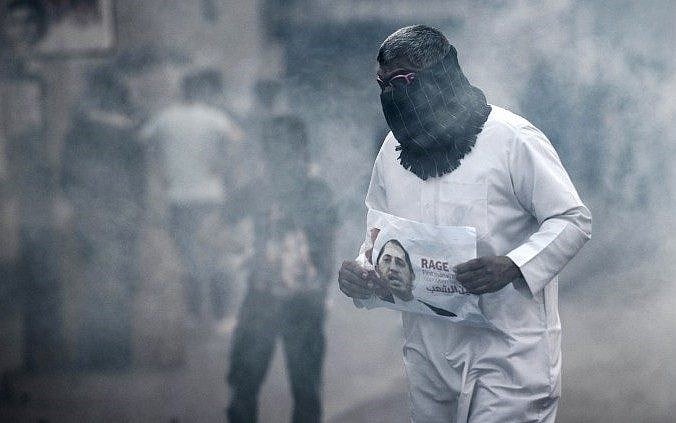
DUBAI, United Arab Emirates — Bahraini activists say a young man died after participating in protests against the execution of two men whose trial drew concern from UN human rights experts.
The Bahrain Institute for Rights and Democracy says Mohamed al-Miqdad died on Sunday at a hospital after being found unconscious on the street shortly after protests against the executions on Saturday. The group says there were clashes at the protests with police firing tear gas, but that activists have been unable to verify the circumstances of his death.
In response to an Associated Press query, the government said a medical report confirms illness as cause of death for the 22-year-old.
Monday’s statement says the individual died “due to natural causes” and that police confirmed that the circumstances leading to his death are not suspicious.
Bahrain’s human rights record has come under severe criticism in the West. In past years, Bahraini authorities have detained nonviolent critics, dissolved a major Shiite opposition bloc and shut down an independent newspaper, forcing many Bahrainis into exile. Dozens were also stripped of their nationality. The government has, meanwhile, faced sporadic Shiite militant attacks on security forces.
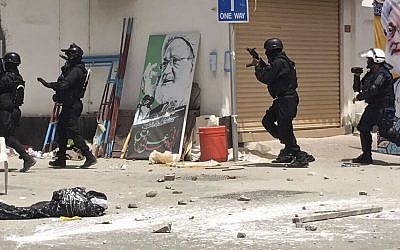
On Saturday, the government executed two men convicted in a mass terrorism trial in a case that activists have decried and that UN human rights experts had expressed concerns over.
Activists identified the two as Ali al-Arab, 25, and Ahmed al-Malali, 24. The Bahrain Institute for Rights and Democracy said the two had exhausted all their legal appeals after being sentenced to death in a mass trial alongside 58 other men in January 2018.
Attorney General Ahmed al-Hammadi said in a statement released on the Public Prosecution’s Instagram page that the individuals, who were not named in the statement, were involved in terrorist operations that killed a security officer, as well as in firing and wounding security forces, assisting in a prison riot, working with terrorist operatives in Iran and Iraq, possessing explosives and weapons illegally, and being involved in crimes against the state.
UN human rights experts had appealed to Bahrain to halt their executions amid concerns the men were coerced into making confessions through torture and did not receive a fair trial. The two were arrested in February 2017 and allegedly prevent from attending their trial. They were also allegedly not provided legal counsel before their trial.
The rights institute alleged that al-Arab was coerced into signing a confession while blindfolded and subjected to torture, including electric shocks and severe beatings. Al-Malali was allegedly shot during his arrest and was held incommunicado for a month before signing a confession.
The tiny island nation off the coast of the Arabian Peninsula was rocked by a 2011 uprising backed by majority Shiites demanding greater rights from the Sunni-led monarchy. Bahrain crushed the protests with the help of Saudi Arabia and the United Arab Emirates, Sunni allies suspicious of Iran and opposed to growing Shiite influence in the region.


The Times of Israel Community.