

Ben-Gurion University president: Iran strike has ‘far-reaching effects on Israeli science’
Anatomy lab and 14 others damaged or destroyed, with cost to university of $200m, in missile attack on Beersheba’s Soroka Hospital. But it’s impossible to put a price on researchers’ life’s work
 Add ToI as a Preferred Source on Google
Reporter at The Times of Israel
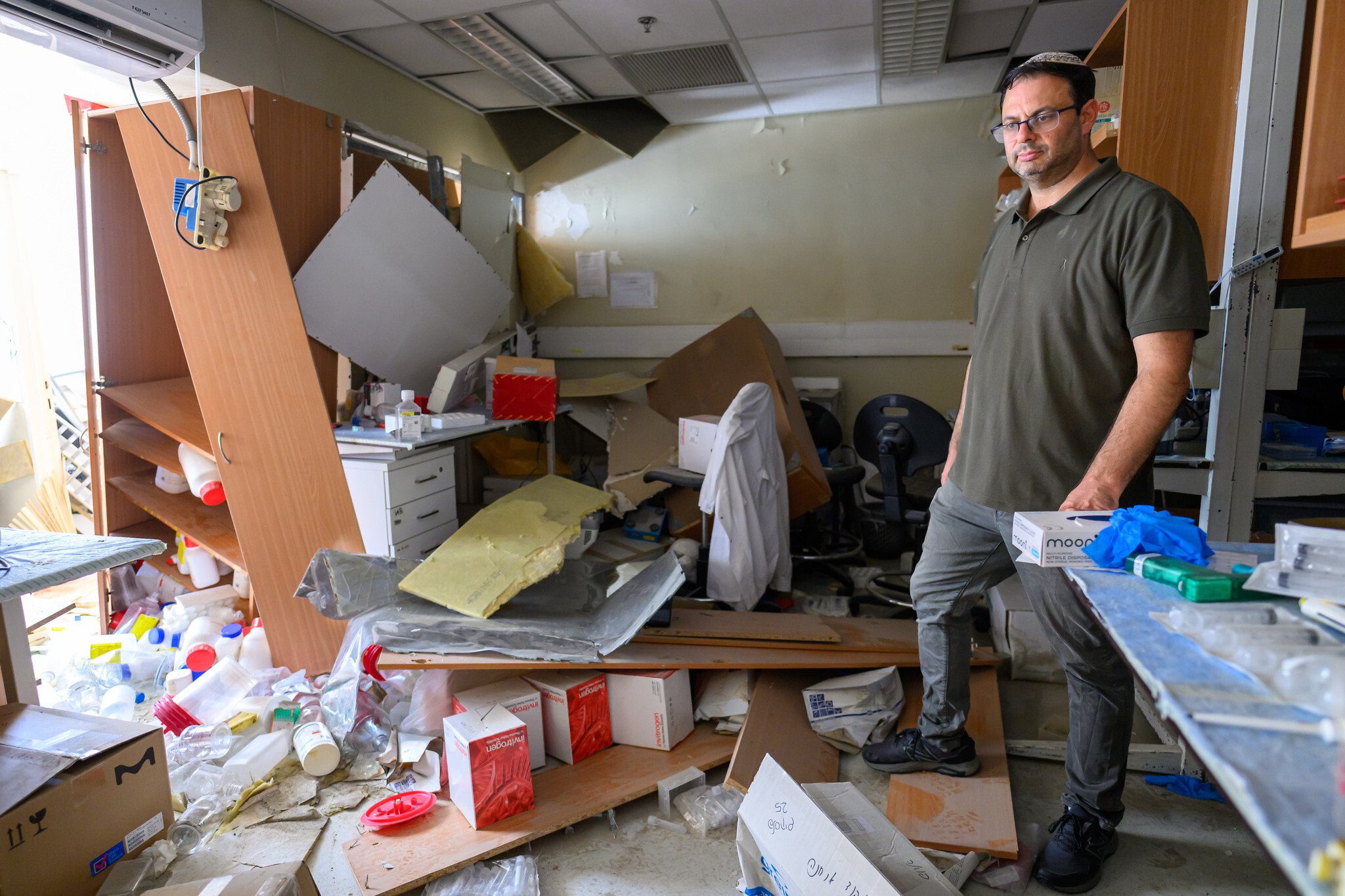
BEERSHEBA — In the early morning of June 19, an Iranian ballistic missile with a large explosive warhead struck Building 12 of the Soroka University Medical Center, injuring at least 80 people, destroying the hospital’s surgical ward, and causing widespread destruction to nearby buildings
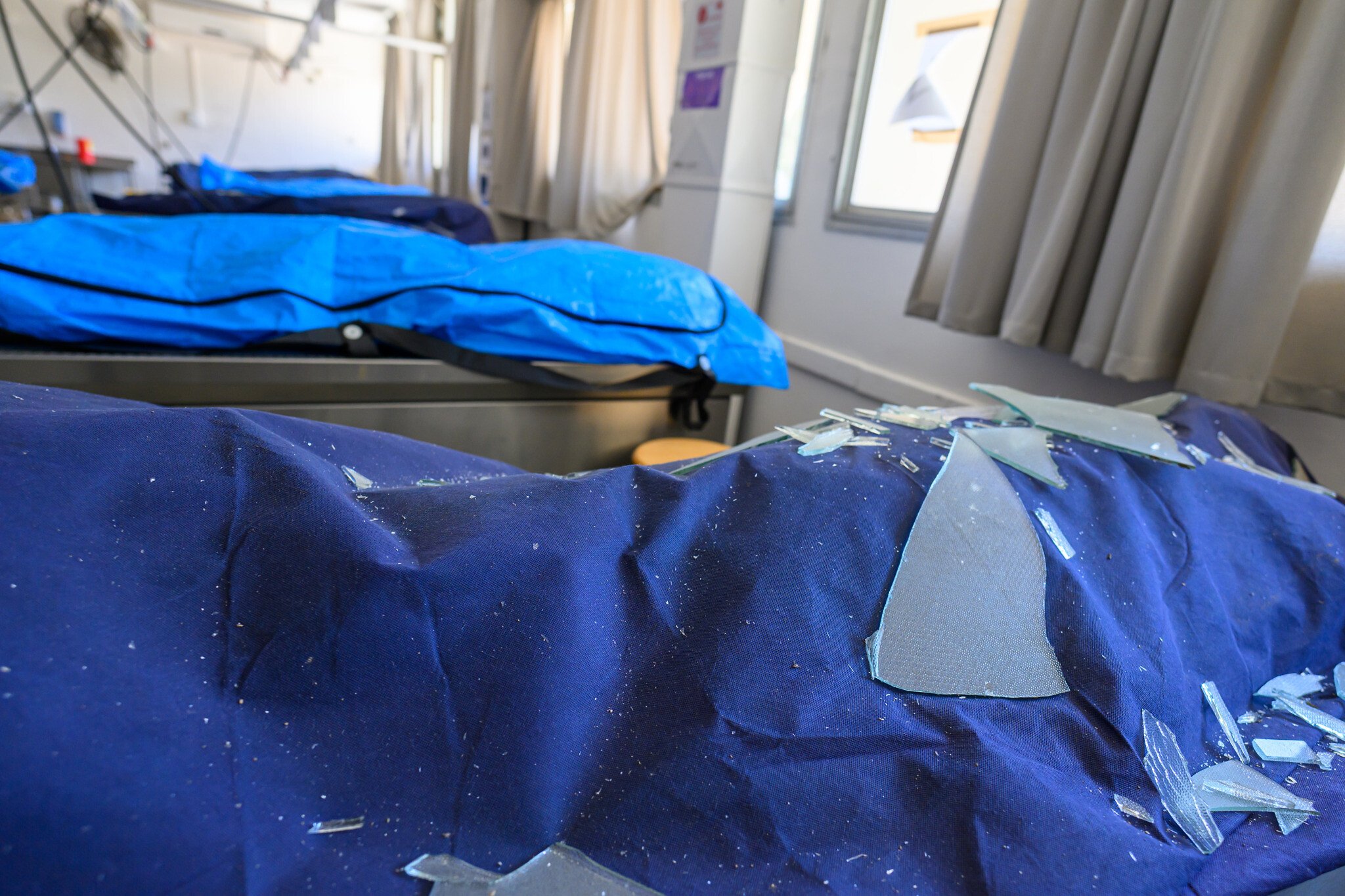
Also destroyed were six research laboratories and the medical school’s anatomy lab.
“Luckily, no one was killed,” said Prof. Daniel Chamovitz, president of Ben-Gurion University of the Negev. “No one was severely hurt.”
But alongside dozens of researchers’ life’s work, the cadavers that had been donated to the medical school for future physicians’ training were irreparably harmed and had to be buried.
“You can actually kill a cadaver twice,” Chamovitz said.
Other damage was dealt to the lab of Prof. Ehud Ohana of Ben-Gurion University of the Negev’s pharmacology and biochemistry department.
When Ohana opened the door to his lab two hours after the blast, “I realized we were in trouble. The damage was immense.”
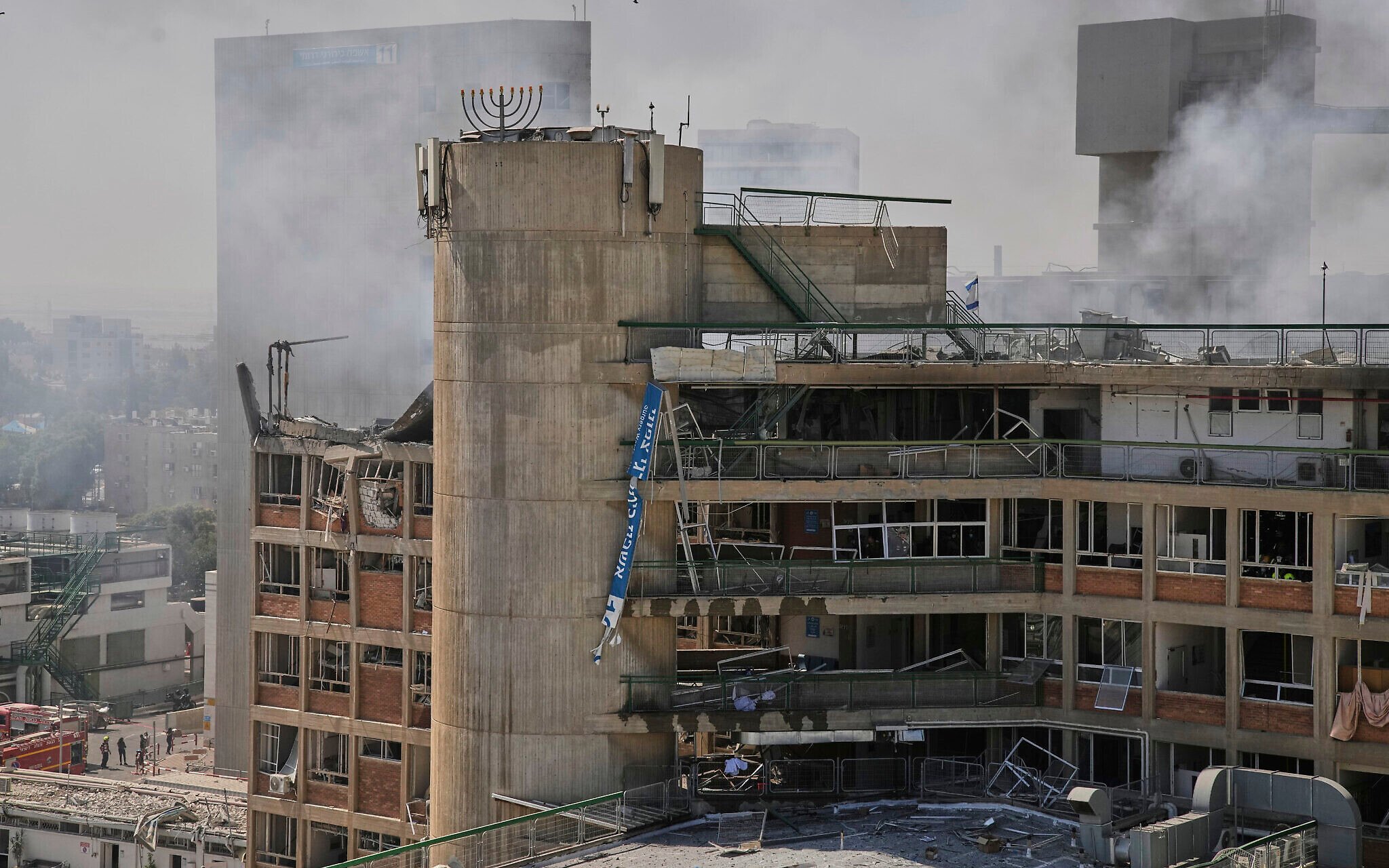
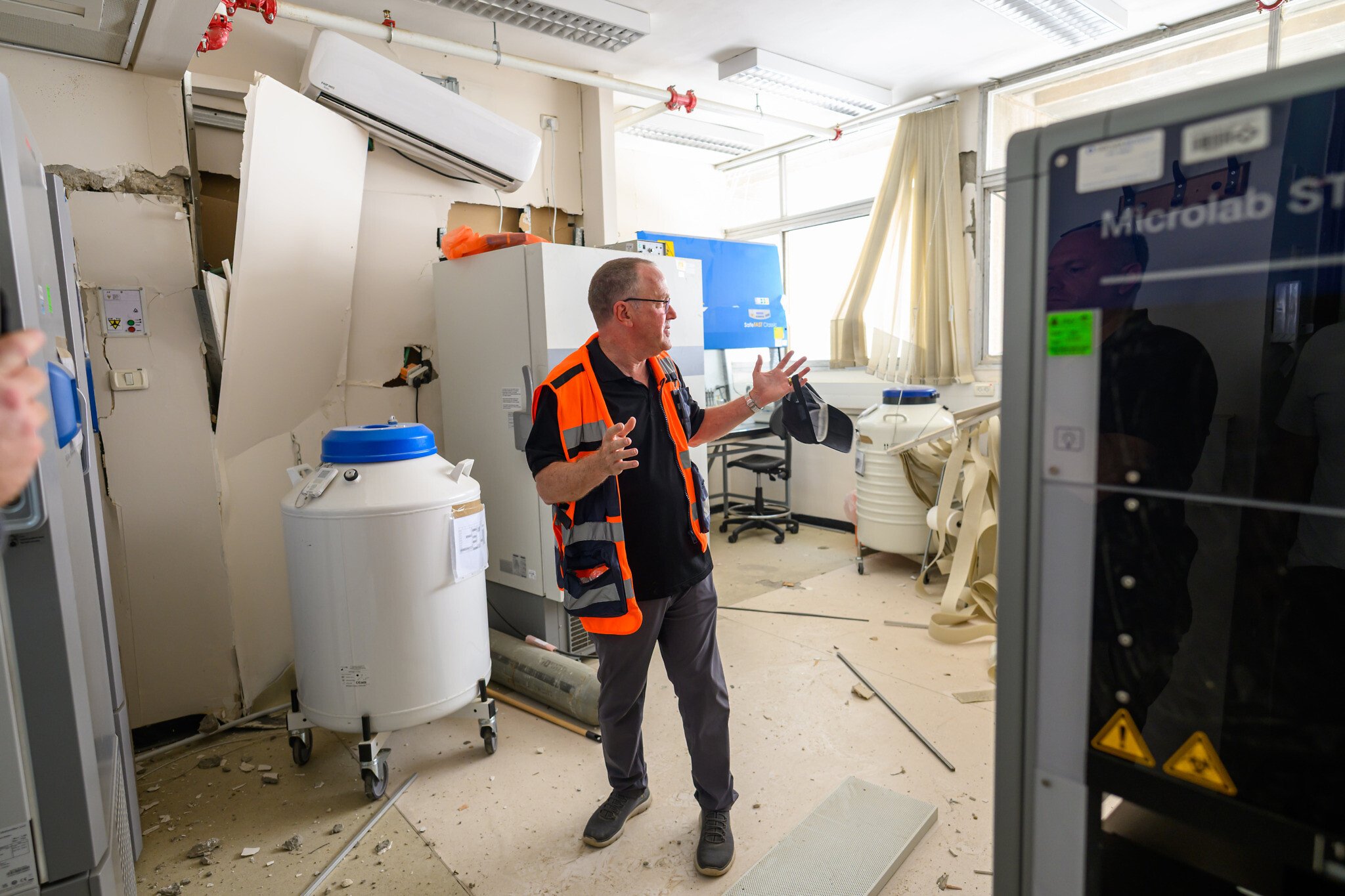
There was still a fire in the building and collapsing walls and “all kinds of stuff falling on our heads,” Ohana recalled, speaking to The Times of Israel by telephone.
With permission from the Home Front Command, he and some of his students went into the lab and started to “grab stuff,” trying to save as many biological samples as they could, some of which Ohana had collected over the course of 20 years.
“It’s going to take a very long time to generate them again,” Ohana said sadly. “Some are gone and irretrievable. We’ve been set back from two to five years.”
The Iranian regime targeted Soroka Hospital in Beersheba with a ballistic missile—hitting a major medical center.
We will not stand by. We will continue doing what must be done to defend our people. pic.twitter.com/4ldeTQhATW
— Israel ישראל (@Israel) June 19, 2025
Ohana’s lab focuses on researching diseases such as diabetes, renal cancer and cholesteatoma, a nonoperative tumor in the middle ear.
Since the blast, Ohana has set up in a temporary lab in a different building at the center. But his team lost all its equipment along with the human samples.
“It’s a total loss,” he said. “We were able to go back on track with some of the experiments, but the majority of it will be delayed. We have the knowledge. We’re focused on the colossal project to bring everything back on track. ”
His students, he said, “have worked so hard to go back to doing science. But we’ve already started since the attack occurred because this is our life’s mission. This is my life’s mission.”
‘A disaster of enormous proportions’
During the 12 days of conflict with Iran, 28 people in Israel were killed, over 3,000 were hospitalized, and 13,000 were displaced.
The damage to the country currently stands at an estimated NIS 10 billion ($2.7 billion).
But, said BGU president Chamovitz of the loss of the Soroka labs, “This is really a disaster of enormous proportions. How do you even put a price tag on it? There could be a scientific discovery that would have come in four months that’s not going to come.”
Footage posted to social media shows the moment of the ballistic missile impact at Soroka Hospital in Beersheba. pic.twitter.com/aicK9zLSnx
— Emanuel (Mannie) Fabian (@manniefabian) June 19, 2025
Speaking to The Times of Israel in his office on Wednesday, the US-born scientist talked about the impact of the missile strike.
In addition to the six labs that were completely destroyed, nine others were damaged. About seven classrooms at the medical school suffered extensive ruin.
In all, 30 buildings were damaged in the attack, including the library, which remains closed. Exams have been postponed, and while students mingled in the center of the lush campus, the atmosphere was subdued.
The challenge, Chamovitz said, will be to figure out how — and where — to teach next year even as the number of incoming medical students has grown from 120 to 200 students a year.
“We’re under pressure to grow more because there’s not enough physicians,” he said. Now, however, “I’m missing a number of teaching labs and teaching rooms.”
Dozens of staff members and students were made homeless and the university needs to find temporary housing.
Rooms in Building 12 damaged during the June 19 Iranian ballistic missile strike on Soroka University Medical Center in Beersheba on July 2, 2025. (Diana Bletter/Times of Israel)
“We’re going to rent houses, rent lecture rooms,” Chamovitz said. “We’re going to possibly teach longer hours during the day. But where do we find laboratories for our researchers who lost their life’s work?”
People who work on computers can back up their work, he said. “But you can’t back up DNA samples.”
On June 15, when an Iranian ballistic missile struck the Weizmann Institute of Science, destroying around 45 labs, Chamovitz had offered the Rehovot-based university the use of his university’s labs. After the June 19 attack in Beersheba, he had to rescind his offer, apologizing and saying, “I’m sorry, we need those labs.”
Chamovitz estimates that the total losses to Ben-Gurion University at between $50 and $200 million.
But there’s a ripple effect of the damage that extends even further.
“I’m probably going to have to find a place for 12 researchers,” Chamovitz said. That means, he said, that young Israelis who are looking to build their careers “won’t be hired because we don’t have any place to put them.”
“Multiply that with what happened at the Weizmann Institute of Science,” he said. “This has far-reaching effects on Israeli science and on Israeli society.”
‘The Iranians hoped to set us back’
Chamovitz, who is chairman of the Association of University Heads, Israel, (VERA), said the scientific community of Israel “has been amazing.”
Researchers and presidents from all over the country have reached out, asking how they can help.
Chamovitz noted that 23 years before the founding of the country, in 1925, Israel’s founding fathers established the Technion Israel Institute of Technology and the Hebrew University of Jerusalem.
“There was very little industry at the time,” Chamovitz said. “But they invested in building educational institutions. Even 100 years ago, they understood the importance of world-class research for the future of the country.”
“By targeting universities, the Iranians hoped to set us back,” Chamovitz said. “But we’re focused on recovery. We’re focused on how we’re going to rebuild.”





The Times of Israel Community.