

‘Body Worlds’ creator asks to become part of exhibit after death
Wife of Gunther von Hagens, who suffers from Parkinson’s disease, says she was first shocked but eventually agreed to husband’s request
 Add ToI as a Preferred Source on Google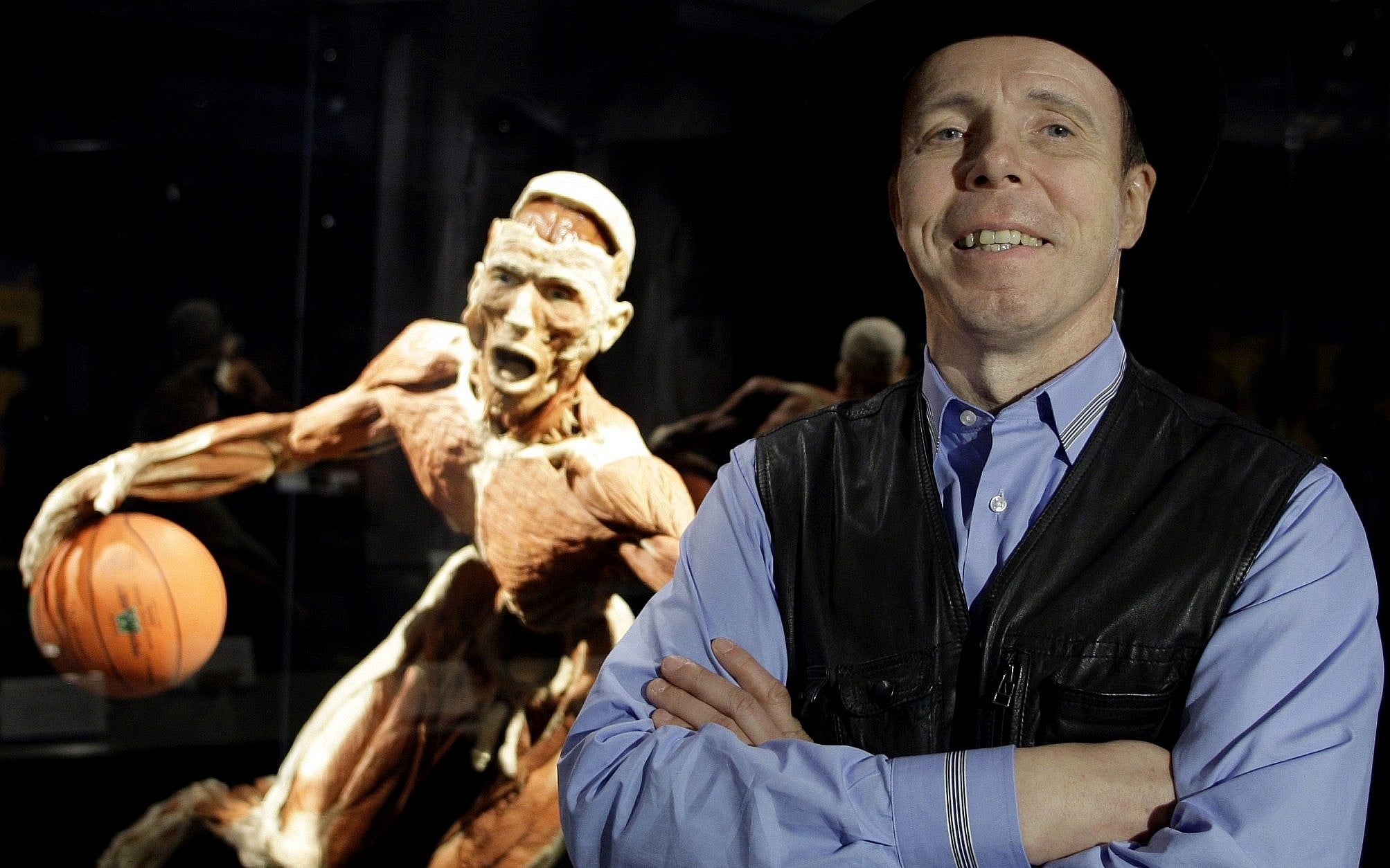
The German scientist behind the “Body Worlds” exhibits of dissected human bodies has asked to become part of the show upon his death.
Gunther von Hagens, who has been dubbed “Dr. Death” for popularizing the preservation and display of dead bodies as artworks, is ill with Parkinson’s disease.
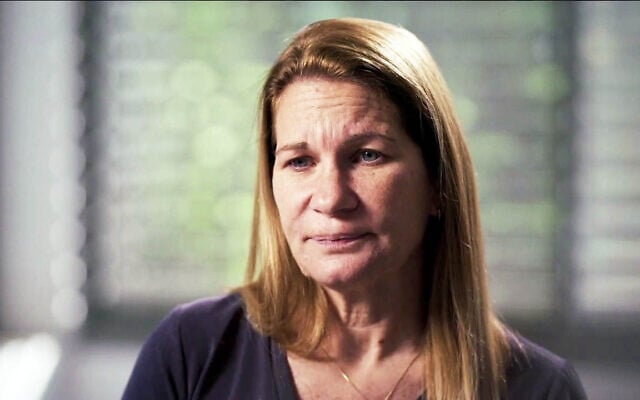
Von Hagen’s wife and partner, Dr. Angelina Whalley, told the Observer she was at first shocked by his request.
“Of course, in the very beginning I thought, Gunther, you are kidding me! This is something I would never be able to do,” she recounted. But she eventually came around and agreed.
“It’s somehow finalizing his life’s work,” she said. “I understand now that it’s more an appreciation and an expression of love for me to do it.”

The process, called plastination, involves skinning the body parts and preserving them with a synthetic resin, laying bare the naked muscles, nerves and tendons. The liquid plastic hardens, leaving tissues intact and allowing bodies to be displayed in their natural color and without formaldehyde.
Most of the bodies in Von Hagen’s displays are flayed and dissected, revealing their organs. Others are kept intact and displayed in dramatic action poses, such as a basketball player driving to the hoop or a runner in full stride.
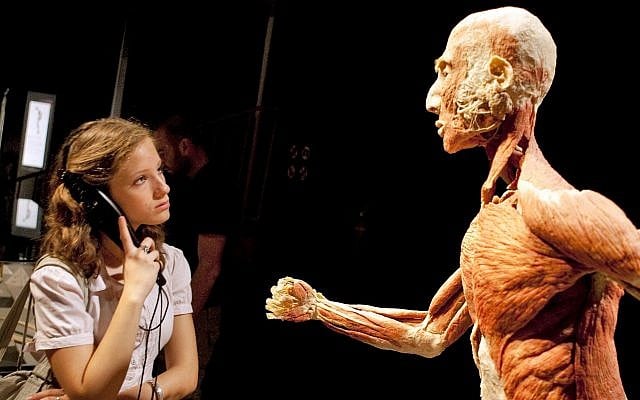
The show has been criticized by some as trivial, disrespectful and voyeuristic. Von Hagens, who developed the technique in 1977, has insisted he’s helping viewers understand how their own bodies work.
Japan hosted the first exhibition of the plastinated bodies in 1995.
Since then, more than 15,000 people worldwide have registered as donors. Tens of millions have visited shows in over 20 countries, including in Israel.
“In the West we have somehow become distracted from death, although it is such a natural part of our life,” Whalley said. “Nowhere else than close to death can you really feel life.”









The Times of Israel Community.