

Cairo, Moscow sign contract for Egypt’s first nuclear plant
Site at Dabaa, on the Mediterranean coast, to be financed with $25 billion Russian loan as two countries build ties
 Add ToI as a Preferred Source on Google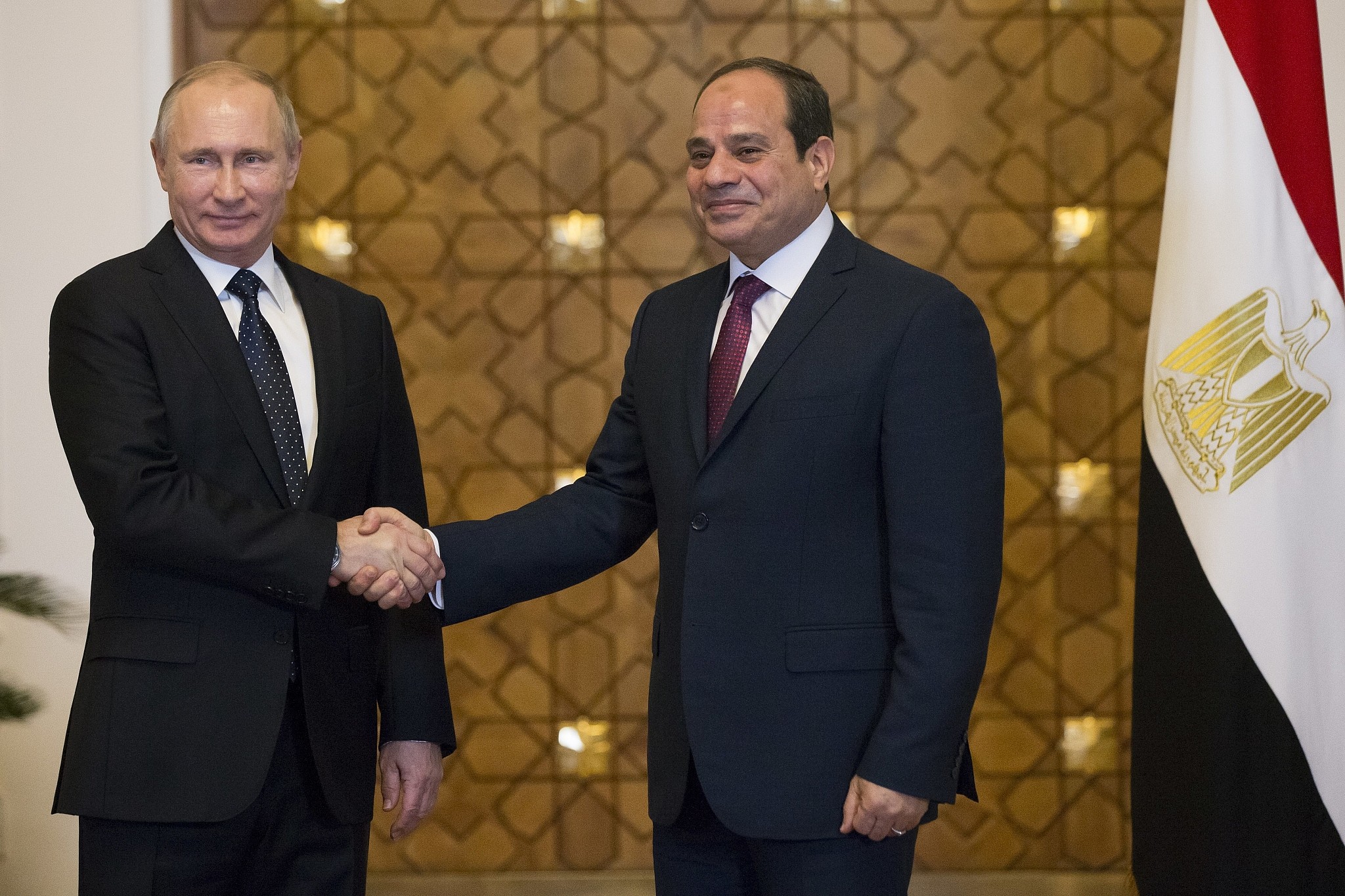
CAIRO, Egypt — Egypt and Russia signed a final contract on Monday for the building of Egypt’s first nuclear power plant, during a visit to Cairo by Russian President Vladimir Putin.
The contract to build the plant in Dabaa on the Mediterranean coast was signed during a ceremony shown on state television and attended by the Russian leader and Egyptian President Abdel-Fattah el-Sissi.
Putin, making his second visit to Egypt in as many years, held talks with his Egyptian counterpart on their countries’ rapidly expanding ties.
Egypt’s general-turned-president, Sissi, has visited Russia three times since the ouster of his Islamist predecessor in 2013. Since taking office, Sissi has bought billions of dollars’ worth of Russian weapons, including fighter jets and assault helicopters.
Also, Russia last month approved a draft agreement with Egypt to allow Russian warplanes to use Egyptian military bases, a deal that would mark a significant leap in bilateral ties and evidence of Moscow’s expanding military role in a turbulent Middle East. That deal, if it goes through, will likely irk the United States, until now a top Egypt military ally.
Putin flew to Cairo after a brief and previously unannounced visit to a Russian military air base in Syria.
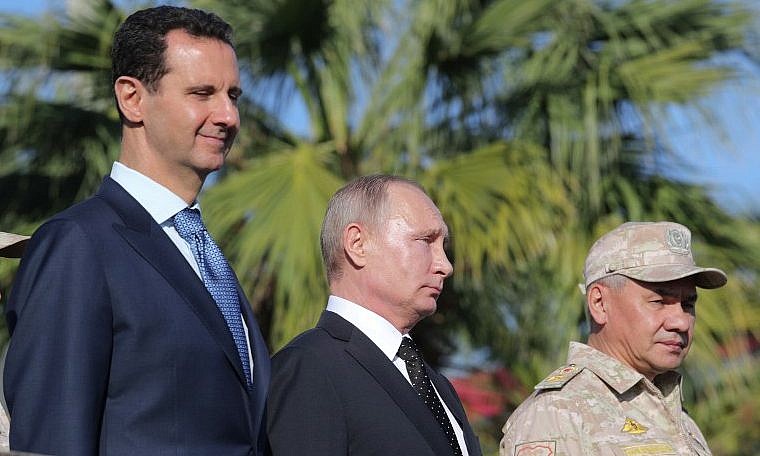
The air base has served as the main foothold for the air campaign Russia has waged since September 2015 in support of Syrian President Bashar Assad against armed groups opposed to his rule.
Sissi met Putin at Cairo’s international airport and the two leaders later went straight to the presidential Ittahidyah palace in Cairo’s upscale Heliopolis suburb where talks got underway.
Egypt’s currently close ties with Russia hark back to the 1950s and 1960s, when Cairo became Moscow’s closest Arab ally during the peak years of the Cold War.
Egypt changed allies in the 1970s under the late President Anwar Sadat, who replaced Moscow with Washington as his country’s chief economic and military backer following the signing of a US-sponsored peace treaty with Israel. Egypt has since become a major recipient of US economic and military aid.
Under Sissi, Egypt has been able to maintain close ties with both Russia and the United States — something that would have been unthinkable during the Cold War.
However, Cairo has not been able to persuade Moscow to resume its flights to Egypt, suspended since October 2015 when the Islamic State terror group downed a Russian airliner over the Sinai Peninsula, killing all 224 people on board. Egypt has since spent millions of dollars to upgrade security at its airports and undergone numerous checks by Russian experts to ascertain the level of security at the facilities.
The suspension of Russian flights has dealt a devastating blow to Egypt’s vital tourism industry. Britain, another major source of visitors, has since the Russian airliner’s crash also suspended flights to Sharm el-Sheikh, a Red Sea resort in Sinai from which the Russian airliner took off shortly before it crashed.
“Your Excellency: When will Russian tourism return to Egypt?” read the front-page banner headline in a Cairo daily loyal to the government, in both Arabic and Russian.
[mappress mapid=”6241″]
There had been speculation that Sissi and Putin might during the visit finalize and announce a deal on the construction of the nuclear reactor on Egypt’s Mediterranean coast after months of wrangling over technical and financial details.
Egypt and Russia have already initialed an agreement for a $25 billion Russian loan to finance the construction.
Egypt has quietly supported Russia’s military involvement in the Syrian civil war, a policy that had clashed with the position taken by Saudi Arabia, Cairo’s chief ally and financial backer. The Saudis, however, have gradually softened their opposition to Russian involvement there and taken a host of steps to thaw decades of frosty relations with Moscow.
Both the Saudis and Egyptians, according to analysts, are now hoping that Russia’s presence in Syria would curtail the growing influence there of Shiite, non-Arab Iran, whose expanding leverage in the region has been a source of alarm to both Cairo and Riyadh.
Egypt, meanwhile, has been raising its own profile in Syria, negotiating local ceasefires between government and opposition forces with the blessing of both Damascus and Moscow.


The Times of Israel Community.