

Conservation body asks Israel to protect rodent vulnerable to extinction
International Union for Conservation of Nature asks Israel Nature and Parks Authority to protect endemic Buxton’s jird in sandy area set for development in central Rishon Lezion
 Add ToI as a Preferred Source on Google
Sue Surkes is The Times of Israel's environment reporter
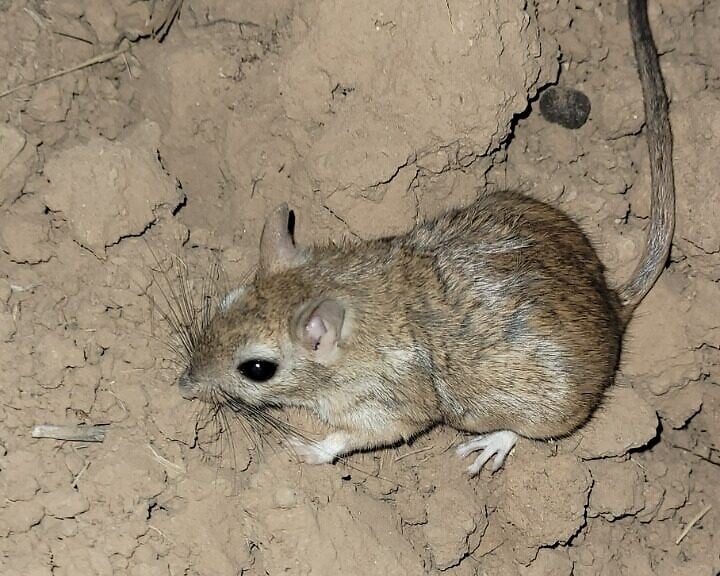
In an unusual move, the International Union for Conservation of Nature (IUCN) recently wrote to the Israel Nature and Parks Authority asking it to help protect a species of rodent in an area threatened by urban development.
The Small Mammals Specialist Group expressed concern about Buxton’s jird, which lives only in Israel and which the IUCN lists as vulnerable to extinction.
It is named after the British hunter and conservationist Sir Edward North Buxton, a founder of the Society for the Preservation of the Wild Fauna of the Empire, which became Flora and Fauna International.
According to Haaretz, the IUCN is worried about a plan advanced by the central Israel city of Rishon Lezion to build 3,600 housing units on a training site that the IDF plans to evacuate.
A maintenance center for a light railway is scheduled to be built next to it.
Most of another, smaller site, which the army will also clear at a later stage, has been earmarked for a nature reserve.
Among those objecting to the plan, which was discussed Sunday at the Central District Planning and Building Committee, were ecologist Michal Zaitzove Raz, who, with the approval of the army and the Israel Nature and Parks Authority, had been surveying the IDF site over the past two years.
In an opinion written with another ecologist, Prof. Meirav Ben-David, Zaitzove Raz wrote that the concentration of Buxton’s jird in the area planned for construction was three to 10 times greater than in the southern coastal plain and the Western Negev, where the species can also be found.
In response to the IUCN request, Israel Nature and Parks Authority’s Chief Scientist Prof. Dror Hawlena noted that large parts of the Negev dunes, where the rodent lives, are protected within large nature reserves and that the populations appear to be stable, although detailed surveys are required. The coastal dunes, while fragmented, also included small reserves where the animal lives, Hawlena went on, but the populations there are not the last viable ones in Israel.
He said the authority would be surveying the roughly 750 hectares (850 acres) proposed for the Rishon Lezion nature reserve to define the habitat of Buxton’s jird, and that this would help in defining the borders of the reserve during negotiations with the state.









The Times of Israel Community.