

Could Russia’s war on Ukraine prompt a US rethink, bolstering Mideast moderates?
US disengagement has left Israel battling solo against Iran in Syria. But facing Putin’s challenge in Europe, DC may have to reconsider how to protect its interests everywhere

 Add ToI as a Preferred Source on Google
Yaakov Lappin is a military and strategic affairs analyst, contributing to JNS, Jane's Defence Weekly, and others. Yaakov is a research fellow at the Miryam Institute and the Alma Center.
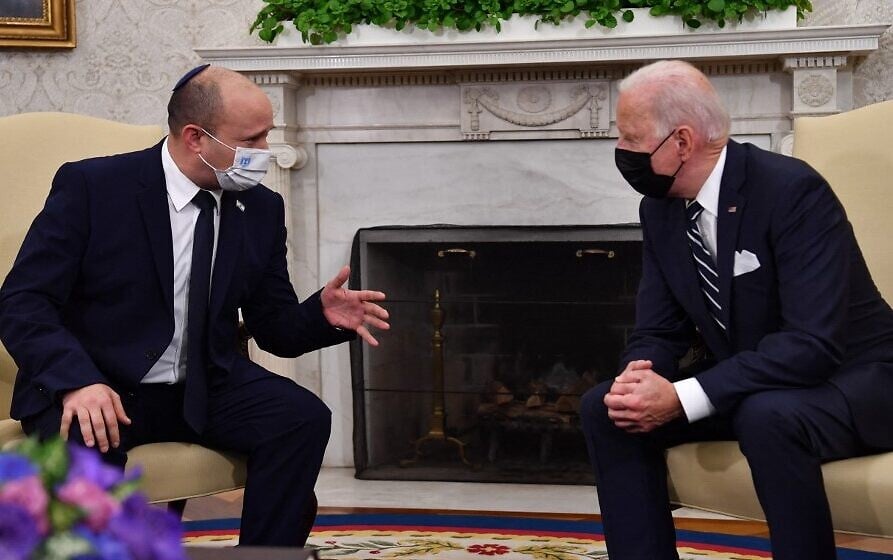
Since the start of Russia’s brutal war of choice against Ukraine’s independence, Israel has dealt with two conflicting tensions, and it has done so in a reasonable manner.
Israel needed to strike a balancing act as it maneuvered between its commitment to the American-led Western backing for Ukraine and its critical security interests in Syria.
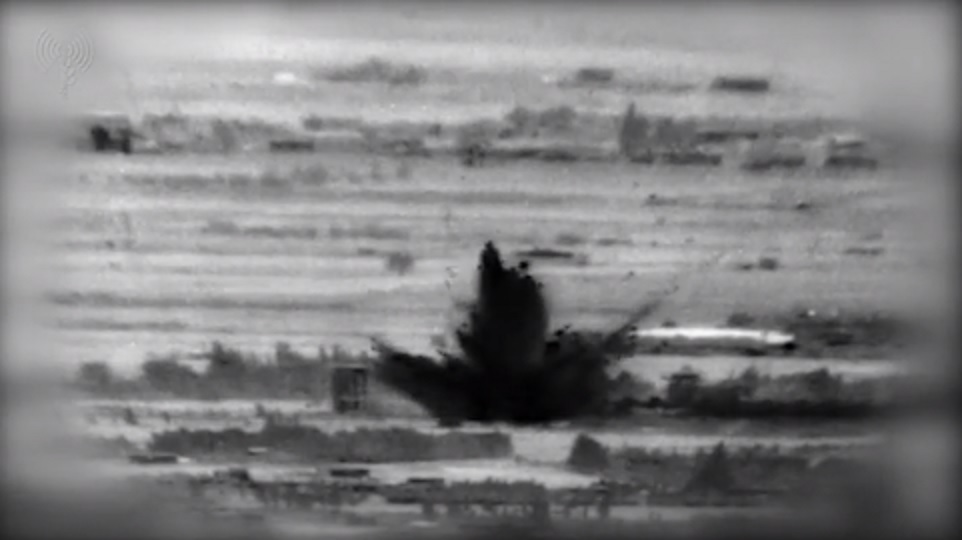
The Israeli core security interest in Syria, of rolling back Iran’s entrenchment program though thousands of “gray zone” military strikes, remains constant. Israel alone has prevented Iran from building a war machine in Syria that was designed to rain down thousands of missiles on Israeli cities and launch cross-border land attacks on northern Israel.
The continued pursuit of this objective cannot be well served in the absence of the deconfliction channel that Israel has built with Russia, which rules Syria’s skies.
The tight airspace over Syria means the Israeli Air Force has had to learn to navigate while avoiding conflict with Russia’s air force and, at the same time, dodge the over 1,000 surface-to-air missiles fired by the Syrian regime from Russian-made launchers on the ground over recent years.
In light of the fact that Israel is pursuing its campaign against Iran alone, those who call on Israel to be bolder in confronting Russia over its invasion of Ukraine need to also call on America to go some way to recommitting to the Middle East.
Yet there are grounds to believe that such a change in America’s attitude toward the region is more likely now than it was a month ago.
A 21st century cold war
One scenario that could emerge in the wake of Russia’s invasion of Ukraine involves the start of a new geopolitical era: a 21st-century cold war. This time, it would involve a tripolar struggle for global power between the US, Russia, and China.
So long as the Putin regime in Moscow is committed to the use of devastating, indiscriminate military force in order to rebuild its concept of a Russian empire, the prospect of Cold War 2.0, featuring sustained, massive economic and political decoupling between the West and Russia, and heightened global military tensions, remains a dominant scenario.
In the Middle East, China and Russia might cooperate in their competition against the US, based on a common Russian-Chinese goal of undermining American influence.
The buds of a new cold war are already apparent, and should this scenario continue to develop, it could also dramatically impact the Middle East.
In this region, a parallel struggle has been raging over the future of the regional order, and it is one that Israel has been fighting almost entirely on its own.
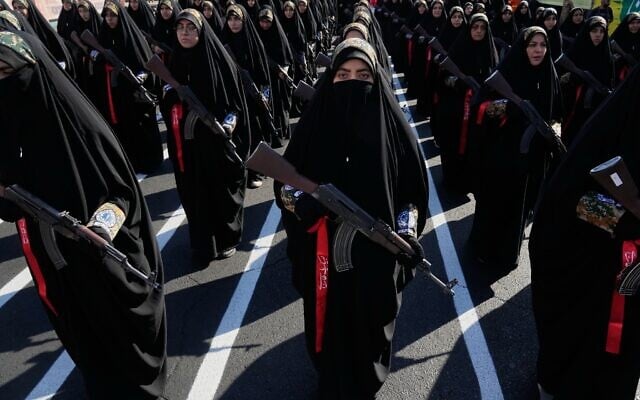
In the Middle East’s not-so-cold war, the Iranian-led radical axis seeks to turn as many countries as possible in the region “red” – signifying areas under Iranian influence. Iran does this using a combination of proxy warfare, spreading its military capabilities and radical ideology, and gray zone military campaigns.
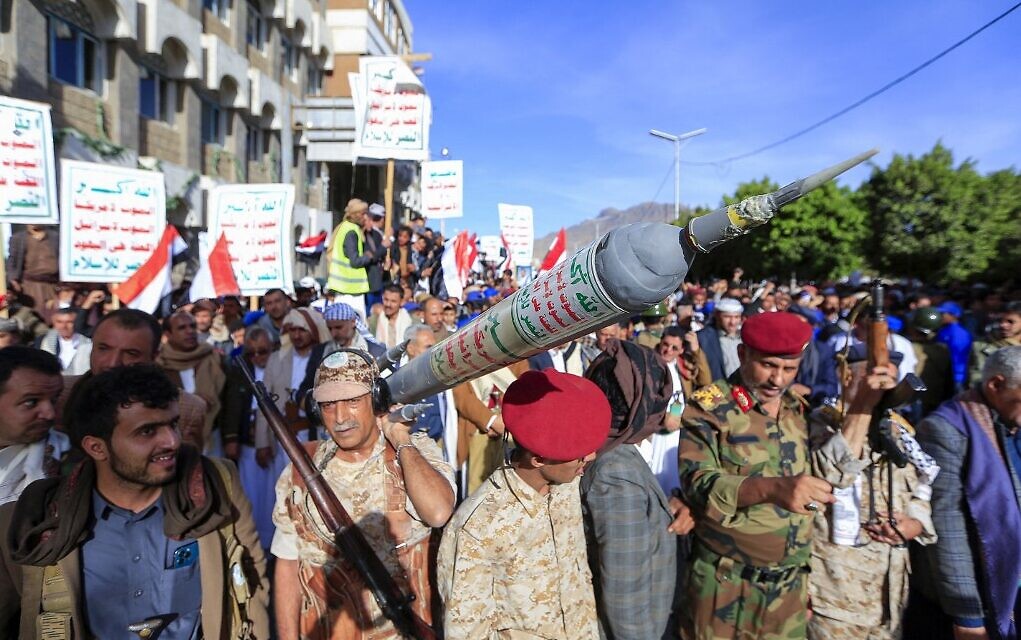
The vast majority of the Middle East’s negative dynamics can easily be tracked back to Iran. In countries with partial or failed sovereignty, Iran is there, building terror armies, funding and training them, establishing militias, and influence. Iran’s zone of influence stretches across Iraq, Syria, Lebanon, Yemen, and into the Gaza Strip.
On the other side of the divide are moderate Sunni states, or the “blue states,” which have entered into varying degrees of alliance with Israel in order to stop the Iranian hegemony program from marching any further. These relationships, as valuable as they are, have yet to translate into a military bloc against Iran, or a local version of NATO.
America’s disengagement
Any potential gains that the anti-Iranian “blue alliance” can make are, to a significant degree, dependent on US policy and support in the Middle East.
Yet prior to the Russian invasion of Ukraine, America was scaling down its military operations in the Middle East in order to free up resources and attention for its great power competition with China.
On the diplomatic front too, Washington has sounded increasingly meek in the defense of its allies facing growing Iranian threats. Saudi Arabia has been incensed by the US’s faltering position on the Houthis and its removal of this Iranian-backed organization from its terror list, as the Houthis continue to terrorize Saudi cities and target oil installations. Riyadh’s response to an American request to step up oil exports to stabilize the market in the wake of Russia’s decreased output was met with a lukewarm Saudi response.
The vacuum left behind has not strengthened the regional partnerships against Iran.
While this has been a long-term American trend, the Biden administration has taken more steps than any previous government to draw down two decades of American counter-terrorism operations in the Middle East, through the retreat from Afghanistan and the ending of combat operations in Iraq.
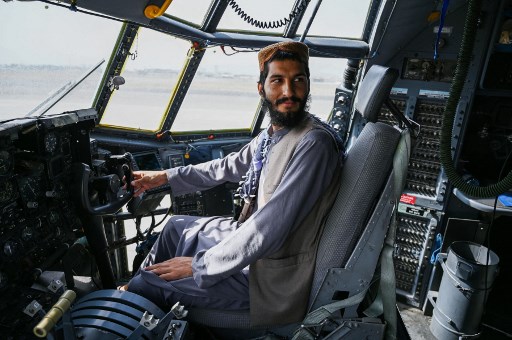
The US paid a considerable price for its wars in Afghanistan and Iraq, and it reached the conclusion that it needed to shift its focus onto new missions: long-term American force build-up, and power projection through the moving of military assets away from the Middle East and to the Far East.
All Middle Eastern actors understand this new reality. When American national strategy documents began listing the Middle East in the fifth and sixth paragraphs, while China and Russia appeared far higher up, the message was unmistakable.
This does not mean that the US is militarily vacating the area; it still maintains a considerable presence through the Bahrain-based Fifth Fleet under the US Military’s Central Command (CENTCOM), as well as US air force hubs in Qatar, and other bases.
But the desire of Washington to “disentangle” from the region is clear. Its effort to rush into a problematic nuclear deal with Iran, and its willingness to consider compromises like the removal of the Iranian regime’s military vanguard, the IRGC, from the US terrorist entity list, are recent examples.
Long before the current crisis in Europe, China and Russia designated the Middle East as a “primary theater of strategic competition” with America, according to CENTCOM’s own assessment.
CENTCOM has recognized that the Middle East can become a “potentially decisive theater for strategic competition with the People’s Republic of China (PRC) and Russia,” and that “an expansionist PRC and a resurgent Russia seek to shift alliances and gain influence, seeking leverage through tools such as state-sponsored investment, to achieve assured access and key resources to support their national objectives.”
According to the US military’s assessment, “the PRC and Russia have tailored their regional approaches to suit their specific goals and have expanded military cooperation with many regional countries through both arms sales and exercises. The PRC has expanded its presence through its Belt and Road Initiative (BRI), COVID- 19 diplomacy, debt-trap infrastructure investments, and the proliferation of 5G technology that will provide opportunities for political coercion and military exploitation. Similarly, Russia has reinforced its enduring military and economic presence in Syria, expanded its economic presence in and defense relationship with Egypt, and seeks to increase influence over regional energy resources and transit routes.”
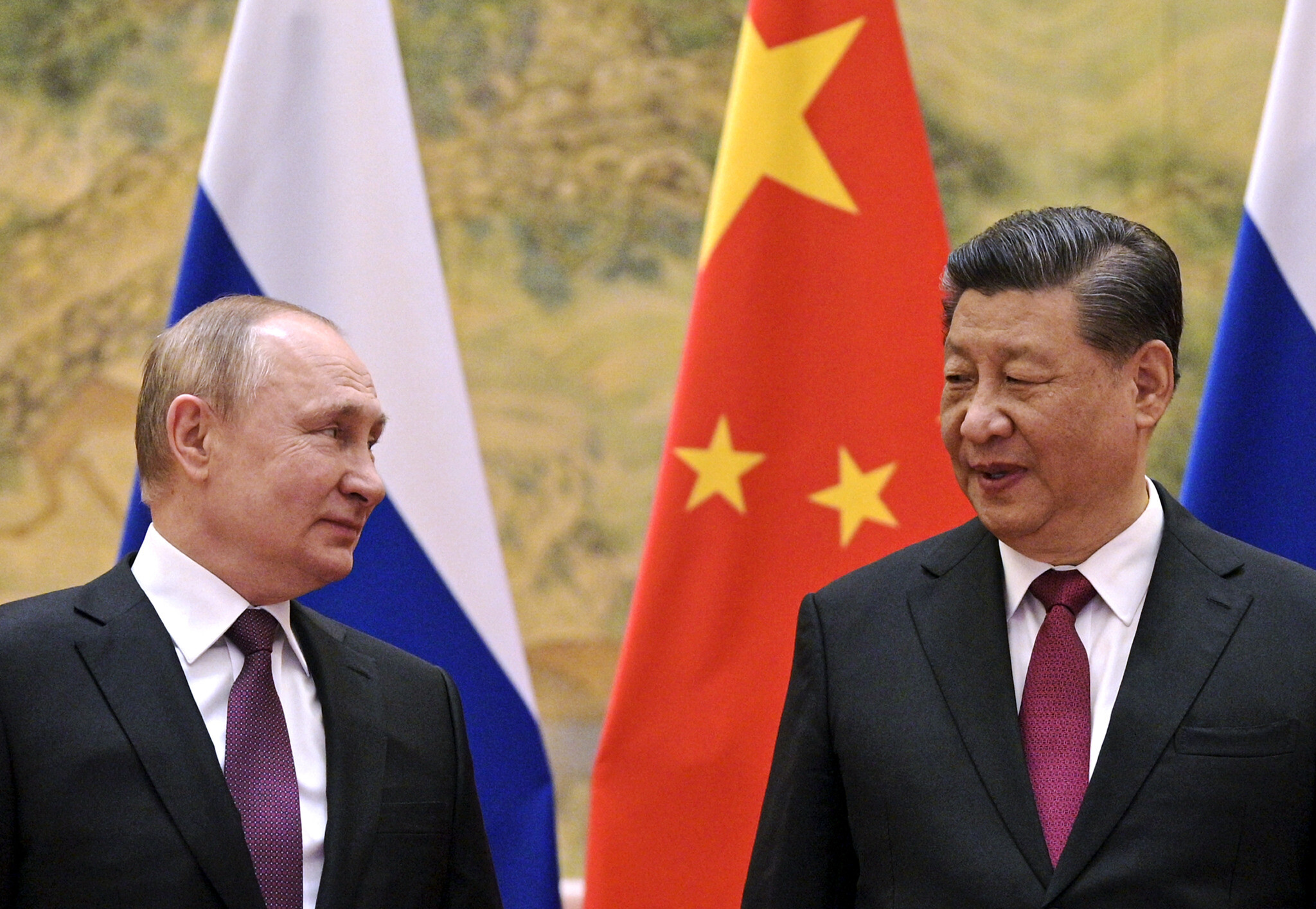
Both China and Russia engage Iran in ways designed to promote their own interests and undermine those of the US, positioning themselves as key economic partners for the Islamic Republic. Iran signed a strategic partnership agreement with China in March 2021, reportedly worth $400 billion in Chinese investment in Iranian energy and transport infrastructure, and providing for military cooperation (though the implementation of this agreement remains up for debate). In October 2021, Iran announced that it would sign a similar agreement with Russia.
Moscow is also committed to helping Iran develop military capabilities.
Ultimately, neither China nor Russia want to alienate their Arab economic partners in the region by aligning too closely with Iran, but both will continue to use Iran as “a useful foil against the West,” said CENTCOM, “reaping economic benefits as they do so.”
Yet this assessment was not enough to convince decision-makers in Washington to reverse the end of significant American interest in the region.
The geopolitical earthquake now playing out in Europe, and the more extreme versions of great power competition that it has unleashed, might, however end up doing so to an extent.
Will the US change course?
Russia has in recent weeks focused considerable naval power in the eastern Mediterranean, in a manner that could challenge NATO maritime operations.
Russia’s permanent access to military bases in western Syria, and determination to fill any vacuum left behind by a retreating America, take on a new significance as a new cold war sets in.
Russia’s war on Ukraine could, at least partially, alter the American scaling down calculus regarding the Middle East.
During the first Cold War of the 20th century, the region became a key arena for bipolar competition, and Israel, after establishing its military credentials in the 1967 Six Day War, was identified as a key pillar of the American anti-Soviet bloc architecture.
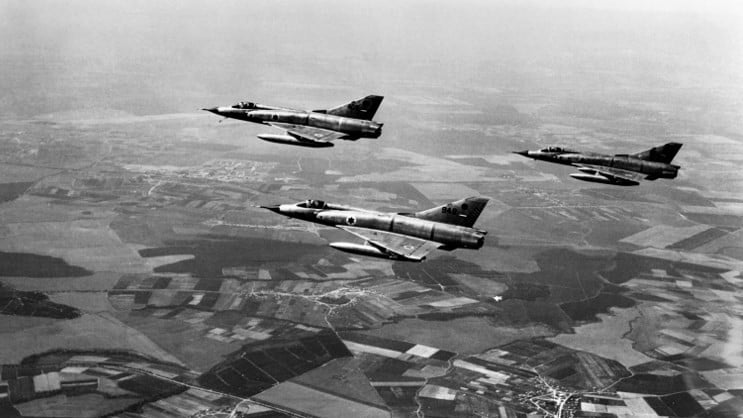
Today, Israel and pro-US Sunni-Arab states can again align themselves with American great power competition interests – provided that the US reverses course and concludes that it cannot divorce its interests in Europe and the Far East from developments in the Middle East, and that the arenas are too deeply integrated.
Under the current status quo, Israel has no choice but to factor in the dramatic reality that Russia has become a military neighbor of Israel since 2015 in Syria. Under current conditions, the US has never been less interested in confronting Iran, and Russia has never felt more emboldened, both in Europe and the Middle East.
Should the US make a strategic decision about partially reversing the scaling down of its military posture in the region, and building new understandings with its allies, including with Israel, this could in turn enable Jerusalem to take a bolder position against Russia’s dark aggression in Europe.








The Times of Israel Community.