

Courting women voters, Bennett vows to revolutionize female representation
At a campaign event for female activists, the former PM says 6 of his new party’s 9 co-founders are women — ‘not because they are women, but because they are excellent’

 Add ToI as a Preferred Source on Google
Tal Schneider is a Political Correspondent at The Times of Israel
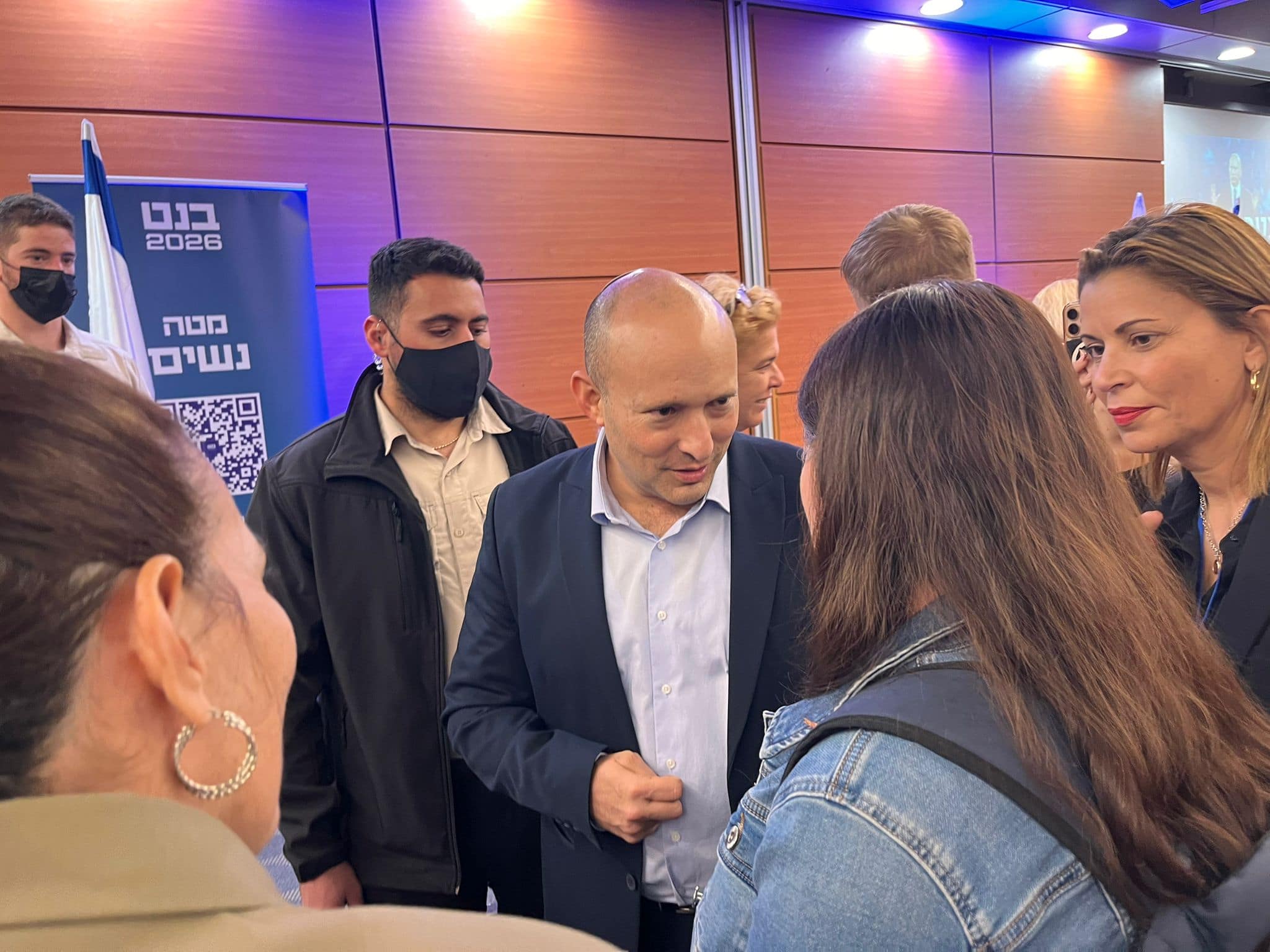
With no national election date set — though one must take place by autumn next year — former prime minister Naftali Bennett is already crisscrossing Israel, holding campaign gatherings in different communities to rally activists and supporters.
One group he is attempting to win over in his apparent effort to reclaim the premiership is female voters. Last week in Tel Aviv, Bennett held a “women’s headquarters conference” alongside his wife, Gilat, vowing to stack both his party and senior governmental positions with women.
Before the event even began on Wednesday evening, hundreds of people were crowding the entrance: a diverse mix of Druze women from Isfiya and Majdal Shams, religious and secular women from Modiin and Tel Aviv, and activists from Bennett’s home branch in Ra’anana.
Bennett — who served as prime minister from 2021 to 2022 as the head of a diverse coalition that got together to oust Prime Minister Benjamin Netanyahu from office briefly — took a break from political life after leaving office. But he has come roaring back in recent months, with a new unnamed party and outspoken criticism of the government.
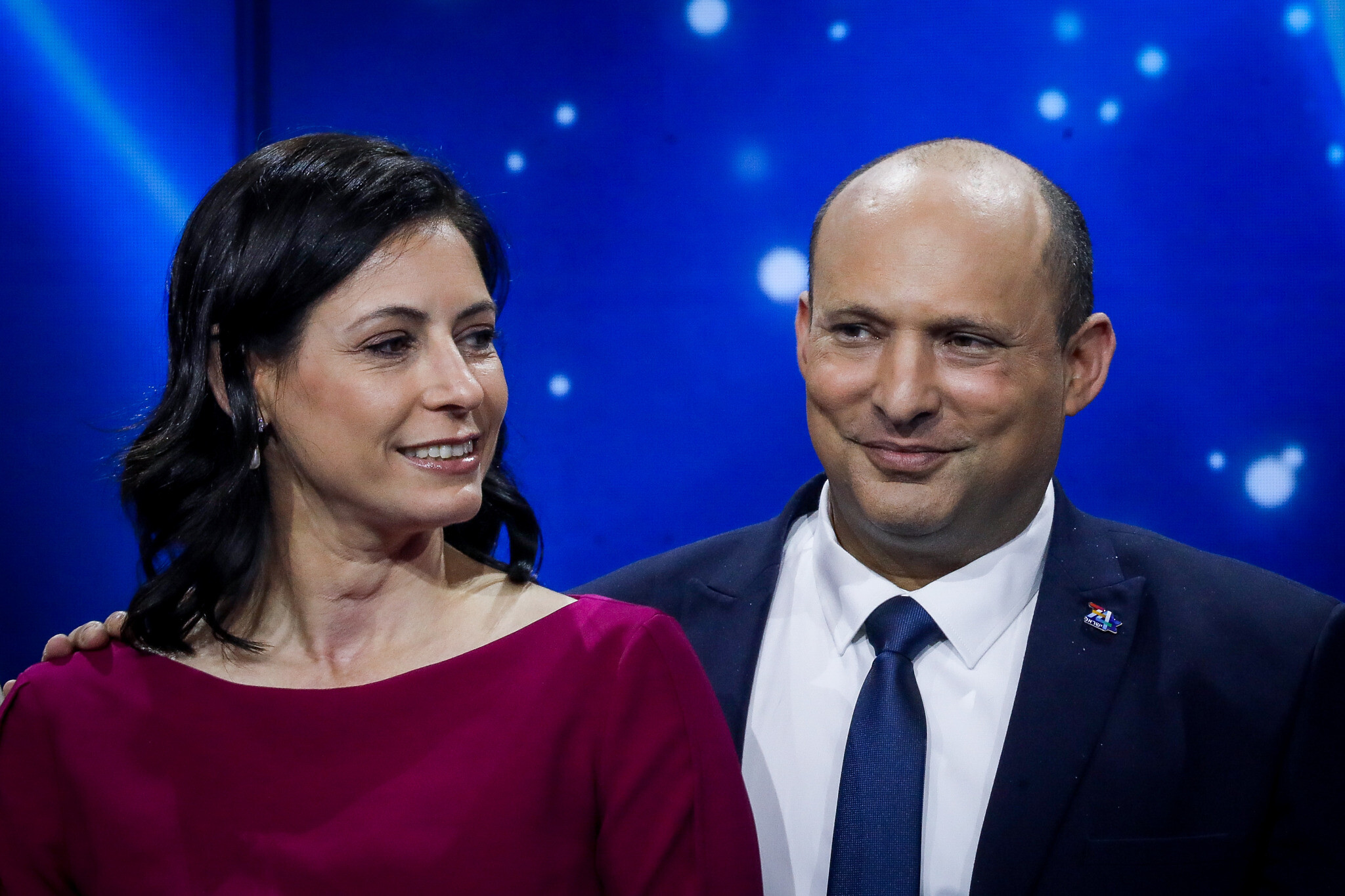
The next national election must be held by October 2026, and Bennett registered his new party earlier this year, naming it Bennett 2026, and seemingly setting his sights on leading the country once again.
Some of the women attending Wednesday’s event told The Times of Israel that they were not definite Bennett voters, but that they came because they were interested in hearing his platform, after the invitation circulated in feminist WhatsApp groups.
Aware of this, Bennett used his address to try to persuade them that replacing the current government requires “coming out of the closet” and publicly identifying as his supporters on social media.
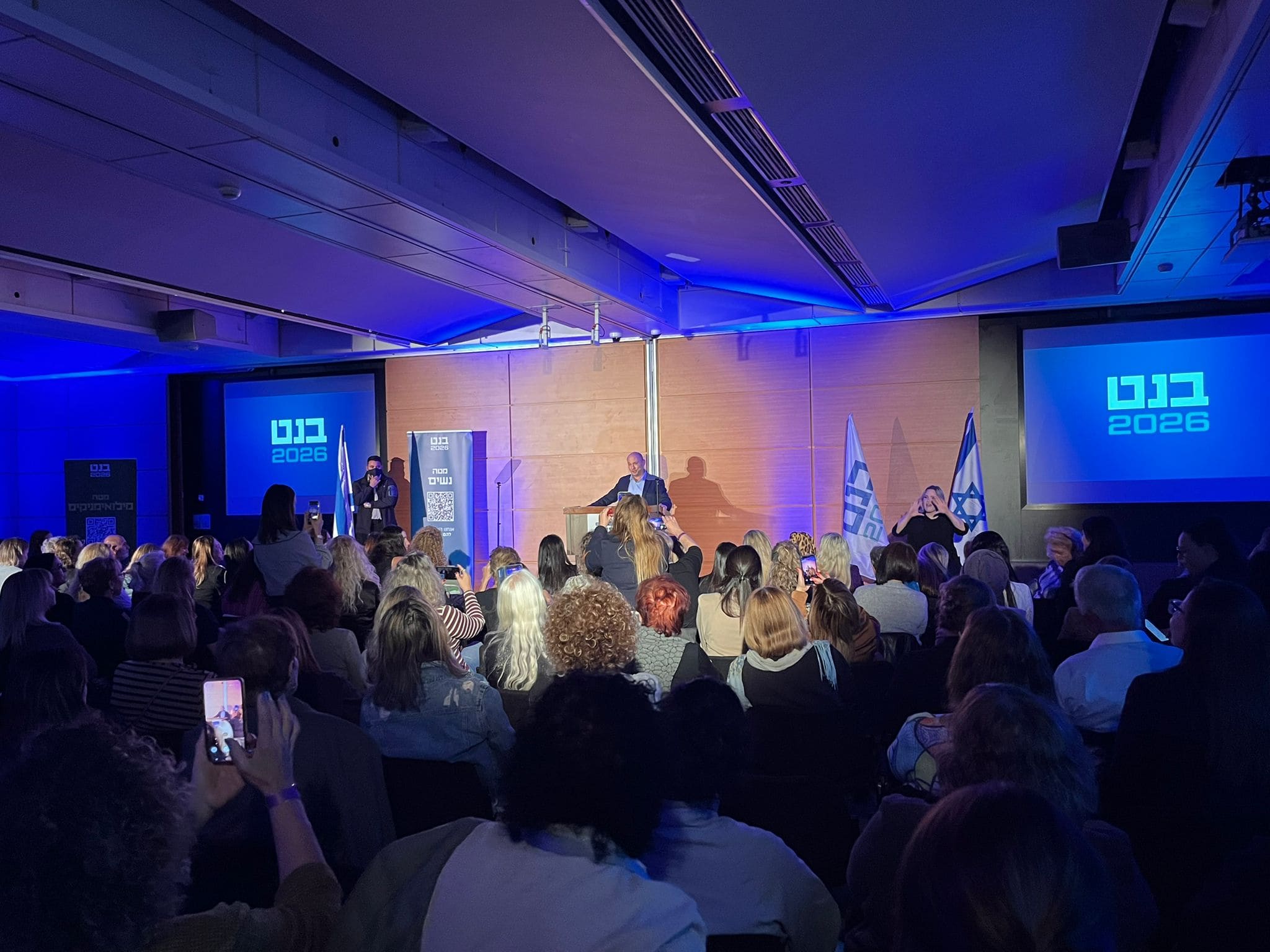
Bennett kicked off the evening by introducing three prominent women who are likely to eventually find themselves on his party’s Knesset slate or in significant governmental roles.
They were Orly Harel, head of the “women’s headquarters,” a tech entrepreneur and volunteer; Keren Levy, former president and COO of tech firm Payoneer, whom Bennett recruited years ago when he was CEO of cyber company Cyota; and Liran Avisar Ben-Horin, former director general of the Communications Ministry.
Avisar Ben-Horin told the crowd that for the past 18 months, she has been leading Bennett’s “100 Days” project — a plan to rehabilitate what she described as “everything that has been destroyed in government ministries in recent years.”
Bennett stressed that six of his party’s nine co-founders are women in senior positions, “not because they are women, but because they are excellent.”
While Bennett refused to commit to a female representation of 50 percent (or any specific ratio) on his final Knesset slate, he noted that “if elections break out tomorrow, our list has a female majority.” However, he hinted that while he currently has many senior women around him, that could shift as crunch time approaches.

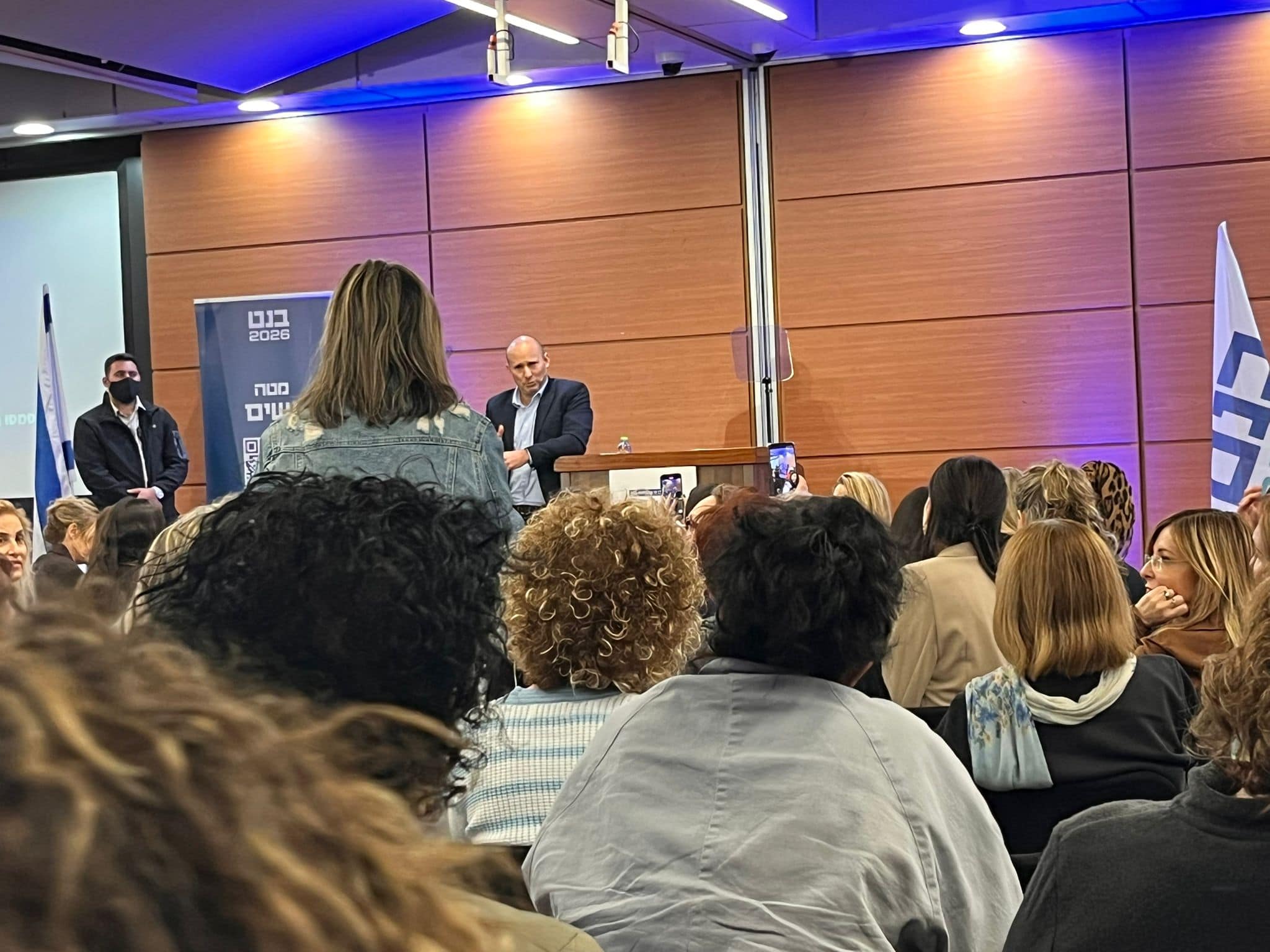
One participant asked Bennett explicitly about his past failures in selecting staff during his term as prime minister. Several women shouted, “Silman! Chikli!” — referring to current Environment Minister Idit Silman and Diaspora Minister Amichai Chikli — who both ran as part of Bennett’s Yamina party in the March 2021 election, only to leave the party and join Likud, bringing down Bennett’s narrow coalition and his government.
Bennett smiled and replied, “In the past, the selection was done at the very last minute. This time, I am doing the exact opposite. I have been working on this for a year and a half.”
The former prime minister said that this time around, “I know the candidates, I do activities with them, I do due diligence on them. The profile is men and women in their 40s who have accomplished things. They have been CEOs or senior officials in government ministries, or were involved in public life.”
Beyond the party slate, Bennett reminded the audience of the high proportion of women in his 2021 government, including a record number of female directors general in government ministries. “Do you know how many female directors general there are in government ministries today? Zero. Zero!” he declared.
Currently, Drorit Steinmetz serves as acting director general of the Prime Minister’s Office. Netanyahu sought to appoint her to the role permanently, but her nomination was rejected by the Civil Service Commission.
Addressing the crowd, Bennett declared that any future government led by him would advance a move to fill 50% of all senior public service positions with women within five years.
That pledge echoed a government decision made in October 2020, which set a goal of having women fill half of senior civil service roles by 2023. In a session of the Knesset’s Committee on the Status of Women and Gender Equality held last month, it was revealed that five years on, only 9% of the senior roles are held by women.
Speaking to the group on Wednesday, Bennett also addressed wage gaps between men and women in Israel, arguing that the market failure occurs primarily when young couples start families.
Although he referred to himself as a “free-market man,” he asserted that the failures in Israel regarding the treatment of working women “justifies intervention.”
A poll aired last week on Channel 12 news showed Bennett’s party getting 21 seats in the next Knesset, trailing only behind Likud, which would receive 25 seats. The poll also showed that Netanyahu’s bloc would receive only 51 seats total and fail to form a coalition. A Bennett-led bloc could get 59 seats, the poll showed, with two Arab-dominated parties holding the balance of power.
Bennett has been courting some of his previous electoral allies in recent months, including joining a meeting of opposition parties last month with Yesh Atid chief Yair Lapid, Yisrael Beytenu party chairman Avigdor Liberman, Yashar! With Eisenkot party chief Gadi Eisenkot, Blue and White party head Benny Gantz, and The Democrats party leader Yair Golan.
He has also met one-on-one with a number of political leaders, fueling speculation that he might seek a merger with Eisenkot or Liberman, after he said earlier this year that he wanted to “get everyone into one big party.”





The Times of Israel Community.