

Criminal rot in the heart of Israel
The SEC has filed fraud charges against the key firm in Israel’s global binary options scam. The saga shows our governance, law enforcement and society at large have been corrupted

 Add ToI as a Preferred Source on Google
David Horovitz is the founding editor of The Times of Israel. He is the author of "Still Life with Bombers" (2004) and "A Little Too Close to God" (2000), and co-author of "Shalom Friend: The Life and Legacy of Yitzhak Rabin" (1996). He previously edited The Jerusalem Post (2004-2011) and The Jerusalem Report (1998-2004).
In October 2016, responding to months of reporting by The Times of Israel on the global theft of billions of dollars in a fraudulent industry known as “binary options,” the office of Prime Minister Benjamin Netanyahu issued a statement to ToI urging a worldwide ban on the Israeli-centered mega-fraud.
The Prime Minister’s Office condemned the scammers’ practices, by which they tempt members of the public into what are described as potentially lucrative short-term investments, but then use all manner of subtle and unsubtle ploys — including, but not only, lying about who and where they are, rigging the trading platforms, and refusing to let clients withdraw their funds — to ensure that their victims lose most or all of their money. “I hope that, in other countries, they will follow in our footsteps and make binary trading illegal,” the statement from the PMO said.
Israel, at that stage, had not in fact banned the entire industry, which employed thousands of Israelis in hundreds of companies, scamming victims worldwide, causing untold misery and even suicide. But it did so a year later, via Knesset legislation directly prompted by ToI’s reporting and piloted by the then head of the Israel Securities Authority, Shmuel Hauser. After we at Times of Israel had alerted Hauser to the fraud and he had begun to investigate, Hauser had told ToI that “as a regulator, as a Zionist, as a father,” the fraudulent industry “looks awful to me.” He called the Israel-based companies “disgusting” and a problem of national significance, and vowed to gather all branches of law enforcement to tackle it.
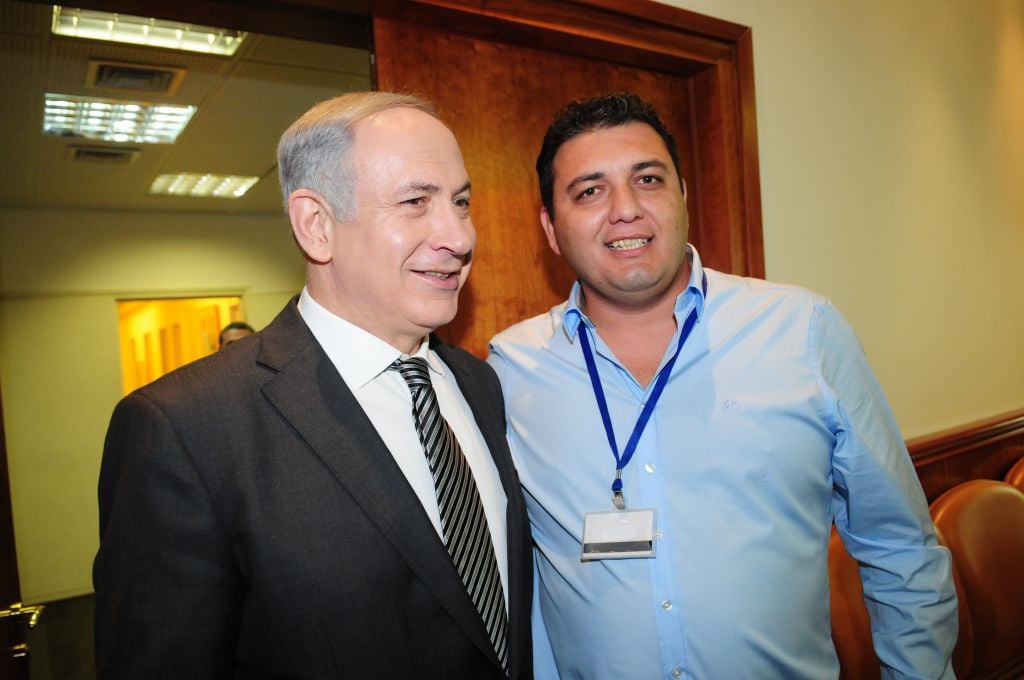
What the PMO almost certainly did not know at the time that it issued its laudable statement was that Netanyahu had hosted the head of the company at the heart of the industry, Malhaz Pinhas Patarkazishvili (also known as Pini Peter) of SpotOption, at the Prime Minister’s Office and been photographed with him. Peter gave a great deal of money to charitable causes, and it was in that context that the PMO welcomed him in good faith at a 2011 event.
Such financial donations, indeed, enabled Peter to mix and mingle frequently with a wide range of prominent Israelis over the years.
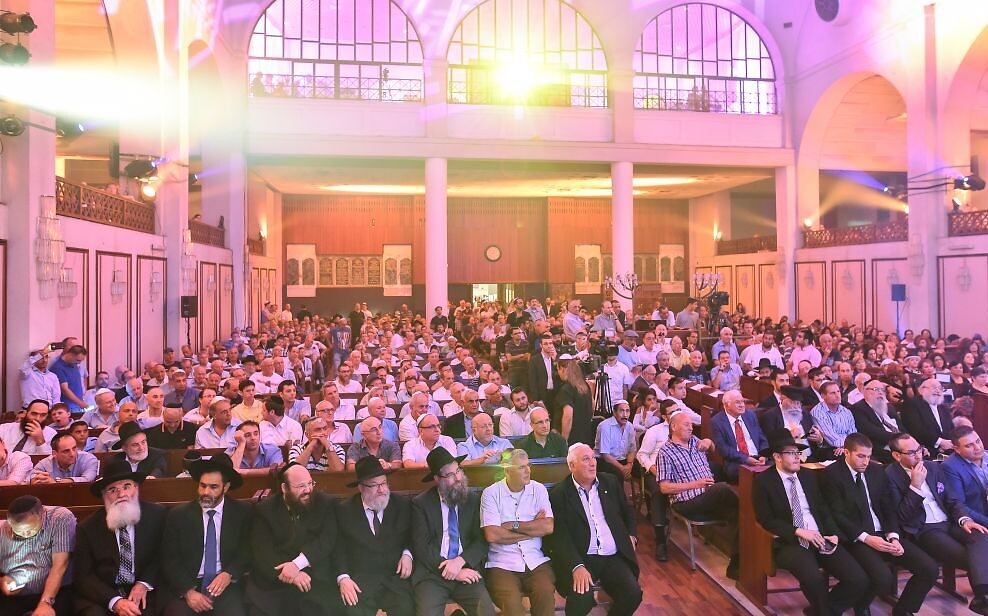
In 2015, for instance, at a ceremony co-sponsored by SpotOption marking the 90th anniversary of Tel Aviv’s Great Synagogue, he sat in the front row between former Israeli chief rabbi Yisrael Lau and then Knesset speaker Yuli Edelstein; Tel Aviv Mayor Ron Huldai also sat next to him for a while, with other senior politicians in close proximity.
As Likud MK David Bitan ceremonially completed the writing of the final letters of one of four new Torah scrolls for the synagogue on an outdoor stage, Peter looked on from the side and the SpotOption logo was displayed prominently in the backdrop.

On Friday, SpotOption, Peter and a second major shareholder in the firm, Ran Amiran, were charged by the US Securities and Exchange Commission with defrauding US investors out of more than $100 million — the tip of the multi-billion binary options iceberg.
The SEC complaint places SpotOption at the heart of the entire global binary options fraud, noting that the firm developed the “trading platform” used by innumerable binary options firms to fleece victims worldwide “through fraudulent unregistered online sales.”

“To ensure sufficient investor losses and make the scheme profitable, SpotOption allegedly, among other tactics, instructed its partners to permit investors to withdraw only a portion of the monies the investors deposited, devised a manipulative payout structure for binary options trades, and designed its trading platform to increase the probability that investors’ trades would expire worthless,” the SEC said in its press release, echoing revelations in ToI’s reporting over the past few years.
Embarrassment, incompetence or complicity?
In the course of our relentless work exposing the fraud, spearheaded by our investigative reporter Simona Weinglass, The Times of Israel has been threatened by many of Israel’s best-known law firms, who should be ashamed of themselves, with costly legal action designed to deter us from highlighting their wealthy clients’ illegal activities.
We have also been subject to significantly less palatable, more direct threats.
Not one of the thousands of Israelis who defrauded investors during the decade-plus that binary options openly flourished has been prosecuted by the State of Israel… The United States has been prominent among the countries doing Israel’s law enforcement work for it
Despite the 2017 law that outlaws all binary options activity in and from this country, meanwhile, not a single one of the thousands of Israelis who defrauded investors during the decade-plus that binary options openly flourished has been prosecuted by the State of Israel.
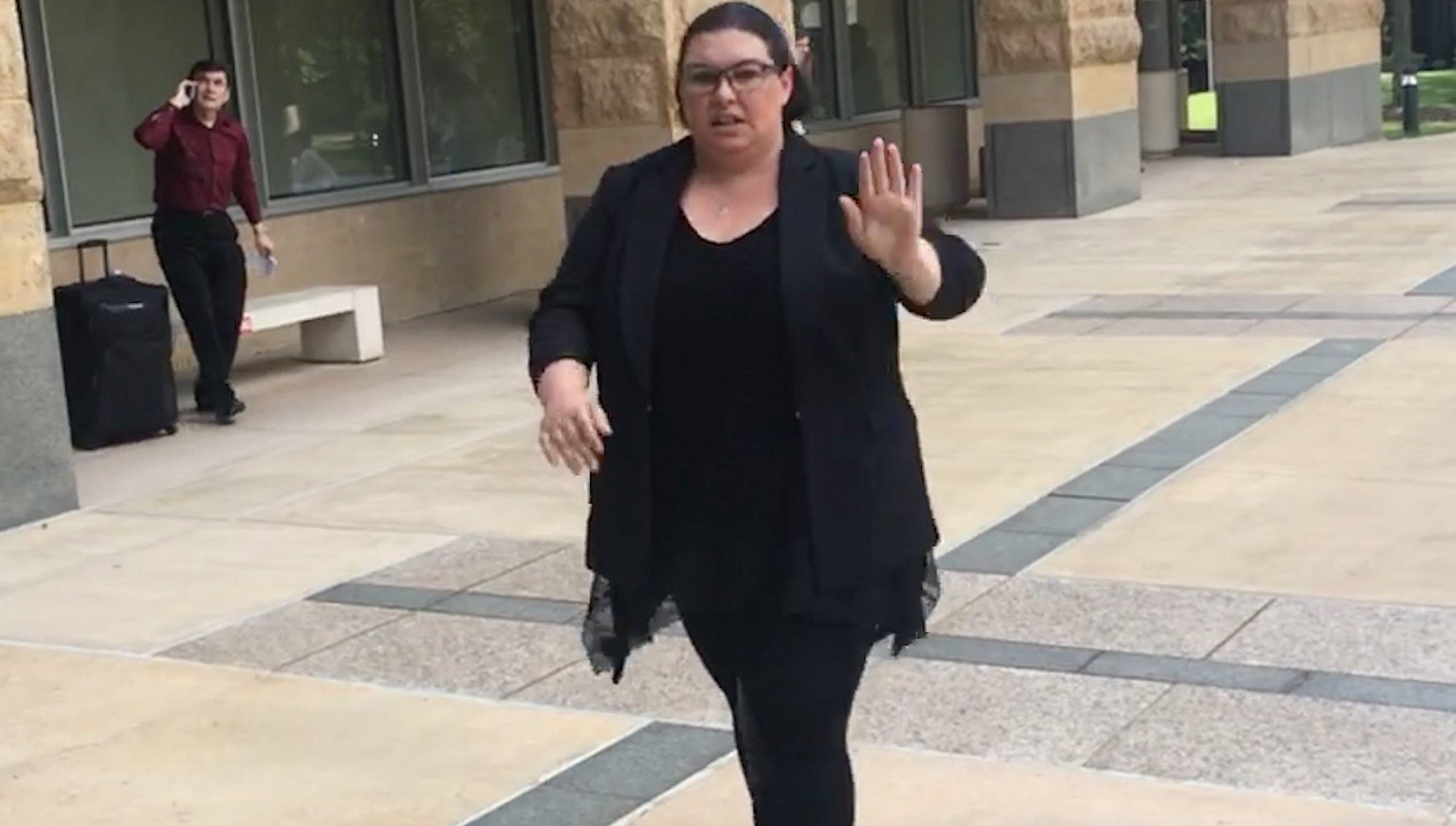
Other Israeli media outlets, some of which have benefitted from binary options-related advertising, have largely ignored the fraud. When Lee Elbaz, the Israeli-American CEO of a binary options firm, made the mistake of flying to the US, was arrested at the airport and ultimately jailed in 2019 for 22 years for a $140-million binary options fraud that the judge stressed targeted elderly and other vulnerable people, even that lengthy sentence merited little competent coverage. On that night’s news, one of Israel’s main TV stations instead interviewed an aunt who proclaimed that her niece was a lovely person who would never harm anybody.
The United States has been prominent among the countries doing Israel’s law enforcement work for it. Several binary options crooks such as Elbaz have been prosecuted. Some higher-level suspects are on the run. The SEC’s new case against SpotOption finally targets the very heart of the industry.
But rather than receiving assistance from Israel, overseas law enforcement agencies repeatedly told The Times of Israel in recent years that their counterparts here were proving insistently unwilling to help. These officials pronounced themselves baffled by this, unsure if the stonewalling stemmed from the Israelis’ embarrassment at their failure to tackle the fraud, inability to confront it, or complicity in it.
A society corrupted
The ongoing binary options saga — and it is ongoing, since many of the Israeli fraudsters have simply moved their businesses overseas, while others have adapted the scam to evade the narrow provisions of the 2017 law — underlines the wider dangers when lucrative criminal activity is allowed to flourish:
Nefarious people make lots of money, and in turn draw in and corrupt others. (Those thousands of binary options scammers included large numbers of students and other young Israelis, many of them new immigrants with native English and other foreign language skills crucial to conning victims into thinking they were dealing with genuine investment experts.) All that stolen money brings influence and access to those in positions of power, notably including politicians and regulators. And thus governance, law enforcement and society at large are corrupted.

David Bitan, the Likud MK who wrote those final letters into a Torah scroll at that SpotOption-funded Tel Aviv Great Synagogue ceremony in 2015, two years later attempted to thwart the law banning binary options. (In an unrelated investigation, the attorney-general announced last year that Bitan, Netanyahu’s former coalition chief, is facing prosecution for bribery and other charges, pending a hearing.)
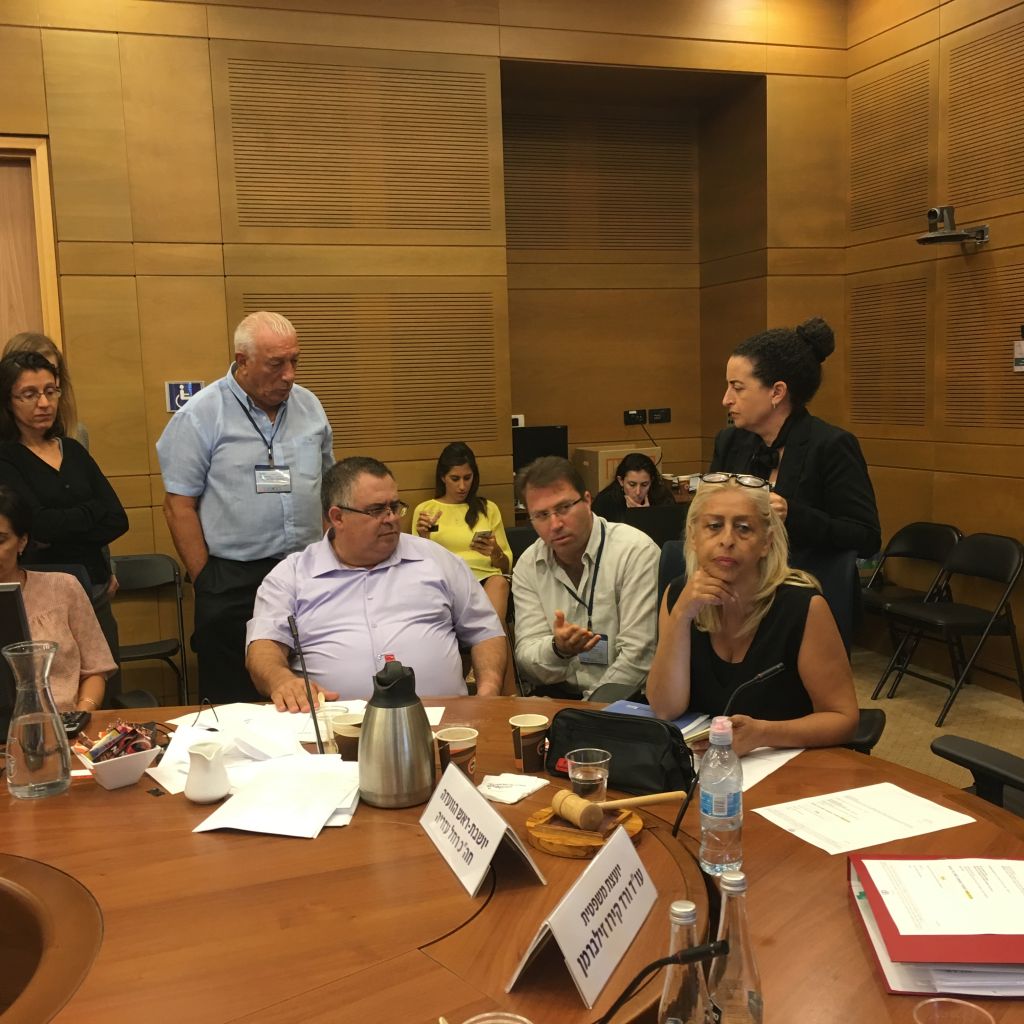
That law was itself watered down in a secretive, behind-the-scenes process that took place before the first of three Knesset Reforms Committee meetings on the legislation in the summer of 2017. And even the watered-down law has not been enforced, giving the fraudsters an all-too-accurate sense of impunity, and leaving them free to try to intimidate those who document their crimes rather than answer for them in a court of law.
At the time of the Tel Aviv Great Synagogue ceremony, Peter’s firm was, incredibly, receiving government grants to expand its activity into China. From 2014 to 2016, SpotOption, the firm at the heart of “a worldwide binary options fraud,” to quote the SEC press release, was given some $270,000 in Israeli taxpayers’ money.
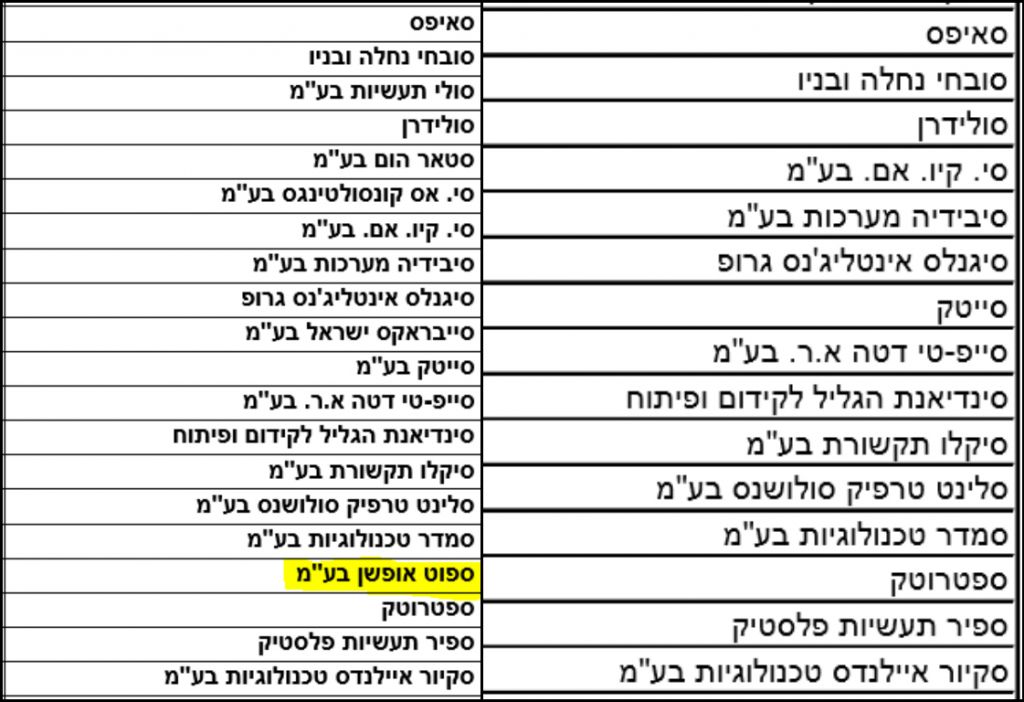
This government funding was approved by the Economy Ministry even though documents seen by The Times of Israel show that ministry officials were warned at the time that at least part of the binary options industry was fraudulent. The funding, moreover, was doled out in secret, in breach of the ministry’s legal obligations. The ongoing grant payments were only acknowledged and made public when ToI confronted the ministry about them.
Alleged Israeli criminals, accustomed to interacting with leading Israeli politicians, were given Israeli taxpayers’ money, allocated secretively by the Israeli government, to carry out alleged global crime. And they and others like them continue to face little or no threat of punishment by Israeli law enforcement
And thus the cycle of corruption is complete: Alleged Israeli criminals, accustomed to interacting with leading Israeli politicians, were given Israeli taxpayers’ money, allocated secretively by the Israeli government, to carry out alleged global crime. And they and others like them continue to face little or no threat of punishment by Israeli law enforcement.
The US SEC is now on this particular case. But how deep is the rot in Israel?
SpotOption, flush with allegedly stolen money and undisclosed government grants, funded a ceremony at the flagship synagogue of the first Zionist city, attended by many of Israel’s great and good, at which sacred Torah scrolls — the handwritten essential text of Judaism, with its code of moral behavior, its Ten Commandment injunction against theft — were solemnly dedicated.
Where else has financial crime, protected by legal and other threats, empowered by indifferent or complicit politicians, and enabled by supine law enforcement, spread its tentacles?
—
** This Editor’s Note was sent out Wednesday in ToI’s weekly update email to members of the Times of Israel Community. To receive these Editor’s Notes as they’re released, join the ToI Community here.








The Times of Israel Community.