

Doctor sees ‘feminist medicine’ as cure for medical gender discrimination
Israeli physician Lior Baruch wants med students and researchers to know that women can manifest different symptoms from men — often news to 21st century health care professionals
 Add ToI as a Preferred Source on Google
In her first year as a medical practitioner, Dr. Lior Baruch received two simultaneous requests to perform house calls. One was for a man of about 70 complaining of chest pressure, the other a woman of similar age reporting nausea.
“Naturally, I went to the man first, because chest pressure is a more worrisome symptom,” says Baruch. She’d just graduated from IDF-sponsored medical studies and was working as a house-call physician prior to her deferred military service, as part of a prestigious program called Academic Reserves, or Atuda.
“Only after checking the man and realizing the matter was negligible did I reach the woman,” Baruch tells The Times of Israel’s Hebrew sister publication, Zman Yisrael. “She looked really bad, but only complained of nausea and stomach pains.”
Baruch checked the woman and couldn’t determine what was ailing her, because it didn’t seem to have anything to do with the digestive system. After hearing what she thought was a single irregular heartbeat, she administered an EKG test and was horrified to realize that the woman was having a heart attack before her very eyes.
“It was just without the chest pressure, without the radiation to the left hand, and without all the other symptoms we all know about, which are mostly found in men,” Baruch says. “I called an ambulance and sent her to the hospital.”
This was the first time Baruch, now a married mother of two, realized how sex and gender can impact health.
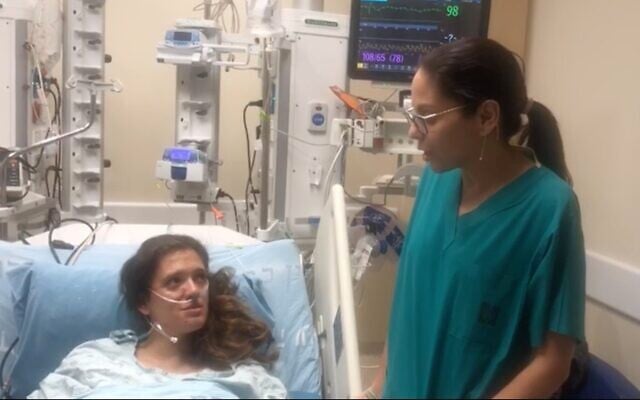
“I remember how shocked I was. I realized that I could have easily missed this cardiac episode because nothing I had learned at medical school addressed the gender differences between men and women in this regard,” Baruch says. “Throughout my studies, there was only one professor who told us to keep in mind that a heart attack may manifest in a woman completely differently than in a man. I was lucky to have remembered it.”
Throughout my studies, there was only one professor who told us to keep in mind that a heart attack may manifest in a woman completely differently than in a man
Setting aside the question of whether Baruch was lucky or perhaps the system was at fault, the doctor saw the incident as a wake-up call, and for the past seven years has been active in the field of what she calls “feminist medicine.”
“I coined this term hoping it would catch on — which it has,” says Baruch. She adds that “later on I learned that similar work is being done around the world, under different names.”
“This is gender-based medicine, which is aware of sexual and gender-based diversions of various pathologies, and which speaks a feminist language with proper sensitivity,” Baruch says. “I wanted to promote equal medical care for women and minority groups — LGBTQA, ethnic minorities, and other groups which aren’t receiving care that is optimal for them.”
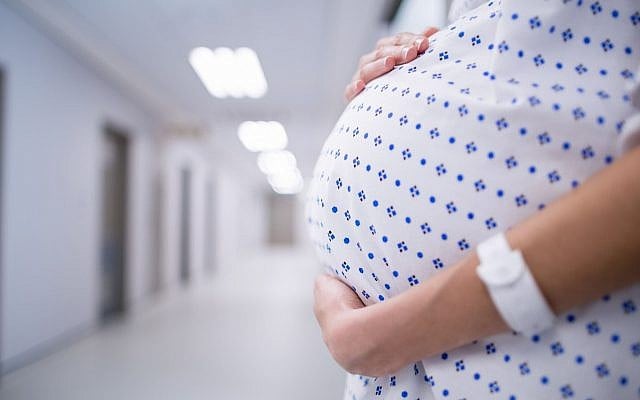
Pregnancy is a window into women’s health futures. Umbilical insufficiency, gestational diabetes, or pre-eclampsia are risk factors for future coronary diseases. But when women visit their doctors at age 50, nobody is asking them about their pregnancies due to lack of awareness, says Baruch.
In 2013 Baruch started a Hebrew website named “Livriuta” (the English site is called “HealthyHer”) and began writing about medicine in a gender context. As part of her activity in the field she gives talks to the public, takes part in crafting training plans for medical teams, and advises on how to apply feminist theories in daily practice. She is also a member of the Health Ministry Director General’s committee on gender healthcare, which, the first of its kind in Israel, is meant to advise the health minister regarding the fostering of gender equality in the healthcare system.
“In recent years the topic has begun to gain awareness and to be mentioned in medical schools. On the Health Ministry’s professional committee, there are voices calling for it to be added to the board exams, so that this topic will be emphasized in the curriculum,” Baruch says.

She says that the very fact that female medical students are hearing lectures on the topic is astounding. “Ten years ago, when I was in med school, I didn’t hear a word about it,” Baruch says.
Differing symptoms
In recent years awareness has risen regarding the clear-cut differences between men and women in all matters relating to heart disease, and research in the field has been conducted. Still, the majority of medical research until now has focused on men, despite the fact that a woman’s physiology is completely different.
“With men it is a pathology of large blood vessels, and therefore the episodes are very dramatic and sharp, and are expressed by sharp pain in the chest and shortness of breath,” Baruch says. “With women, on the other hand, we’re dealing with small blood vessels, so the symptoms are much vaguer, and among other things include fatigue, nausea, and stomach pain, so it’s harder to diagnose.”
In addition, she says, with men the risk for heart disease increases with age, whereas with women the risk increases with menopause, which happens at a different age for each woman.
One of the consequences of conducting most medical studies related to heart disease on men is that the common treatment is also better suited for men, Baruch says.
“Angioplasty, for example, which is the most common procedure for treating the heart, is appropriate for men’s larger blood vessels and not for the female heart, which is much smaller,” Baruch explains. “The medications taken for heart disease also have a lot more side effects for women for the exact same reason.”
Angioplasty, for example, which is the most common procedure for treating the heart, is appropriate for men’s larger blood vessels and not for the female heart
Research also shows that sexual harassment, which is a trauma factor for women, is an independent and unrelated risk factor for cardiovascular disease.
“It’s crazy how significant this datum is,” Baruch says, “but it will take time before it gets the spotlight it deserves.”
Pregnancy is a window into a woman’s future health
Even in fields where research has been conducted on both men and women, the findings are slow to seep down into the broader public’s consciousness.
“We know, for example, that pregnancy is a window into a woman’s future health,” says Baruch. “Placental insufficiency, gestational diabetes or pre-eclampsia are considered risk factors for future cardiovascular diseases.
“But nobody is telling this to women who have had these symptoms during pregnancy,” she says. “When they come to the doctor with a vascular disease at 50, nobody asks them about their pregnancies due to lack of awareness. When I meet a woman who had gestational diabetes or pre-eclampsia, I ask her to mention it in every future encounter with a doctor.”
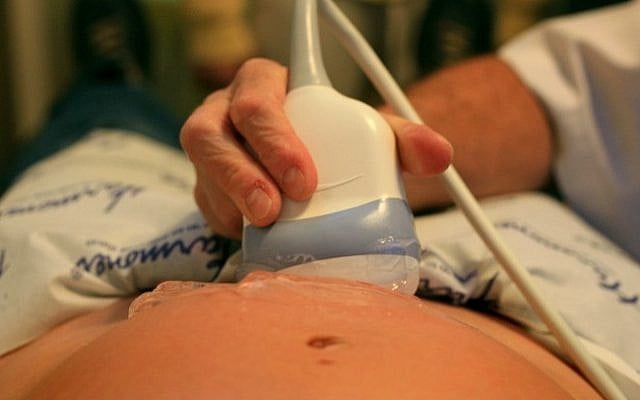
In contrast with the over-representation that men have in the area of cardiovascular health, there are other medical fields in which men suffer from under-diagnosis and insufficient treatment. Unsurprisingly, these are areas typically associated with women.
“Depression and anxiety, for instance, which have been associated with women throughout history, have been studied mainly in women; and also osteoporosis, which is poetically associated with female fragility, and is barely studied in men. It’s true that more women suffer from the condition — 50 percent of women as opposed to 20% of men — but the under-treatment among men is concerning,” Baruch says.
“A study that tracked people with osteoporotic fracture showed that some 25% of the women received treatment to increase bone density, as opposed to only 4.5% of the men,” she says.
Women put cooking Shabbat meals ahead of their own health
Cultural context and unawareness also impact how women take care of their own health problems. According to studies, women who have heart attacks only seek help 54 hours after symptoms first manifest, versus 16 hours it takes men.
There’s an inside joke that women who come in for emergency treatment make sure they finish the Shabbat preparations first
“Among doctors in emergency rooms and hotlines there’s an inside joke that women who come in for emergency treatment make sure they finish the Shabbat preparations first,” Baruch says. “We’d noticed that just before the start of the Sabbath there would be a wave of women coming in to the emergency rooms.”
“From what I see in the field, unlike men, women put off seeking treatment. They’ll take care of all their chores first, like sending the kids to school, arrange everything, and only then will they make time to take care of themselves — even if it’s a heart attack,” she says.
Baruch demonstrates from her personal experience how cultural context impacts medical treatment.
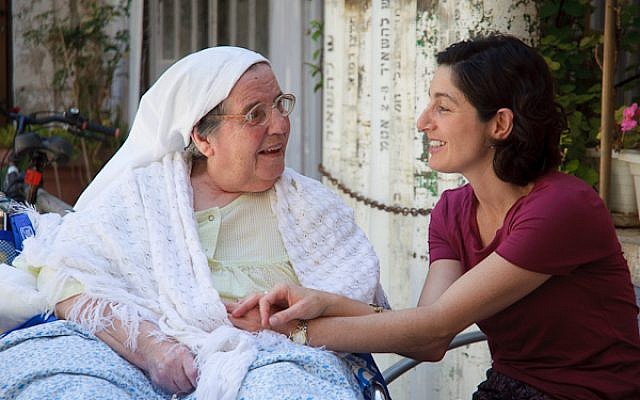
“Throughout my life as a woman, I was taught to stop complaining. They told me relax, don’t be hysterical. For my entire life I have suffered from an iron deficiency, which in most women is connected to the menstrual cycle. They always told me to take supplements and there’s nothing else to be done about it,” she says.
Throughout my life as a woman, I was taught to cut down on complaints
“Only at the end of my first pregnancy, when I was already a doctor myself, did I decide to test myself for celiac and did my own bloodwork. I didn’t tell anyone but my husband, and even him I told sort of apologetically. I didn’t want people to think that I was a hysterical pregnant woman. When the tests came back it turned out I had been suffering from celiac for many years,” Baruch says.
Baruch believes that had she been a man, the diagnosis would have been made far earlier, in light of the low figures in the test results.
“The doctors I went to automatically attributed the lack of iron to the fact that I’m a woman and I menstruate. We have to remember that physicians are also citizens of a society that minimizes women, and which dismisses their complaints in the medical context as well,” she says.
‘Saying I was a feminist was bad PR’
Baruch was born in Pardes Katz, a secular neighborhood in Bnei Brak, a large, mainly ultra-Orthodox city about 10 kilometers (6 miles) northeast of Tel Aviv. With an accountant father and a physician mother, the road to her vocation was clear to her early on. As she grew up, she witnessed her parents pave their respective professional roads to socioeconomic stability.
“I come from a Mizrachi family,” Baruch says, referring to Jews of Middle Eastern heritage, who have faced discrimination from Israel’s largely Eastern European Ashkenazi establishment. “Both of my parents came from large families. When I was three they left Pardes Katz and moved to Rishon Lezion,” a middle class mega-suburb of 250,000 south of Tel Aviv.

“When I was young I thought I was unaffected by being Mizrachi, but as I grow older I see that this is nonsense,” Baruch says. “I was one of the few Mizrachi women in my class in med school, and after all, that doesn’t reflect the share of Mizrachi people in the general population.”
“The same with feminism. All my life I’ve said that I’m not a feminist, because it has bad PR. But in practice I’ve always been a feminist. My family has always promoted values of equality for all segments of the population. So I may not have been an activist, but I believed in equality,” she says.
“Medicine is a conservative field, and this is a good thing, since we’re talking about life and death. On the other hand, we all have to challenge our standard thinking. Our culture today seeks equality not only between genders, but for all non-hegemonic segments of society,” Baruch says.
A tradition of excluding girls
For the past six months Baruch has lived in the United States, where her husband is conducting research. From there she advocates for research into the impact of menstruation on the lives of teenage girls in Israel, in collaboration with Noga Shifman, a graduate of the Technion Medical School.
The research is based on menstrual poverty studies from around the world, which show that in Africa and the East — and even in certain US communities — there are traditions of excluding girls from society during their periods.

Baruch tells that lack of awareness leads to inequitable girls’ education and to their social isolation in various places around the world. “We want to check how much the onset of menstruation in girls and women impacts absence from school, and women’s and girls’ academic performance, and how guidance on the subject impacts their lifestyle.”
The researchers believe the phenomenon of isolating girls from society during their periods exists in Israel and they plan to examine the geographic periphery in secular and religious Jewish populations, as well as Arabs.
In the meantime, says Baruch, the attention paid to female health has risen in recent years. “Clinics have opened that specialize in female heart problems. Female psychiatric clinics have also been established,” says Baruch. “In other fields the gaps are still larger, but we’re beginning to move towards closing them.”
To read the original Hebrew version, check out Zman Yisrael.










The Times of Israel Community.