

Easter prayer fiasco, resolved too late, shows Christians still treated as afterthought
Netanyahu boasted about protecting worshipers once row over Holy Sepulchre access was fixed; without serious attention to policy, he’ll continue rushing to clean up scandals after the harm has been done

 Add ToI as a Preferred Source on Google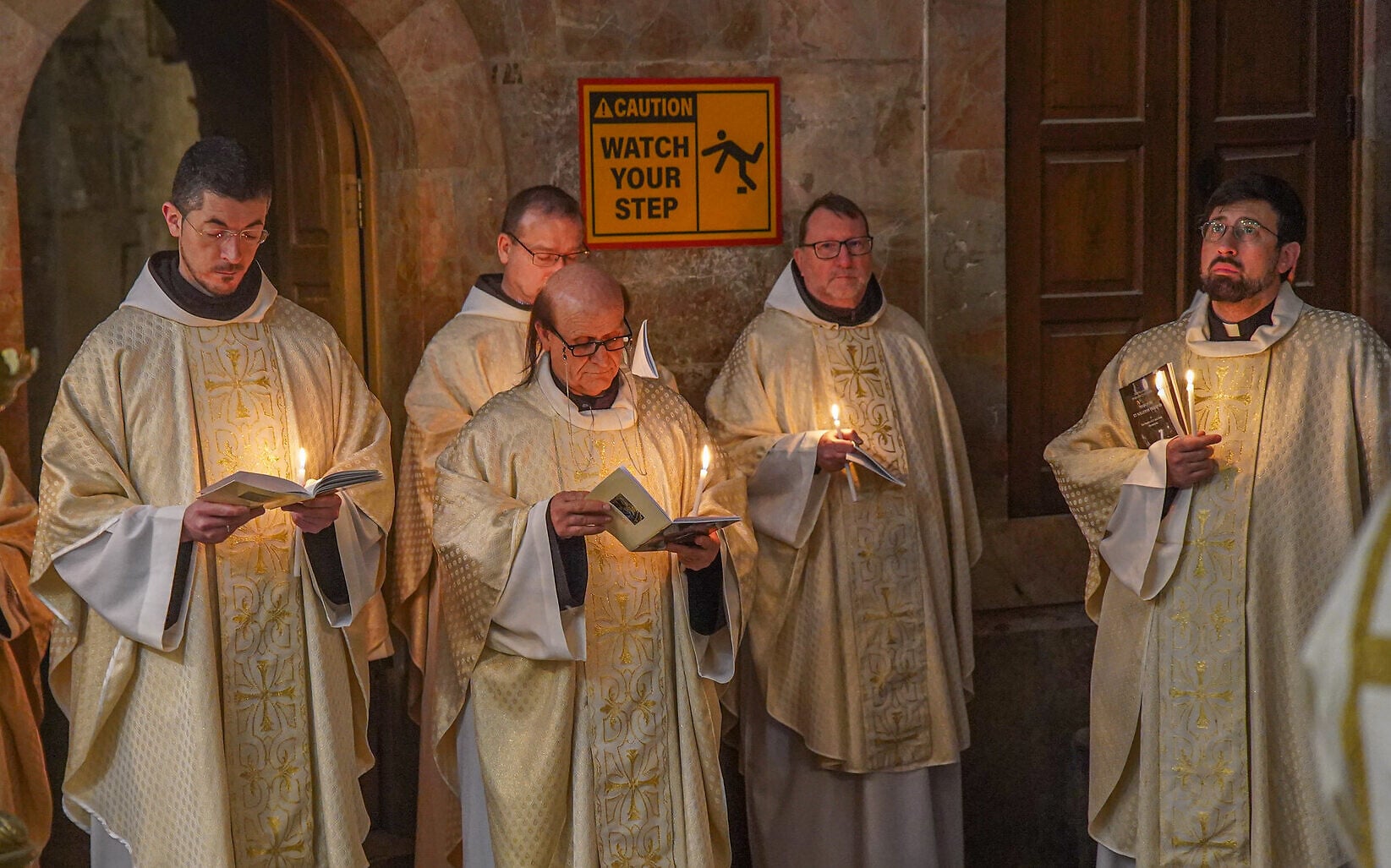
When Easter services took place in Jerusalem’s Church of the Holy Sepulchre on April 5, only a few dozen people were present in the cavernous space that would normally be thronged with pilgrims and worshipers for the holy day.
Leading the small group of clerics and dignitaries was Latin Patriarch Pierbattista Pizzaballa, the top Catholic official in the Holy Land, whose presence, along with that of the others, was only made possible after an international diplomatic rhubarb a week earlier had made police agree to slightly ease security guidelines blocking access to the Old City during the war with Iran.
On Saturday, with the Iran war halted and restrictions largely lifted, thousands of worshipers were able to take part in the annual Holy Fire ceremony in the Holy Sepulchre celebrated by Orthodox denominations. The police published multiple posts on social media to highlight their efforts to ensure that the famously fractious rite went smoothly.
Israel has been keen to show the world its commitment to religious freedom since Pizzaballa and others were blocked from reaching the Holy Sepulchre on Palm Sunday in late March.
The blunder, made in line with strict adherence to Home Front Command guidelines forbidding gatherings in places without access to bomb shelters — with Iranian missiles still flying at the time — immediately became an international scandal, with condemnations coming from Italy, France, and even US Ambassador Mike Huckabee.
Prime Minister Benjamin Netanyahu and President Isaac Herzog were quick to step in, bringing the police and Pizzaballa together to find a solution to Holy Week prayer during the war in a bid to head off the potential diplomatic black eye to a country already under fire.
Since the early morning hours, Israel Police and Border Police units have been deployed across Jerusalem’s Old City. Our forces are working to ensure a safe environment for all citizens and visitors, including the thousands of Christians arriving for today’s Holy Fire ceremony. pic.twitter.com/zLyRQA12lB
— Israel Police (@israelpolice) April 11, 2026
In a post on X on Easter, Netanyahu attempted to play up Israel’s commitment to religious freedom.
“In this land where the story began, as missiles are fired at our capital, the holy city of Jerusalem, and as the US and Israel stand firm against the Iranian regime and its terror proxies, we continue to steadfastly protect the freedom of worship for all faiths, especially at this sacred time,” he wrote. “Even under fire, our commitment is unwavering: to defend life, to safeguard liberty, and to ensure that every believer can pray in peace.”

But Netanyahu’s triumphal posts — and the quick police pivot toward stressing eagerness to accommodate Christian services — mask a systemic problem in Israel’s approach to Christian communities and their unique needs, which treats the world’s largest and arguably most powerful religion as an afterthought.
Until Jerusalem looks at its relationship with Christians as a complex strategic issue that it must get right through proper attention, Netanyahu may continue finding himself scrambling to clean up completely avoidable fiascos.
A string of missteps
Days before the Palm Sunday incident, Netanyahu found himself trying to explain away another entirely avoidable controversy around Christianity.
Citing historian Will Durant, Netanyahu said during an English-language press conference: “History proves that, unfortunately and unhappily, Jesus Christ has no advantage over Genghis Khan. Because if you are strong enough, ruthless enough, powerful enough, evil will overcome good. Aggression will overcome moderation.”
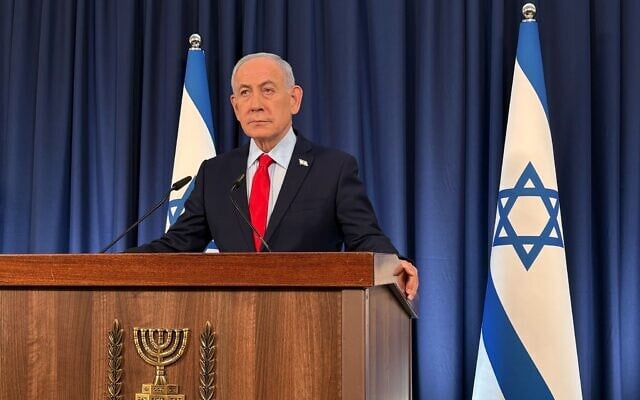
Netanyahu was using Jesus as a metaphor for good in the fight against evil, but, predictably, outlets and figures hostile to Israel had a field day, alleging that Netanyahu had denigrated Jesus.
“More fake news about my attitude towards Christians, who are protected and flourish in Israel,” Netanyahu wrote on X after the controversy had blown up. “Let me be clear: I did not denigrate Jesus Christ at my news conference this evening.”
Once again, a mistake that could have been avoided, followed by attempts at damage control after the harm was already done.
In Israel’s repeated stumbles around its ties with Christians, that pattern almost always holds up.
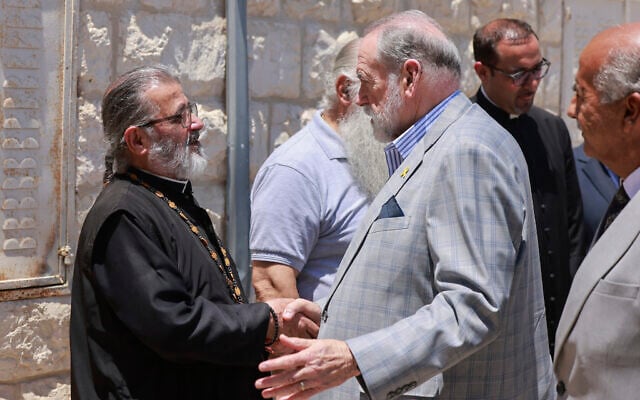
Last year, Huckabee, an outspoken and dedicated Christian supporter of the Jewish state, fired off a seething letter to Interior Minister Moshe Arbel, threatening to publicly announce that Israel no longer welcomes Christian groups to Israel.
Israel “is instead engaging in harassment and negative treatment toward organizations with long-standing relationships and positive involvement toward Zionism and friendship to the Jewish people and the State of Israel,” the US envoy wrote in a missive that was leaked to Hebrew media, quite possibly by Huckabee’s office, the next day.
The ambassador’s ire was piqued by a mid-level bureaucrat in the Interior Ministry, appointed by the ultra-Orthodox Shas party, who had been holding up visas for Christian tourists and volunteers, including a dedicated Christian Zionist organization.
“It comes down to one official, the head of the visa section in the Ministry of Interior,” one Christian Zionist leader in Israel told The Times of Israel. “She’s been very deliberate and intentional every time she deals with this.”
Here too, Netanyahu had to get involved to bring the issue to a rapid and satisfactory resolution.
After meetings with the Minister of the Interior and with the help of @IsraeliPM , I’m happy to report that the issue concerning visas for American Evangelical organizations has been fully resolved.
Starting in January, a change in the manner which visas for Christian…
— Ambassador Mike Huckabee (@GovMikeHuckabee) July 21, 2025
Another ostensibly minor issue blew up into a scandal in 2023, when Christian media got wind of a Knesset bill that would make religious proselytization punishable by jail time.
The measure is proposed annually by the ultra-Orthodox United Torah Judaism party, though it has never been seen as having any chance of advancing.
Nonetheless, the bill was picked up by Newsmax, a right-wing American outlet that reaches tens of millions of people, and other news sites frequented by many of Israel’s staunchest allies.

Once the story went out, the Foreign Ministry began receiving calls from heads of parliamentary friendship groups, diplomats, Christian Zionist leaders, and Jewish leaders around the world, an Israeli diplomat said.
By the time Netanyahu got involved, tweeting in Hebrew and in English that “we will not advance any law against the Christian community,” the damage had already been done.
Jerusalem’s problems become global concerns
Perhaps the clearest example of local issues turning into a global headache for Israel came in 2018.
A decades-long agreement between the churches and the state had prevented the Jerusalem municipality from collecting property tax from Christian institutions. However, that year, the perennially cash-strapped city decided that the exemption for churches applies only to properties used “for prayer, for the teaching of religion, or for needs arising from that.” The move, which cited a legal opinion, was slated to bring more than NIS 650 million ($186.3 million) into municipal coffers.
While the churches were contending with a decision that they said could force them to shut down many of their core functions, lawmakers in the Knesset were working on a bill that would allow Israel to confiscate land sold by churches to private developers in cases where homes had been built on the land.
In both cases, the localized decisions were defensible — the Jerusalem municipality needs money to provide residents with services and churches were running tax-free commercial operations like hotels, giving them an advantage over competitors. In the Knesset, lawmakers leading the Church land legislation said they were protecting Jerusalem residents who feared losing homes built on land leased from the church for 99 years, should developers who purchased the ground from under them not renew the leases.
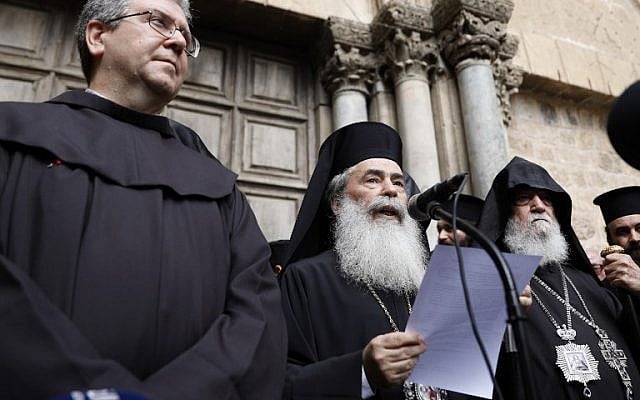
Though they lacked the legislative means to fight the measures, the churches showed they could still muster considerable power via other levers of influence. Escalating the battle, the leading denominations came together to shut the Holy Sepulchre in protest, a drastic move that drew global attention.
Of course, Netanyahu had to get involved. Under heavy pressure from the Vatican, Orthodox countries like Russia and Greece, and Evangelical Christian groups, he got Jerusalem to suspend the tax collection and the Knesset to freeze the land legislation until a newly formed committee could work out the issues with the churches.
Most Zionists are Christian
Beyond the vital moral imperative of protecting religious minorities and their holy sites, Israel’s global standing depends on well-managed relations with the Christian world.
The vast majority of the Zionists in the world are Christian. Israel’s closest allies are majority-Christian or officially Christian countries, and the world’s largest Christian denominations have many of their holiest sites in Israel.
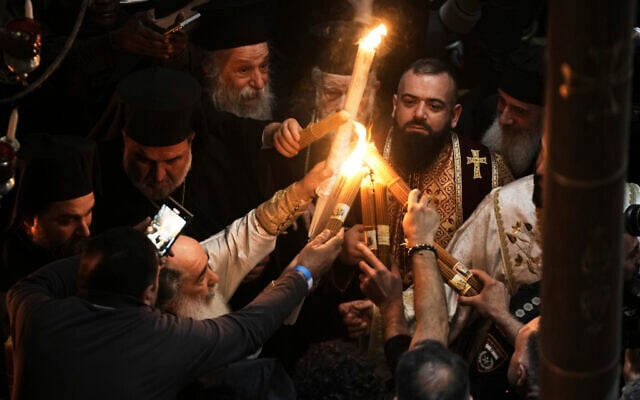
Close regional partners like Greece, Cyprus and Moldova are overwhelmingly Orthodox Christian, as is Russia, a world power with which Israel has deep but complex security and economic ties. Half of Palestinian Christians and a significant minority of those in Israel are Orthodox, and what happens to them resonates with the 260 million believers around the world.
The Catholic Church has 1.4 billion adherents across the globe who listen closely to what the pope says. Leading European countries like Italy, France, and Spain treat the welfare of the Catholic community and protection of Christian sites in Israel as core elements of their bilateral relationship with Israel.

For example, visits from senior French officials are repeatedly overshadowed by fights over privileges at France’s four holy sites in and around Jerusalem. In November 2024, French Foreign Minister Jean-Noel Barrot visited Israel to discuss potential ceasefire deals in Gaza and Lebanon, but his trip was dominated by a diplomatic row sparked by Israeli police officers arresting two guards at a French-owned church in Jerusalem.
Israel’s relations with these powerful and hierarchical churches are complex and occasionally adversarial, but the country enjoys enthusiastic and dedicated support from another massive Christian group — evangelical Protestants, many of whom consider themselves Zionists.
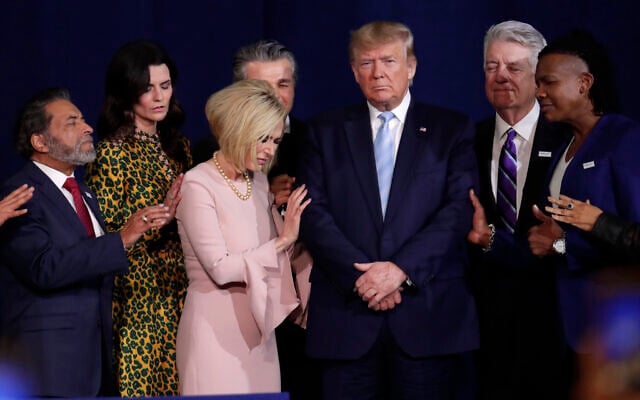
Though not all Christian Zionists are evangelicals, and not all evangelical Protestants are Zionists, the terms are often used interchangeably. Evangelicals broadly see supporting Israel as a central piece of backing God’s plan for the world as stated in the Bible, and believe that those who side with Israel “will be blessed,” per a verse in Genesis.
Christian Zionists are motivated by three things, said Bishop Robert Stearns, founder of Eagles’ Wings Ministries: a “debt of eternal gratitude” to the Jewish people for being the foundation of Christianity’s stories, worldview, and inspiration; a “debt of eternal repentance” for the atrocities committed against Jews under the banner of Christianity; and a common threat from “an unholy alliance” of far-left groups and a radical vision of Islam.

Up to 100 million Americans identify as evangelicals, with the Jewish state a beneficiary of both their funding and their significant political clout. Representing the largest constituency in Trump’s coalition, evangelicals lobby elected officials, stage rallies and prayer events, send money, and come to Israel on pilgrimage and solidarity visits, even during war.
When Trump recognized Jerusalem as Israel’s capital in 2017, he said he did so “for the evangelicals,” and complained that “the evangelicals are more excited about that than Jewish people.”
As significant as the US community is, the majority of Christian Zionists live in the global south, in countries like Brazil, South Africa, Nigeria and even China, each of them providing diplomatic support and trade or tourism ties that help buoy the economy.

Despite the support, some Jewish Israelis still cast a wary eye at Christians, due in no small part to centuries of persecution in Europe. In recent years, that distrust has increasingly curdled into harassment, or worse, including in a May 2023 protest by hundreds of religious Jews, led by Jerusalem Deputy Mayor Arieh King, against Christians taking part in a 21-day fast and prayer gathering near the Western Wall.
“It was one of the few times in Israel where I feared an assault,” International Christian Embassy Jerusalem president Juergen Buehler told the Maariv news outlet. “I’d never experienced such hostility before.”
The vitriol in May “was directed at people who spent a lot of money on a trip to Israel and it was a very bad experience for them in the Holy Land,” said Buehler, a German-born ordained minister and physicist who has been living in Israel since 1994, and whose two sons served in IDF combat units.
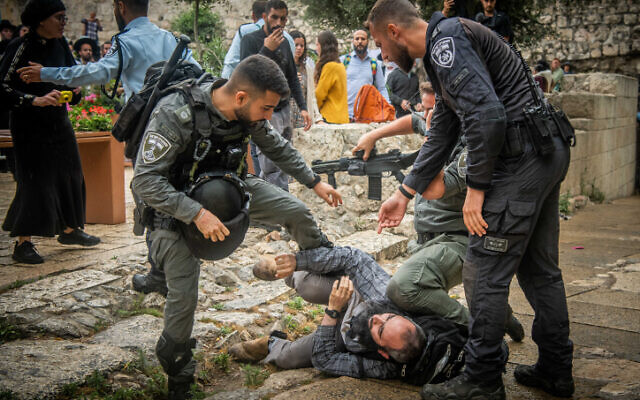
The protest was not an isolated event. It followed a series of incidents, including dozens of cases of mostly young Orthodox Jews spitting on the ground in front of clergy and other Christians, mainly in Jerusalem’s Old City, an act that may be prosecuted as a hate crime. There were also acts of vandalism against churches and cemeteries, and physical assaults, including actions that bear the hallmark of extremist Jewish settler violence familiar to the West Bank.
Last year alone, there were 155 reported cases of attacks against Christians, according to the Rossing Center for Education and Dialogue.
“Clergy in areas such as Mount Zion and the Armenian Quarter report that harassment has become so routine that stepping outside can carry an almost certain risk of abuse,” according to the center.
The spitting attacks and other violence against Christians violate Israeli law, and police say they are working to apprehend any attackers. Yet the phenomena persist, an indication that somewhere up the chain of command, the issue is simply not being prioritized.
Priority and sovereignty
The repeated missteps do not at all mean that mainstream Israelis and top officials are hostile to Christians and their right to worship.
No prime minister has been closer to evangelicals than Netanyahu, whose return to office in 2009 coincided with the growing political power of evangelicals and the emergence of Israel support as a foundation of their theology and policy.
Top Netanyahu aide Strategic Affairs Minister Ron Dermer said at a 2021 conference that Israel should prioritize the “passionate and unequivocal” support of evangelical Christians over that of American Jews.
“People have to understand that the backbone of Israel’s support in the United States is the evangelical Christians,” he declared.
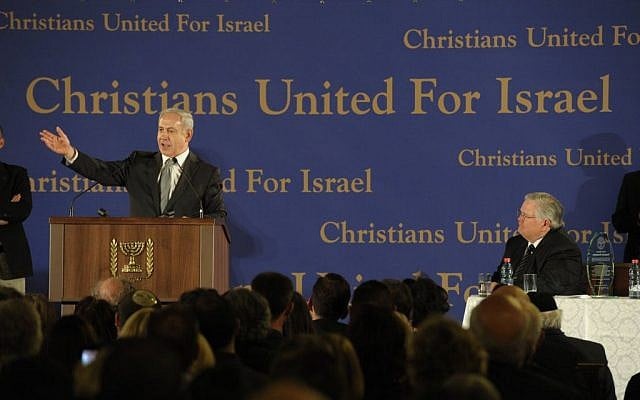
There has also been widespread condemnation by senior Israeli officials and rabbis of the harassment of Christians.
“We take bullying, violence and acts of hate and vandalism of any kind seriously,” an Israel Police spokesperson told The Times of Israel in 2024. “Accordingly, any report or complaint received by the police about an attempt to harm religious figures, religious sentiments or holy places is examined and treated professionally and thoroughly with the tools that we have.”
“I think the prime minister and others with a broader worldview certainly do [recognize the importance of Christian Zionists], most definitely,” said ICEJ spokesman David Parsons.
The senior decision-makers aren’t the problem per se. Rather, it is their unwillingness to impose Israel’s laws and values on radical outliers — often for political reasons — and a failure to prioritize Israel’s relationship with the diverse elements of the Christian world.
Some say that far-right National Security Minister Itamar Ben Gvir is behind what critics say is a lack of action from police to crack down on anti-Christian attacks. Ben Gvir has been accused by Attorney General Gali Baharav-Miara, legal experts, and other critics of using his authority in a manner that constitutes “illegitimate intervention” in the police force, using the possibility of a promotion as a carrot-and-stick to influence cops’ decision-making.
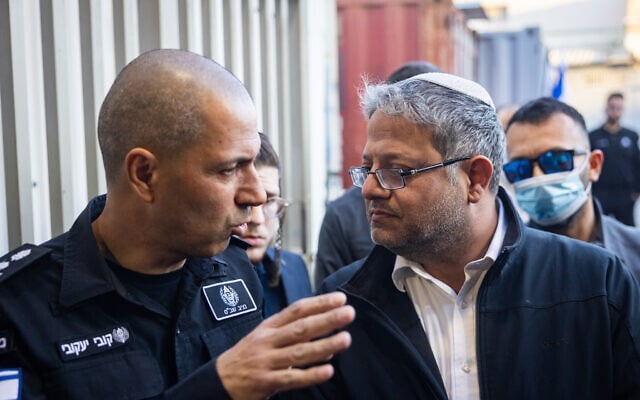
The problem boils down to a willingness by Netanyahu and his government to allow niche constituencies, like Ben Gvir’s radical right-wing base, to carve out little fiefdoms where Israel’s rule of law and strategic sense do not reach.
Out of a fear of crossing its far-right partners, the government has failed to stop extremists in the West Bank attacking and even murdering Palestinians. It could even more easily put an end to harassment of Christians in the Old City, but coalition politics ensure the issue is not prioritized.
Bureaucrats are able to make life difficult for passionate Zionists looking to come to Israel to pray and show solidarity with the Jewish state, leading to drastic threats from even Israel’s closest friends.
לא נקדם שום חוק נגד הקהילה הנוצרית.
We will not advance any law against the Christian community.— Benjamin Netanyahu – בנימין נתניהו (@netanyahu) March 22, 2023
When problems do arise, Netanyahu and his top aides scramble to work out solutions, but only after damage has already been done.
“Personnel is policy” was a slogan associated with Ronald Reagan’s White House. The aphorism applies in Jerusalem as well. Netanyahu has not created a post for an adviser on Christian affairs, and as a result, the community’s needs are not even being considered when decisions that could affect it are being made. When safety guidelines are being weighed against various factors, like coalition politics, certain constituencies are taken into account, yet Christians don’t even have a seat at the proverbial table.
Without an influential senior official handling the file, there is no one to recognize potential issues before they spill out into the public, or to solve problems before they become diplomatic and PR disasters.
It also means Christian groups and communities in Israel do not have an address in the government to approach with their concerns. The Prime Minister’s Office, Foreign Ministry, Interior Ministry, Religious Affairs Ministry, Israel Police, and Jerusalem Municipality all play important roles in Christian affairs, but none has the authority to handle the issue in its entirety, nor is there any holistic approach.
While the issue of Easter prayer during the Iran war was resolved, other ongoing friction points remain unsolved.
And with the government unwilling to put in the effort and resources necessary to protect Christians from extremists and ensure the country’s relationship with Christian communities worldwide, more crises will yet arise.







The Times of Israel Community.