

Education Ministry threatens to slash school’s budget for refusing to admit Sephardim
Warning undercuts Jerusalem mayor’s claim of solving the admissions issue. Beit Shemesh denies knowledge of proposal to create ‘new educational framework’ for unplaced students
 Add ToI as a Preferred Source on Google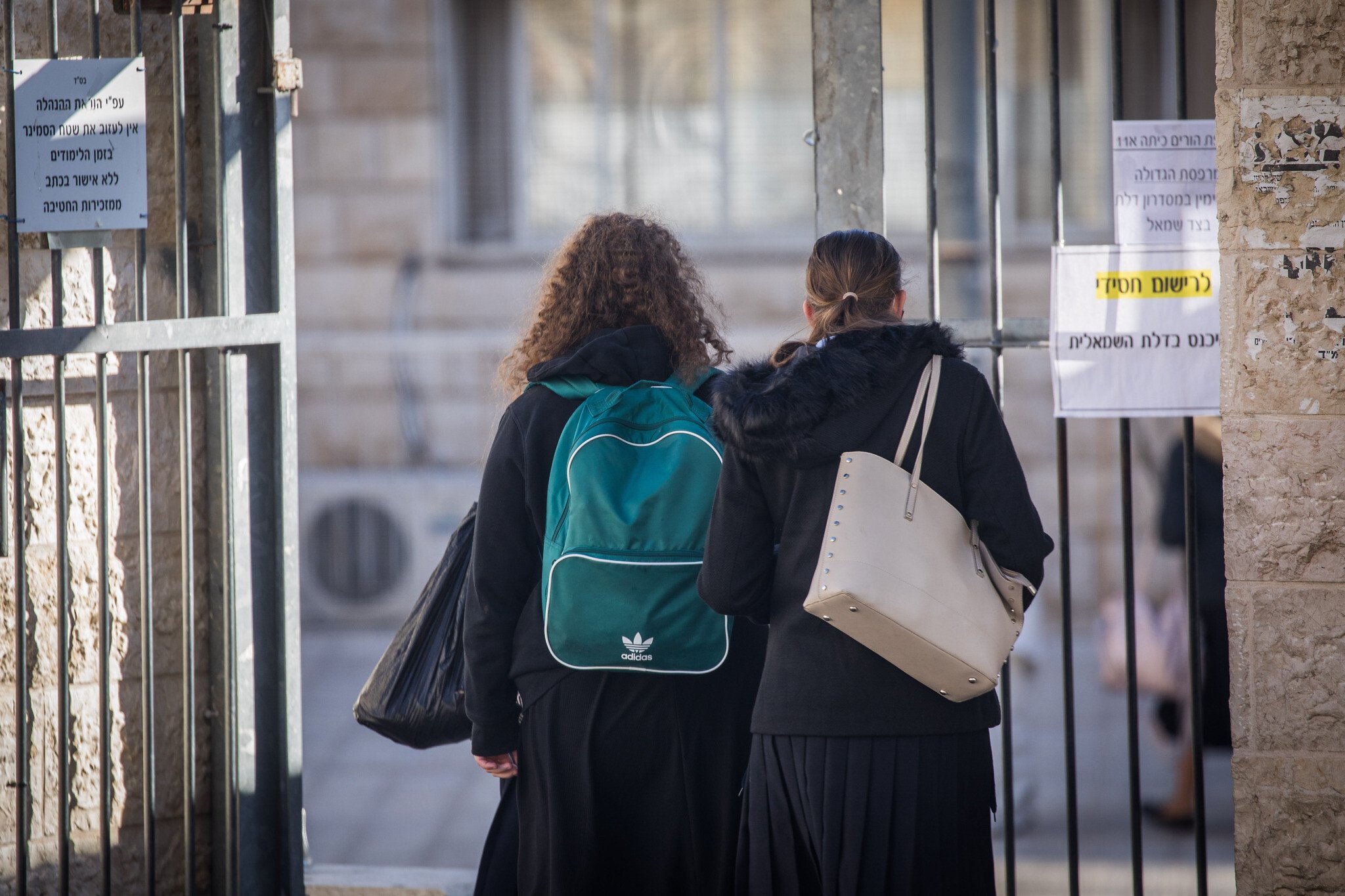
The Education Ministry’s director of Haredi education sent a warning letter to one of the ultra-Orthodox seminaries in Jerusalem refusing to admit students of Sephardic origin on Thursday, threatening to slash its budget and even potentially shut it down unless it complies with ministry directives by the end of the week.
“From the information presented, it appears that your conduct constitutes a clear violation of the Ministry’s directives, which may lead to the revocation of the institution’s license,” Shai Calderon wrote to the school, which was not identified in media reports.
Calderon warned that unless the institution complies with instructions and accepts the students by Friday, he will recommend a number of measures, “including the possibility of withholding budgets…and even closure of the institution.”
The letter came two days after the ministry summoned representatives of multiple ultra-Orthodox schools for hearings after administrators refused to open their doors to students of Sephardic background — announcing in a statement that incidents of discrimination were “being handled strictly, up to and including denial of funding and revocation of the license of the refusing institution.”
This summer, Channel 13 reported that some 440 Haredi girls in Jerusalem, 73 percent of them Sephardic, had not been accepted into any seminary. As a result, the municipality decided to assign students to seminaries independently and required the schools to accept them.
On the instructions of community rabbis, multiple seminaries in Beit Shemesh and Jerusalem declined to allow ninth graders to begin their studies in order to protest instructions by the two cities’ municipalities to accept students of Middle Eastern and North African background who had not been accepted elsewhere.

Discrimination against Sephardic students has plagued the Haredi community for years, and critics charge that many Ashkenazi schools maintain unofficial quotas of Sephardic students stemming from racism against families of Middle Eastern origin.
In an interview with the Ynet news site, the mother of one student of mixed origin described her daughter as “emotionally broken” after a school “asked us to change our last name” to something Ashkenazi.
According to Channel 13, Rabbi Dov Lando, one of the most prominent rabbinic leaders of the so-called Lithuanian stream of Ashkenazi ultra-Orthodoxy and the spiritual leader of the United Torah Judaism party’s Degel HaTorah faction, was behind instructions to local rabbis not to accept the girls.
Calderon’s letter appears to undercut claims by the Jerusalem Municipality and Lando’s spokesman that the placement issue had been solved.
According to a statement by Lando’s office on Thursday, the senior rabbi directed the “Old Seminary” — a prestigious Beit Yaakov teacher training program — and the other seminaries to open the school year after the agreement reached with the mayor.

“After many efforts, we succeeded in finding a solution that will allow the school year to open in the seminaries,” Jerusalem Mayor Moshe Lion said in a separate statement, announcing that “two new classes will be opened to accommodate all the girls who, until now, had no placement.”
‘Not familiar with this solution’
The issue of discrimination has also come up in Beit Shemesh, where Degel HaTorah MK Moshe Gafni sparked outrage on Monday by calling on the ultra-Orthodox Shas party to open additional schools for Sephardic students in the city of Beit Shemesh so that “your girls” don’t need to “crowd into our institutions.”
Ultra-Orthodox media reported on Thursday that a solution to the crisis in Beit Shemesh had been found, with the Beit Shemesh Union of Seminaries announcing that a local seminary “would establish a new educational framework for about 45 girls, which in practice will solve the issues that prevented the opening of ninth-grade classes in the seminaries this year.”
While the group appealed to the municipality to agree to the solution, Hebrew media reported that officials are concerned that the plan amounts to de facto segregation.

According to the municipality, some 50 girls at five seminaries in the city are being refused admission for the new school year.
Asked about the plan, a municipal spokesman said that he was “not familiar with this solution.”
An ongoing issue
Even if all of the girls are placed in schools, however, the problem of discrimination remains a serious one, argued Eliyahu Berkowitz, a researcher at the Israel Democracy Institute.
This primarily manifests itself in school admissions and matchmaking, where Sephardic Jews are seen as less desirable partners by members of the Ashkenazi community, Berkowitz said, noting that many senior Ashkenazi rabbis have spoken out against the phenomenon over the years, which he described as “bottom up, not top down.”
When you study in a kollel, “you’re probably going to be living in poverty. The only currency that you have is respect, honor, hierarchy. To have a hierarchy, you need to have someone up and someone down,” he said.
It’s very difficult for Sephardic girls who went to school together with Ashkenazim to “find out that they cannot go with their friends” when they reach ninth grade.









The Times of Israel Community.