

‘Election deniers’ in midterms are threatening US democracy, warn experts
Republicans up and down next month’s ballots are embracing defeated president Donald Trump’s false assertion that 2020 election was stolen and that voter fraud is rife
 Add ToI as a Preferred Source on Google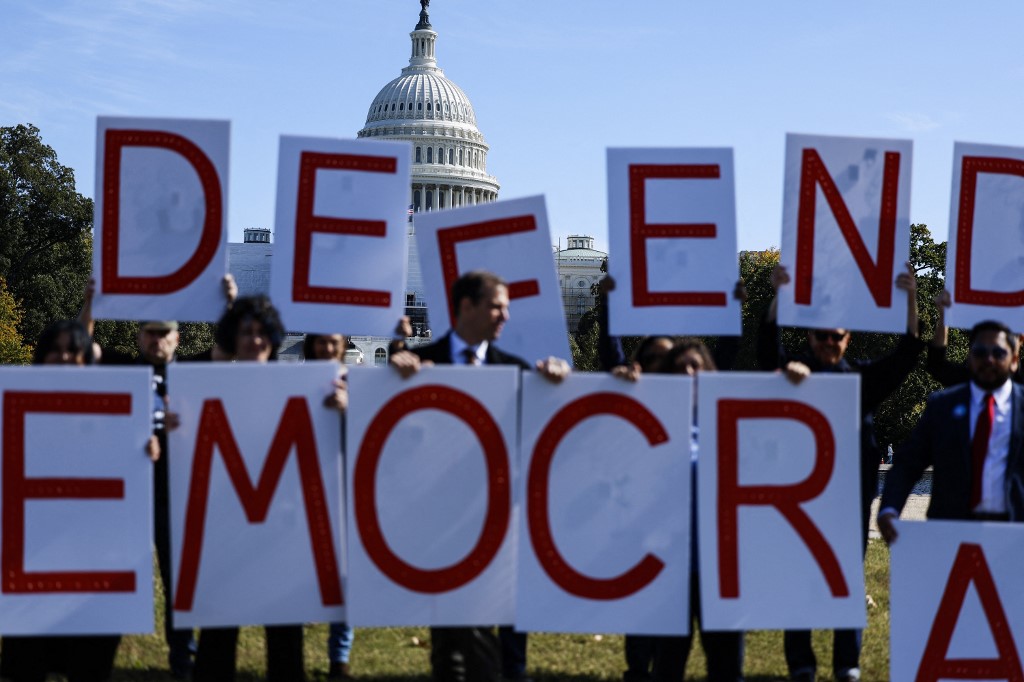
WASHINGTON (AFP) — From the Pacific coast to the eastern seaboard, election denialism has seeped from US state capitols into village halls, bars and living rooms — sickening the US body politic and threatening democracy itself.
Two weeks ahead of the midterm election, Republicans up and down the ballot are embracing defeated president Donald Trump’s false assertion that the 2020 election was stolen and that voter fraud is rife.
The Washington-based Brookings Institution has identified 249 of these so-called “election deniers” — all Republicans — in the 567 races for the House, Senate and key statewide offices.
Mark Bayer, president of Bayer Strategic Consulting and a former chief of staff in the US Senate, told AFP that US democracy was at its “highest risk of unraveling” since World War II.
“Allegiance to the ‘Big Lie’ was a major campaign theme for many deniers running for office. How might these candidates respond to losing their own elections, fair and square, in November?” he said.
No one has ever offered proof of significant fraud in 2020, and yet the torrent of disinformation from Trump and his allies has convinced much of the country that Joe Biden is not the legitimate president.
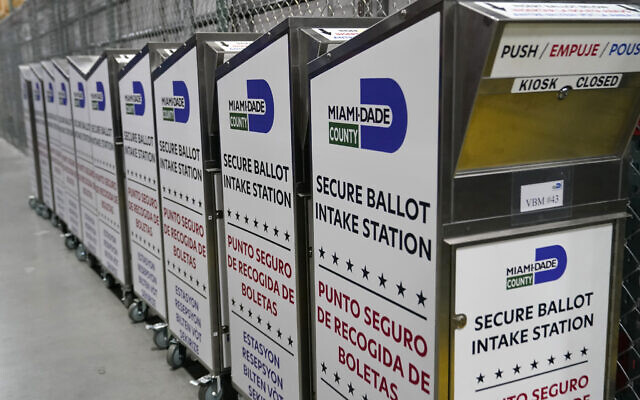
Many of Trump’s supporters, such as Terri Privett, a Republican interviewed by AFP at a recent political event in Vero Beach, Florida, have been won over by his fallacious argument that his large crowds relative to Biden’s prove he was cheated.
“You’ve got one guy that’s in office who got empty circles around him, you know that they stole the election. Then you go to a Trump rally and there’s like thousands upon thousands trying to get in,” the 53-year-old cable company employee told AFP.
Five-alarm fire
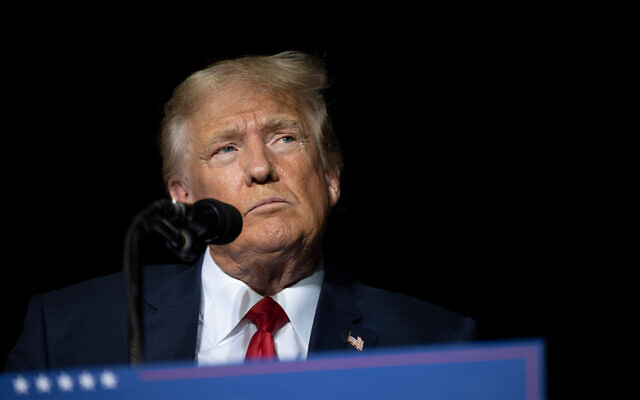
Trump, who endorsed more than 200 Republicans in their nominating contests for November’s election, made belief in his “Big Lie” a prerequisite for his support.
“Political analyses indicate that most democracies do not end by revolution or military coup but erode from within,” said Barbara Wejnert, an internationally renowned political sociologist who teaches at the University of Buffalo.
“And that could be the case for American democracy if election deniers are elected, as well as if Trump is elected again as the president.”
None of this would matter if the controversial candidates were fringe outsiders. But their elevation to the mainstream is a five-alarm fire, according to activists.
Brookings estimates that 145 of the 249 election deniers — 58% — look highly likely to win their races.
Vindicating fears for democracy, almost half are sitting House members who voted to bar certification of the 2020 presidential election, despite having no evidence of malfeasance.
When it comes to the fight for democracy, the most important races are in the 39 states electing governors, attorneys general or secretaries of state.
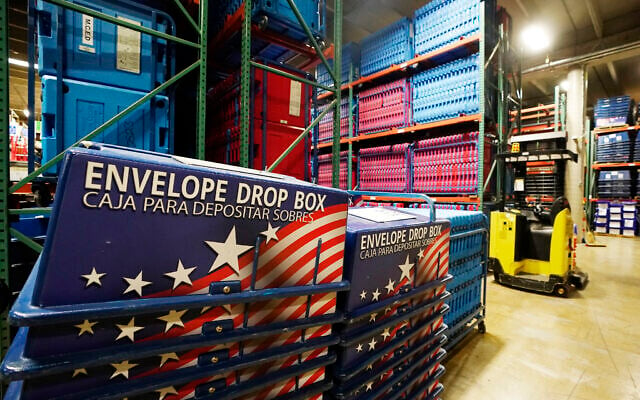
These officials manage elections, oversee vote tallying and certify results, making them the front line in the defense of US democracy.
Lobby group States United Action estimates that 58% of the population, living in 29 states, has an election denier running to oversee their elections.
‘Democracy is fragile’
University of Southern California professor Ann Crigler, who has written extensively on politics and the news media, echoed fears that defeated election deniers would attempt to undermine faith in their result.
But the victors would present a bigger problem, because they would be in positions of power to change election rules to the advantage of their favored candidates.
“Democracy is fragile and vulnerable to corruption if not for vigilant, honest participants in the process of voting and governing,” Crigler told AFP.
Adding to the concern, the battlegrounds with the highest number of election-denying candidates — Pennsylvania, Arizona, Michigan, Florida, Texas, Wisconsin and Georgia — are almost all crucial swing states that invariably decide who controls Congress and the White House.
“Making things up or denying the facts is fundamentally undemocratic. In short, by denying what the evidence tells us, you risk the very foundations of our democracy,” said John Geer, dean of the College of Arts and Science at Vanderbilt University.
“[A] functioning democracy requires fidelity to the accomplishments of those in power. If things are bad, let the other side rule. If things are good, support the status quo,” he said.
“But if we are untethered by evidence, we no longer have accountability. We, therefore, risk the very democratic freedoms our founders fought for, if we ignore evidence.”






The Times of Israel Community.