

Elections again? Surely not! Or just maybe? Three key points
Liberman isn’t bluffing. Nobody knows if the ultra-Orthodox are. But Netanyahu desperately wants to avoid another round of voting

 Add ToI as a Preferred Source on Google
David Horovitz is the founding editor of The Times of Israel. He is the author of "Still Life with Bombers" (2004) and "A Little Too Close to God" (2000), and co-author of "Shalom Friend: The Life and Legacy of Yitzhak Rabin" (1996). He previously edited The Jerusalem Post (2004-2011) and The Jerusalem Report (1998-2004).
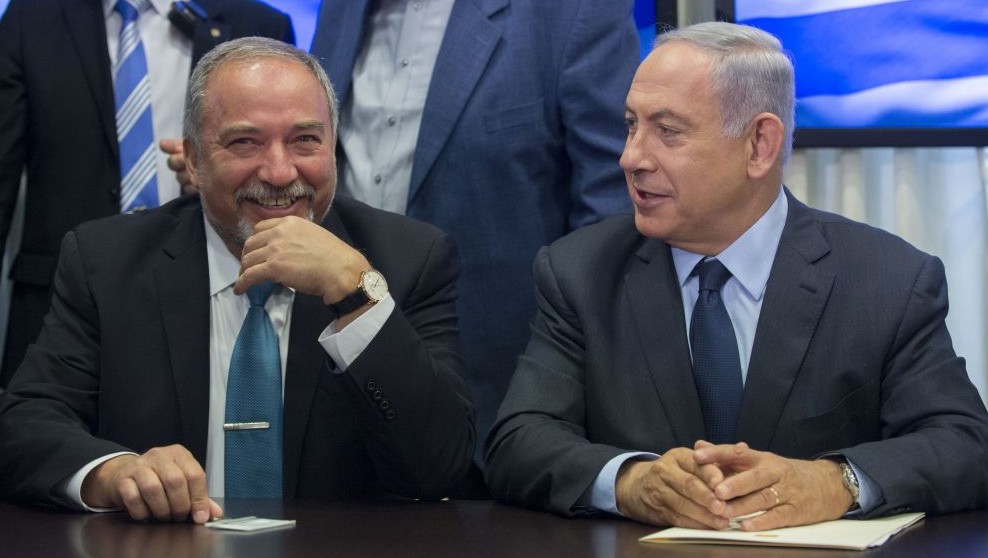
It is simply inconceivable that Israel’s freshly elected politicians are going to put us through the nightmare of new elections immediately after we just got through the last round. I mean, think of the expense. Think of the mockery of the democratic process. It has to be out of the question. Hasn’t it?
An insider I spoke to on Sunday put the odds at 95-5 against elections. Today, he adjusted that to 80-20. Miki Zohar, the Likud MK who is organizing the legislation ordered by Prime Minister Benjamin Netanyahu to dissolve the barely sworn-in new Knesset, went with 50-50 in a Channel 12 interview on Monday afternoon, and added that the public would not easily forgive Avigdor Liberman, the coalition-resister, if elections are again to be our fate. (Some might say that much of the public will not easily forgive Zohar for happily declaring recently that the Supreme Court may soon be “irrelevant” and claiming that if Netanyahu is not given irreversible immunity against prosecution, “an innocent man will be sent to jail.”)
What to make of what Zohar on Monday correctly termed the “farce” to which Israeli politics has descended? With the situation shifting hour by hour, here are three core points:
1. Liberman isn’t bluffing
Watching Yisrael Beytenu chief Liberman relishing his moments in the spotlight at his press conference on Monday afternoon, it was patently obvious that he isn’t bluffing. If the ultra-Orthodox military conscription bill isn’t passed in its current form, he won’t join the coalition. This is not because the bill as it stands will rapidly and radically raise enlistment quotas in the ultra-Orthodox community. It won’t. It will gradually raise the proportion of young ultra-Orthodox males who share the responsibility of IDF service from roughly 10% to 20% over a decade. It is also not because Liberman is genuinely wedded to every comma in the current text, which passed a first reading in the Knesset last July.
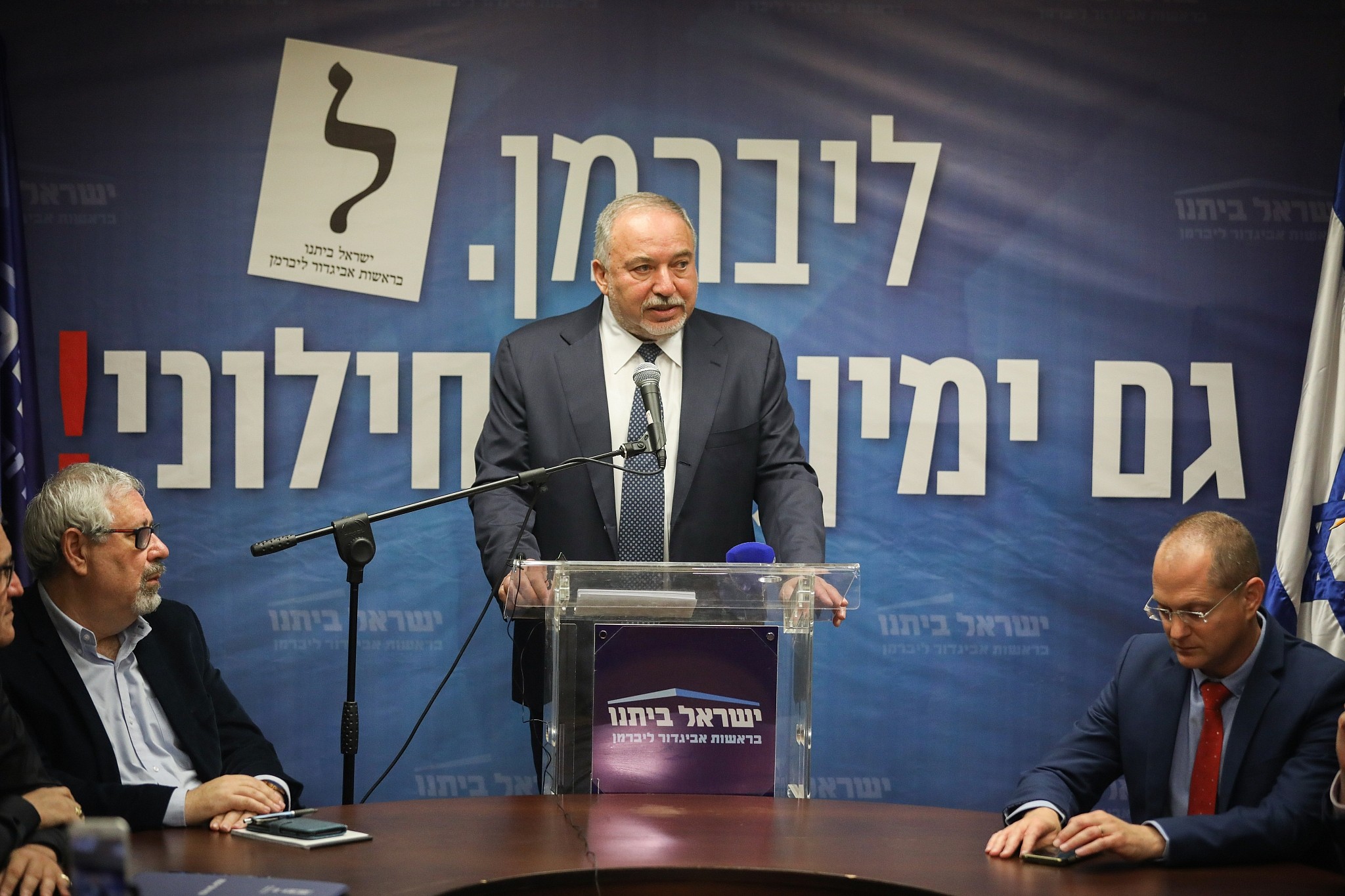
It is, rather, because Liberman is both standing up to the ultra-Orthodox as a matter of principle, and feels he has a lot to gain and little to lose by doing so. His voters (and many more besides) support his anti-theocracy outlook. He believes Netanyahu — whom he regards with almost undisguised contempt — capitulates to the ultra-Orthodox parties with dismal regularity.
If the ultra-Orthodox concede, and allow the law to pass as it stands, Liberman will have won a political victory, and may gain support in the future as the politician who stood up to ultra-Orthodox extortion. (He’ll also have made Netanyahu sweat.) And if they don’t concede, and Israel does go to elections again, he’ll expect to win support at the expense of Likud, a party he notably castigated during his press conference. (And he’ll have made Netanyahu sweat a great deal more.)
2. The ultra-Orthodox might not be bluffing either
So will the ultra-Orthodox back down and, as Liberman suggested, withdraw their objections to the bill as it stands — which, in any case, will barely change the overwhelming non-participation in IDF service of their community? Will they, as Liberman suggested they could, swallow hard, leave the plenum on the day the vote is held, and make do with other financial concessions they will doubtless extract from Netanyahu as the price of their climbdown?
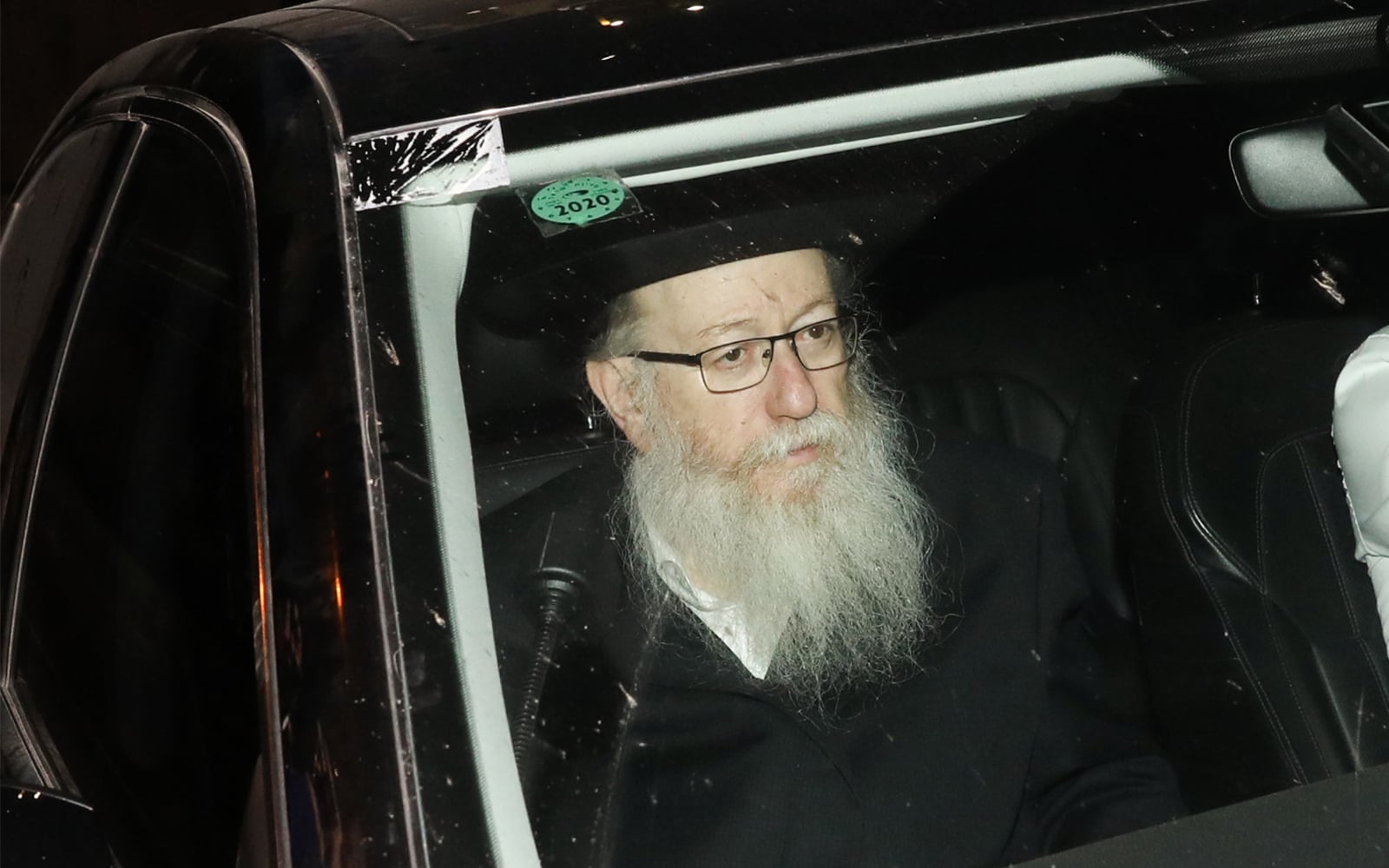
Nobody but their leaders — politicians and sages — has the answer to that question right now. Indeed, it is highly likely that even the ultra-Orthodox politicians and sages haven’t finalized their position. After all, the deadline for forming a coalition is still more than two days away (and Netanyahu might be able to buy some more time even after midnight on Wednesday).
3. But Netanyahu really doesn’t want elections
The prime minister has directed his Likud colleagues to prepare for new elections if need be, but the fact is that he desperately wants to avoid them, and desperately wants to sew up his planned 65-strong coalition, with Liberman, the ultra-Orthodox et al. Critically, a resort to another national vote means the Knesset cannot get going on the various legislative initiatives he is seeking in order to avoid facing potential prosecution for fraud and breach of trust, and one count of bribery, in the three cases against him. His pre-indictment hearing is set for October. He’ll have little or no time to wage legislative war against the state prosecutors if the Knesset is dissolved again now.
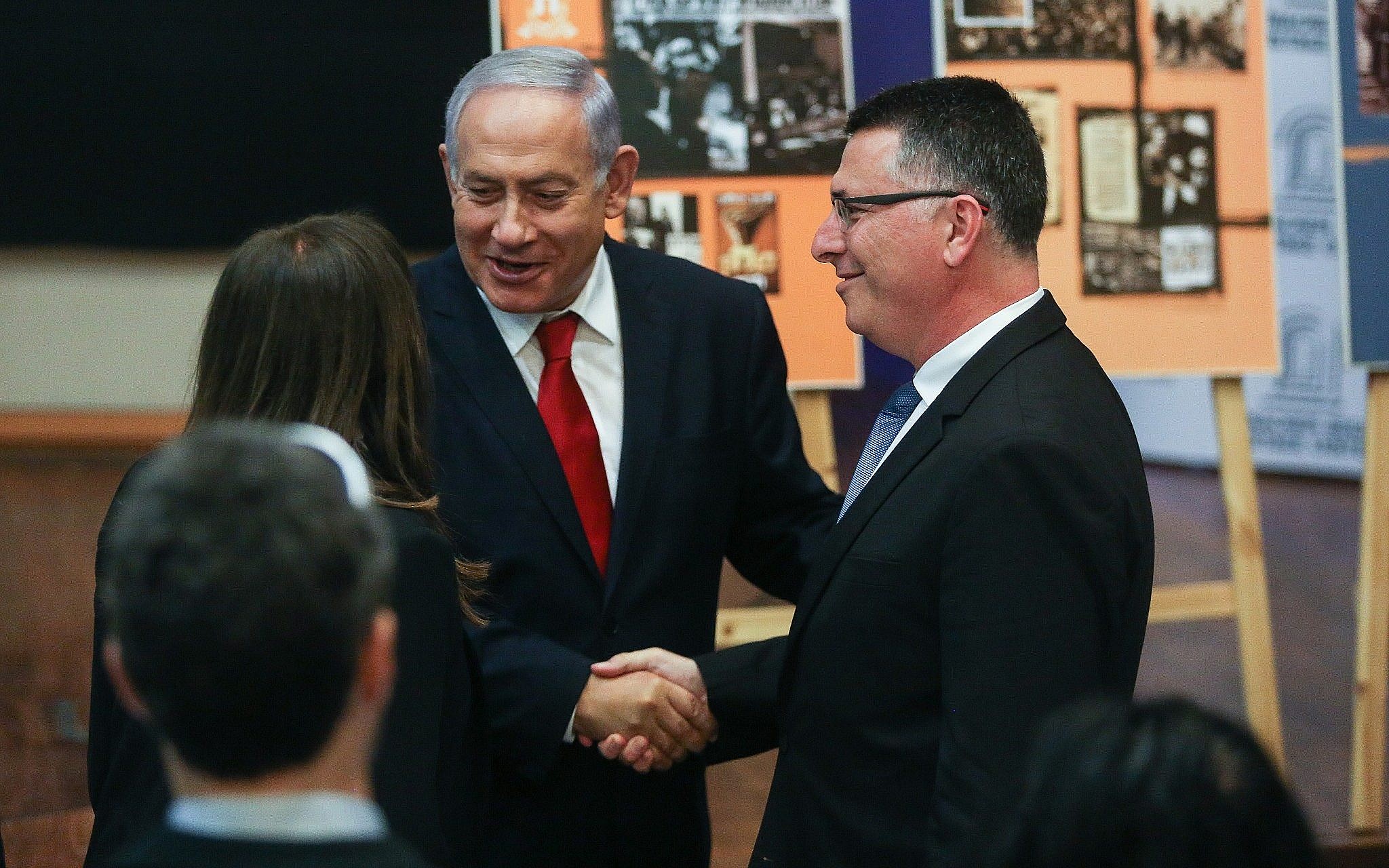
Worse, he will fear that the dissenters in Likud — led by Gideon Sa’ar — will become increasingly emboldened if he fails to put together a coalition. Sa’ar has overtly challenged the idea of amending the existing Immunity Law but has not directly challenged Netanyahu. Yet if the prime minister’s ambitious rivals scent weakness, and start to lose their fear of directly confronting Netanyahu, his hold on power — which seemed so firm in the early hours of April 10 — might be at genuine risk for the first time in years.
For all Netanyahu’s declared concern that Sa’ar has long been plotting to oust him, there is no indication at time of writing that Liberman’s immovable stance is part of some wide conspiracy involving Likud dissenters, opposition MKs, President Reuven Rivlin, Ayelet Shaked, and all and sundry. But all kinds of alliances become possible the moment the prime minister is perceived to be in trouble. And Netanyahu will be in a good degree of trouble if he cannot reconcile Liberman and the Haredim.
But don’t forget
Two days is a long, long, long time in Israeli politics.




The Times of Israel Community.