

New masterplan needed after desalination shutdown underlines dangers of tech overreliance
Experts blast complacency, urge reviving wells, natural buffers, and conservation to lower the 80% of drinking water that comes from coastal facilities

 Add ToI as a Preferred Source on Google
Sue Surkes is The Times of Israel's environment reporter
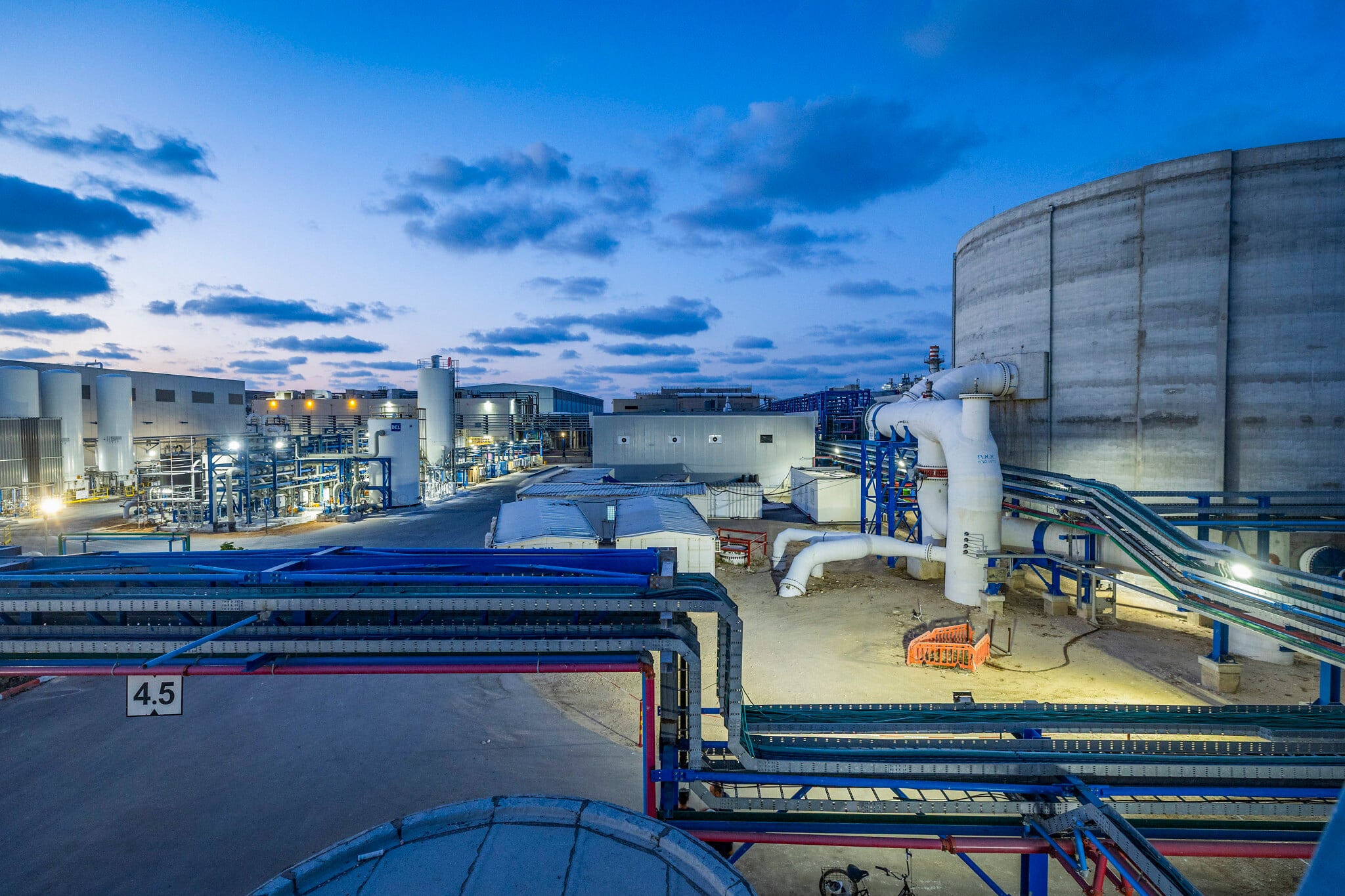
The unprecedented shutdown of five of Israel’s six desalination plants on Saturday has exposed what water-policy and national-security experts say is a growing strategic vulnerability: the country’s near-total dependence on large coastal facilities for drinking water.
The plants, all along the southern Mediterranean coast, were forced offline by microalgae swept north by waves from the Nile Delta. Reduced output continued into Wednesday, as the Water Authority and national water company Mekorot scrambled to activate backup supplies.
By Wednesday, two stations in south-central Israel were back online, and the Water Authority was hoping to restart a third later in the day. It also allowed the supply of water to resume for southern farmers after the taps were shut on Sunday. The two southernmost stations, in Ashkelon and Ashdod, remained closed.
Large-scale desalination facilities already supply around 80 percent of Israel’s municipal drinking water, a share set to rise sharply under government plans to expand production in the coming decades.
Experts said the incident showed the need to rebuild backup sources rather than rely almost exclusively on centralized, energy-intensive infrastructure. They called for rehabilitating polluted and inactive wells, restoring natural water buffers, and launching aggressive conservation and pricing campaigns to push water-complacent Israelis to save.
“Desalination is supposed to complement, not replace, natural sources,” said Tel Aviv University’s Prof. Dror Avisar.
Israel, an arid country with a fast-growing population and declining rainfall, has long felt secure in its ability to meet water needs through technology, from drip irrigation and wastewater recycling to desalination — all fields in which the country leads globally. But this week’s mass shutdown appeared to underline warnings that the same technological success has encouraged overdependence on a narrow set of vulnerable systems.
The risk was not entirely unforeseen. According to the state comptroller, between 2007 and late 2023, 14 seawater pollution incidents — including microbial contamination, fuel and oil leaks, and storm-induced turbidity — forced individual plant shutdowns lasting from a few hours to five days.

The supply of desalinated water is set to increase in the short term as part of a government target to reach 1.1 billion cubic meters per year, with new facilities near Acre in the Western Galilee and in central Israel’s Emek Hefer.
Looking ahead, the government in June approved a Water Authority plan to produce an annual 2.3 billion cubic meters of desalinated water by 2050, and 2.75 billion by 2075.
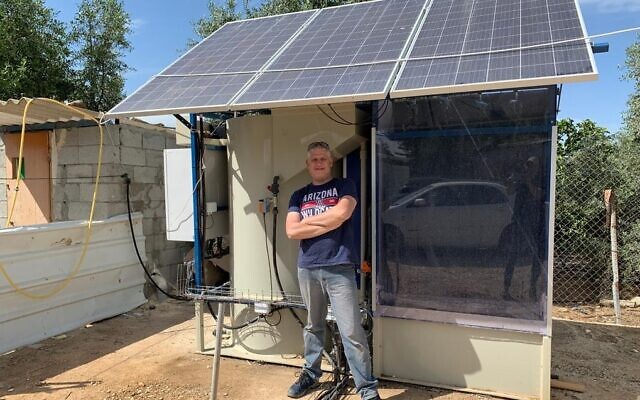
“Decades of reliance on desalination have led to a false confidence,” warned Clive Lipchin, a water expert at the Arava Institute for Environmental Studies in southern Israel. “This is a wake-up call to the government and the public that these are amazing technologies, but we haven’t solved the water scarcity problem.”
David Katz, an associate professor at northern Israel’s University of Haifa who researches water policy and economics, agrees.
“You have to ask whether Israel is doing enough to ensure that it has a backup plan, that it’s keeping and conserving and replenishing the natural reserves, and the answer is not really,” said Katz.
Dry winters, polluted wells
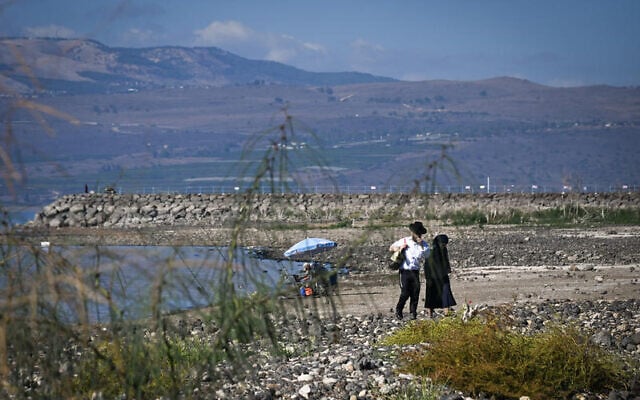
Following an unusually dry winter two years ago, the level of the Sea of Galilee, Israel’s emergency drinking water source, has been below the so-called second red line for most of this year. The lower red line is set at -213 meters (-699 feet) below sea level. Pumping beyond this risks damaging the ecosystem. A first-of-its-kind plan to keep it topped up with desalinated water remains limited and experimental.
“From my understanding, our groundwater is very regulated,” said Lipchin. But, he said, the coastal aquifer, which runs from the Carmel ridge in the north down to the Gaza border in the south, is suffering from seawater intrusion.
The mountain aquifer, the country’s largest natural groundwater reservoir, which stretches along the western foothills of the central mountain ridge, was of better quality, he said.
“But we share it with the Palestinians, where there’s a lot of over-pumping and where regulation isn’t like it is on our side. If [the aquifer] is compromised and desalination goes down, we will really be in a crisis,” Lipchin said.
For organizations such as the Arava Institute and EcoPeace, which see environmental cooperation as a tool for regional peace-building in addition to ecological sustainability, joint management systems with the Palestinians are a no-brainer.
At the same time, they also highlight the dangers of sewage entering the Mediterranean Sea from Gaza and drifting north to Israel’s coast, percolating into the coastal aquifer and threatening the sensitive filtering membranes of desalination stations.
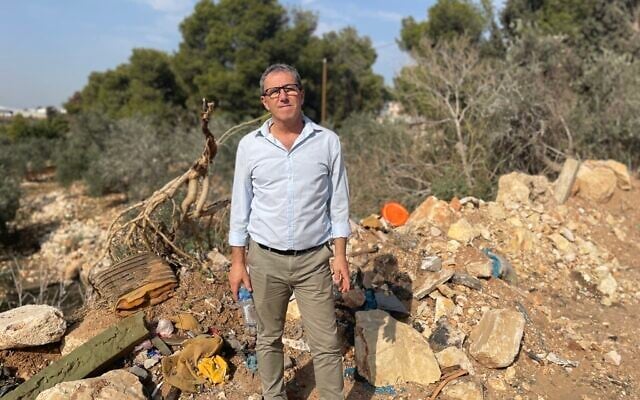
“Despite the complex situation, full cooperation is needed from the Israeli government, the [US-led] Board of Peace, and Palestinian water authorities to urgently repair the wastewater treatment facilities in Gaza, with the aim of protecting, among other things, Israel’s water security as well,” said Gidon Bromberg, Israel director at EcoPeace.
Shira Efron is special adviser on Israel at the RAND Corporation think tank, where she is currently working on Gaza issues. A former senior research fellow at Israel’s Institute for National Security Studies, she specializes in the nexus between national security and climate change.

“Several of us have warned that the sanitation issue from Gaza requires urgent treatment, with clear prioritization for sewage treatment facilities and waste — because it’s the right thing to do, but also for Israel. But the politics get in the way, and nothing has been done,” she lamented.
Efron noted that wars with Iran had underlined the vulnerability to attack of Israel’s critical infrastructure, including desalination stations and the natural gas system on which the stations rely. She added that climate change poses another risk, as desalination is not even possible when water temperatures rise above a certain level.
A new masterplan
Water Authority data shows that as of early 2026, around 41% of the country’s 1,702 drill holes were inactive due to reasons ranging from pollution and dropping water tables to aging infrastructure. Two hundred eighty of the wells have been permanently closed.

At the end of 2024, the Water Authority released a draft national water and sewage infrastructure plan for public comment. The plan is now being revised before being submitted for approval by the authority and the government, a spokesman said.
The 2025 draft proposed rehabilitating 400 drill holes to keep up with demand, plus an additional 200 by 2050 for an 80% backup in the event of an emergency shutdown of desalination plants. The price tag: Nearly NIS 4 billion ($1.3 billion).
By comparison, the Mekorot water company, which operates over 500 wells, reported rehabilitating just eight drill holes in 2024 and six in 2025.
“The masterplan accounts for population growth, but still wrongly calculates future water capacity per capita,” said Orly Babitsky, head of climate resilience at Israeli environmental watchdog Adam Teva V’Din. The plan fails to account for global warming and the introduction of server farms that consume large amounts of water for cooling, Babitsky said.

She added that with such intensive building throughout Israel, areas of exposed soil or sand through which rainwater could percolate back into the groundwater are becoming increasingly rare. A couple of local authorities have reserved land for groundwater recharge, but the Water Authority has either failed to reimburse them — the utility was successfully sued by the central Israeli city of Rishon Lezion — or has done so without accounting for additional costs incurred.
Poor awareness, lack of incentive to save

According to Katz, who was commissioned last year by the Energy and Water Ministry to submit a paper on water conservation, Israelis consume more water per capita than many arid countries but pay less than countries that are water secure, such as Norway and Denmark. Surveys show that Israelis no longer believe the country has a water shortage, while also indicating that the effects of temporary public awareness campaigns are short-lived, he added.
Katz said governments have not invested in water conservation because none want to raise water prices. Doing so would also require legislation.
Israeli household water prices are based on a tiered system: consumers pay a relatively low rate for basic consumption, ensuring access to essential water, while use above that threshold is charged at roughly double the price.
“Raising the second tier even higher would raise funds for water conservation projects and result in more savings — but it’s a political no-go, especially now, in an election year,” Katz said.
“We have to run desalination at full steam and use it to replenish the aquifers and other reserves,” he said. “We could introduce buy-back programs from farmers [where the state provides financial incentive for farmers to reduce their water use], get local councils to create water-saving plans and require large businesses to do so too.”
A Mekorot spokesperson said the company was activating all drill holes in the aquifer simultaneously, operating older infrastructure, and pumping double the usual amount from the Sea of Galilee to regulate supply.
Meanwhile, a Water Authority spokesperson said the authority “implements government decisions regarding desalination, development, and more,” and operates according to plans and policies endorsed by the Water Authority Council.
But some experts question whether enough is being done, including Prof. Ofira Ayalon of the University of Haifa’s School of Environmental Sciences, who also heads the Energy and Environment research cluster at the Technion’s Samuel Neaman Institute.
“We are neglecting the alternatives [to desalination],” Ayalon said. “The Water Authority is going to start another campaign, but it’s too little, too late.”









The Times of Israel Community.