

Elections czar gears up to preempt any ‘speck of a claim’ of a tainted vote
Dean Livne, director general of the Central Elections Committee, details plan to fight deepfakes, protect voter privacy and release real-time data to keep polls clean on October 27

 Add ToI as a Preferred Source on Google
Tal Schneider is a Political Correspondent at The Times of Israel
Of all the challenges the 25th Knesset posed to the body that referees national elections in Israel, the most potent may have been its very survival for four years, a rare and unexpected feat.
Managing a countrywide ballot for the first time since 2022, the Central Elections Committee is facing a radically different landscape from the one that was in place the last time Israelis voted.
For one thing, there are the 600,000 voters who became citizens or turned 18 since November 2022.
And there is the spread of artificial intelligence, which has made it easier than ever to mislead voters. When Israelis last went to the polls, ChatGPT was still a month away from becoming publicly available.
Polarization in society is an ever-present issue, but in the last four years it has metastasized in ways seemingly never seen before.
“We’re living in a time where there’s a general mistrust in institutions,” Dean Livne, the acting director of the CEC, told The Times of Israel. “There might be people who question the election results as well, whether deliberately or because we’re in an age where people don’t believe anything.”
“The way to deal with this is on several levels. The first is transparency. We’re significantly upping the CEC’s level of transparency,” he said.
Composed of representatives from Knesset factions and headed by Supreme Court Deputy President Noam Sohlberg, the CEC is responsible for tallying votes, disqualifying parties or candidates, and monitoring compliance with rules designed to protect voters and keep elections free and fair.
It regularly deals with petitions regarding ads accused of breaching campaign laws or efforts by parties that allegedly intrude on voter privacy.
As of late August, activists and political parties have submitted over 120 petitions to the CEC — more than double the number of petitions brought before the independent state body during the entire previous election campaign. With nearly two months till the polls, the bulk of the petitions is likely yet to come.
For election day, the CEC is combing through a record 195,000 applications from people seeking to work the polling booths, twice as many as the last election. Some 35,000 of them will be chosen to monitor the election and oversee the vote-counting process in individual polling stations.

Livne has overseen the legal aspects of eight election campaigns in his 13 years as CEC legal adviser.
In May, heading into his ninth election, Livne became acting CEC director general, after longtime director general Orly Adas resigned amid heightened tensions with Prime Minister Benjamin Netanyahu’s Likud party.
“Every vote in the election goes through a long line of controls to ensure everything is exact,” Livne said, predicting a clean and honest election. “It’s all there so we can preemptively refute any claim, and even a speck of a claim, that there was something improper in the process.”
Livne spoke to The Times of Israel on Sunday. The interview has been translated from Hebrew and lightly edited for clarity.
CEC chair Noam Sohlberg has ruled that for the first time, on election day, the voter turnout rate at each of the 13,000 polling stations across the country will be made public. How will that work?
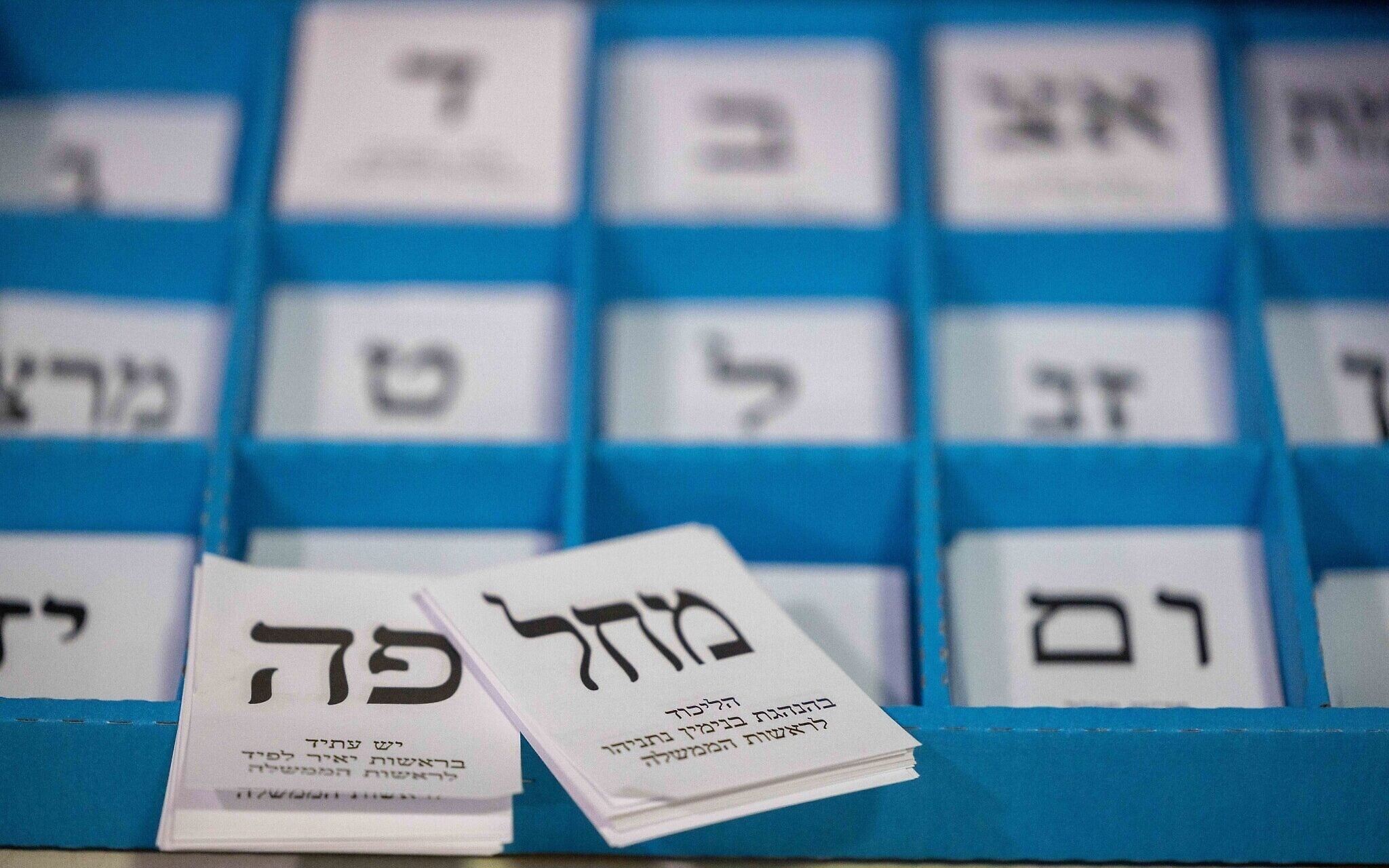
This is a very significant innovation. Until now, during election day, the Central Elections Committee published only the nationwide voter turnout rate. From now on, we’ll publish turnout rates by polling station. Every few hours – the precise frequency will be determined later – we’ll post how many people voted at each polling station up to that point.
For example: at a given time, at polling station No. 7 in a given city, 100 out of the given number of voters registered to vote there have voted. This way we increase transparency significantly. The public will be able to know where it’s congested, where there aren’t any queues and what’s going on in their area.
It will also help us handle fake news. It will no longer be possible to claim a certain population is “voting in droves” without being able to check that claim against the data.
That is an enormous operation. Can the Elections Committee website handle that kind of traffic?
We’re building a dedicated website for that purpose, with very substantial resources, and preparing for significant traffic as well as website-crash scenarios. The Central Elections Committee is an organization that knows how to deliver.
Will the information itself come from each polling station committee?
The information will be transmitted from every polling station committee. I don’t want to elaborate on the method of transmission, due to cyber- and information security concerns.
You’ve said previously that you receive information from the Shin Bet and intelligence agencies about attempts by foreign countries to interfere in the election. What interferences have you already identified?
Israel’s a small country, but it’s surrounded by enemies. What I can say is that we’ve been told Israel’s election is currently second in the world, after the US midterms, in terms of the interest it’s generating.
Countries and organizations abroad are setting their sights on what’s happening here — every aspect of it — and as a result there are also attempts at interference. I can’t elaborate on them.
All the relevant bodies are preparing to deal with this, so that only Israeli citizens decide what happens in Israel.
The security arrangements, or lack thereof, for Gadi Eisenkot, whose Yashar party leads the polls, have recently been making headlines. The Elections Committee has been brought into the picture, though it’s unclear that this is within the scope of your authority. On the other hand, harm to a candidate could derail the election. What’s your responsibility on this matter?
We aren’t experts in security, nor are we experts in threats. There’s a certain regulatory gap here: The Knesset Guard protects members of Knesset, and the Magen unit protects ministers. But who protects candidates who are not elected officials?
When the police’s Threatened Persons Unit examines an individual and assigns a certain threat level to them, the question is, who’s responsible for protecting that person. Currently, that responsibility can fall to the party itself.
The Elections Committee chairman noted in his letter to the head of the National Security Council that we aren’t expressing a position on whether a specific individual requires protection, because we don’t have the expertise for that and aren’t familiar with the threats. We drew the relevant authorities’ attention to the fact that it would be worthwhile to set a policy on the matter and publish it.
The bodies responsible for the matter, including the Advisory Committee for Personal Security and the relevant government agencies, are the ones that need to set the policy. We of course hope nothing will derail the election.
The issue of bringing Israelis back from abroad [in order to vote, as there is no absentee voting from abroad] is generating a lot of interest. Likud attorney Ilan Bombach has already sent a warning letter to the organizations involved, claiming their activity amounts to bribery, but he has yet to petition the CEC against them. There are initiatives that say they themselves aren’t paying for people’s airline tickets, but are rather offering bureaucratic and logistical help, organizing group purchases of tickets or chartering planes, offering accommodation solutions, and sometimes even scheduling conferences in Israel that can help a person justify the trip to their employer abroad. At what point might such assistance cross the line of what is permitted by law?
I can’t express a position on a specific case or provide a legal analysis in advance. This is an issue that could come before the Elections Committee chairman.
But the law itself is clear. The Elections Law states that anyone who gives or offers a bribe, in order to influence a person to vote or refrain from voting, commits an offense. It’s not limited to voting for a particular slate. Providing a benefit in order to induce someone simply to come and vote at all could also fall within the prohibition. A bribe can consist of money, service, or another benefit. The law has an explicit carve-out that permits driving voters to the polls.
In other words, the exception would be, for example, that it is permissible to drive someone from their hotel to the polling station, but not to fly them in from abroad.
I won’t analyze a concrete case; that’s the committee chairman’s role. But the principle is clear: it’s forbidden to give someone a benefit in exchange for their vote.
There was an incident in the August 17 Likud primary where a man was filmed saying very openly that he had been paid NIS 400 ($130) to vote and that he didn’t even care who the candidates were. Granted, this was not a Knesset election. But when someone says something like that so openly, it makes you wonder whether norms have eroded to the point that people no longer realize this is illegal. Did you examine that as an indication of erosion, and the possibility that you may need to educate the public about things that once seemed obvious?
The internal Likud election is outside the direct purview of the Central Elections Committee for the Knesset. If there was an offense, that’s something for police to investigate. But as a matter of principle, paying someone for their vote is a terrible thing. It strikes at the very core of democracy. Primaries are also subject to prohibitions on election bribery under Section 10 of the Elections for Public Bodies Law.
The law states that anyone who gives or offers a bribe in order to influence a voter to vote, refrain from voting, or vote in a particular way commits a criminal offense. These are very basic norms. I didn’t think it needed explaining that bribery is prohibited.
Only recently, the Haifa District Court, and then the Supreme Court, annulled the Acre mayoral election and ordered a new vote because of election bribery. So it’s extremely problematic to treat bribery as though it were some marginal issue.
Parties recently began labeling content generated by artificial intelligence — something that didn’t happen in previous election campaigns. Are you monitoring this? Are the parties complying with guidelines as far as you’re concerned?
The law was amended at the initiative of the Elections Committee to require a label on content that was technologically generated or edited to create a portrayal that doesn’t reflect reality. The Elections Committee chairman was empowered to determine the manner of the labeling, and guidelines were set.
Obviously, I don’t see every advertisement and every video, but from the petitions submitted to us, you can see very few petitions are filed on this issue. That is, about six weeks ago there were more complaints and petitions about AI-generated videos, and there have recently been fewer petitions, and that indicates there is greater compliance with guidelines.
What about the Shas video featuring the figure of a soldier? That wasn’t an AI video at all, but a real person, and it was disqualified anyway.
The Shas video was not disqualified because of artificial intelligence, but because of two other prohibitions. The first is a specific legal prohibition on using the parties’ letter-symbols until 42 days before the election. The Elections Committee previously recommended that the Knesset repeal this prohibition, but the Knesset chose to leave the provision in the law.
The second prohibition is general and very well known: at the end of the video, the party wrote that 30,000 IDF soldiers support it. I don’t know if that’s true or not, but the Election Propaganda Methods Law explicitly says the IDF may not be used in election propaganda in a way that could make the IDF appear to identify with a particular party.

When it comes to artificial intelligence, the more worrying issue on election day is not necessarily a promotional video showing two leaders embracing in a way the human eye immediately recognizes as fake, but rather audio files circulated through social media. A fake recording of a politician’s voice could have a major impact on voters. How can you prevent manipulation by a fake audio file, such as a fraudulent robocall, on election day?
The rules established by the Elections Committee chairman explicitly apply to audio content as well.
When a voice has been created or altered using technological means in a way that could mislead, labeling is required. At the beginning and end of the recording, it must be made clear that this is not the real speaker and that the content was created using technological means.
But suppose that on the morning of the election, a fake voice message is circulated on WhatsApp. It doesn’t come from a party but from an anonymous person online. By the time you identify who created it, it may have already spread like wildfire.
There are two aspects here. First, transparency and identification of election propaganda. The prohibition in the law applies not just to parties, but to everyone. Even if you, for example, circulate a voice message.
Second, we’re working in cooperation with the social networks and platforms operating in this field, including WhatsApp and [its owner] Meta, to remain vigilant. If something like that comes up for examination, it can be quickly removed or blocked.
Does Meta have tools that can block the forwarding of an audio file that is spreading rapidly across platforms during election day?
Yes. They know how to quickly identify files that are being forwarded in massive quantities, and they know how to restrict that. And yes, we’ll have a dedicated command center monitoring influence operations on election day, and Meta will be in continuous contact with us.
How do you handle the concern that various actors will cast doubt on the result after the election? Just recently, in the Likud primary, we saw people questioning the tally, going back to the polls, checking and finding problems. Do you see incidents like that as a warning sign?
We’re living in a time where there’s a general mistrust in institutions. We see it again and again. The era of populism causes people to question even things that are very clear; sometimes even whether the sun will shine tomorrow morning.
There might be people who question the election results as well, whether deliberately or because we’re in an age where people don’t believe anything.
The way to deal with this is on several levels. The first is transparency. We’re significantly upping the CEC’s level of transparency.
Already on election night, alongside the data entered into our computer system, we’ll publish the original protocol as written and signed by the members of the polling station committee, who are representatives of the Knesset factions. Every citizen will be able to go online and see for themselves what was recorded at their polling station. That document was also published in the past, but only some time after the election. This year, we’re moving the timetable up so it’ll be published at the end of election day.
Any citizen will be able to examine the results and say, for example: “The protocol says 7, but you entered 2 into the system. How can that be?” We’re setting up a simple online form for this purpose, with no fee, no bureaucracy, and no need to wait for a telephone response. People will be able to contact us, and we’ll examine every complaint and respond.
I’m just saying, I don’t expect any problems like that to be found, since we have a lot of control mechanisms lined up.
How will the vote-counting process be monitored?
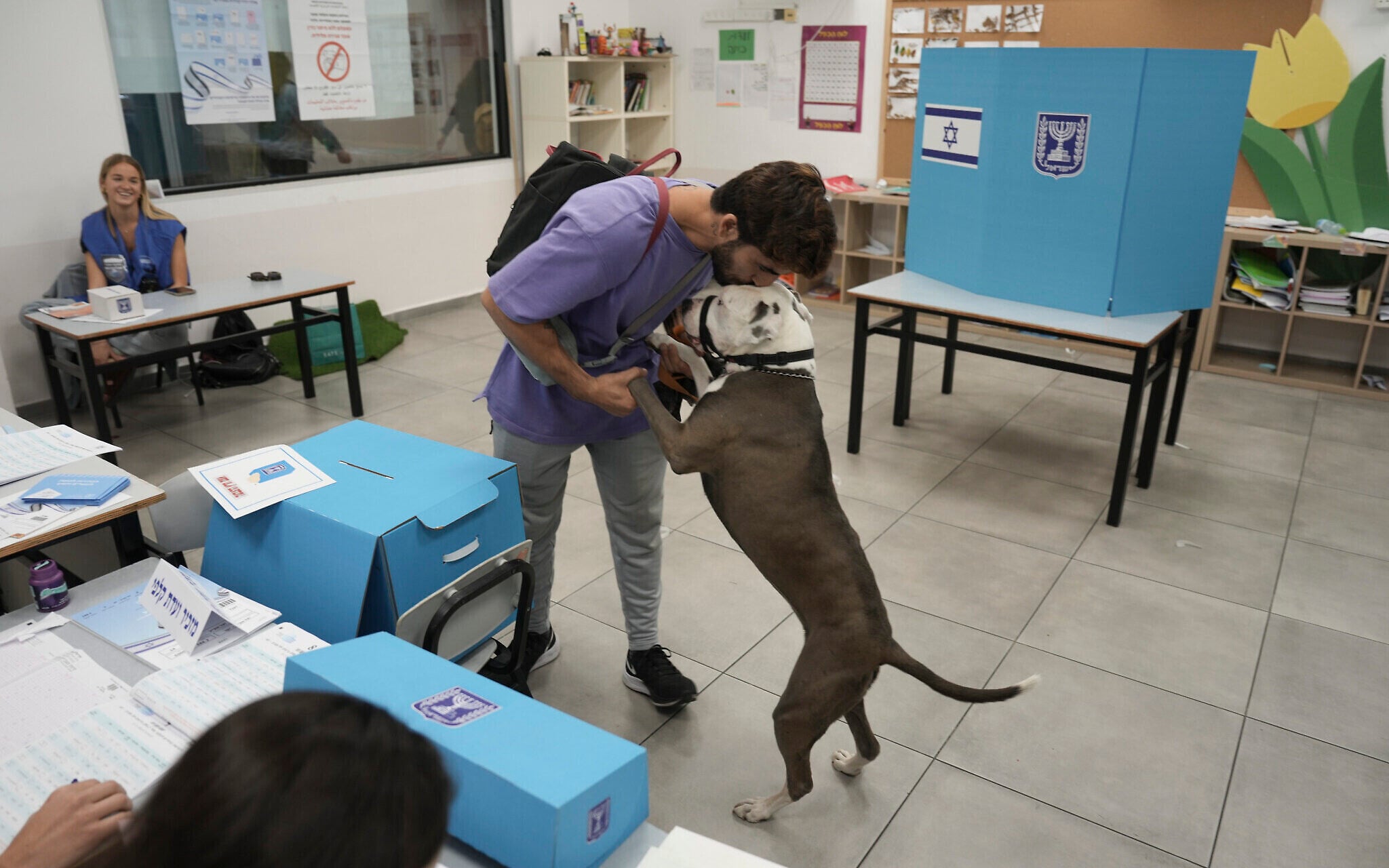
Already at the polling station, the procedures are carried out by the representatives of various factions along with the polling station secretaries and under the supervision of an election integrity inspector who carries a camera and records the counting process.
The materials then come to a regional election committee, where an independent judge goes over the protocols. If he finds an error, he amends it in his own writing, explains the rationale and signs it. The amendment and the judge’s rationale will also be published online.
After that, there are other technological systems, which we won’t specify, that carry out additional checks.
The materials ultimately reach the Central Elections Committee. Here, we form a big array of election integrity controls, where jurists who were uninvolved in the materials’ earlier processing work day and night to recount each ballot box as much as necessary to check the propriety of the process.
Every vote in the election goes through a long line of controls to ensure everything is exact. It’s all there so we can preemptively refute any claim, and even a speck of a claim, that there was something improper in the process.
You mentioned there will also be a live broadcast of the counting process of double-envelope votes, which are cast by people unable to vote at a polling station near their home, such as soldiers, hospitalized patients and diplomatic personnel abroad. What’s the difference between the tallying of double-envelope votes and the tallying at regular polling stations?
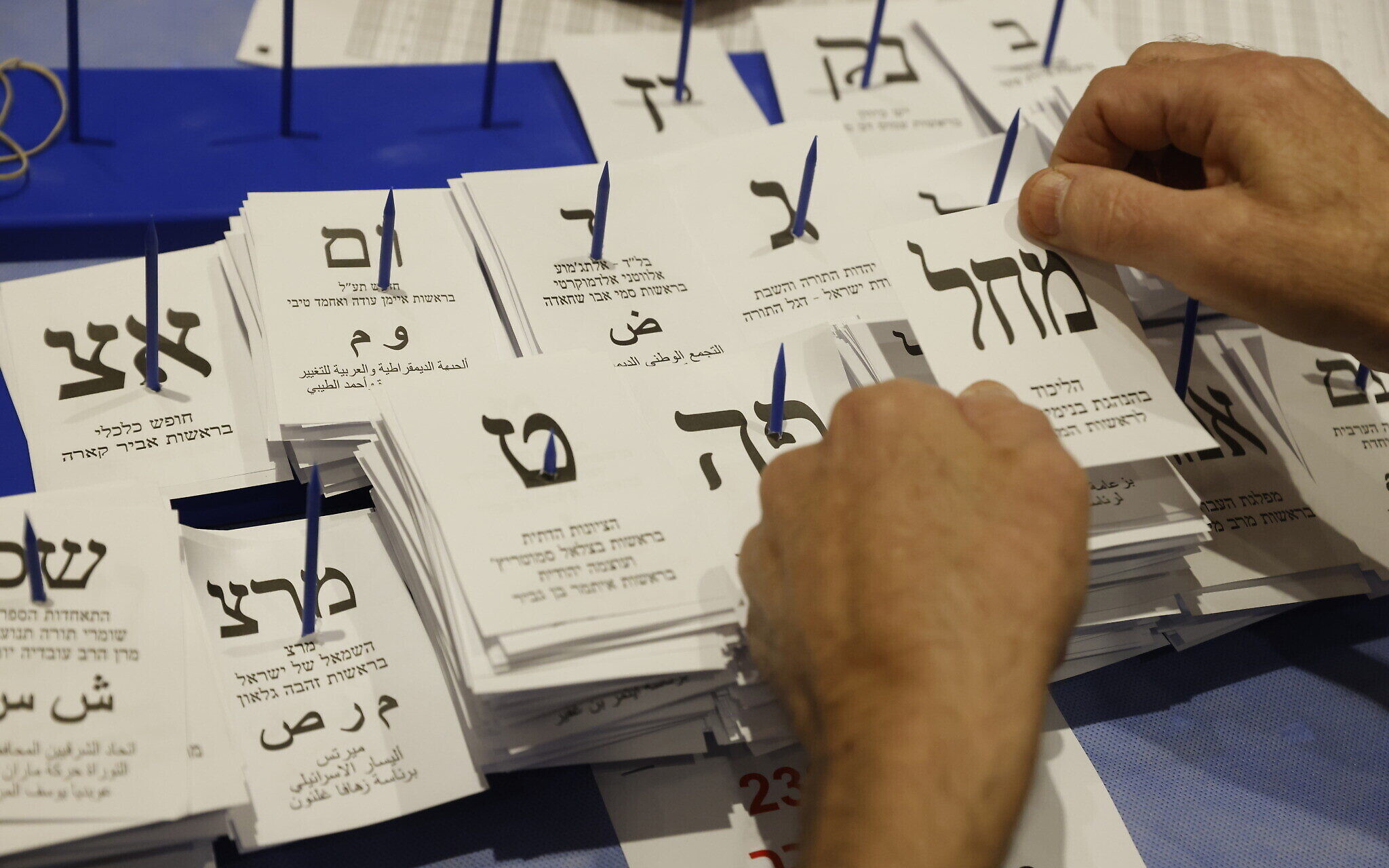
At the polling station itself, the votes are counted, the protocol is signed, and then the materials are transferred to the regional committees. The new live broadcast applies only to the counting of double envelopes, which takes place in Jerusalem. Decentralization is one of the key sources of the elections’ resilience.
Thousands of different polling station committees, in different places, count the votes. Hundreds of thousands of people are involved in the process in one way or another, so there’s no single focal point that can sway the general result.
Because the double-envelope count involves a centralized counting of about half a million envelopes, there is some erosion of the decentralization principle, and for that reason we want to broadcast this process live and afford it another layer of transparency.
Do you expect there to be an increase in the number of double envelopes this time?
Yes, for several reasons. First, there’s a certain expectation of higher voter turnout. Second, the number of eligible voters has increased by about 600,000 people. Third, there are additional populations that may vote using double envelopes — such as evacuees who have still not returned to their homes — and they’ll be able to vote at designated polling stations.
There’s also an increase in the number of reservists and active-duty soldiers compared with previous election campaigns.
And the rule is still in effect that anyone may vote who has a disability or illness that prevents them from reaching their registered polling station.
The candidate lists will be finalized on September 8. The process happens live, at the Knesset. It’s led to some colorful and even bizarre moments in the past. I remember how, ahead of the 2020 election, the joint list of Bezalel Smotrich, Rafi Peretz, and Naftali Bennett was submitted three minutes before the deadline.
The law specifies the hour. We accept the lists until 10 p.m. If a person joins the line by 10 p.m., registration continues until the last person in line has been processed. But anyone who joins the line after 10 p.m. will not be able to register for the election.
Will we see people charging down the hallways again — the mergers and splits and all the hubbub until the 11th hour?
We’re making extensive preparations for those two days. We held a full dress rehearsal, covering literally every stage, and I have a feeling there will be more interesting cases this time. It will be intriguing and exceptional, I guarantee.







The Times of Israel Community.