

IDF ousts reservist who prayed with besieging settlers; still no arrests for Qusra attack
Police chief tells officers not to cooperate with Katz plan for army to give cops responsibility for West Bank civilian law enforcement; back home after deportation by Israel, UK activist says settler violence backed by Israeli state
 Add ToI as a Preferred Source on Google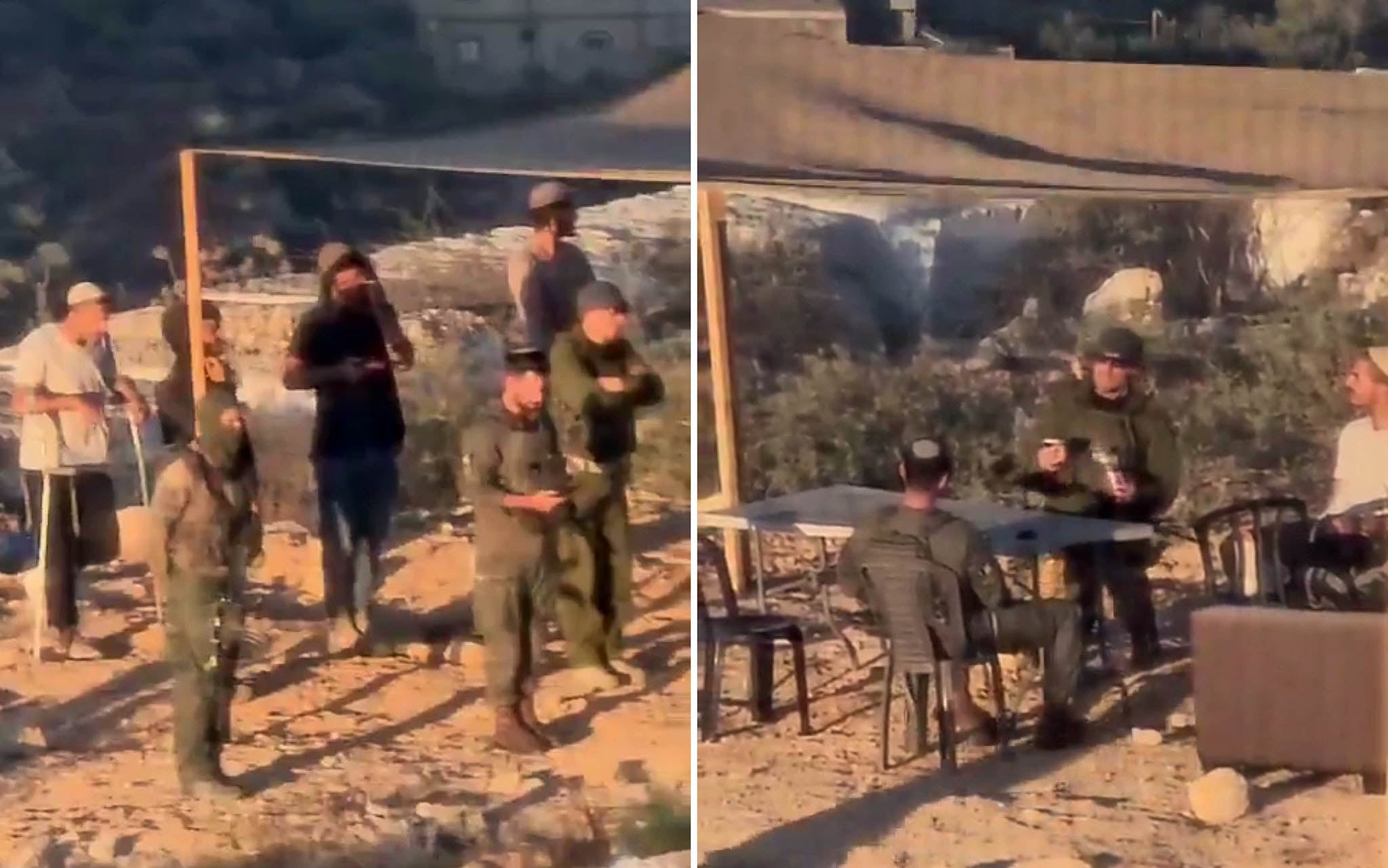
The IDF on Tuesday dismissed a reservist commander who, along with his troops, was filmed praying with settlers besieging the Palestinian village of Qusra, rather than removing them from their illegal outpost.
The August 10 footage sparked an outcry and additional accusations that Israeli authorities were willfully ignoring settler violence.
The outpost where the troops were filmed praying with the Jewish extremists was later removed, but settlers continued to roam the area freely, despite a closed military zone order issued by the IDF.
Residents of Qusra say the siege that settlers began on August 9 is still effectively in place, as families in several homes on the outskirts of the village are unable to leave without coordinating with the army. They are also afraid to do so as settlers remain in the area, and they are convinced that the Israeli extremists will take over their homes, as they have after carrying out similar sieges in nearby towns.
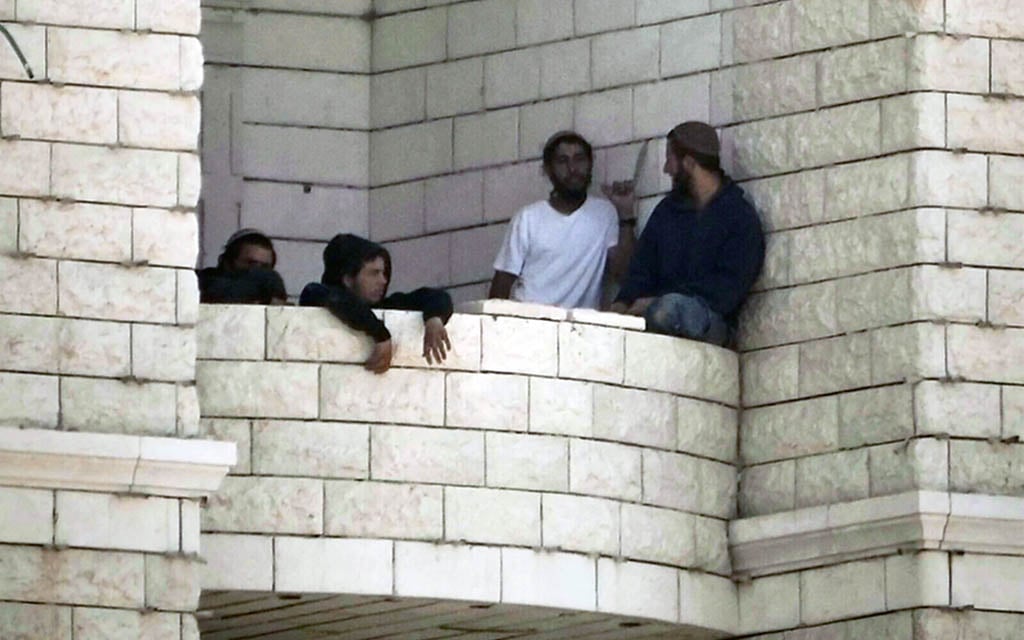
On Saturday, dozens of settlers attacked Qusra, temporarily taking over a home while a Palestinian family was inside.
While footage from the attack showed the faces of a number of the settlers involved, no arrests had been made as of Wednesday morning.
אך ביומיים האחרונים האירוע החמיר עם חסימת דרכי הגישה. הוא הוסיף כי הוא מנסה למצוא דרך להוציא את אשתו ובנותיו. אתמול תועדו חיילים מגיעים לסוכה שאותה הקימו המתנחלים ומתפללים איתם. לאחר מכן לפי חסאן הם עזבו את המקום ולא פינו את המתנחלים. פניתי לצה"ל לפני זמן קצר, נאמר לי שבודקים. pic.twitter.com/OTwREJ8zGM
— Nurit Yohanan (@nurityohanan) August 10, 2026
Police on Monday said investigators visited the scene and collected findings and evidence, and took testimony. Police also said they had issued a number of warrants for the suspects “in order to arrest them in order to bring them to justice,” but did not give any details.
Saturday’s rampage, in addition to an attack on a crew of journalists in the nearby Palestinian town of Jalud, drew another wave of international condemnation.
In a Tuesday statement announcing disciplinary measures against the soldiers filmed praying with the settlers at the outpost in Qusra, the army said that the commander on site acted “contrary to what was expected of him and contrary to the instructions given to him.”
An inquiry into the incident found that the troops had followed the orders of their commander by praying with the settlers.
The military said that the troops were sent to the area to serve as a barrier between the settlers and Palestinian residents and were expected “to refrain from carrying out actions that could be interpreted as identification with or support for illegal activity at an outpost that had caused harm.”
Following the inquiry, the IDF said that it was decided to remove the commander from his role. Should the reservist express a desire to continue serving, he would be allowed to do so in a non-command role, according to a military source.
The other troops seen praying had “acted in accordance with their commander’s instructions, and therefore it was decided not to take action against them,” the IDF added.
Police chief orders officers not to cooperate with Katz
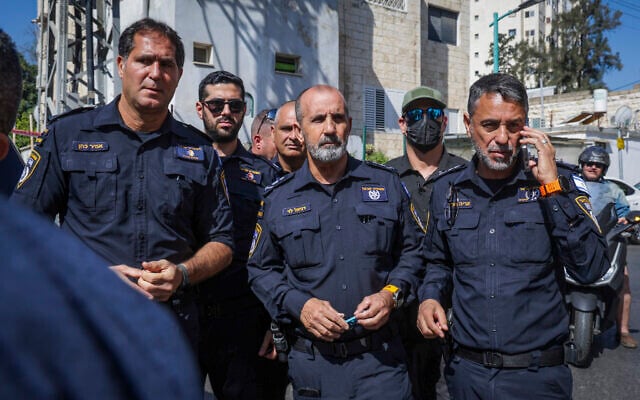
Separately on Tuesday, Israel Police commissioner Daniel Levy ordered subordinates not to cooperate with Defense Minister Israel Katz’s effort to transfer responsibility for civilian law enforcement in the West Bank from the army to police.
In a Zoom call with senior police officers, Levy ordered them not to meet with military officials seeking to discuss Katz’s directive from last month, Hebrew media reported.
“If Defense Minister Israel Katz did not come to help us with crime in Umm al-Fahm, why is he asking us to help in places that are supposed to be under the army’s jurisdiction?” Levy was quoted as having told officers.
On August 17, Katz declared that the IDF had two more weeks to come up with a plan to transfer jurisdiction for law enforcement against settlers to police, as Israel came under fire for its failure to crack down on rampant settler violence.
The army is supposed to be the sovereign authority in the West Bank, given that Israel has never formally annexed the territory, so it is unclear whether it will even be possible to implement Katz’s directive.
IDF soldiers are expected to apprehend settlers seen breaking the law before handing them off to police to file charges. However, such apprehensions are rare, and prosecution is even more infrequent. This has led to accusations that Israeli authorities are tacitly backing settler violence.
The former head of the police’s West Bank division is under investigation for refusing to prosecute cases of settler violence in order to curry favor with far-right National Security Minister Itamar Ben Gvir.
Levy said in the Tuesday Zoom call that the US is “fed up” with Israel’s failure to crack down on settler violence.
“In the world, we are seen as thugs and criminals,” he said in the widely leaked remarks.
Levy said the perpetrators are a small minority of Jewish extremists “whose sole goal is to come and attack Palestinians. This is damaging our image.”
مستوطنون يحرقون مركبات الفلسطينيين خلال هجومهم على المنطقة الشرقية لبلدة بيتا جنوب نابلس. pic.twitter.com/4L8Sb32tBj
— Alhadath Newspaper|صحيفة الحدث الفلسطيني (@Alhadath_news1) September 2, 2026
Hours after he spoke, settlers torched a pair of vehicles overnight in the Palestinian village of Beita, Palestinian media reported.
Security footage showed masked suspects dressed in black torching the two vehicles before fleeing.
Back home after deportation by Israel, British activist urges UK to call out state-backed settler violence
A British activist detained by settlers over the weekend in the West Bank is back home after being deported by Israel earlier this week.
In his first interview since returning to the UK, Finn Joughin told Times Radio he expects his government to condemn settler violence as well as the Israeli government’s complicity in it.
“My first concern is the duty of the British government to protect British citizens. I would be most interested in hearing a strong condemnation of the settler violence, but also the undeniable state complicity in allowing this violence to continue,” he said.
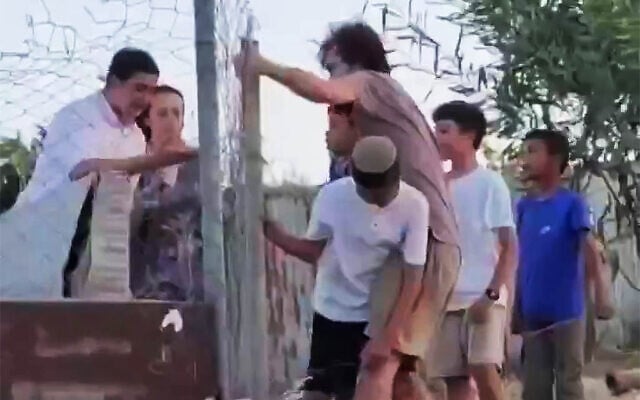
Settlers kidnapped Joughin on Saturday from the West Bank village of Umm al-Kheir, where he was conducting a volunteer activity known as protective presence in which Israelis and foreigners try to stave off attacks from nearby settlers.
The settlers dragged Joughin to their nearby illegal outpost before handing him over to the police.
Israeli law enforcement claimed Joughin was suspected of having conducted an indecent act against a minor, but the footage officers apparently relied on merely showed the British activist using his body to try and block a settler child from breaking into Umm al-Kheir. Israel’s decision to deport Joughin rather than prosecute him for the alleged offense suggested a weak case against him.
Joughin used the Times Radio interview to highlight the difficult situation that Palestinians are currently facing in the West Bank, where settler attacks have been taking place on a daily basis, with near-complete impunity.
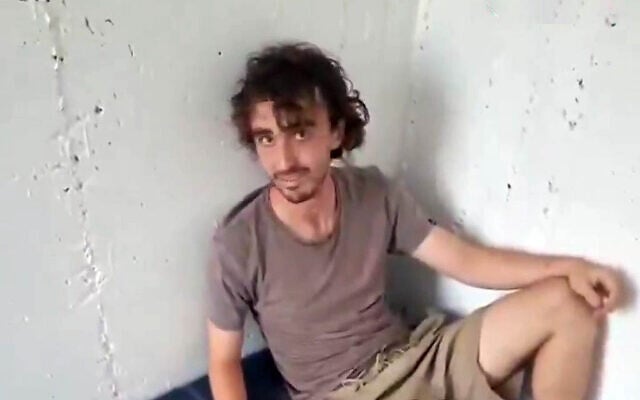
“It’s an absolutely awful scenario that [Palestinians] are living through every day,” he said. “They’ve been barred from allowing their sheep to graze on their own land. They have been banned from harvesting their own olive trees, from planting in their own gardens and fields.”
“It is a continual battle by the residents of Umm al-Kheir to even keep their village standing. In a week, Israeli courts will proceed likely with an order to basically demolish the whole village. Nearly 40 families, dozens of children will be basically left without a home,” he lamented.
Recalling his detention by settlers, Joughin said, “I had been explicitly told that when dealing with settlers, you must not be aggressive. You must not give them any recourse to strike back or call the police on you. So I was very firm. I was standing my ground. I was making sure that I recorded the whole incident.”
“All of a sudden, I was approached by one of the adults with an assault rifle. They were pushing me, shoving me, screaming in my face. Before I knew it, I had been grabbed. I was put in a chokehold. I had my arm twisted behind my back, and I was kidnapped, made to sit, locked in a bomb shelter, as I understand it, for at least half an hour under threat of gunfire,” he said.




The Times of Israel Community.