

Everyone wants quiet in the south. That doesn’t mean we’ll get it
Had Wednesday’s rocket fire at Sderot caused casualties, we would find ourselves in a completely different situation

 Add ToI as a Preferred Source on Google
Avi Issacharoff, The Times of Israel's Middle East analyst, fills the same role for Walla, the leading portal in Israel. He is also a guest commentator on many different radio shows and current affairs programs on television. Until 2012, he was a reporter and commentator on Arab affairs for the Haaretz newspaper. He also lectures on modern Palestinian history at Tel Aviv University, and is currently writing a script for an action-drama series for the Israeli satellite Television "YES." Born in Jerusalem, he graduated cum laude from Ben Gurion University with a B.A. in Middle Eastern studies and then earned his M.A. from Tel Aviv University on the same subject, also cum laude. A fluent Arabic speaker, Avi was the Middle East Affairs correspondent for Israeli Public Radio covering the Israeli-Palestinian conflict, the war in Iraq and the Arab countries between the years 2003-2006. Avi directed and edited short documentary films on Israeli television programs dealing with the Middle East. In 2002 he won the "best reporter" award for the "Israel Radio” for his coverage of the second intifada. In 2004, together with Amos Harel, he wrote "The Seventh War - How we won and why we lost the war with the Palestinians." A year later the book won an award from the Institute for Strategic Studies for containing the best research on security affairs in Israel. In 2008, Issacharoff and Harel published their second book, entitled "34 Days - The Story of the Second Lebanon War," which won the same prize.
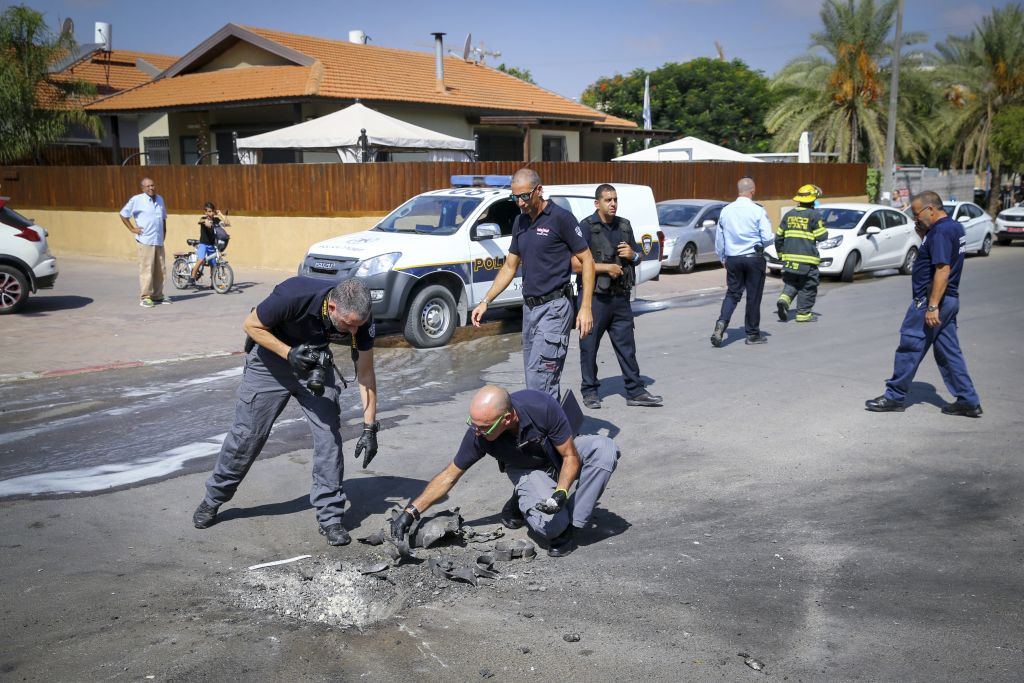
The rocket fire at Sderot this week, together with Israel’s response, which included an attack on Hamas positions, ended with no casualties. Hamas officials told Israel that they did not want an escalation; the Israeli army stopped the bombardments. Plainly, it would appear, both sides, Israel and Hamas, have a clear interest in keeping things quiet on the Gazan front.
Hamas wants to ensure the survival of its regime. Israel wants Hamas to demonstrate sovereignty in Gaza and keep other radical elements from firing rockets into its territory.
Wanting is one thing, however. Reality can turn out rather differently.
The rocket that landed on a street in Sderot on Wednesday, and the mortar shell that struck the Eshkol region on Thursday, underlined the fragility of the current situation in Gaza. While neither side may be interested in an escalation, tiny Salafist groups are making no small effort to heat things up. As far as they are concerned, calm serves the Hamas regime, but not them.
For now, the government of Israel, under the leadership of Prime Minister Benjamin Netanyahu and Defense Minister Avigdor Liberman — who is supposed to be taking a hawkish position against Hamas, sworn as it is to wage jihad against Israel — is treating the potential flare-up with kid gloves. True, the bombardment of Hamas’s targets following Wednesday’s rocket fire was quite heavy, but it caused no casualties. The firing of the mortar shell the next day brought almost no response (just the firing of several artillery shells into uninhabited areas).
Israeli officials evidently believe that the country needs a strong and stable Hamas in Gaza in order to keep things calm. At the same time, Hamas leaders in Gaza realize that they need significant gestures from Israel in order to keep their regime stable.
This is why the Israeli government recently allowed the establishment of a natural gas line to Gaza, as well as the entry of funds to pay the salaries of Hamas officials — a measure that can be seen as unprecedented in terms of Israel’s willingness to accept Hamas’s rule in Gaza.
The question is how long this balance will last in light of the other jihadist groups’ constant attempts to undermine Hamas’s rule. Had the rocket that struck Sderot caused casualties, we would likely be in a completely different situation.
Abbas’s unhealthy week
Gaza aside, this was one of the toughest weeks, if not the toughest, for Palestinian Authority President Mahmoud Abbas (Abu Mazen) since he took office in January 2005.
It started with the funeral of former president Shimon Peres on Friday, and the barrage of criticism aimed at Abbas on numerous Palestinian websites, social media and on the street, for his “crime” of attending. Small protest demonstrations were held in the West Bank, during which the participants called for his removal from office.
The demonstrators shouted “Arhal!” (Get out!), the same slogan that Egyptian demonstrators used against then-president Hosni Mubarak in 2011.
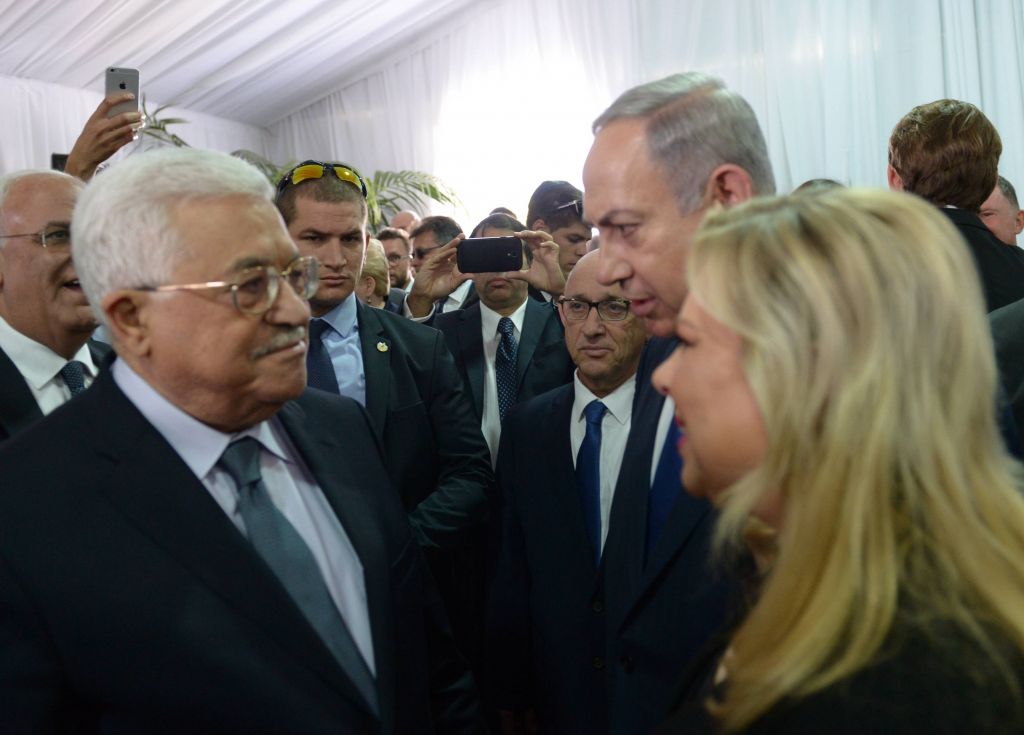
As far as many members of his own Fatah group are concerned, too, Abbas made a big mistake — maybe, too big — by attending the funeral.
Other ostensible mistakes followed: Abbas refused a demand from Cairo that his big rival Mohammad Dahlan be re-admitted to Fatah. He then appeared ready to move ahead with local elections in the West Bank and then called them off. (Abbas’s close associates insist that it was the PA courts, not the president, who made the key decisions here).
Several members of Fatah’s upper echelon said, off-the-record, this week that Abbas should resign honorably before the damage he causes to Fatah becomes too great and leads to a “Palestinian Spring” against the PA.
The public conflict with Dahlan is far from over. It is difficult even to determine who started it, but that does not change the fact that the rivalry between them brings no credit to Abbas, Dahlan or Fatah. High-ranking Fatah officials believed that Abbas would agree to a reconciliation with Dahlan following pressure from the Arab Quartet (Egypt, Jordan, Saudi Arabia and the United Arab Emirates), but that did not happen. Now Dahlan’s supporters are holding rallies, sometimes burning photos of Abbas, while Fatah has expelled some of his loyalists and Abbas’s associates prevented Jalila, Dahlan’s wife, from entering the Gaza Strip to conduct charitable activities financed by her husband.
Members of Hamas are looking on from the sidelines, positively rubbing their hands with glee.
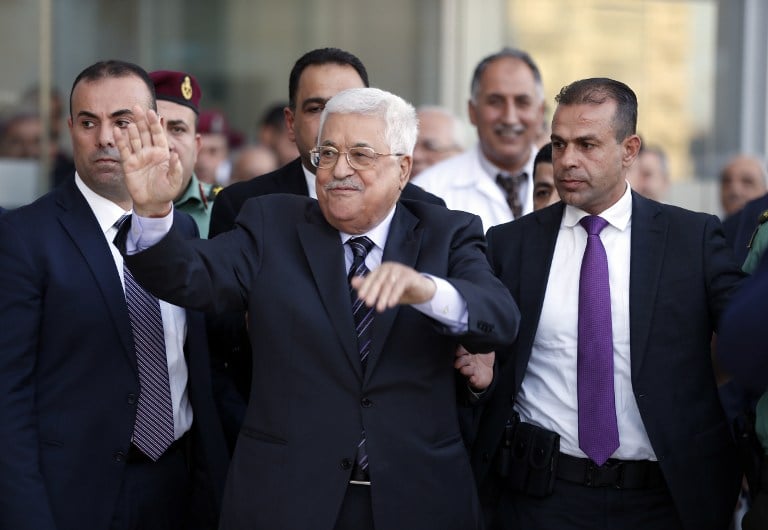
As if all this were not enough, Abbas had a health scare on Thursday, and was admitted to the hospital in Ramallah in the morning with chest pains. At first, his advisors claimed that he had gone there for routine tests, and, typically, accused the Israeli media of spreading false reports of something worse. But the official statement by the hospital’s director made it clear that Abbas, soon to turn 82, had undergone a cardiac catheterization procedure. Even though he left the hospital on his feet, waving, a few hours later, his age, his decades of heavy smoking, and his history of health problems, call his physical well-being into question.
Abbas’s political condition is weaker than ever. His health is not what it used to be. There is no solution with Israel on the horizon. And his associates are fighting over the succession. Still Abbas refuses to give up, and is working on several ambitious political projects. He wants to convene Fatah’s Seventh General Conference next month, replace the members of the PLO Executive Committee (following elections for Fatah’s leadership), and maybe then hold those local elections in the territories.
As previously stated: Wanting is one thing. Reality, however, can turn out rather differently.






The Times of Israel Community.