

Exit polls show win for Netanyahu and far-right allies, as vote count gets under way
Bloc led by Likud leader forecast to muster 61-62 seats in 120-member Knesset, with Religious Zionism predicted to win up to 15 seats, though actual tally could change picture
 Add ToI as a Preferred Source on Google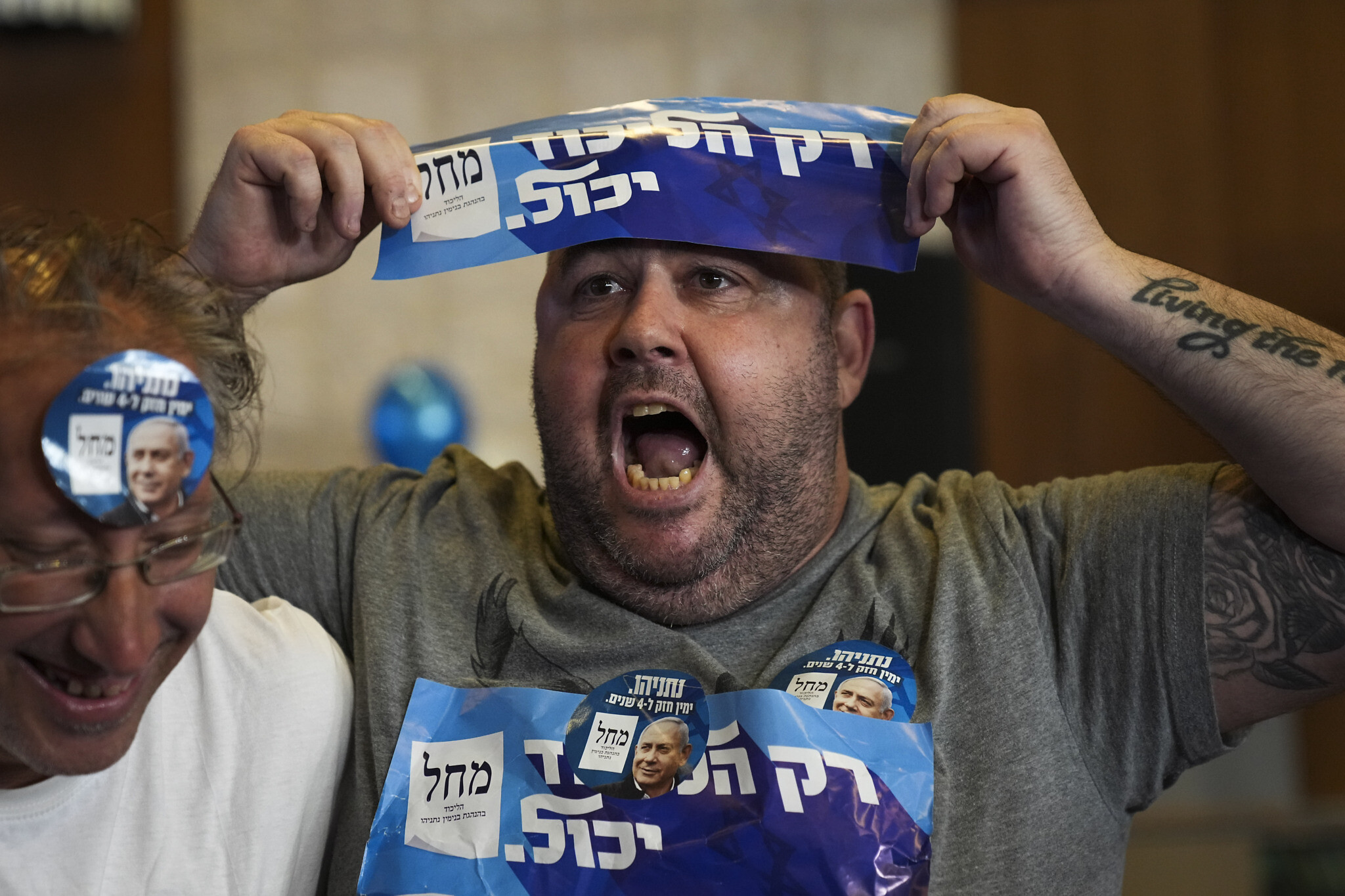
Three TV exit polls published Tuesday night as Israel’s polling stations closed showed former prime minister Benjamin Netanyahu heading back to power after 17 months in the opposition, with his right-wing-religious alliance projected to notch at least 61 seats, delivering a knockout punch to Prime Minister Yair Lapid’s wide-tent coalition.
The numbers could yet change, however — as they have repeatedly in past Israeli elections when actual votes are counted — and neither Netanyahu nor Lapid was rushing to make victory or concession speeches.
“I request we wait for the real results,” Minister Meir Cohen of Lapid’s Yesh Atid told Channel 12 news.
If confirmed, the exit poll projections would mark a stunning comeback for Netanyahu, currently on trial in three corruption cases. But it could also usher in a new era of ultra-divisive politics, with Netanyahu’s far-right partners promising to pass legislation that will do away with his legal woes and defang the Supreme Court.
The polls were published by Israel’s major networks as voting stations closed across the country at 10 p.m. Tuesday, at the end of the fifth election in under four years, after a coalition headed by Lapid and former prime minister Naftali Bennett collapsed in May following just a year in power.
Polls from all three networks, which have been off the mark in the past, showed Netanyahu’s bloc with 61-62 seats and parties backing Lapid with 54-55, with another four seats going to Arab alliance Hadash-Ta’al, which has indicated it will not be part of a government.
One major remaining wildcard was the anti-Zionist Arab party Balad, which was hovering just beneath the 3.25% threshold according to the exit polls. Should it squeak into the Knesset, it would swing four seats away from the other parties, and could leave both the Netanyahu bloc and the outgoing coalition bloc short of a majority.
Channel 12 showed the pro-Netanyahu bloc of right-wing and ultra-Orthodox parties with 61 and Lapid’s coalition, comprising factions from the right, left, center and Arabs, with 55. Channel 13 and Kan both gave Netanyahu 62 and Lapid 54.
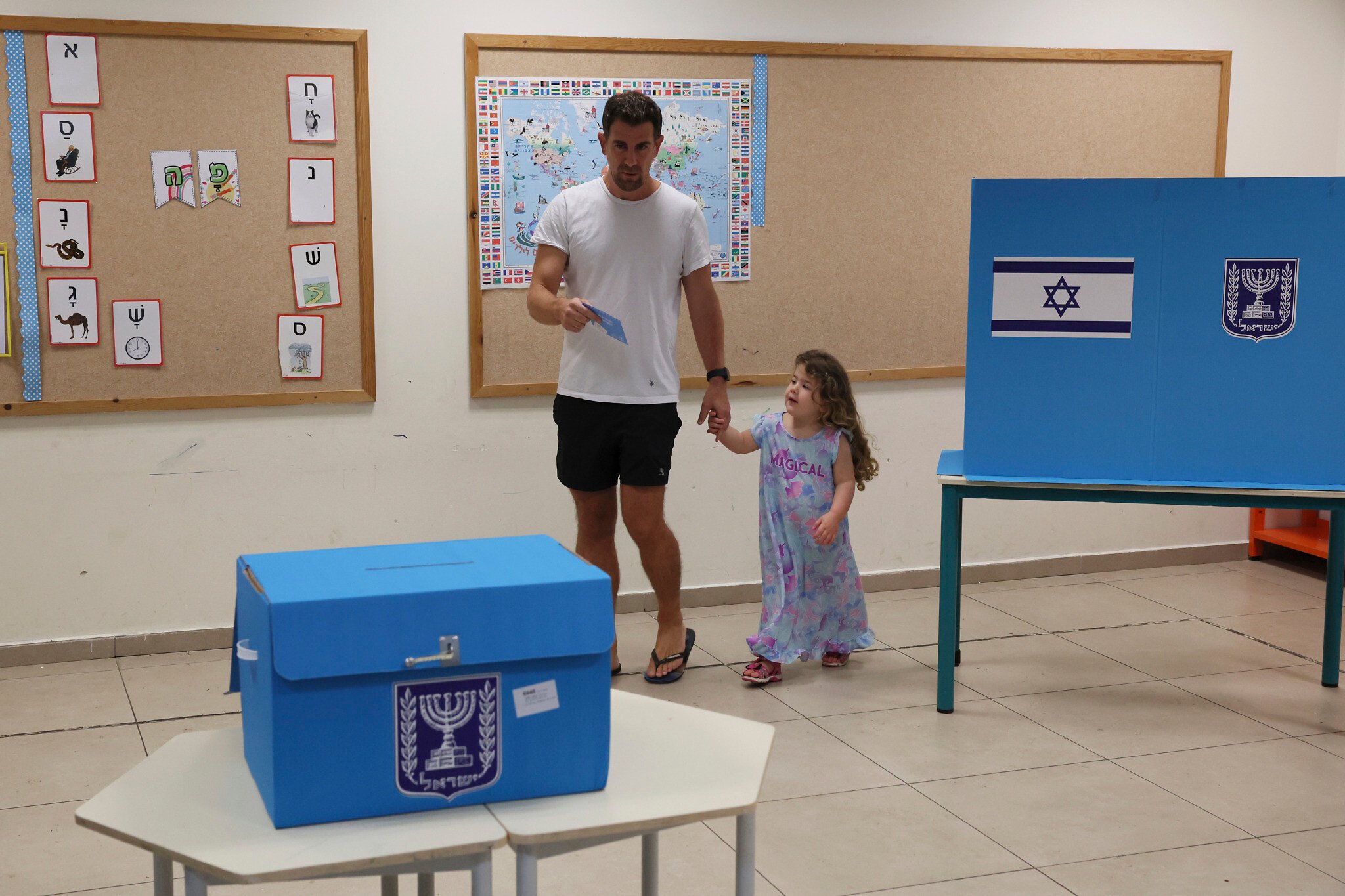
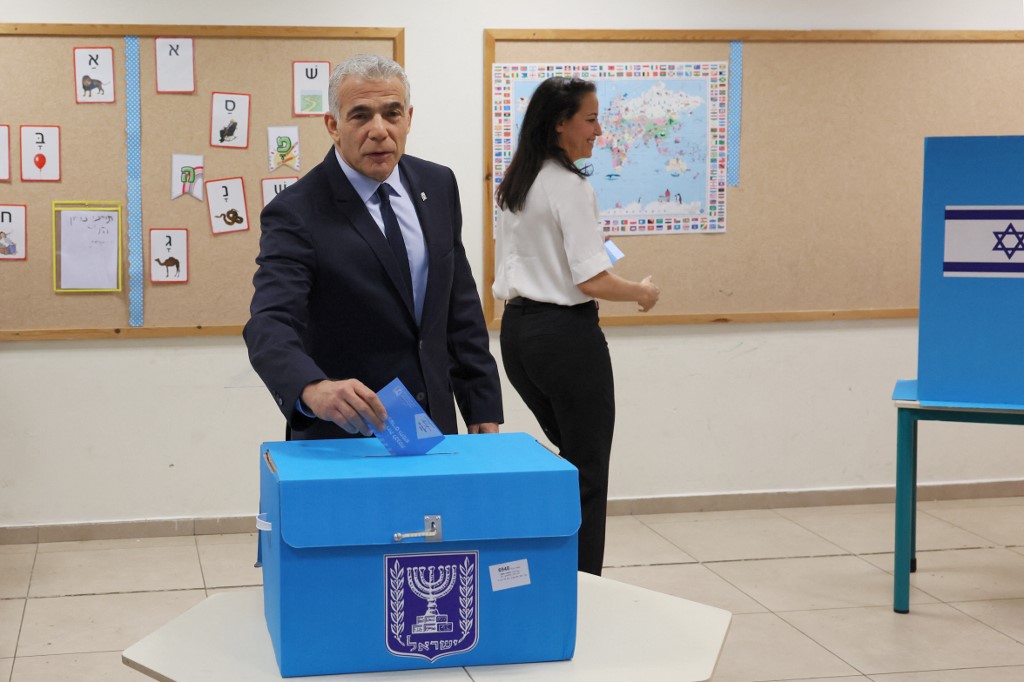
The exit polls will continually be updated throughout the night as officials tally the 4,843,023 ballots cast in the election — the highest turnout since 2015, at 71.3 percent.
The polls showed Netanyahu’s Likud remaining the top vote-getter with 30-31, trailed by Lapid’s Yesh Atid, which was projected to win 22-24 seats. The third largest party was projected to be the far-right Religious Zionism, which has partnered with extremist Itamar Ben Gvir’s Otzma Yehudit, with 14-15 seats, while National Unity was projected to get 11-13 seats.
A former follower of extremist rabbi Meir Kahane, Ben Gvir looks set to get a cabinet post in a potential Netanyahu government, raising alarms both at home and abroad. He has proposed a loyalty test for citizenship, which could lead to the mass deportation of Arabs, and together with Religious Zionism leader Bezalel Smotrich has proposed far-reaching changes to the country’s legal system that would strip the Supreme Court of the ability to strike down legislation ruled unconstitutional.

Speaking to Channel 12 news, former Likud justice minister Amir Ohana indicated legal reforms would be a main priority for the potential Netanyahu-led government, but claimed they would not affect Netanyahu’s trial.
Coming in fifth was Shas, predicted to get 10 seats, followed by United Torah Judaism with seven seats, giving Netanyahu 17 likely seats of support.
Netanyahu swiftly got on the phone with leaders of Religious Zionism, Shas and UTJ following the release of the polls, according to Hebrew media reports.
While smaller parties like Meretz and Labor pleaded throughout the day for voters to go to the ballot booth, predicting dolefully that their factions would fail to cross the 3.25% threshold, the worries were proven unfounded by the exit polls.
Labor was projected to get 5-6 seats, Meretz 4-5, Yisrael Beytenu 4-5, Ra’am 4, and Hadash-Ta’al also 4.
Balad leader Sami Abou Shahadeh told supporters that the exit polls were not an accurate reflection of the party’s level of support. “Exit polls don’t take into account the last few hours because they close early and the rising turnout will prove Balad victorious,” he said. Because many Arabs work in the service industry and do not take election day off, turnout in the community often picks up at the end of the day.
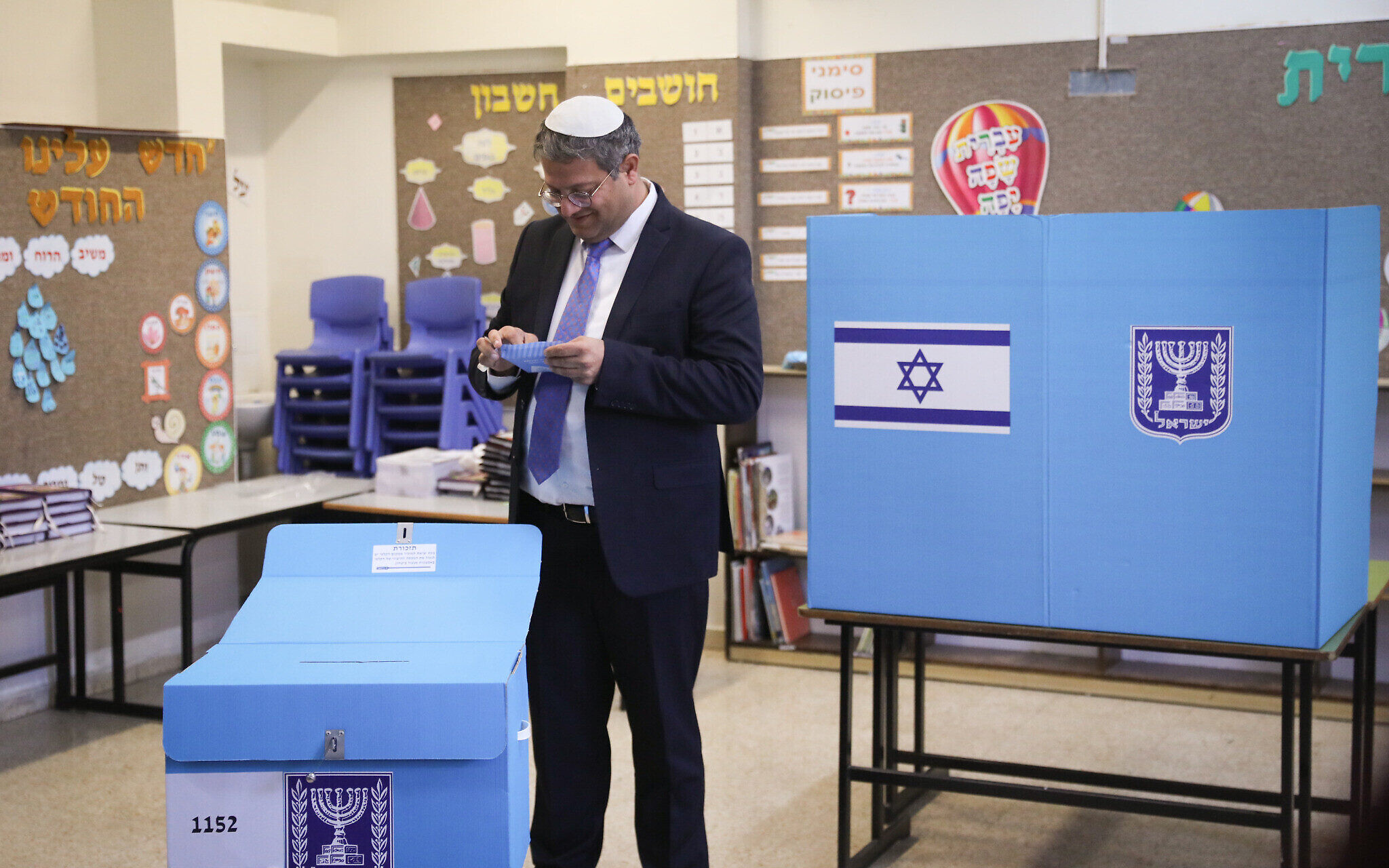
Despite the question marks, Likud supporters at a campaign party excitedly chanted “Bibi is back!” and “Bibi, King of Israel.”

Otzma Yehudit headquarters exploded with celebrations as the results were announced, with young supporters dancing to Jewish music while hoisting flags.
“The nation has spoken,” Otzma Yehudit spokesman Yishai Fleischer told The Times of Israel.
In 2021, exit polls also initially showed Netanyahu winning a majority, though they were not borne out in the end.
With few parties agreeing to merge, the 2022 election had a larger-than-usual number of small parties — especially among Arab factions and the center-left — competing for votes, putting several components of a future Lapid coalition in danger of falling below the threshold.
Netanyahu is seeking to retake power after a year-plus in the opposition, during which he successfully drove a wedge into the right-wing flank of Lapid’s coalition, leading to its collapse.
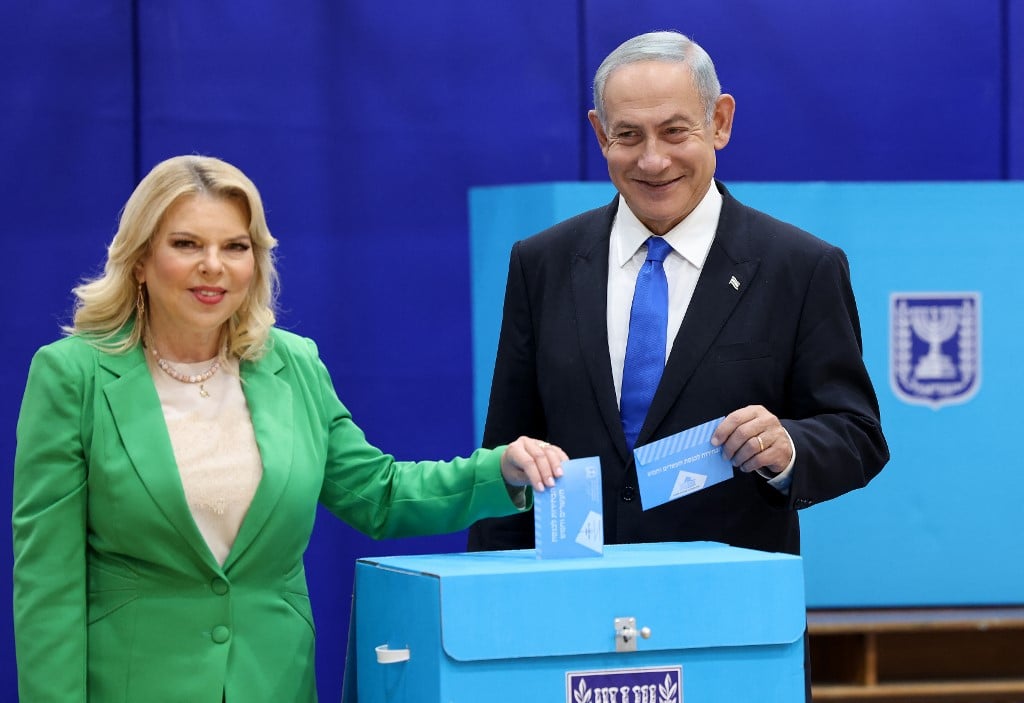
But the former premier, who is on trial in three corruption cases, faces a wall of opposition to his return, leaving him with few likely partners beyond the ultra-Orthodox Shas and UTJ and the far-right Religious Zionism.

Israel has been rocked by political turmoil since a Netanyahu-led government fell apart in late 2018. Two rounds of elections, in April 2019 and September 2019, failed to yield a winner, and a short-lived unity government formed after the third vote in March 2020 collapsed after less than a year.
Starting in June 2021, Lapid’s unlikely coalition, which he helmed with his predecessor as premier Naftali Bennett, managed to push Netanyahu from power after over a decade, but the alliance, which included right-wing Yamina and Islamist Ra’am, struggled to overcome deep ideological divisions.

Turnout numbers were the highest since 1999, defying worries of growing voter apathy. Some 12,000 ballot stations opened nationwide at 7 a.m. for the nation’s 6.8 million voters.
Election authorities reported a number of issues at polling stations, including isolated irregularities and violence or threats at polling stations in Carmiel, Rehovot, Taibe, and the Krayot region.
In Yarka, police were stationed at polling booths and poll workers who were members of political parties were replaced by unaffiliated officials after reports that empty voting envelopes were stolen.
In Beit Shemesh, a polling station was closed and moved to a new location after extremists sprayed a foul-smelling liquid in an apparent attempt to discourage voters.
Jacob Magid, Jeremy Sharon, Tal Schneider, Sue Surkes, Carrie Keller-Lynn, and Jack Mukand contributed to this report.








The Times of Israel Community.