

First we take Qusair, then we take Homs
Sudan shuts the oil tap on South Sudan, accusing it of aiding separatist rebels
 Add ToI as a Preferred Source on Google
Elhanan Miller is the former Arab affairs reporter for The Times of Israel
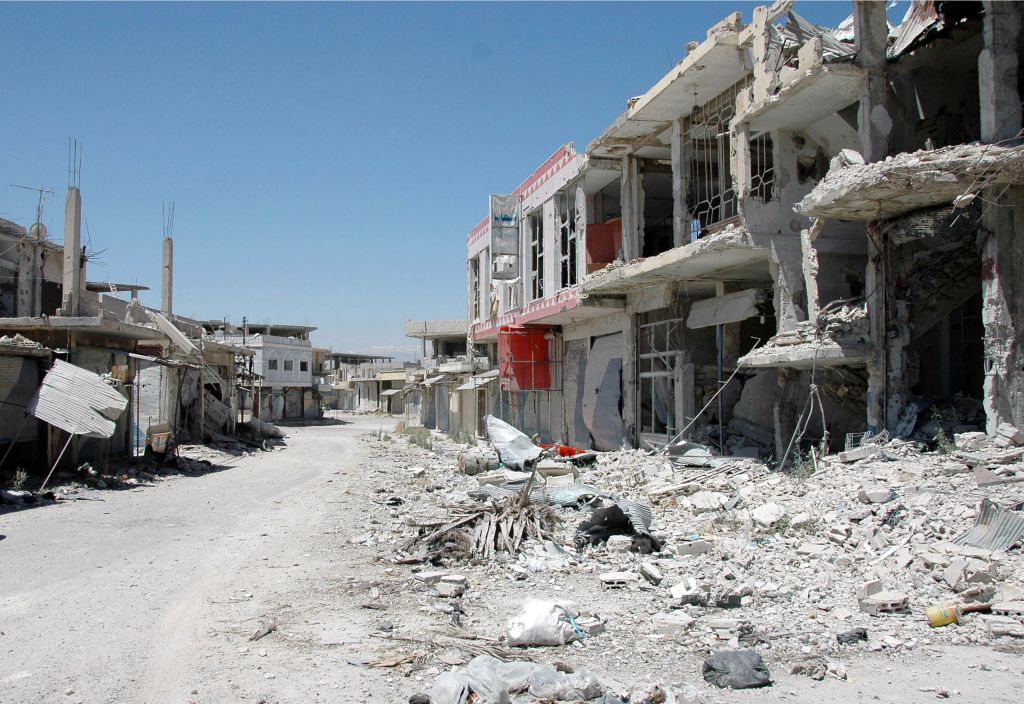
The tactical gains made by forces of the Assad regime supported by Hezbollah lead the headlines in Arab media Sunday.
“The regime completes the link between Damascus and the coast,” reads the headline of London-based daily Al-Hayat, featuring two army soldiers riding motorcycles during a patrol of the town of Buweidha, north of Qusair, captured by the regime on Saturday. Opposition sources tell the daily that the government has also tried to retake the city of Homs and its environs, aided by Hezbollah and Iraqi fighters. The opposition sources added that only 20 percent of the combatants on the side of the regime are Syrians, and the rest have come to the country from abroad.
“Ten million Syrians are in need of aid,” reads the headline of Saudi owned daily A-Sharq Al-Awsat, noting that the figure of 4 million refers to civilians in need of immediate humanitarian aid. In fact, some 10 million Syrians, some half of the country’s population, will be requiring aid by the end of the year. The UN has sent out an unusual appeal for $5.2 billion in donations for Syria from the international community.
Meanwhile, the daily reports that the regime will likely turn now to take Aleppo or Homs; while an opposition force, the Free Syrian Army’s Marwan Hadid Battalions, announced targeting the presidential palace in Damascus with five Grad missiles.
Members of the Yarmouk Martyrs Brigade fighting on the Golan Heights near the border with Israel tell Al-Jazeera that they will not allow Russian troops to enter the demilitarized zone near the border to replace the UNDOF contingent which is quickly unraveling.
“How can they serve as peacekeepers when they were involved in killing Syrians and destroying the country?” wonders Abu Ali, deputy commander of the battalion.
“They are dividing Syria!” cries the headline of an op-ed by A-Sharq Al-Awsat columnist Tareq Homayed, referring to Iran and Russia. He claims that the partition of Syria is taking place as he writes, with Russia helping to distract the world with the Geneva 2 conference designed to yield a political solution for the Syrian conundrum.
“The sad thing is that the Arabs, and especially the active, not passive ones, and the international community, especially America, France and Britain, are not only ignoring the suffering of the Syrian people, they are also ignoring the process of Russia and Iran dividing Syria. They are of course also ignoring Israel which has taken its share of the Golan Heights and continues to hold it aided by Assad himself. All of this is a direct threat to the interests of the Arabs and the West.”
Sudan prepares for war with South over oil
A decision by the Sudanese government to block the transfer of oil emanating from South Sudan through its territory is making major headlines in Arab media on Sunday.
According to Dubai-based news channel Al-Arabiya, President Omar Al-Bashir is refusing to allow southern oil to travel through his country less than two months after he enabled the oil to flow that way. According to a statement made to the Sudanese news agency, Sudan feels that oil revenues are being used by the South to fund rebels against Sudan’s regime.
The channel reports that South Sudan inherited 75 percent of the country’s oil deposits, but it needs the northern installations to export the oil.
But according to A-Sharq Al-Awsat, the Sudanese government decision was to stop the export of oil in the opposite direction, from the north southward.
Qatari news channel Al-Jazeera opens its coverage of the event with a comment by South Sudan’s information minister Barnaba Benjamin, saying that Sudan’s decision to stop the oil transfer is “unwise.” According to Benjamin, South Sudan was not informed about the decision, which is merely intended to turn the country into a “scapegoat” for internal struggles in Sudan.
—



The Times of Israel Community.