

Flights resume after two-day strike concluded
Major delays reported at Ben Gurion, as travelers stranded since Sunday converge on airport
 Add ToI as a Preferred Source on Google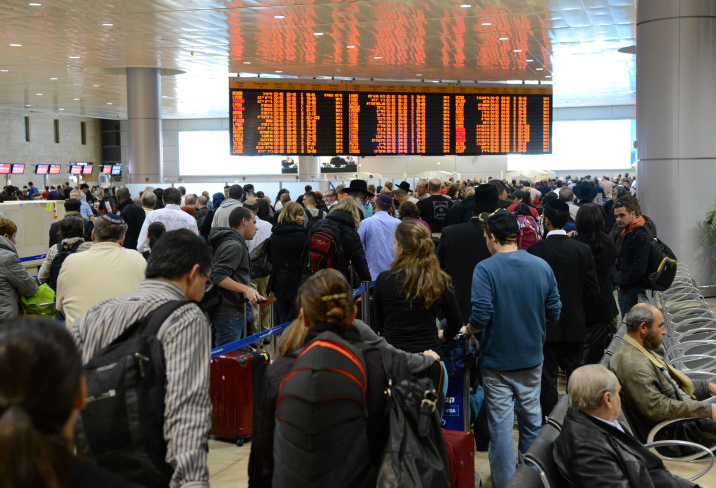
After concluding a two-day strike over a deal that would open the local aviation industry to competition, Israel’s three airlines resumed flights early Tuesday morning.
Between 11:00 p.m. Monday night and 2:00 a.m. Tuesday morning, the first six flights of El Al, Israel’s largest airline, left Ben Gurion International airport. El Al and the country’s two smaller carriers, Arkia and Israir, had approximately 80 departures and arrivals by 8:00 a.m.
Once service resumed, very heavy delays were reported at the airport as many travelers whose flights were canceled on Sunday and Monday tried to board planes.
Domestic travel also resumed from Terminal 1 at Ben Gurion and from Tel Aviv’s Sde Dov airport.
The strike began Sunday in response to the government’s approval of an Open Skies agreement with the European Union, meant to increase competition among carriers, open up European destinations to Israeli travelers, increase tourism, and reduce the cost of air travel for Israelis.
El Al, Arkia and Israir airlines all grounded flights in protest, saying the move would lead to a loss of jobs in the airline industry and the possible closing of Israeli airlines due to increased competition.
As part of the deal ending the strike, Israel’s Finance Ministry will increase spending on security for El Al and other Israeli airlines. The airlines, in turn, are to enact measures increasing security efficiency, and consequently lowering the cost of security expenditures. Security measures cost approximately 500 million shekels (some $140 million) per year.
The local airlines had said the agreement would put them at a disadvantage compared to other European airlines that do not have the same security requirements.
Israeli airlines do not fly to European airports whose security checks do not meet Israeli standards. Unless Israel provides the security at these airports, the local carriers had argued, the European carriers would be able to offer more flights and lower prices under Open Skies than the Israeli companies could supply.
The Open Skies agreement was signed with the European Union last July after more than three years of negotiations, and ratified during Sunday’s cabinet meeting by a vote of 16-3.










The Times of Israel Community.