

Following inconclusive vote, AG demands second round in chief rabbi election
Call for runoff comes after a single miscast ballot left rabbis Micha Halevi and Kalman Ber with 40 votes apiece in last Sunday’s Chief Rabbinical election
 Add ToI as a Preferred Source on Google
Sam Sokol is a former political correspondent at The Times of Israel. He was previously a reporter for the Jerusalem Post, Jewish Telegraphic Agency and Haaretz. He is the author of "Putin’s Hybrid War and the Jews"

The Chief Rabbi Election Assembly must hold a second round of voting for the next Ashkenazi chief rabbi as soon as possible, the Attorney General’s Office informed the Religious Services Ministry on Monday evening, just over a week after the first ballot ended in a tie between two candidates.
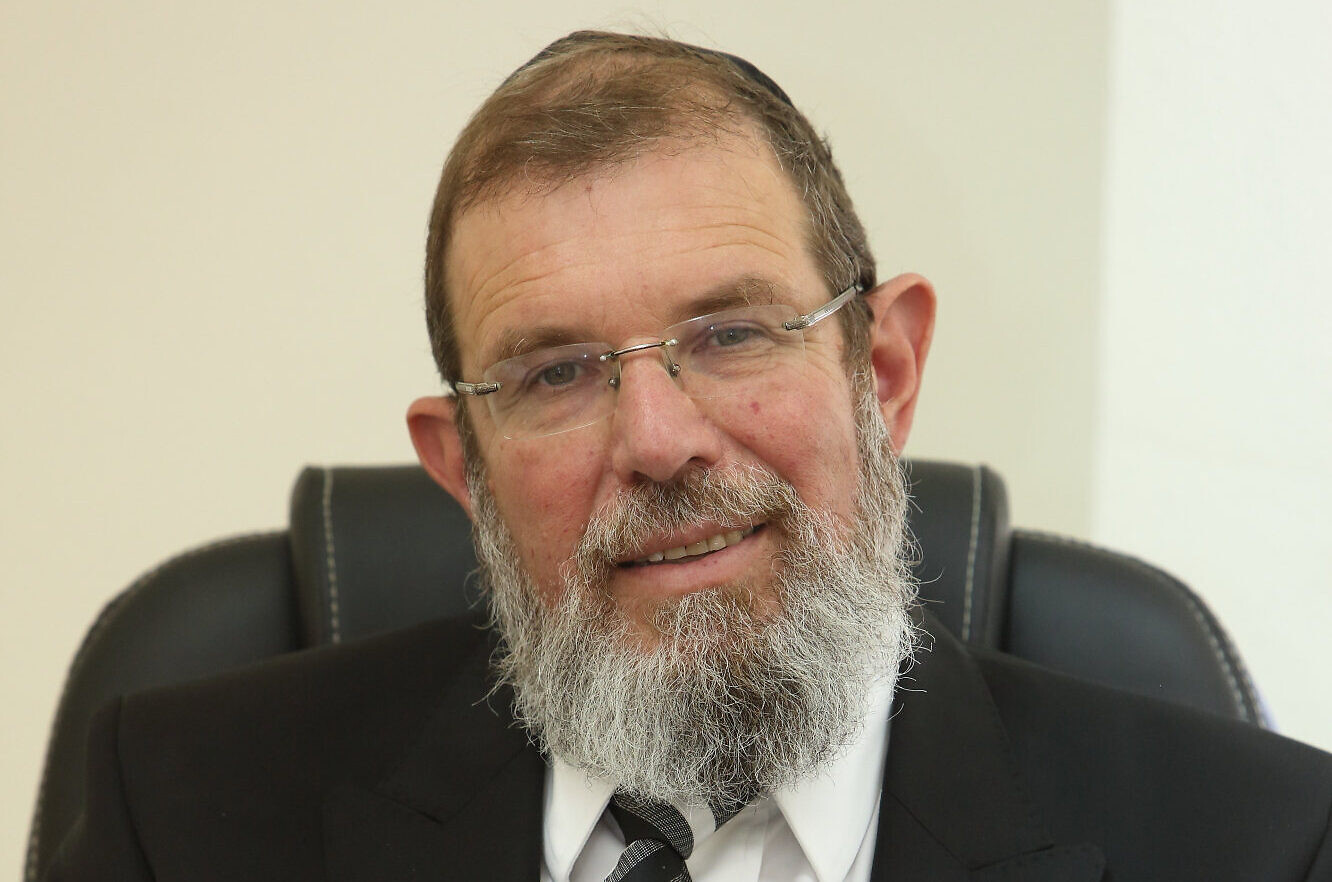
While Rabbi David Yosef was elected as Sephardic chief rabbi last Sunday, the vote for his Ashkenazi counterpart was inconclusive — with both Micha Halevi, chief rabbi of Petah Tikva, and Kalman Ber, the Ashkenazi city rabbi of Netanya, receiving 40 votes apiece.
Following the election, it was discovered that an empty envelope had been submitted in the Ashkenazi race while an envelope containing ballots for both rabbis Yosef and Halevi had been submitted, apparently mistakenly, in the Sephardic election.
In a letter to the Religious Services Ministry’s legal adviser, Deputy Attorney General Avital Sompolinsky stated that because it was placed in the wrong envelope, the additional vote for Halevi could not be counted and the voter’s intent could not be reliably inferred.
As such, the Chief Rabbi Election Assembly should “prepare as soon as possible for another round of elections for the Ashkenazi chief rabbi,” she wrote.
Responding to Sompolinsky’s letter, lawyers for Ber wrote to the deputy attorney general, stating that the ministry had set “no date” for the next round and alleging that there were those who were attempting to delay the vote.

A spokesman for Religious Services Minister Michael Malkieli did not respond to a request for comment.
Halevi is a hardline candidate who is backed by both Bezalel Smotrich’s far-right Religious Zionism party and Shas. He recently received negative publicity due to a scandal involving kosher supervision in Petah Tikva. He has also been slammed for previously promising not to run in the election.
Ber, despite roots in the religious Zionist community and in the Bnei Akiva youth movement, nevertheless received the backing of Degel HaTorah, an ultra-Orthodox party.
Smotrich aims to break the long-time hold by the ultra-Orthodox community on the Ashkenazi chief rabbi post by electing a figure from the religious Zionist community.
“There’s a lot of political interests” involved in the issue of who serves as the next chief rabbi, Rabbi Seth Farber, the director of the ITIM nonprofit, which helps Israelis navigate the country’s labyrinthine religious bureaucracy, told The Times of Israel.
“My hope is that they be moved forward efficiently based on [Sompolinsky’s] decision and we’ll have a chief rabbi within a few weeks,” although it is possible that the issue may end up in litigation before the High Court of Justice, he said.
Israel’s two most recent chief rabbis, Ashkenazi David Lau and Sephardi Yitzhak Yosef, stepped down from their posts in July, leaving the positions officially vacant for the first time in more than a century, after elections for their replacements and for the Chief Rabbinate Council were repeatedly pushed off. They were elected to 10-year terms in 2013.
The elections were initially delayed by the Knesset last summer after Religious Services Minister Malkieli, of the ultra-Orthodox Shas party, argued that municipal voting could interfere with the rabbinical elections.
But the date was then pushed off again because of two rulings from the Supreme Court. Both Lau and Yosef come from rabbinic dynasties and the court ruled that, because both had brothers running to succeed them, the chief rabbis could not have a hand in choosing members of the 150-member body that votes for their successors. The second ruling instructed them to “consider” appointing more women to the voting body.
Only 140 delegates — all men — voted on Sunday.
The Chief Rabbinate, a century-old body, oversees marital laws, burial rites, rabbinic courts, kosher certifications, Jewish conversions and other aspects of Jewish family and religious life in Israel.
A poll by the Israel Democracy Institute of over 600 Jewish respondents conducted in June found that 54 percent neither accepted the Chief Rabbinate as a religious or spiritual authority nor held the identity of the next chief rabbis to be particularly important (55%).
Gavriel Fiske contributed to this report.









The Times of Israel Community.