

For US, cobbling coalition on IS no easy task
World leaders not yet agreed on what the coalition is doing and why, as well as who should be allowed to take part
- See more Times of Israel on Google - add us as a Preferred Source
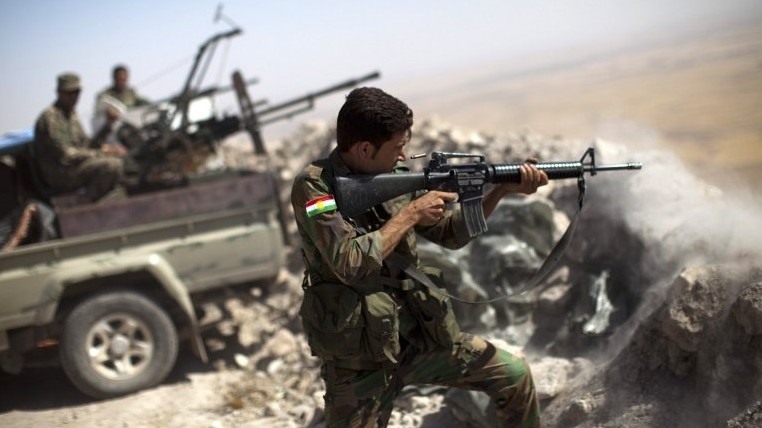
ANKARA, Turkey (AP) — Assembling a coalition to fight the militants from the Islamic State group is proving to be a complicated affair.
France is all in, but would like to invite Iran — against the wishes of the United States. The US is pressing Turkey, which has resisted publicly endorsing the global strategy against the extremists, who are holding 49 Turkish hostages.
Many world leaders want to act quickly, before the Islamic State group gains more territory. But it’s crucial to reach agreement on what the coalition is doing and why, particularly after bitter diplomatic divisions created by the US-led invasion of Iraq a decade ago.
US Secretary of State John Kerry said as many as 40 countries have offered various levels of support — from humanitarian aid to cracking down on illicit cross-border funding and fighters that are flowing to the insurgents — to providing intelligence and supplies to rebels in Syria and security forces in Iraq.
But after more than a week of meetings with top NATO and Mideast officials, Kerry refused to say Friday precisely how a global campaign that is being pieced together by the US would succeed in destroying the Islamic State group, which has taken over large parts of Iraq and Syria.
The US needs serious support from regional players if it hopes to weaken the militants over the long term.
Kerry has persuaded key Arab allies to join a coalition of Mideast nations that pledged to curb the extremists’ resources, repudiate their ideology, provide humanitarian aid to its victims and potentially contribute to a military campaign.
He’s had less success in getting Turkey to join in.
Visiting Ankara on Friday, he pressed Turkish Foreign Minister Mevlut Cavusoglu to harden borders against fighters and funding flowing to the Islamic State militant group.
Turkey sits on the front line of the Islamic State group’s battleground in Iraq and safe haven in Syria. It already has helped refugees and cracked down on suspicious cross-border traffic from both countries.
But Turkey is in a tight spot, and the US is being careful not to push too hard on its NATO ally as Turkish authorities grapple with trying to free the hostages, who include diplomats. The Turks were kidnapped from their consulate in the northern Iraqi city of Mosul when it was overrun by the Islamic State group in June.
“They have a few sensitive issues,” Kerry told the BBC on Thursday. “We respect those sensitive issues, and we’re going to work with them very carefully.”
At the start of a meeting Friday with Kerry, Cavusoglu cited “challenges and threats” in Iraq and Syria.
The Sunni Muslim extremists also are holding several Americans hostage. After Washington launched more than 150 airstrikes against them in Iraq since last month, they have beheaded two US freelance journalists who were working in Syria.
Senior US officials who briefed reporters traveling with Kerry said Ankara already has been working against the Islamic State, including by recently denying about 6,000 people from entering Turkey and deporting 1,000 more who were deemed suspicious. But one of the US officials said Turkey’s borders remain extremely porous.
The potential military campaign that the new coalition is planning is likely to include training and equipping moderate Syrian rebels and Iraqi forces, providing intelligence, and expanding airstrikes against extremists in Iraq and potentially into Syria.
France, which opposed the last US war in Iraq, is ready to play a substantial role now, including with airstrikes.
French President Francois Hollande paid a bold visit Friday to Baghdad to bolster new Prime Minister Haider al-Abadi as the Iraqi government struggles to unite the nation amid the rampage by the Islamic State group.
“In order to confront Daesh, we need aerial support from our allies,” al-Abadi said, referring to the Islamic State group by its Arabic acronym. “The French president promised me today that France will participate in this effort, hitting the positions of the terrorists in Iraq.”
France also has delivered arms to Kurdish authorities in Iraq and is hosting an international conference Monday on helping Iraq. Paris sees this as the first step in a long-term effort against Islamic State militants who have captured territory straddling the Syria-Iraq border with the goal of establishing a self-styled caliphate.
However, France doesn’t want to be a pawn in a US game, and it disagrees with Washington on two key points: Iran and Syria.
The French are stopping short of possible action in Syria, at least for now, fearing that airstrikes on extremists in Syria could strengthen President Bashar Assad’s hand and raise international legal problems.
France also is increasingly pragmatic in its attitude toward Iran — and wants to invite Iran to Monday’s conference. Iran, a Shiite Muslim nation and neighbor of Iraq, joins regional states and the West in adamantly opposing the advance of the militants. Tehran’s long-time influence in Iraq, including at times a military presence, makes it a logical — and even essential — partner, in France’s eyes.
But Kerry said Friday that “no one has called me and asked me” whether France should invite Iran to the meeting.
“Under the circumstances, at this moment in time, it would not be right for number of reasons,” Kerry said at a news conference. “It would not be appropriate, given the many other issues that are on the table with respect to their engagement in Syria and elsewhere.”
He also accused Tehran of being “a state sponsor of terror” in some areas of the world.
Iran’s ambassador to Iraq, Hassan Danaee, said Friday that Iran would be happy to participate in the Paris conference since it has a great interest in Iraq’s stability.
The United States also is not seeking to partner with Assad’s government against the Islamic State militants.
After US President Barack Obama’s comments Wednesday made clear the US is sticking with the rebels, Syrian Foreign Minister Walid al-Moallem said any US military operations in Syria would be considered an aggression unless coordinated with the government in Damascus.
Assad’s political adviser, Bouthaina Shaaban, said Thursday that Obama was making a big mistake by excluding the Syrian government.
The US launched airstrikes and humanitarian aid missions on August 8 in Iraq to boost the efforts of waning Iraqi and Kurdish security forces. The airstrikes marked a significant shift in the US strategy in Iraq, where the military fully withdrew in late 2011, after nearly a decade of war.
In violence Friday, a car bomb exploded near an outdoor market in the Iraqi capital’s southeastern neighborhood, killing seven people and wounding 21, police said.
Later, a bomb in central Baghdad killed three people and wounded 10. Medical officials confirmed the casualty figures. All officials spoke on condition of anonymity because they were not authorized to speak to the media.
Copyright 2014 The Associated Press.



The Times of Israel Community.