

From key Knesset post, Religious Zionism’s Woldiger champions healing for war-traumatized
Welfare committee head pushes for better care for Oct. 7 victims, troops and more – but needs support of Haredi parties whose anti-service demands make life harder for those she seeks to help
 Add ToI as a Preferred Source on Google
Ariela Karmel is a political correspondent at The Times of Israel. She previously reported for Calcalist and Haaretz. She holds an MA in Middle Eastern and African History from Tel Aviv University and a BA in Political Science from the University of British Columbia.
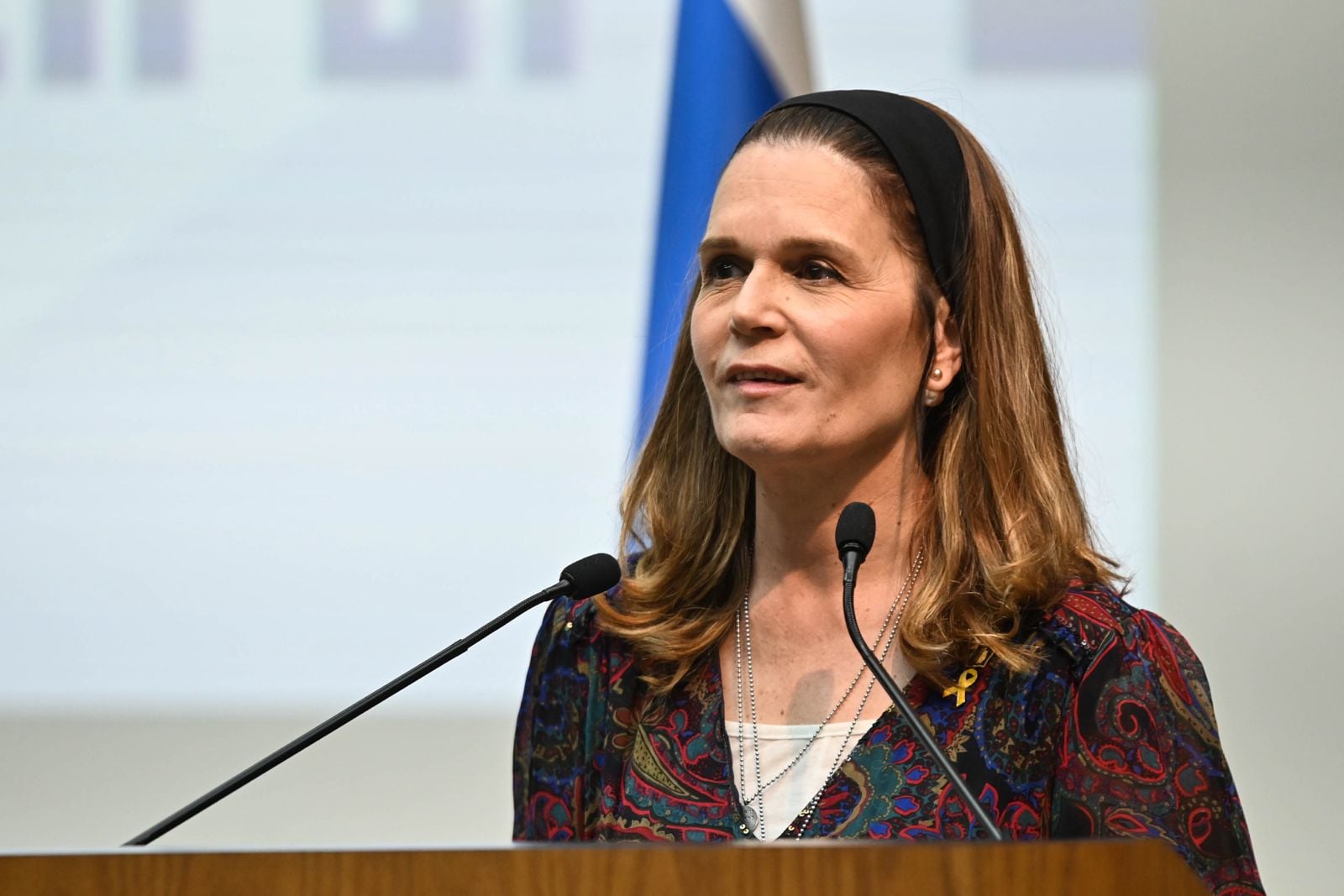
MK Michal Woldiger of the far-right Religious Zionism party is one of the few coalition lawmakers to publicly acknowledge the depth of Israel’s mental health crisis and the state’s insufficient management of the crisis.
As chair of the Knesset’s Labor, Health and Welfare Committee, she has made overhauling the country’s strained mental health and rehabilitation systems her central mission — arguing that the scale of trauma facing Israeli society after October 7, 2023, has become a matter of national security.
“Our ammunition and our planes and our tanks are very important, but no less important — maybe even more important — is who flies the plane, steers the ship, or drives the tank,” she said.
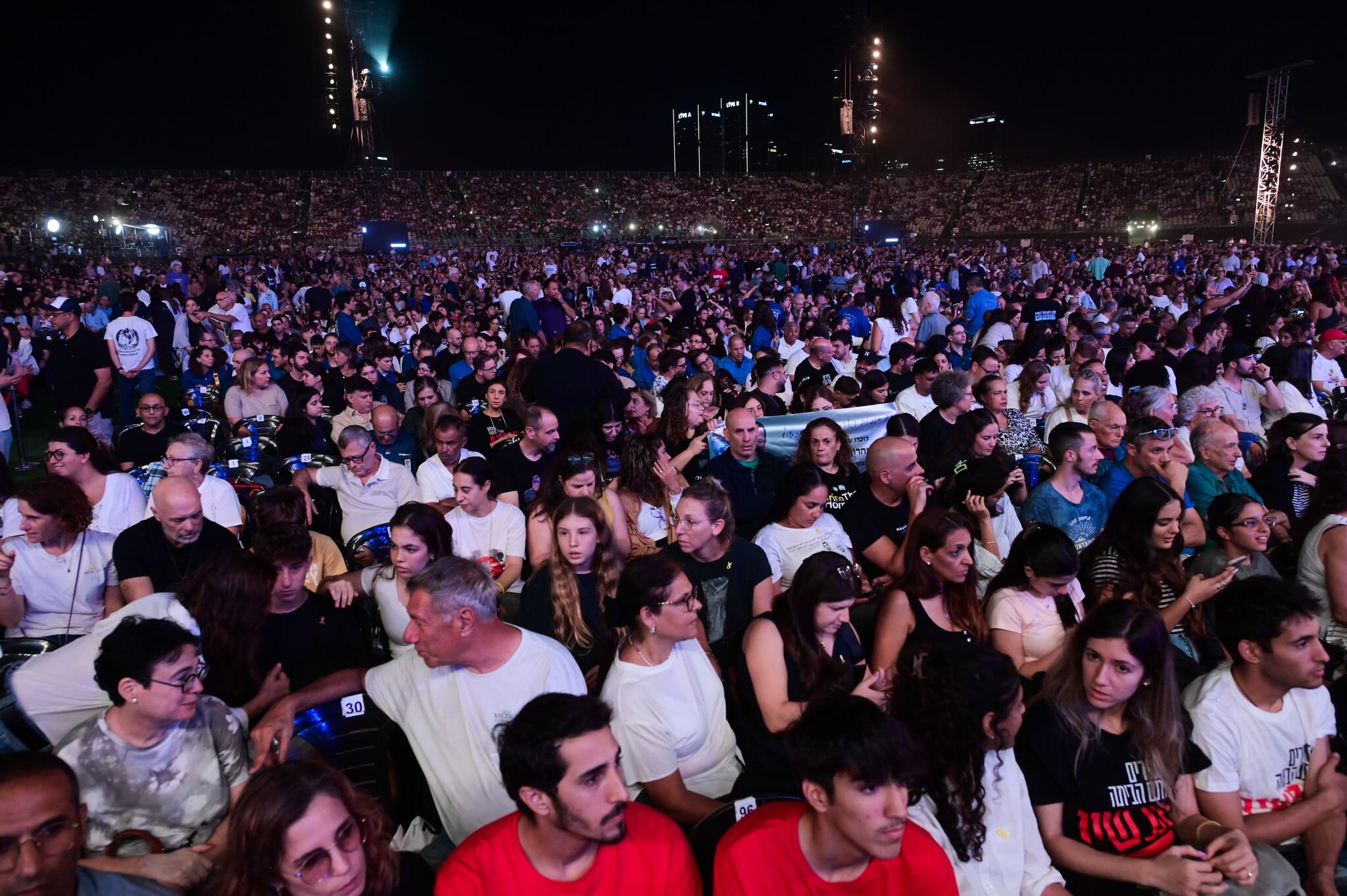
In the two years since the October 7 invasion by Hamas that launched Israel’s multifront war in Gaza and elsewhere, the need for psychological care has outpaced the system’s capacity. Survivors of the attack, soldiers, first responders, hostages, bereaved families, those displaced from their homes, and others grappling with trauma have faced a fragmented and highly bureaucratic network of state agencies that can’t meet the demand.
“We don’t have enough therapists or psychiatrists,” Woldiger acknowledged in a recent interview with The Times of Israel. “Our entire country has PTSD. How do we solve it? We can’t prevent trauma because, unfortunately, we’re in the Middle East and we’ll probably be living by our swords for a long time to come. But we can minimize it if we give everyone the toolbox to deal with it.”
In her role leading the committee responsible for overseeing welfare, health, and rehabilitation services, Woldiger can advance legislation, hold government agencies accountable, and bring attention to systemic gaps. By shaping the committee’s agenda and pushing reforms through the Knesset, she has a unique platform to influence how Israel addresses the mental health crisis — turning concern into concrete policy initiatives.
But the reality of coalition politics means the lawmaker is also in the awkward position of defending the government’s efforts to pass legislation aimed at protecting military service exemptions for the ultra-Orthodox community, even though doing so will increase the burden on a group of people suffering more than most: soldiers, reservists and their families. Opposing the exemption legislation would mean losing the backing of Haredi lawmakers whose support may be crucial for advancing her agenda.
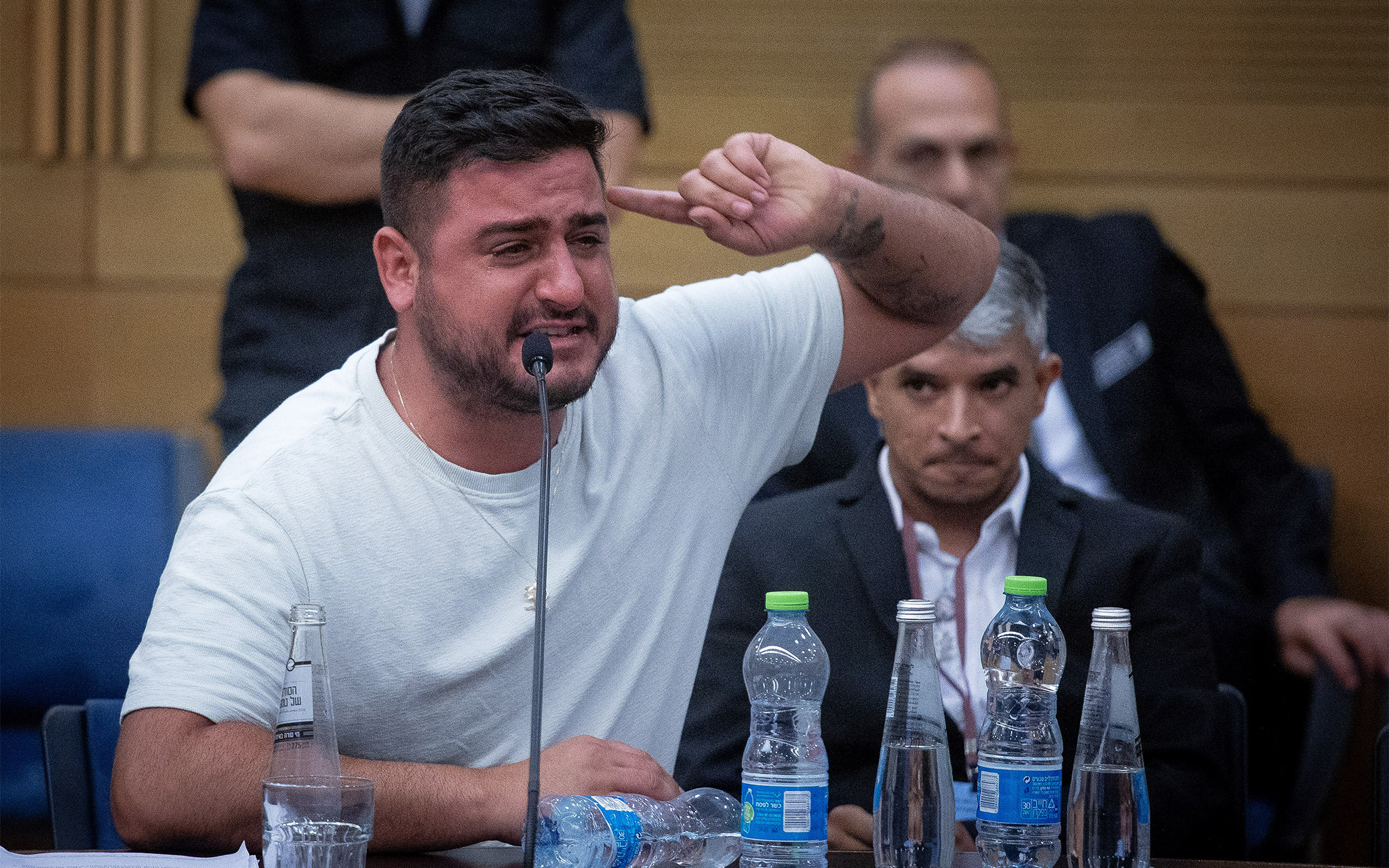
Woldiger meets regularly with bereaved families, survivors of the October 7 massacre, former hostages and their families, first responders, soldiers, and more at committee meetings. There, they air complaints regarding insufficient support for rehabilitation and mental health services, with many blaming the government Woldiger supports for failing to prevent the attacks in the first place.
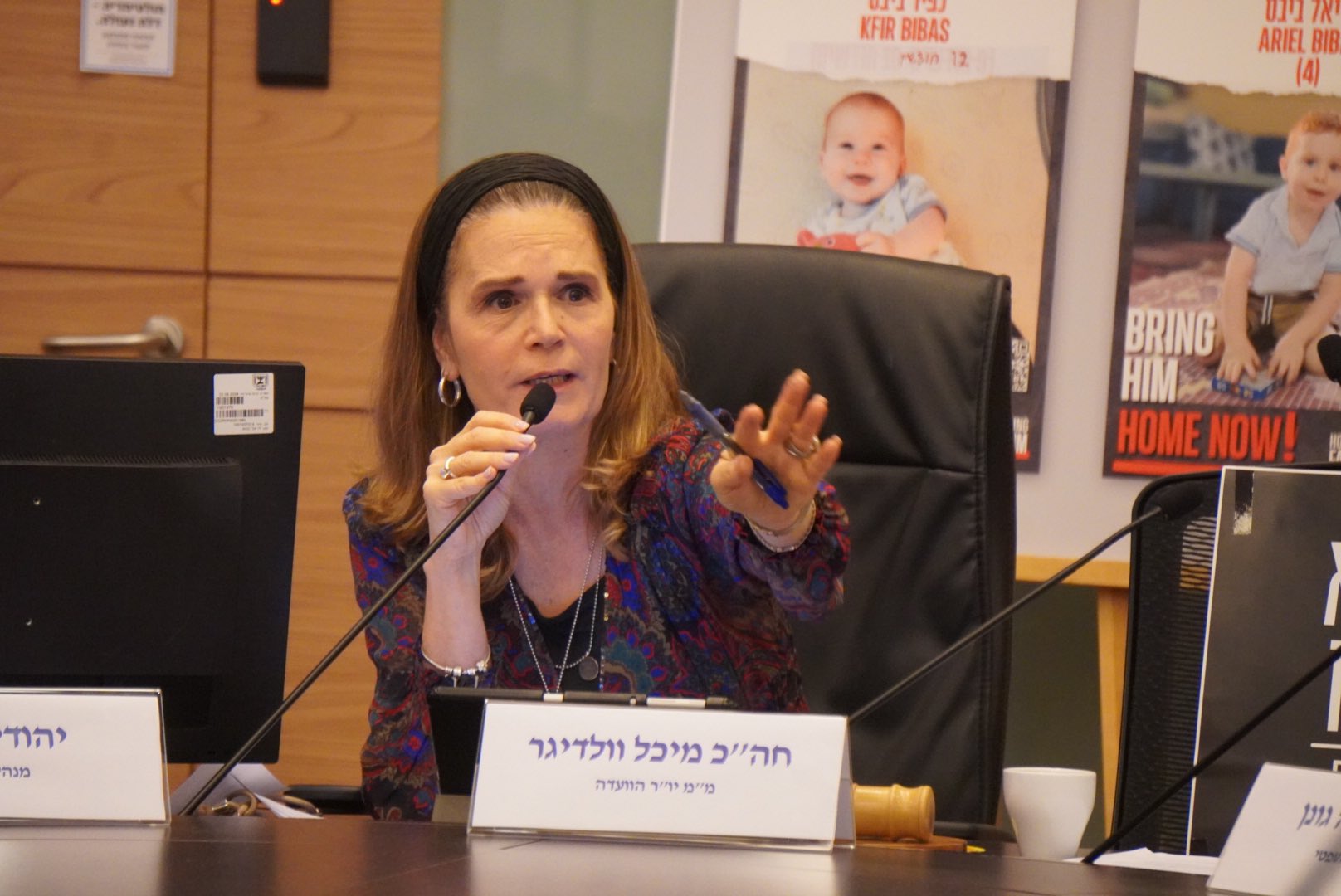
A lawyer by training, Woldiger first entered politics when she served on the Givat Shmuel municipal council, where she oversaw the welfare portfolio and gained firsthand experience of the limitations of state services. She entered the Knesset in 2021 as a member of Finance Minister Bezalel Smotrich’s Religious Zionism party.
Since her appointment to chair the Knesset committee in August, Woldiger has focused on improving services for the victims of October 7 and their families, and addressing gaps in the law governing rehabilitation for those coping with PTSD and other mental health conditions, while confronting problems that long predated the war.
She has been advocating for reforms to recognize the toll on families of soldiers and civilians facing psychological trauma. Previously, families of soldiers hospitalized for psychiatric conditions received far less support than families of physically wounded soldiers.
The committee during her tenure has also been trying to advance mental health parity for survivors’ families and expanding rehabilitation spaces for those dealing with post-traumatic stress, and to amend the law to better support orphans and widows of members of security forces. According to Defense Ministry statistics released in October, more than 6,500 people — including 1,973 parents, 351 widows, 885 children, and 3,481 siblings — have been designated as bereaved family members.
“This war has brought us a lot of widows, and many with very young children, and the law does not know how to give them what they need. So we are trying to fix that too,” Woldiger said. The ongoing reforms, to her, are not a sprint but a marathon — a complex, incremental process aimed at building a more responsive, humane mental health system across Israel.
However, the slow legislative process, often stalled by inter-ministerial squabbles over funding, has led to frustration for both committee members and their constituents.
Her commitment to the mission has won her praise from even political rivals, cutting through traditional ideological divides.
“This committee has a very, very big burden, and [Woldiger] is really trying to run it effectively,” lauded Yesh Atid MK Debbie Biton, who serves on the Knesset Welfare Committee. “We really sit down and try to move things forward quickly, but there is never enough time, and constant delays from various offices.”
The weight of wartime needs, in addition to the panel’s regular mandate, is an impossible burden, she said. “On top of all the issues and communities affected by the war, there are all of the ongoing, wide-ranging issues the committee is trying to address,” Biton noted. “We meet reservists who have become homeless or who are afraid to sleep, overwhelmed by trauma and lack of care. The government needs to give answers, and we’re not succeeding.”
An overtaxed system
Woldiger paints a picture of a disorganized system where the state’s resources are substantial but poorly coordinated. “It’s terribly cumbersome and bureaucratic, with different ministries constantly arguing over who is responsible for what,” she said. “There needs to be a national mental health focus for both soldiers and civilians. It can’t just be left to families to wait for a crisis and show up at the emergency room.”
Her concerns are echoed by trauma experts and her colleagues on the committee alike.
Gila Tolub, co-founder and executive director of ICAR — Israel’s Collective Action for Resilience, created in the wake of the October 7 attacks to address widespread collective traumas, said the country’s mental-health system was fractured long before the war, and is now wholly unequipped for the scale of trauma Israel faces.
“There are enough services to support you, but they’re impossible to navigate,” she said. “We just aren’t coordinated, not sharing data, and people can’t know where to go.”
Tolub traced the problem back to 1994, when Israel created its universal health-care model but excluded mental health from the responsibilities of the four health maintenance organizations that together provide healthcare to all Israelis. Only in 2015 did the HMOs assume responsibility, but by then, much of the work had been outsourced to nonprofits.
“That creates a very disorganized ecosystem,” she explained. “Today, you have more than 400 nonprofits trying to provide services to the population. A very large chunk of their budget actually comes from the government, which recognizes the role they play — but it means the whole system is scattered.”
However, Tolub asserted that Israel also spends less on mental health than other OECD states. “We spend only about 5 percent of total healthcare costs on mental health. The US spends seven, and Europe spends ten. It’s not like we have fewer problems, and in terms of trauma, our rates are much higher.”
This is even though Woldiger herself acknowledges that the funds exist. “Today, the State of Israel spends a lot of money on these services,” she said, “but they’re not always directed to the right places.”
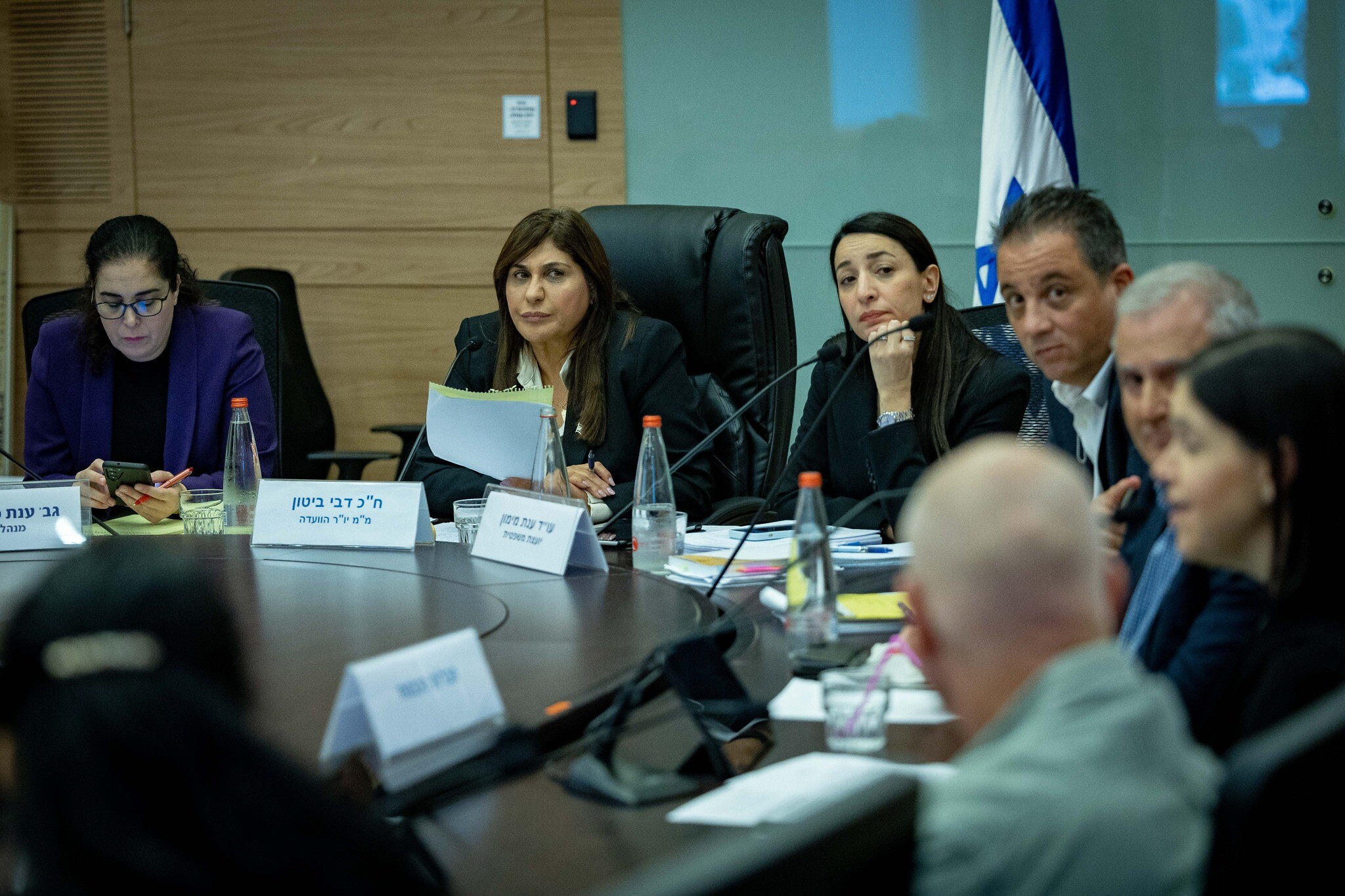
Biton is blunter, arguing that support for the communities most devastated by October 7 — particularly their mental health needs — is not a priority for the government. She describes the funds allocated for mental health, as well as for hostages, reservists, evacuees, bereaved families, and others directly affected by the war, as “pennies.”
“It’s not even close to enough to what they need. Something here isn’t working, and it’s not that the country lacks money. The State of Israel and the Treasury have enough money, but priorities are not always set correctly,” she charged.
Patriotism or politics
As the chair of the Labor and Welfare Committee and a mental health advocate, Woldiger is passionately focused on expanding services for those most affected by the war. But her political associations put her in a complex and at times contradictory position.
A member of the hard-right Religious Zionism party led by Finance Minister Bezalel Smotrich, she actively supports a government that is currently trying to reach an accord with the ultra-Orthodox parties over a highly contentious army draft exemption law for Haredi yeshiva students. The issue has emerged as one of the key political battlegrounds after two years of war and repeated warnings from the military that it’s facing a manpower shortage.
Thus, the very soldiers and families whose well-being she champions are disproportionately shouldering the burden of military service because of the refusal to serve by the very groups her government must appease to remain in power.
“It makes me very angry what [the Haredim] are doing, because we do combine Torah study and military service,” she said, contrasting her party’s view with the Haredi community whose leaders argue that the two are mutually exclusive.
Haredi politicians are demanding the government support legislation that will legalize a status quo in which most members of the ultra-Orthodox community are exempt from mandatory military service, while other lawmakers seek passage of a law that will set rising service quotas and enable stiff sanctions against draft dodgers.
Woldiger asserts that she will not support “any law that isn’t a real change and that will just be more of the same thing.”

Her perspective is personal: As a mother of soldiers and as a member of the Religious Zionist community, which has lost a disproportionate number of soldiers in recent conflicts and balances Torah study with military service, she is deeply invested in the principle of service.
However, she also believes that a solution to the lack of ultra-Orthodox conscription can’t “poke a finger in the eye of the Haredim,” that no law alone can guarantee the numbers that the army needs, and that only a combination of “legislation and social change” will change the facts on the ground.
Woldiger also blames the lack of manpower on the Bennett-Lapid government — which was in power for one year — saying that it had focused on integrating the Haredi population into the workforce rather than the army.
Arrests of draft dodgers in recent weeks have energized mass protests by Haredi men, particularly in Jerusalem and near Tel Aviv, though Woldiger accuses those who oppose the draft exemption of “heating up the atmosphere.”
“There is a clear dissonance,” Biton said regarding coalition support for this bill. As a mother of three children who have served in the army, she expresses frustration at the notion that during a war, “some people believe that others should send their children to die — and they will die — while others study and feel no obligation to contribute to the state.”
“I believe that every member of the Knesset has their hearts in the right place,” she says. “However, to preserve their government, the coalition will do anything, even if it comes at the expense of things that are very close to their hearts.”
To pass legislation and remain in power, the government needs the support of the ultra-Orthodox Shas and United Torah Judaism parties, who exited Prime Minister Benjamin Netanyahu’s coalition in July over the failure to pass the bill. Woldiger herself was appointed to lead the Labor and Welfare committee in August due to the resignation of UTJ from the government of MK Yisrael Eichler, who had chaired the panel.
Keeping the coalition intact is crucial for her own far-right Religious Zionism party’s fortunes, which recent polls have suggested may fall below the electoral threshold in the next election — which is coming in less than a year — forcing it to consider a joint run with Otzma Yehudit, the even farther-right party led by Itamar Ben Gvir. But Woldiger is not concerned.
“I believe that the public is smart and that we will pass the threshold in the upcoming elections,” she said, adding that she hopes that the ultra-Orthodox parties will “return to the coalition in a real way, and understand how much a real conscription law is needed.”
Without ultra-Orthodox support, the coalition cannot advance her legislative agenda. But that support means backing moves that will continue placing a disproportionate burden on soldiers and their families, even as Tolub and other trauma experts warn that the country’s mental health crisis is only about to grow.
“I’m already hearing people say, ‘Oh, the war is over, we don’t need to invest in mental health anymore,’ when the reality is that the healing process is only starting now,” she said. “We know that suicide rates go up not during the war, but after a war. People are now being diagnosed with PTSD at double the rate of before the war, not because of events two or three years ago but due to chronic stress.”
“During COVID, nobody gave schools or municipalities the choice whether to close. We didn’t know what we were dealing with, and we made decisions out of fear,” Tolub said. “Right now, we should be scared, because this is going to impact us way more than we think.”







The Times of Israel Community.