

Get off your crutches, quit Iran talks, go hug Bibi, Huckabee urges Kerry
At Christian pro-Israel summit, GOP presidential candidates unite in denouncing deal with Tehran, disagree on Palestinian statehood
 Add ToI as a Preferred Source on Google
Rebecca Shimoni Stoil is the Times of Israel's Washington correspondent.
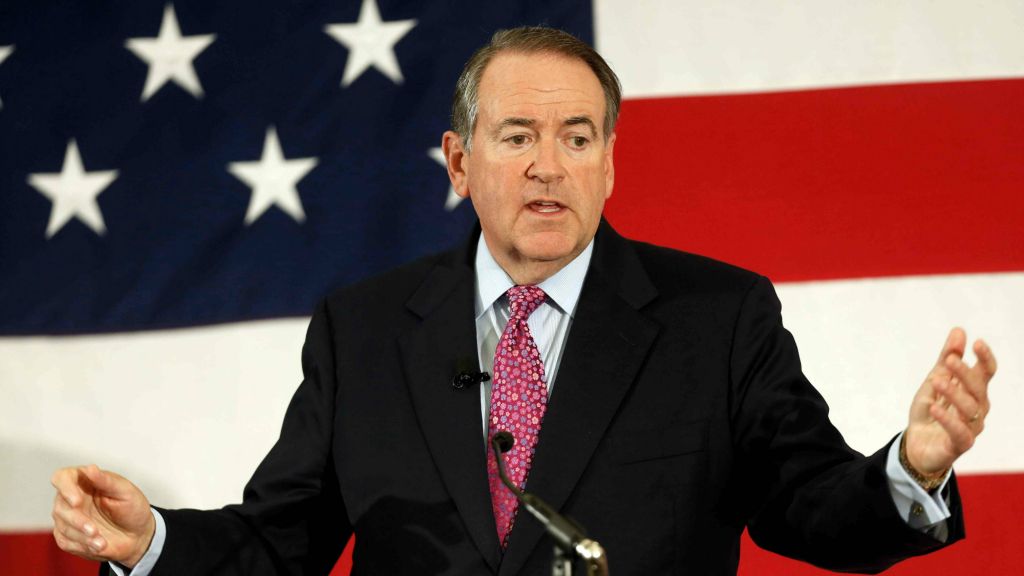
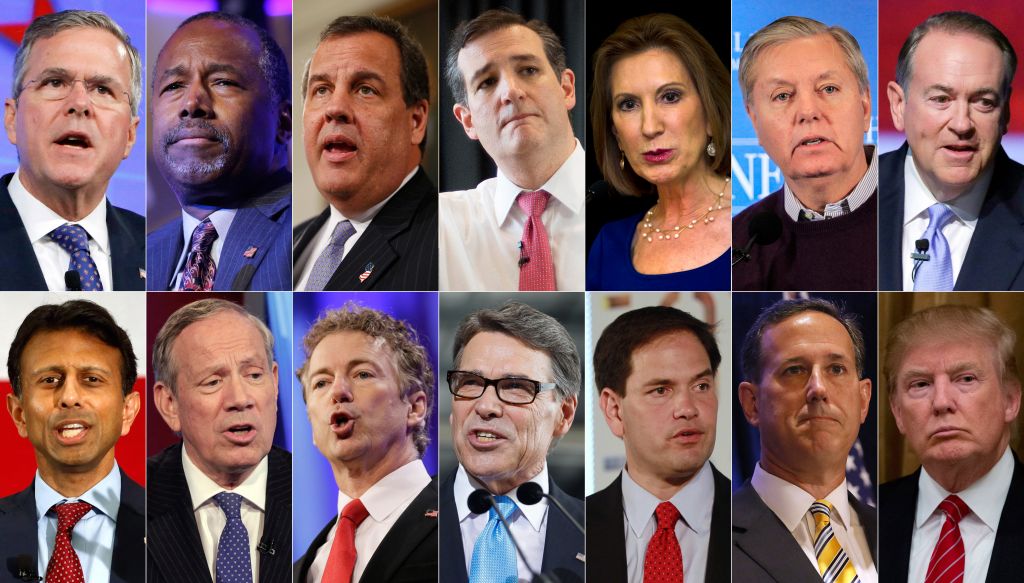
WASHINGTON — Republican presidential candidates revealed key differences while talking up their pro-Israel credentials at the annual summit of Christians United for Israel in Washington on Monday, where hopefuls such as former Arkansas governor Mike Huckabee and former senator Rick Santorum denounced a two-state solution, and former Florida governor Jeb Bush offered guarded support for such an outcome.
With dire warnings about the results of nuclear talks with Iran and condemnation of the Obama administration’s stance toward Israel, the GOP politicos used the forum to court some 1.6 million CUFI members, who tend to lean conservative.
Prime Minister Benjamin Netanyahu, in brief video comments to the conference, said keeping Iran from becoming a nuclear weapons power was the “paramount challenge” of this generation.
Both Huckabee and Santorum disavowed longstanding US policy of supporting a two-state solution to the Israeli-Palestinian conflict, ruling out the establishment of a Palestinian state alongside Israel.
“I am not for a two-state solution,” Santorum told attendees at the annual conference. “I don’t think it’s the role of the United States of America to be dictating solutions any more than if there is an internal territorial dispute in the United States.”
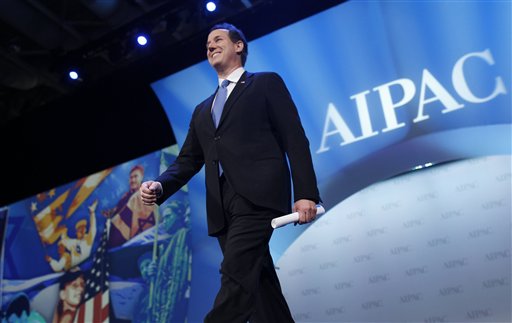
But fundraising powerhouse Bush, seen as one of the more centrist contenders in the crowded GOP field, took a more cautious approach.
In a pre-recorded interview, Bush affirmed that that it was “in the interest of the United States for a Palestinian state to come into existence,” but conditioned his agreement with the comment that “it has to be under the right conditions.”
Bush did say that Israel should be allowed to continue to build in the West Bank, “in areas that are developed,” but questioned construction in “green field” areas — a possible reference to a policy that would differentiate between existing settlement blocs and construction of new neighborhoods or towns.
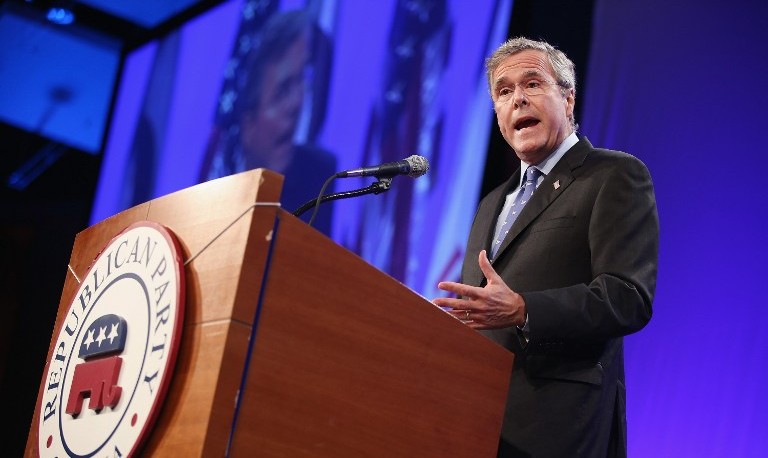
In contrast, former New York governor George Pataki said that he would “work with the Israeli government toward an intelligent approach toward Judea and Samaria.”
“I’m not going to demonize them when they believe it is in the national strategic interest to establish a community somewhere,” Pataki added. He said that the US couldn’t “expect the Israelis to sit down with [Palestinian Authority President Mahmoud] Abbas and the PLO government when their strategic partner has been Hamas.”
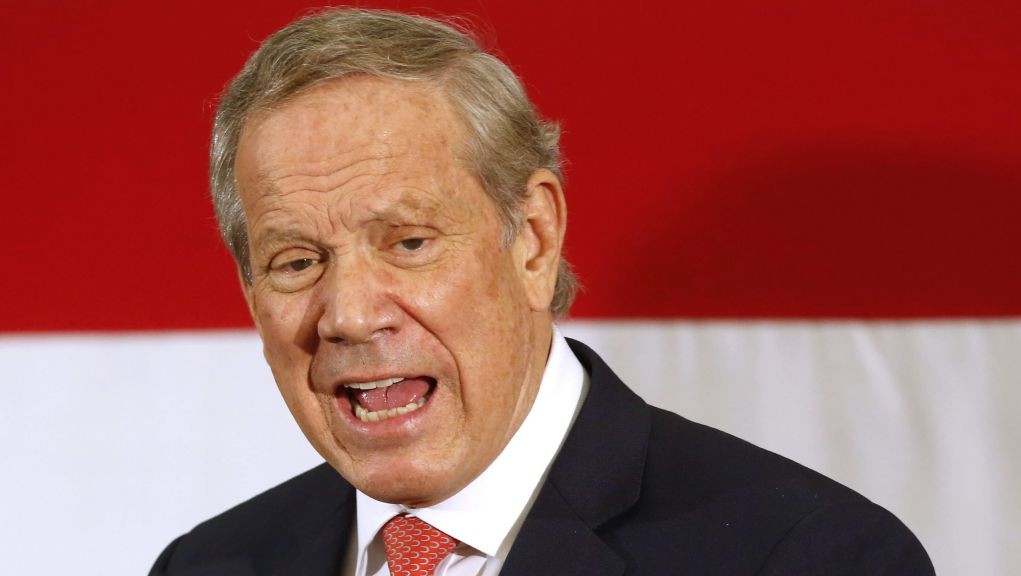
Senator Ted Cruz of Texas did not specify whether or not he supports a two-state solution, instead telling moderator Bret Stephens that he doesn’t “think it is the role of the US or any other for nation to try to impose a specific solution on the dispute between Israel and the Palestinians.”
“Israel is a sovereign nation,” Cruz added. “Whatever the ultimate solution that is arrived upon by those two parties — whether it is a two-state solution or a one-state solution is a decision for Israel to make.”
Cruz did, however, take the opportunity to turn his answer into a critique of the current administration — one of many aired during the 90-minute forum.
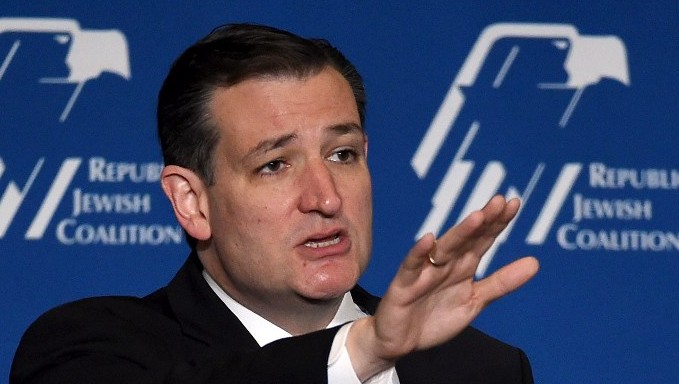
Asserting that “Israel is not the obstacle,” to peace, Cruz added that “sadly, President Obama, and Hillary Clinton and John Kerry have trouble understanding the idea that the impediment to peace is not Israel, but the Palestinians who refuse to lay down their arms.”
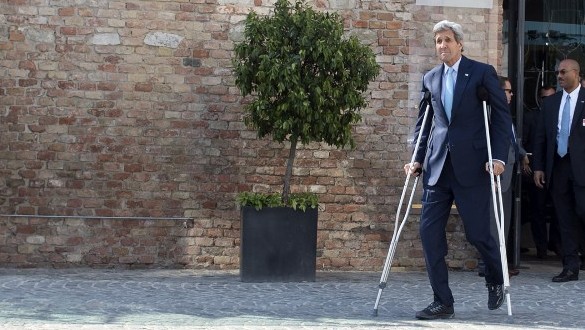
The candidates did largely agree in their critical approach toward almost every aspect of the Obama administration’s foreign policy – particularly in the Middle East. Huckabee garnered applause when he said that that Kerry should “get off his crutches” and leave the Iran talks, “go to Jerusalem,” and “hug Bibi.”
“Historically, before it came to this president, affairs when it came to Israel and the Middle East were not partisan – but that changed when this president came to town. Because he vilifies anybody who disagrees with them,” Santorum complained. “This president has made bipartisanship virtually impossible in this town,” he added, stressing that previously, a tough stance toward Iran was a strongly bipartisan value.
The talks with Iran over its nuclear program were a major theme for the candidates. Senator Lindsey Graham, a vocal foreign policy hawk from South Carolina, laid out for the audience possible congressional steps to counter the Iran deal.
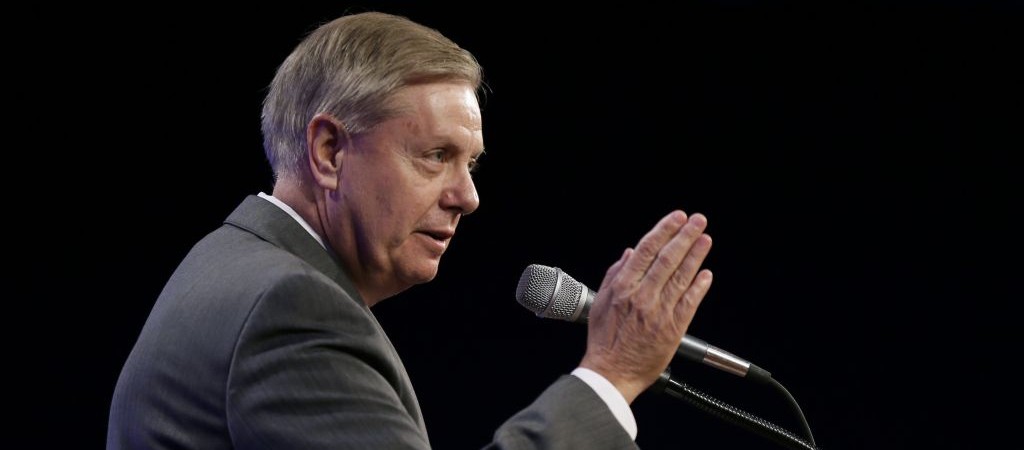
Graham, like a number of other speakers, noted that the deal could only be countered if Senate Democrats were also willing to resist administration pressure to accept the agreement.
Cruz, meanwhile, wasted little time in telling the crowd in his pre-recorded interview that the “negotiations have gone from bad to worse to catastrophic,” and called the Iranian nuclear program “the single greatest security threat facing the US today.”
“This deal has become a research and development program for the Iranian nuclear program. Under the terms we know, the Obama administration has already given up the entire store, and they are pushing it as a partisan political issue,” he continued. “The president’s approach from day one on Iran is that he wants a political legacy and doesn’t particularly care about the terms of the deal.”
Resuming his excoriation of the administration – and of leading Democratic candidate and former secretary of state Hillary Clinton — Cruz said that “President Obama and John Kerry and Hillary Clinton are perfectly fine with Iran having a nuclear weapon.”
“They should really be conducting these negotiations in Munich and coming back with an announcement about peace within our time,” he quipped, referencing the 1938 talks between Germany and England that paved the way to a Nazi takeover of most of Europe.
Also offering tough foreign policy talk, Pataki described sanctions relief as “an incredibly stupid policy that I hope doesn’t come to pass” and said that instead, the US “should do everything we can to destabilize the Iranian administration.”
He garnered large applause when he also told the audience that “we should provide every bit of mil support short of troops to help [Egyptian President Abdel Fatah el-Sissi] defeat ISIS in Sinai” – but not close to the enthusiastic reception that he received when he declared that the US “should have our embassy in Jerusalem.”
JTA contributed to this report.







The Times of Israel Community.