

Going carob — the healthy chocolate substitute
Phyllis Glazer demystifies the pod, from the tree to the table
 Add ToI as a Preferred Source on Google
Phyllis Glazer is an American-born food journalist based in Tel Aviv, Israel. She is the author of several cookbooks that have been published in Hebrew, German, and Italian, and appears frequently on television and radio in Israel.
Just the other day, a client called to consult with me about her husband’s new health-related diet that precludes the consumption of chocolate. “He’s really suffering,” she whispered over the phone. “He was a virtual chocoholic, and now he’s going cold turkey and in one hell of a terrible mood. What can I do?”

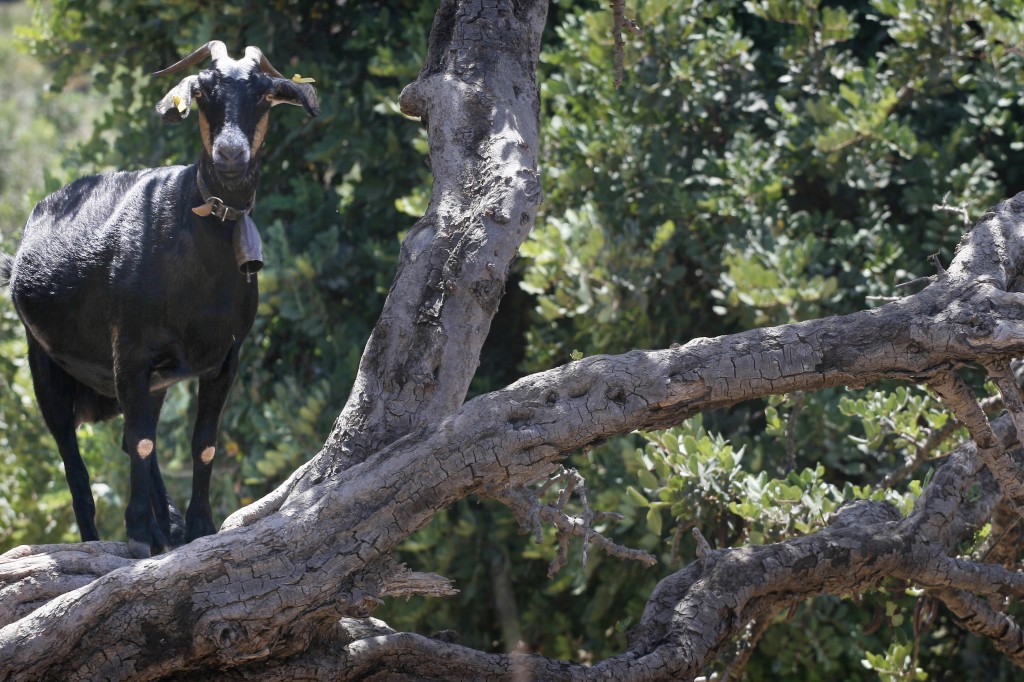
Of all the various maladies and restricted diets for which I’ve been asked to find culinary solutions, this was certainly the easiest. “The answer is carob,” I told her. “It’s the closest in flavor to chocolate that you can find, and from September to November you can actually pick carobs in the Galilee and the Carmel forest, and even on the outskirts of Jerusalem.”
Known to many as “St. John’s Bread” — or “bockser” in Yiddish — the carob does not look like a fruit, but rather a long, horn-shaped pod containing uniformly shaped seeds. Though carob once made ideal food for livestock (and often still does in Mediterranean countries), the sweet, juicy pulp of the ripe fruit has been soaked and cooked down as a source of “honey” since ancient times. Today, the pods, sugar-free carob syrup, carob powder and even ready-made carob “chocolate” bars are found in health food stores, where they are sold as a substitute for chocolate to those who are allergic to chocolate or who prefer to abstain from the caffeine found in chocolate.
Legend has it that Rabbi Shimon bar Yochai and his son, Rabbi Eliezer, who hid in a cave from the Romans for 13 years, survived on carobs and water from a nearby spring. Aside from its nutritional value (as a source of thiamin, niacin, riboflavin, calcium, iron, magnesium and other minerals), carob — unlike regular chocolate — does not interfere with calcium absorption, and is considered beneficial in the treatment of mouth sores and diarrhea.
Using carob is easy. Carob powder can be substituted for cocoa, and carob “chocolate” bars can be used instead of solid chocolate in virtually any recipe. The trick to getting it to taste just like chocolate is by adding a teaspoon or two of instant coffee (or coffee substitute such as barley- or chicory-based “coffee” powders sold in health food stores and some supermarkets). I like to serve the hard pods in hot coffee or tea, where they serve as a stirring spoon and soften to a delicious munch-able consistency.
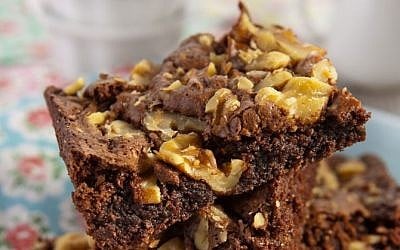
Here’s the recipe I suggested my client make for her husband. After baking them, she called me to say thanks — his chocolate habit was solved and he was smiling again.
* Double Carob Chocolate Brownies (makes 12-14)
- 100 grams room temperature butter (or 1/2 cup oil)
- 1 cup organic cane sugar
- 2 teaspoons pure vanilla extract
- 2 eggs
- 5 tablespoons boiling water
- 6 tablespoons carob powder
- 1 tablespoon instant coffee or coffee substitute
- Pinch salt
- Half cup whole wheat flour
- 1 teaspoon baking powder
- 100 grams plain carob chocolate, coarsely chopped
- Half cup chopped walnuts
- Preheat the oven to 180C (350F). Grease a 20×30 cm (8×12 inch) rectangular or 24x24cm (10-inch) square pan.
- Beat the butter and sugar together by hand or in a mixer. Beat in the vanilla and eggs.
- In a small bowl, mix the boiling water, carob flour, instant coffee and salt and stir until smooth. Pour into the butter mixture and mix well. Stir in the chopped carob chocolate and mix with a wooden spoon.
- Pour into the prepared pan and even out the mixture with a spatula. Sprinkle the nuts on top and bake for 20 minutes (the batter will rise and then drop slightly) or until a toothpick inserted in the center comes out almost clean with just a few crumbs.
- Remove from the oven and let cool in the pan for 15 minutes before cutting into squares.
* Adapted from “Afia Briah B’Kalei Kalut” (Easy Healthy Baking) by Phyllis Glazer, published by Korim Publishers.










The Times of Israel Community.