

Hezbollah warns Beirut that expanded disarmament push could cause ‘chaos, civil war’
Terror group official says forcing it to fully give up arms would be ‘the biggest crime,’ day after Lebanese FM says IDF has right to strike in country as long as Hezbollah holds weapons
 Add ToI as a Preferred Source on Google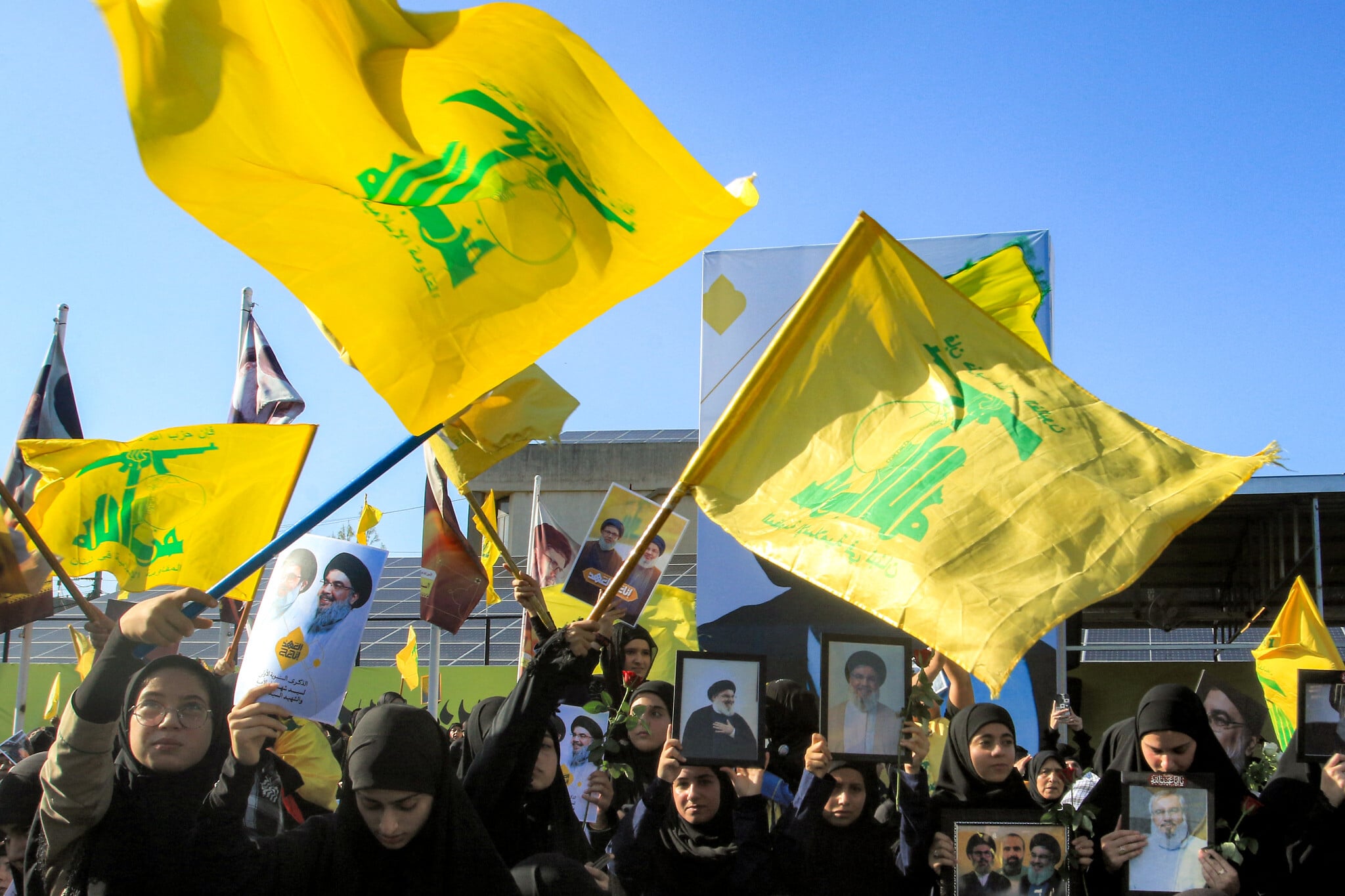
A senior Hezbollah official has warned Lebanon’s government that pressing on with efforts to disarm the group throughout the country would trigger chaos and possibly civil war, according to comments circulated by the terror group on Wednesday.
Lebanon has pledged to bring all arms in the country under state control, in line with a 2024 agreement that ended a devastating war between Hezbollah and Israel, and Beirut’s foreign minister admitted Tuesday that the deal permits Israel to continue striking in the country as long as the Iran-backed group refuses to give up its arms.
Hezbollah insists that deal only applies to the southernmost region of Lebanon that borders Israel and has refused to relinquish its arsenal elsewhere.
In an interview with Russian state media outlet RT, senior Hezbollah political official Mahmoud Qmati said pursuing a state monopoly on arms further north would be “the biggest crime committed by the state.”
“The path taken by the Lebanese government and state institutions will lead Lebanon to instability, chaos and perhaps even civil war,” Qmati said, though he added that Hezbollah would not be dragged into a confrontation with Lebanon’s army.
The Lebanese government claimed last week to have disarmed Hezbollah south of the Litani River — around 30 kilometers (20 miles) from the Israeli border — in line with the deadline it had set for itself, saying it had “achieved the objectives of the first phase” of its plan in an “effective and tangible way.”’
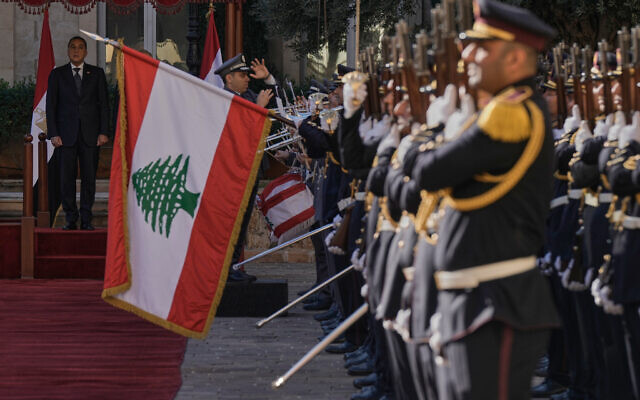
It said it has extended operational control over the south, except for the handful of areas still controlled by Israeli troops. Hezbollah, which has rejected efforts to disarm, did not immediately comment.
Israel sounded a cautious note on the announcement, saying the efforts from Beirut to disarm the terror group were “encouraging” but insufficient, and adding in a second statement that “Hezbollah is rearming faster than it is being disarmed.”
Hezbollah has said that Israeli troops must withdraw from five hilltop positions they still hold in southern Lebanon, halt near-daily airstrikes on Lebanon and release detained Lebanese before any further disarmament is discussed.
“There will be no talk or dialogue about any situation north of the Litani River before Israel withdraws from all Lebanese territory, liberates the South and the prisoners, and stops its violations against Lebanon,” said Qmati.
While Hezbollah considers Israel’s frequent strikes in Lebanon to be a violation of the ceasefire, Lebanese Foreign Minister Youssef Rajji on Tuesday disputed this, saying that the agreement allows for Israeli strikes as long as Hezbollah continues to hold onto its arms.
????????????????⚡- Lebanese Foreign Minister Youssef Rajji declares that Israel has the right to continue its attacks on Hezbollah as long as its weapons are not completely contained. pic.twitter.com/4RDug7p8z5
— Monitor???? (@MonitorX99800) January 13, 2026
“The ceasefire agreement stipulates that the Lebanese government will disarm Hezbollah,” Rajji said in an interview with Sky News Arabia. “As long as Hezbollah still holds weapons, Israel, regrettably, has the right to continue its attacks against them.”
Rajji’s comments appeared to be the first admission from a Lebanese government official that Israel’s strikes on Hezbollah targets in the country are approved by Beirut.
Since the ceasefire, the IDF has killed around 400 operatives and struck hundreds of additional Hezbollah-linked targets. The IDF has repeatedly asserted that the activity at the targeted sites constitutes a violation of the understandings between Israel and Lebanon.
The conflict began on October 8, 2023, when Hezbollah started firing rockets and drones at northern Israel, one day after its fellow Iran-backed terror group Hamas launched a shock assault on southern Israel, sparking the war in Gaza.


The Times of Israel Community.