

Justice minister vows to defy High Court if it rules ‘my friend’ Ben Gvir must be fired
Court hears petitions seeking to fire national security minister, which Netanyahu slammed as unconstitutional; AG backs ouster of far-right minister, saying he overstepped his powers
 Add ToI as a Preferred Source on Google
Justice Minister Yariv Levin vowed on Wednesday that if the High Court of Justice rules that ultra-nationalist National Security Minister Itamar Ben Gvir must be removed from office, the government will not respect the decision, referring to the far-right leader as “my friend.”
Levin’s comments came ahead of a key hearing in which petitioners are asking the High Court to order Prime Minister Benjamin Netanyahu to fire Ben Gvir due to what they allege is the minister’s repeated and unlawful interference in operational police matters, his politicization of police appointments, and his overt interference on police investigations.
“The hearing taking place this morning to oust Minister Ben Gvir is unlawful, and the decision of the judges will regardless have zero validity,” Levin declared.
“The authority to appoint or fire a minister is given in law to the prime minister and not the court,” continued the Likud minister, a key ally of Netanyahu.
“My friend, Minister Ben Gvir, will continue to serve in his position by virtue of the decision of the people and the trust of the Knesset,” Levin said.
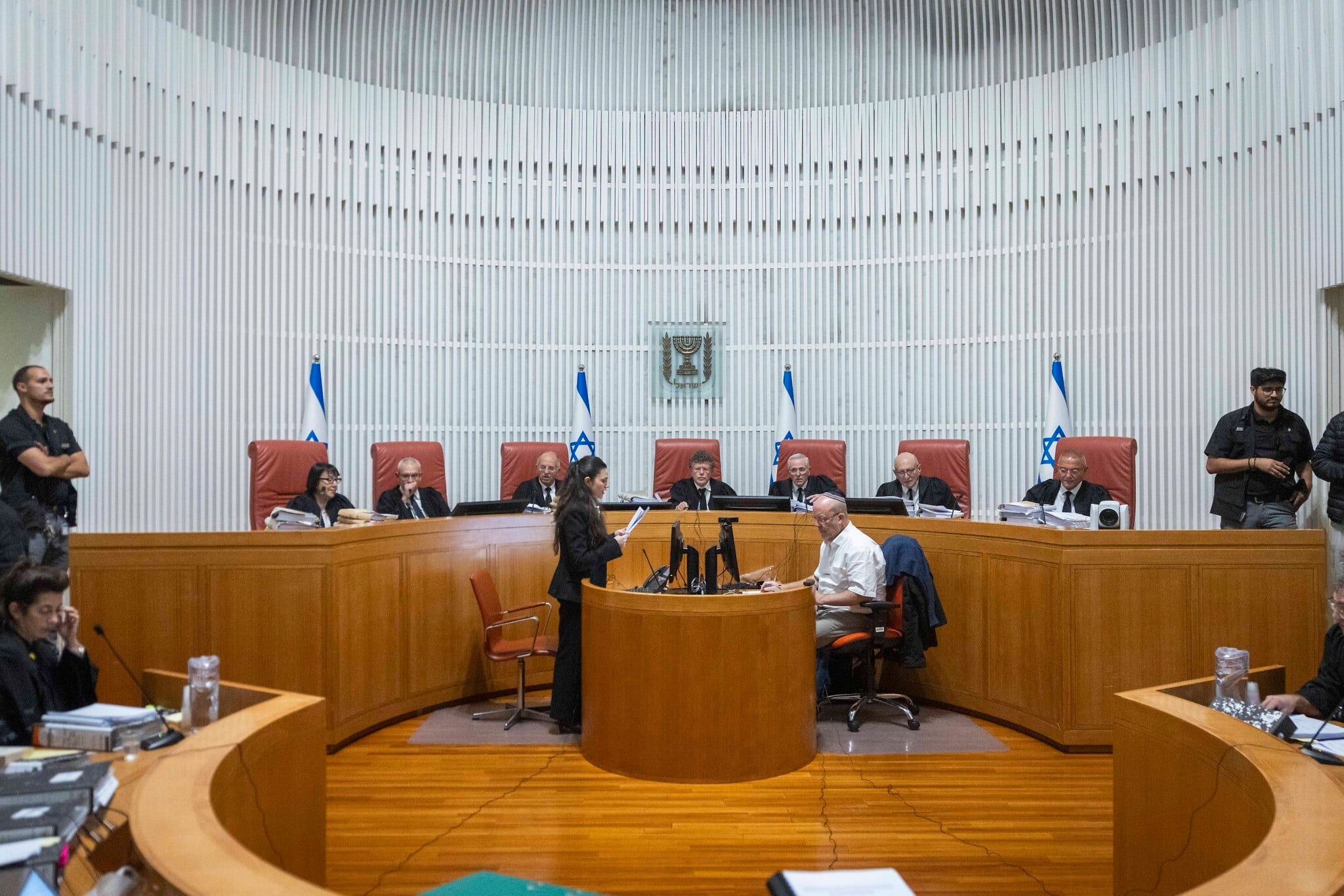
The petitions were heard by a nine-judge panel instead of the usual three-member panel, including Supreme Court President Isaac Amit and Deputy Supreme Court President Noam Sohlberg, indicating the potentially huge consequences and implications of the case.

In January 2023, the High Court of Justice ruled 10-1 that the appointment of Shas leader Aryeh Deri as a cabinet minister was “unreasonable in the extreme” due to a recent criminal conviction and the plea bargain he secured by promising to quit politics, which he subsequently reneged on. Deri therefore lost his positions as minister of the interior and health.
Wednesday’s hearing on petitions, which was postponed due to the war with Iran, is the culmination of a monthslong effort to oust the far-right politician.
It was held behind closed doors due to past disturbances, however it appeared that some members of the coalition were in the courtroom.

Ahead of the hearing, Ben Gvir hit out against the judicial system, asserting he is not a “puppet for the State Attorney’s Office,” as several hundred protesters supporting the minister gathered outside the building, sounding blowhorns and waving signs vowing to “put an end to the judicial dictatorship.”
“[Attorney General] Gali Baharav-Miara says that I am deciding policy and changing the police — she is correct,” he said to reporters outside the court in Jerusalem.
Late last year, Attorney General Gali Baharav-Miara endorsed petitions calling for the court to order Ben Gvir’s termination.

The attorney general has argued that Ben Gvir, whose ministry oversees the Israel Police, inappropriately infringed on the force’s independence and broke an agreement he reached with her. That compromise, meant to fend off the petitions seeking his dismissal, barred Ben Gvir from involvement in antigovernment protests or determining criminal investigations, while limiting his involvement in police appointments.
Baharav-Miara has since called on the court to order Netanyahu to fire Ben Gvir. The reasons she cited in a filing on Tuesday, ahead of the hearing, also include Ben Gvir’s repeated attempts to obstruct the promotion of Rinat Saban, a police detective involved in Netanyahu’s graft trial.
But the premier has refused to fire Ben Gvir and on Sunday called the attempt to force the minister out “unconstitutional.”
Ben Gvir has likewise remained defiant ahead of the hearing, labeling the attempt to dismiss him “delusional and antidemocratic.”

Wednesday’s hearing sits at the intersection of two related long-running firestorms. The first is the fierce conflict between Baharav-Miara and the coalition, which attempted to fire her last year but was blocked by the court. Baharav-Miara has clashed repeatedly with Ben Gvir in particular over what she calls his unlawful conduct.
The second debate is over the coalition’s controversial years-long judicial overhaul effort, which seeks to curb the authority of the courts.
Netanyahu, Ben Gvir and other coalition figures have pointed to the push to fire the national security minister as evidence of the court’s powers, while Amit has vowed the judiciary will press on with its work despite threats he has faced.

In February, the High Court of Justice ordered Netanyahu to explain why he has not fired Ben Gvir.
Other reasons Baharav-Miara provided in her filing on Tuesday as grounds for Ben-Gvir’s dismissal were his influencing the police force to operate in ways that suit his political interests and involving himself improperly in investigations and appointments.
“What is under discussion and what the honored court will rule on, in essence, is the urgent need to stop the damage to individual freedoms and the democratic system of government, which is being caused by improper political interference in the police’s exercise of power, amid severe damage to its apolitical nature and to equality under the law,” she wrote, according to reports in Hebrew media.
In a social media post, Ben Gvir shot back, claiming his actions reflect the will of the voters who elected him.
“Tomorrow, the High Court will weigh the delusional and anti-democratic request to dismiss me,” Ben Gvir posted on X.
Referring to the government’s vote last year to dismiss Baharav-Miara, he added, “The fired adviser Gali Baharav-Miara says I am setting policy, changing the police, getting involved in appointments… The truth is, she’s right. That’s why I was elected. Not to be a potted plant.”
He added, “I was elected to govern.”
Netanyahu has likewise rejected the effort to fire Ben Gvir. In a 129-page filing on Sunday, he wrote, “Accepting the petitions would indicate that the court is, in practice, assigning itself an active and significant role in the political arena without any legal authority.”
The High Court “has no constitutional right to dismiss a government minister due to the substance of his role, the way he acts within his ministry and in the name of his administrative decisions,” he wrote, urging justices to reject the petitions in order to avoid “serious damage to the separation of powers.”
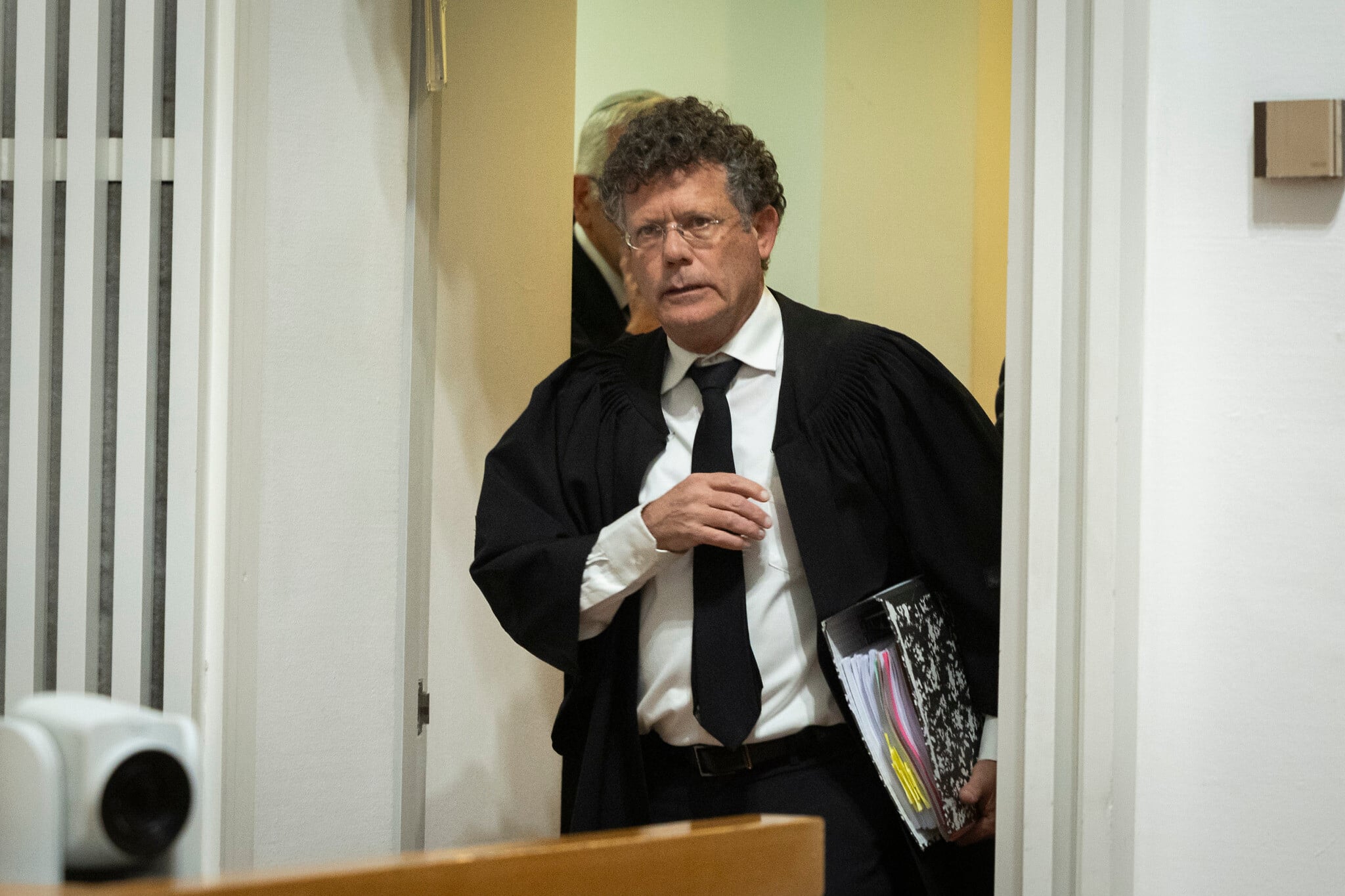
Because the hearing was postponed, one of the nine justices who was initially on the panel, Gila Canfy-Steinitz, will not be present at the hearing.
She will be replaced by Justice David Mintz. Canfy-Steinitz is a moderate conservative, whereas Mintz is perhaps the strongest advocate for judicial restraint on the bench.
That could heighten the likelihood of the petition being dismissed, on the grounds that the court cannot intervene in the prime minister’s discretion to hire and fire cabinet ministers.










The Times of Israel Community.