

IDF blows up Hezbollah’s ‘strategic’ complex beneath south Lebanon’s Ali Taher Ridge
Military says it used 1,100 tons of explosives to raze 2kms of tunnels under hill in southern Lebanon, following reported Iranian warnings; blast triggers 4.1-magnitude tremor
 Add ToI as a Preferred Source on Google
Using 1,100 tons of explosives, the Israeli military said on Thursday that it had demolished a “strategic” underground facility belonging to the Hezbollah terror group beneath a mountainous ridge in southern Lebanon.
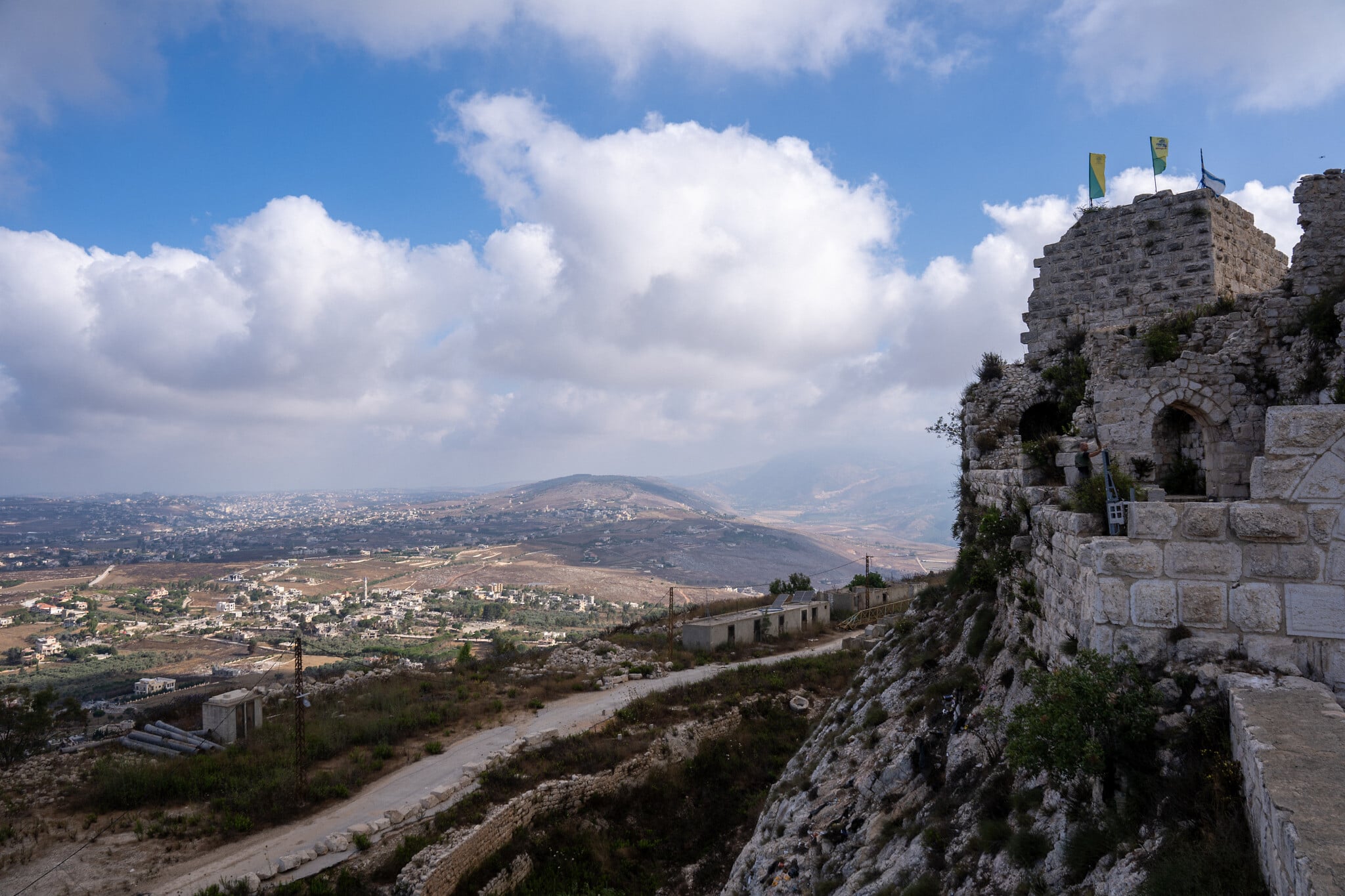
The Ali Taher Ridge is located within Israel’s southern Lebanon buffer zone, near Nabatieh. According to the Israel Defense Forces, the tunnel systems under Ali Taher served as the “nerve center” of the terror group’s Badr regional division — a unit tasked with the area of southern Lebanon that is north of the Litani River.
Last week, the military said it had completed capturing and clearing out the tunnel system of Hezbollah operatives, killing some of them while others fled.
Iran ostensibly warned the US that it would respond to any Israeli offensive against the Hezbollah facility beneath the hill, according to a report by Reuters last week, although that came after the IDF had already captured and cleared the site.
A military official said after the tunnels had been blown up that “the IDF is prepared for a variety of scenarios, including multi-arena scenarios.”
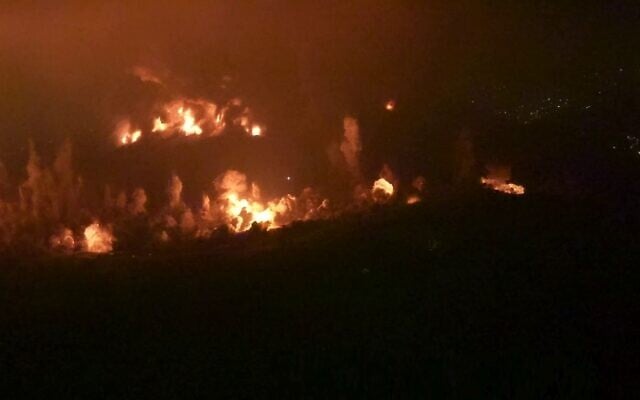
A massive blast was heard throughout the region as the IDF demolished the two tunnel routes under the hill with 1,100 tons of explosives. Footage showed a massive fireball erupting above the mountain. Seismic systems also detected the explosion as a 4.1-magnitude earthquake, the United States Geological Survey said.
Footage shows the demolition of Hezbollah's tunnels beneath the Ali Taher Ridge in southern Lebanon by the IDF tonight. pic.twitter.com/dpFDSok54n
— Emanuel (Mannie) Fabian (@manniefabian) September 10, 2026
The IDF described the facility as a “strategic infrastructure that was built over two decades,” an activity it said was financed and planned by Iran.
Some 50 Hezbollah operatives were believed to be holed up under Ali Taher when a new ceasefire took effect in June. The IDF asserted, contrary to the recent Reuters report, that no members of Iran’s Islamic Revolutionary Guard Corps were in the tunnels.
Israel had initially given the Hezbollah operatives inside the tunnels the option to surrender to troops, a military official said. However, the members of the terror group refused and instead fought or tried to flee.
The military said it killed many of the Hezbollah operatives during the offensive to capture the underground site, including some trying to flee the tunnels and some trying to bring reinforcements.
A video published by the IDF showed two Hezbollah operatives being struck after opening fire from one of the tunnel shafts. Inside the tunnels, around a dozen bodies were found by the troops, according to the military.
IDF troops scan Hezbollah tunnels under Ali Taher Ridge in southern Lebanon, in footage published on September 11, 2026. (Israel Defense Forces)
Still, some of the Hezbollah operatives were assessed by the IDF to have fled the area.
Inside the two tunnels — spanning over two kilometers — troops found dozens of Iranian-made rockets, missiles and drones, along with firearms, anti-tank missiles, and hundreds of mines and other explosives, the military said.
The tunnel also featured “command centers, weapons rooms, generator rooms, living quarters, showers, and a kitchen,” which the IDF said enabled Hezbollah operatives “to conduct fighting and remain there for extended periods.”
מצורף תיעוד מהשמדת התשתיות התת-קרקעיות ברכס עלי טאהר pic.twitter.com/GDHpR984An
— צבא ההגנה לישראל (@idfonline) September 10, 2026
In a separate joint statement, Prime Minister Benjamin Netanyahu and Defense Minister Israel Katz said that the underground facility was destroyed following their directive, and the IDF has now “completed the organization of the security zone in southern Lebanon.”
“The terror infrastructure and headquarters under the ridge were intended to serve as a base for the conquest of the Galilee, and surveillance and fire over Metula and Kiryat Shmona,” Netanyahu and Katz said.
Netanyahu and Katz said that following the blast, the IDF is “preparing for defense in the area and to prevent the enemy from returning to the territory.”
The military said it would “reorganize” its deployment in the area following the destruction of the tunnels, but would still remain in control of the ridge with surveillance and firepower.
Hezbollah drew Lebanon into the broader Middle East conflict in March by launching rockets at Israel in support of its sponsor Iran, which had come under attack by a US-Israeli air campaign. Israel responded to the Hezbollah attacks with a heavy air campaign and ground invasion.
Fighting has persisted despite the ceasefire declared in Lebanon in April, but at a reduced rate. Israeli forces continue to operate inside a self-declared “security zone,” which runs around 10 kilometers (six miles) deep inside Lebanese territory along the border.
In June, Israel and Lebanon signed a framework agreement committing Lebanon to restoring sovereignty over its territory through the “verified disarmament of non-state armed groups,” which would in turn enable a progressive Israeli withdrawal. The State of Lebanon, along with Israel and the US, signed the agreement, but Hezbollah and its allies are opposed to it.
Israel pulled forces out of three pilot zones into which the Lebanese army entered, but has said it will not carry out any further withdrawals before Hezbollah is disarmed.
Israel and Lebanon have been holding negotiations to advance the framework deal since April, and an Israeli official told The Times of Israel on Thursday that the next round of talks will take place next week in Rome.
The talks will take place over two days, but it has not yet been finalized whether they will begin on Tuesday or Wednesday, the official said.
Meanwhile, a US State Department official says in a statement to querying reporters that Washington is closely monitoring “calls from Southern Lebanon, where people are demanding their government assert sovereignty and stop Hezbollah from firing and storing weapons in their communities.”
“We applaud those communities and support the Government of Lebanon’s receptiveness to their requests,” the official continued. “We urge the Government of Lebanon to formulate a plan for disarmament in all Lebanese territory, as laid out in the Trilateral Framework.”







The Times of Israel Community.