

IDF chief briefs UN commander on Hezbollah attack tunnels dug into Israel
Eisenkot tells UNIFIL’s Maj. Gen. Stefano Del Col his troops must help neutralize threat on Lebanese side of the border
 Add ToI as a Preferred Source on Google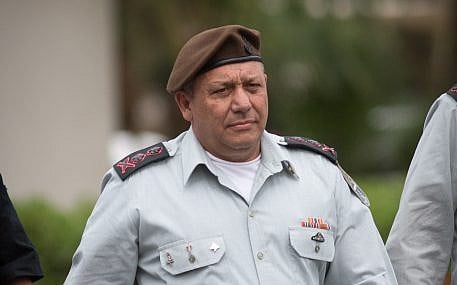
Israel Defense Forces Chief of Staff Lt. Gen. Gadi Eisenkot met with the head of the Lebanon-based UN peacekeeping force on Sunday to discuss Israel’s efforts to destroy a series of cross-border tunnels it says were built by Hezbollah to carry out attacks.
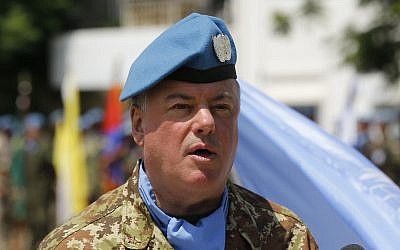
During the meeting at the IDF’s headquarters in Tel Aviv, Eisenkot told UNIFIL’s commander, Maj. Gen. Stefano Del Col, that the tunnels are a “blatant violation” of a UN cease-fire resolution that ended the 2006 war between Israel and the Iran-backed terror group.
“Eisenkot showed [Del Col] the operation’s progress and noted the importance he sees in UNIFIL troops working to neutralize the tunnels on the Lebanese side,” a statement from the army said.
UN Resolution 1701, which ended the Second Lebanon War, required all armed groups besides the Lebanese military to remain north of the country’s Litani River. UNIFIL and the Lebanese Armed Forces are meant to enforce the UN resolution.
“The chief of staff stressed that the responsibility for the digging of the tunnels by Hezbollah in southern Lebanon lies with the Lebanese government,” the statement said.
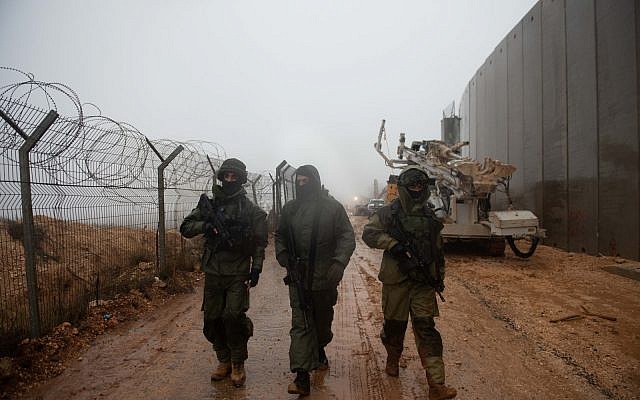
Last Tuesday Israel announced it was launching an open-ended operation to uncover and destroy the network of subterranean passages dug by Hezbollah into Israel. That day, troops uncovered their first tunnel, which originated inside the Lebanese village of Kafr Kila and penetrated Israeli territory south of the town of Metulla.
On Saturday, the IDF exposed another cross-border attack tunnel built by Hezbollah that extended into Israeli territory from southern Lebanon.
The army said Hezbollah intended to use the passageways in a future war to infiltrate into Israel and launch surprise attacks.
The number of tunnels the IDF believes Hezbollah has dug under the border, as well as other information connected to its tunnel-busting operation, have been barred from publication by the military censor.
The tunnels’ discovery, and the subsequent IDF operation to destroy them, has raised the specter of renewed conflict between Israel and Hezbollah.
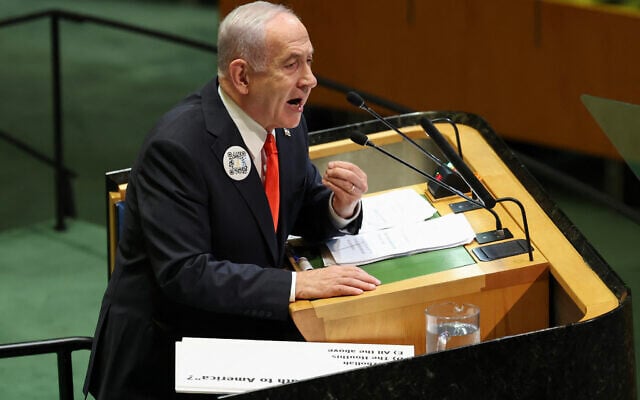
Prime Minister Benjamin Netanyahu has said the operation will go on for as long as needed, and called on the international community to respond to the attack tunnels by imposing additional sanctions on Hezbollah.
Netanyahu also said he will demand that the UN Security Council discuss the matter.
Israeli officials have indicated that the IDF may operate within Lebanese territory to destroy the tunnels. An IDF incursion into Lebanon could spark a major confrontation with the Iran-backed terrorist militia.
Ramping up tensions further, Hezbollah deputy secretary general Naim Qassem warned Israel over the weekend that all of its territory, “even Tel Aviv,” was vulnerable to the group’s immense arsenal of over 100,000 rockets.







The Times of Israel Community.