

In tribal, divided Israel, Rabin’s memory overwhelmed by partisan mistrust
25 years after the assassination, each side believes it is the new target of incitement – and the other side is the perpetrator

 Add ToI as a Preferred Source on Google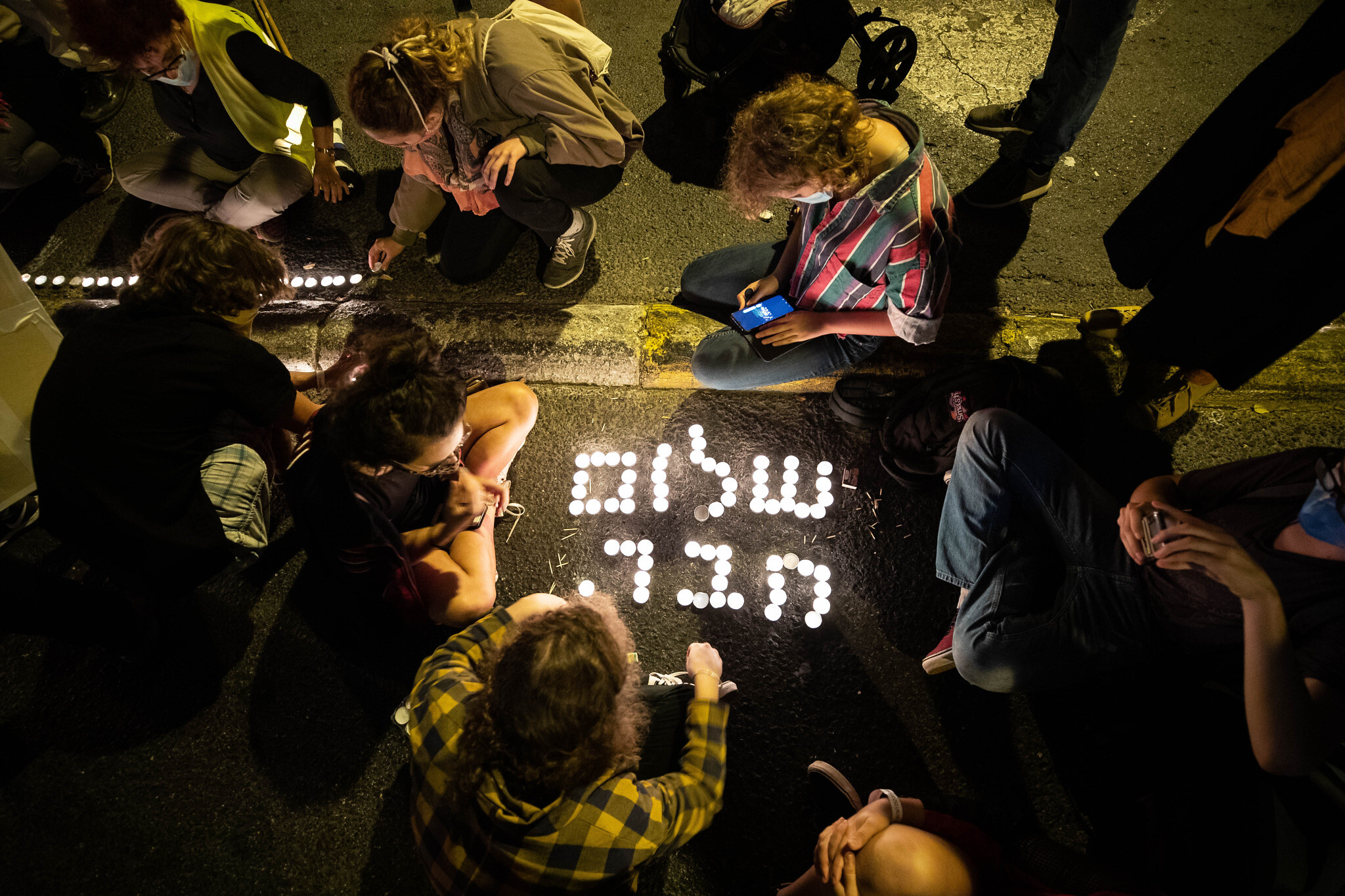
Yitzhak Rabin was assassinated 25 years ago, on November 4, 1995. That’s this coming Wednesday on the Gregorian calendar and last Friday on the Hebrew calendar.
His death at the hands of a right-wing Jewish assassin drove an outpouring of grief from a shocked nation, and then, after the initial trauma wore off, two and a half decades of bitter feuding over the meaning of the first Jewish assassination of a national leader in 2,600 years.
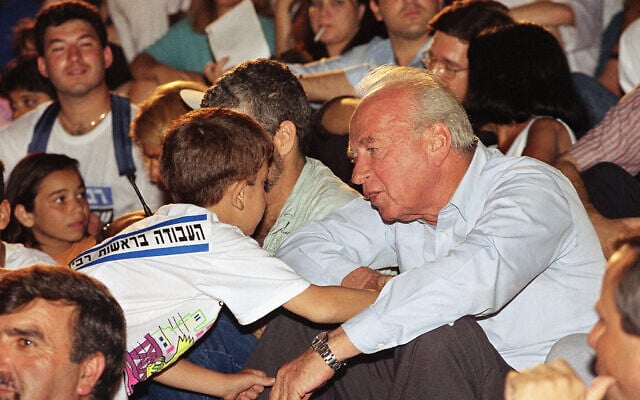
On that long-ago November, teenagers took to Tel Aviv’s Kings of Israel Square – now Rabin Square – to sit in mourning, lighting candles and recalling the legacy of the man who tried to deliver peace.
It may be a fortunate thing for those teenagers, now in their forties, that no Facebook or Twitter existed at the time to offer a window into what many other Israelis were thinking, Israelis less enamored with the Oslo effort and doubly disturbed by both the assassination and the blame for it.
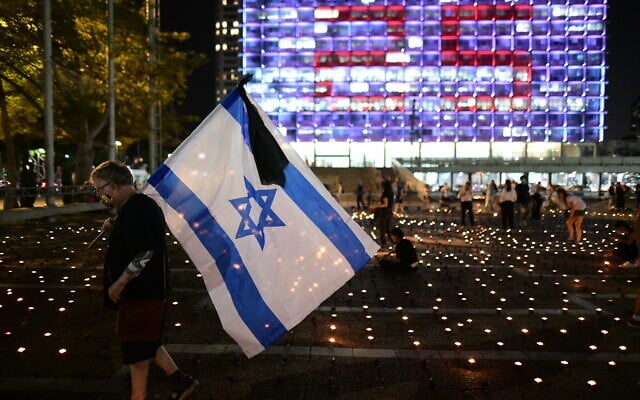
There was visceral, wild incitement against Rabin from right-wing religious extremes, tolerated and sometimes encouraged by his mainstream right-wing opponents. Rabbis uttered curses calling down deadly divine wrath on the prime minister. A coffin was paraded at a right-wing rally, inscribed with the slogan that “Rabin is burying Zionism.” The nation was divided over whether Benjamin Netanyahu, then a rabble-rousing right-wing opposition leader heading up the resistance to the Oslo Accords (and after Rabin’s assassination, a grudging implementer of parts of said accords), had a role in that deadly incitement.
The question of incitement never faded, and indeed, became over the years the left’s chief lesson from that era — a lesson, the left’s leaders and activists have said openly, that only one side needs to learn. To rightists, the left’s narrow and partisan sense of the meaning of the killing prevented it from becoming the stuff of shared civic religion or national memory.

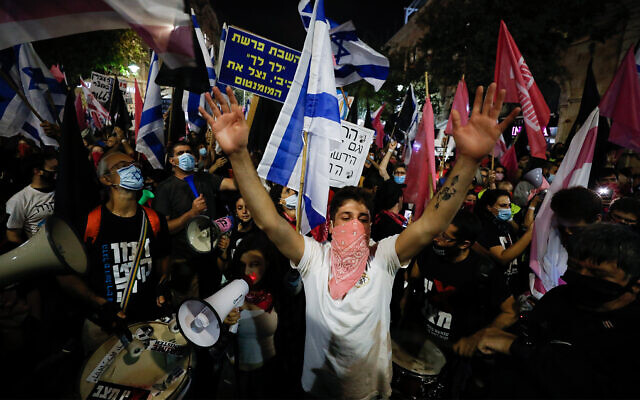
At a Saturday commemoration for Rabin — which, in keeping with the message, was also an anti-Netanyahu protest — entertainer and left-wing activist Orna Banai went on stage to rally the troops.
Rabin’s legacy, she told the crowd, should be something immediate and political and utterly partisan: the downfall of the “tyrant” Netanyahu.
“He won’t win,” she declared to the resounding cheers of the crowd, referring to Netanyahu.
“The days of the tyrant are numbered. And that’s to your credit, to our credit, the wonderful people who want a different Israel, an Israel of peace, of equality, of mutual respect, of truth, of integrity,” she shouted.
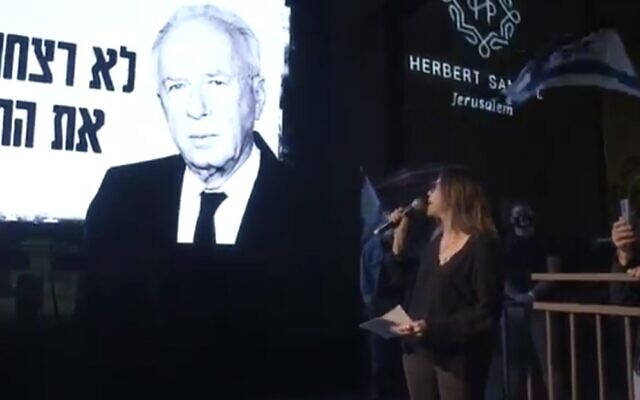
“That was Rabin’s path, and we are paving that path today with our feet, in your memory, Yitzhak Rabin,” she turned to a projected image of the old leader, “our beloved and precious. Not a day goes by that we don’t weep. What a missed opportunity! What a despicable murder! How they murdered and also inherited!”
There it was. The “they” who — like the biblical King Ahab, who took the vineyard of the Jezreelite vintner Navot for his own — “murdered and also inherited.”
In case anyone missed the point, alongside Rabin’s projected face were the words — the accusation — “You didn’t murder hope.”
Nor did the Rabin commemoration go unnoticed on the religious right — the heart of the amorphous “they” and “you” that is the target of the left’s 25-year accusation of collective guilt. It is a trauma there too, but a broader and less gratifying one, in the sense that there is no simple story or message that can be attached to it. The assassination was a defining crisis for the right. So were the Oslo accords Rabin forged with Palestinian leader Yasser Arafat, which ended in a wave of suicide bombings beginning in the fall of 2000 that shattered Israelis’ illusions about Palestinian politics, and shattered, too, the political left Rabin had led into the peace process.
As right-wing radio personality Yotam Zimri put it after Banai’s speech: “I just want to remind everyone that as a child in Afula in Rabin’s day, ‘hope’ meant safely getting to the end of a bus ride, and not having our Purim party canceled because of another terror attack. You’re talking to the generation that still remembers, sweethearts.”
Ofra Lax, a journalist in the religious-Zionist weekly Besheva, described the experience of 25 years of blame thus: “The children of religious Zionism who are over 35, and bore the brunt of the curses and humiliations, the collective accusation that they all murdered Rabin, the exclusion from the grief, have by now learned to accept all of that. Everyone found their own way of dealing with the anniversary of that terrible murder. Some suppress, some distance, some try to connect.”
Everyone thinks they’re the target
A survey late last month by the Israel Democracy Institute revealed just how few Israelis believe the Rabin assassination serves as a unifying and shared experience of trauma, or offers cross-partisan lessons for Israelis writ large.
Just about everyone, the study found, believes that Israeli public discourse is rife with incitement — and just about everyone believes it’s the other side doing the inciting.
Asked if they personally felt that they were targets of incitement, a majority across all divides said they were. Among self-identified left-wingers, fully 86% felt targeted, followed by 81% of Haredim, 70% of Arabs and 67% of right-wingers.
“Who is to blame?” the survey asked.
Among Jews the responses were clear-cut and overwhelmingly partisan. On the left, 74% chose “the political leadership of the right.” On the right, 46% chose “the media” and 21% “the political leadership on the left.”
Just 1% of the left and 10% of the right blamed their own side.
The anniversary of Rabin’s assassination was established by the Knesset in 1997 as an official national day of mourning. But the IDI poll found that 43% of Israelis no longer see it as a day of mourning or introspection. It’s no accident that 70% of the left and 66% of the center say they still think of the anniversary as a period of mourning, while on the right the figure is 38% and among Haredim just 20%.
The day, like Rabin’s legacy, has been swept up in the broader political polarization. Commentators and various heirs to Rabin’s name and legacy have spent the past week reflecting on the dangers of political polarization and incitement, on the loss of a sense of shared fate, on the end of optimism they felt was the result of his killing.
But many ordinary Israelis are less sentimental about his legacy, and less sure about the meaning of his death. More often than not it serves as a cudgel in the never-ending culture war, grief deployed to exclude the other camp – a fault line through which the fractures that divide Israeli society become visible and inescapable, and so grow stronger.






The Times of Israel Community.