

Iran fires multiple cluster munitions at Israel, wounding 1; Tehran claims to down US jet
Missile salvos rain munitions on central Israel, Haifa area causing damage; 2 American air crew members said missing, with rescue operation underway; UN to debate Strait of Hormuz plan
 Add ToI as a Preferred Source on Google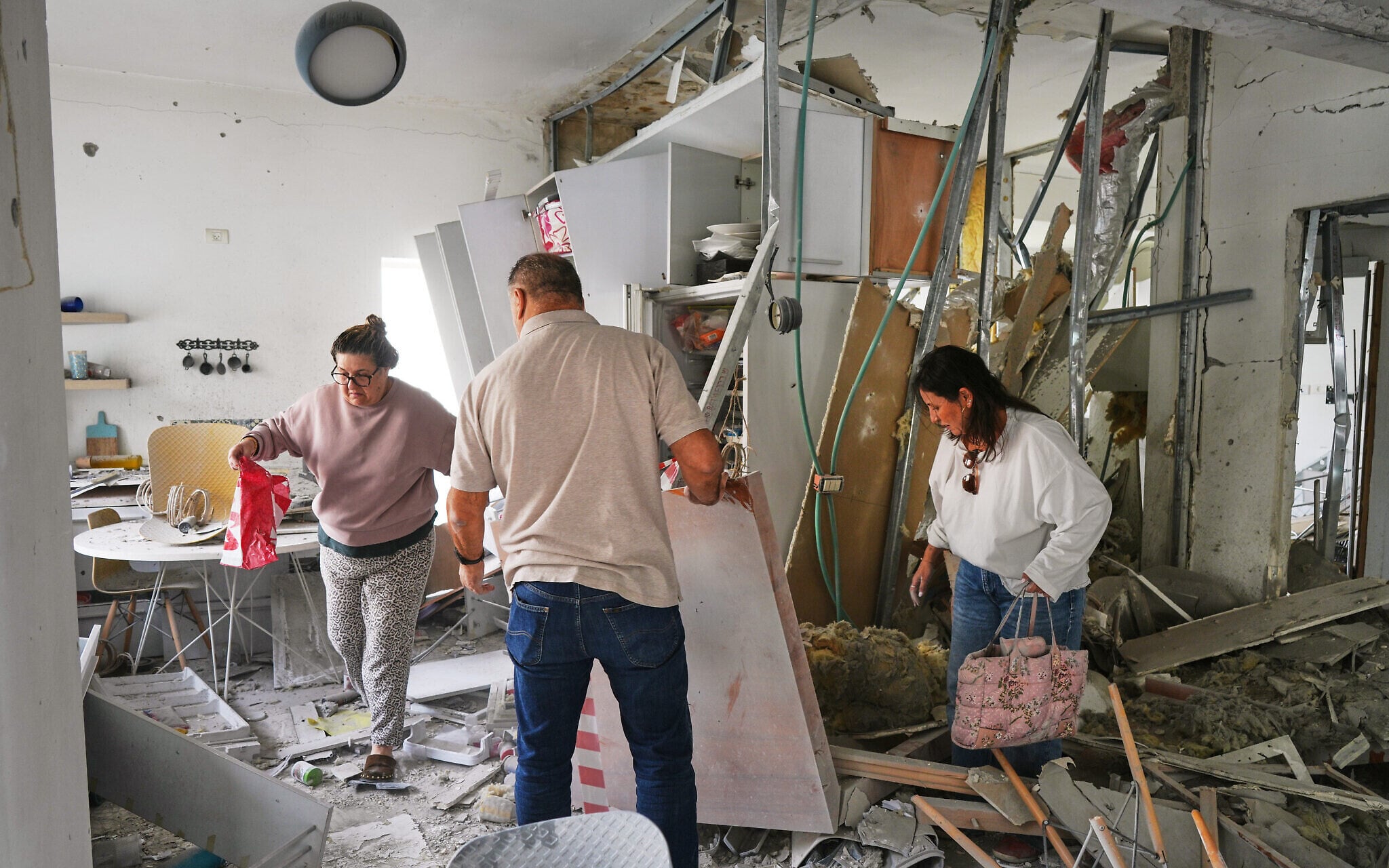
One person was lightly wounded Friday when a cluster munition from an Iranian ballistic missile struck a home near Haifa, as Iran kept up fire at Israel and US allied countries in the Middle East, and claimed to have downed an American jet.
The Iranian regime fired three salvos of missiles at Israel on Friday, targeting the central and Haifa regions of the country, with cluster munitions that scattered over wide areas.
Magen David Adom said that a 79-year-old man was hit by flying debris due to the shockwave of a cluster munition impact in Kiryat Ata, near Haifa.
Several impact sites were reported in the Haifa area following the midday ballistic missile attack, causing damage.
That attack followed one at around 3:15 a.m. that targeted the central area of the country.
Emergency services said there were some ten impact sites from submunitions, with damage but no injuries.

The missile was reportedly not intercepted, and bomblets hit in Ramat Gan, Givat Shmuel and Petah Tikva, causing damage to homes, roads and vehicles.
Central Israel was again targeted on Friday afternoon. There were no immediate reports of damage or injuries.
2 US air crew members said missing
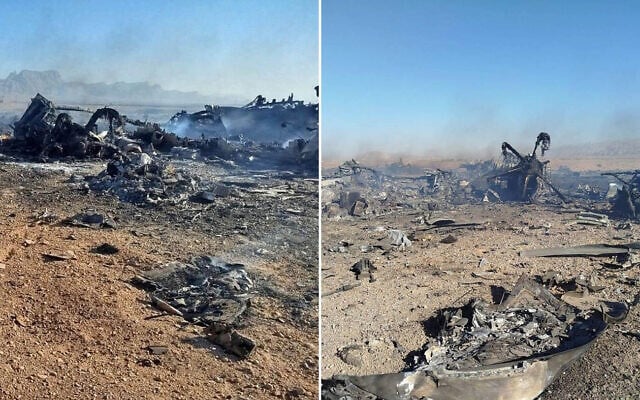
Also on Friday, Iran claimed to have shot down a US F-35 stealth jet, publishing images of what it said was the wreckage and asserting the pilot likely died in the crash.
An Iranian military spokesman claimed that the fighter jet was shot down over central Iran by the Islamic Revolutionary Guard Corps’ air defenses.
The spokesperson said there were low chances of pilot survival.
Images posted online and not immediately verifiable appeared to show debris of a US F-15E fighter jet, and not an F-35.
Iranian media has posted what appears to be debris from a USAF F-15E Strike Eagle, reportedly downed earlier today.
Seen here, the remains of a vertical stabilizer. pic.twitter.com/FGD8jrmM4p
— OSINTtechnical (@Osinttechnical) April 3, 2026
The US did not immediately comment on the claim, however the Axios news site said that a search and rescue operation was underway to locate two crew members.
Last month, a US F-35 had to make an emergency landing at a Middle East base after it was apparently hit by Iranian fire.
Kuwait oil and Emirati gas sites hit, Riyadh downs drones
Meanwhile, Iran continued to strike Gulf nations as British Prime Minister Keir Starmer said the UK would deploy aerial defenses to Kuwait.
Kuwait Petroleum Corporation said Friday its Mina al-Ahmadi refinery was hit by drones, setting off fires at operating units, but no injuries were reported, according to the state news agency.
“Kuwait Petroleum Corporation (KPC) told KUNA that the Mina Al-Ahmadi refinery was targeted in a drone attack early this morning, resulting in fires in several operational units,” official news agency KUNA reported, adding that emergency teams were working to contain the blazes.

An Iranian attack hit a power and water desalination plant, causing damage to parts of the facility, Kuwait said, adding that emergency and technical teams were responding under contingency plans to maintain operations and secure the site.
After the drone attack on the oil facility, Starmer’s office said Friday that Britain was deploying its Rapid Sentry air defense system to Kuwait to help protect British and Kuwaiti interests in the Gulf.
Starmer discussed the deployment in a call with Kuwait’s Crown Prince Sabah al-Khalid al-Sabah on Friday morning, a Downing Street spokesperson said.
“The Prime Minister began by condemning the reckless overnight drone attack on a Kuwaiti oil refinery,” the spokesperson said. “He reiterated that the UK stands with Kuwait and all our allies in the Gulf.”

The spokesperson said the leaders discussed the deployment of the UK’s air defense system – designed primarily to shoot down drones and other low-flying aerial threats – to Kuwait, which would protect Kuwaiti and British personnel and interests in the region, while avoiding escalation into a wider conflict.
Iran also targeted Saudi Arabia — the kingdom’s defense ministry said its air defenses intercepted seven drones, according to its state news agency.
Additionally, debris from an intercepted aerial threat fell on Abu Dhabi’s Habshan gas facilities, prompting a temporary suspension of operations and a fire that emergency teams were working to contain, with no injuries reported, the Abu Dhabi Media Office said.
Iran warns UN on Strait of Hormuz
Amid growing speculation over potential steps to reopen the Strait of Hormuz, Iran warned the UN Security Council on Friday against any “provocative action” ahead of an expected vote on a draft resolution mandating a force to protect shipping through the key waterway.
The vote was initially scheduled for Friday, but was postponed, with no new date set. Sources told the Associated Press that the vote was expected to be held Saturday.
“Any provocative action by the aggressors and their supporters, including in the UN Security Council regarding the situation in the Strait of Hormuz, will only complicate the situation,” Iranian Foreign Minister Abbas Araghchi said.
The draft resolution brought by Bahrain proposes authorizing the use of “defensive” force to protect shipping in Hormuz from Iranian attacks, according to the official Security Council program.
The draft resolution was backed by the US and the Gulf countries hardest hit by the virtual blockade, but member states, including Russia, China, and France, objected to earlier drafts.
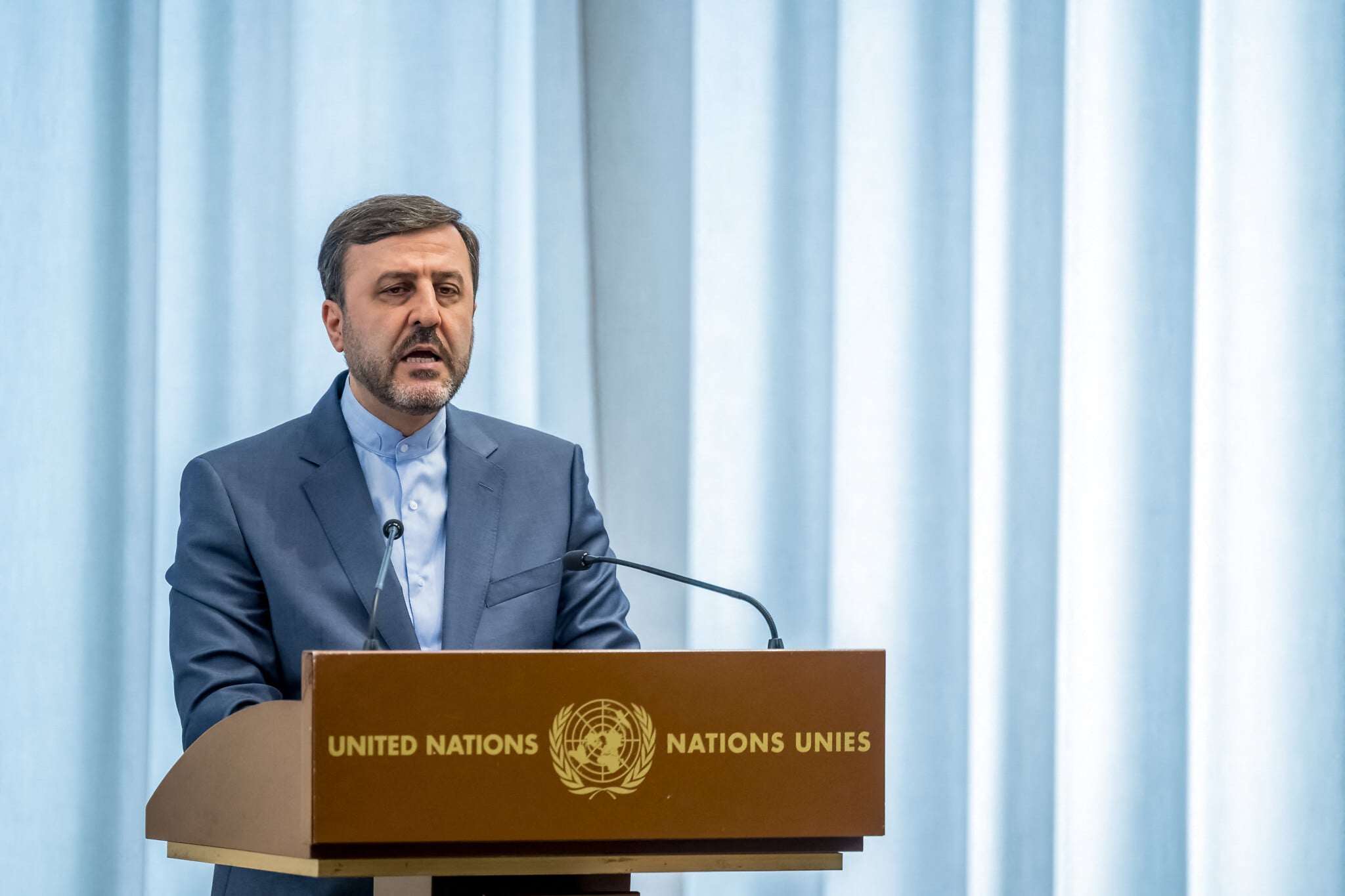
Iran’s state-run IRNA news agency claimed Iranian diplomat Kazem Gharibabadi was instead drafting a proposal to “monitor” the Strait of Hormuz with Oman, describing the proposal as “intended to facilitate and ensure safe passage and provide better services to ships passing through this route.”
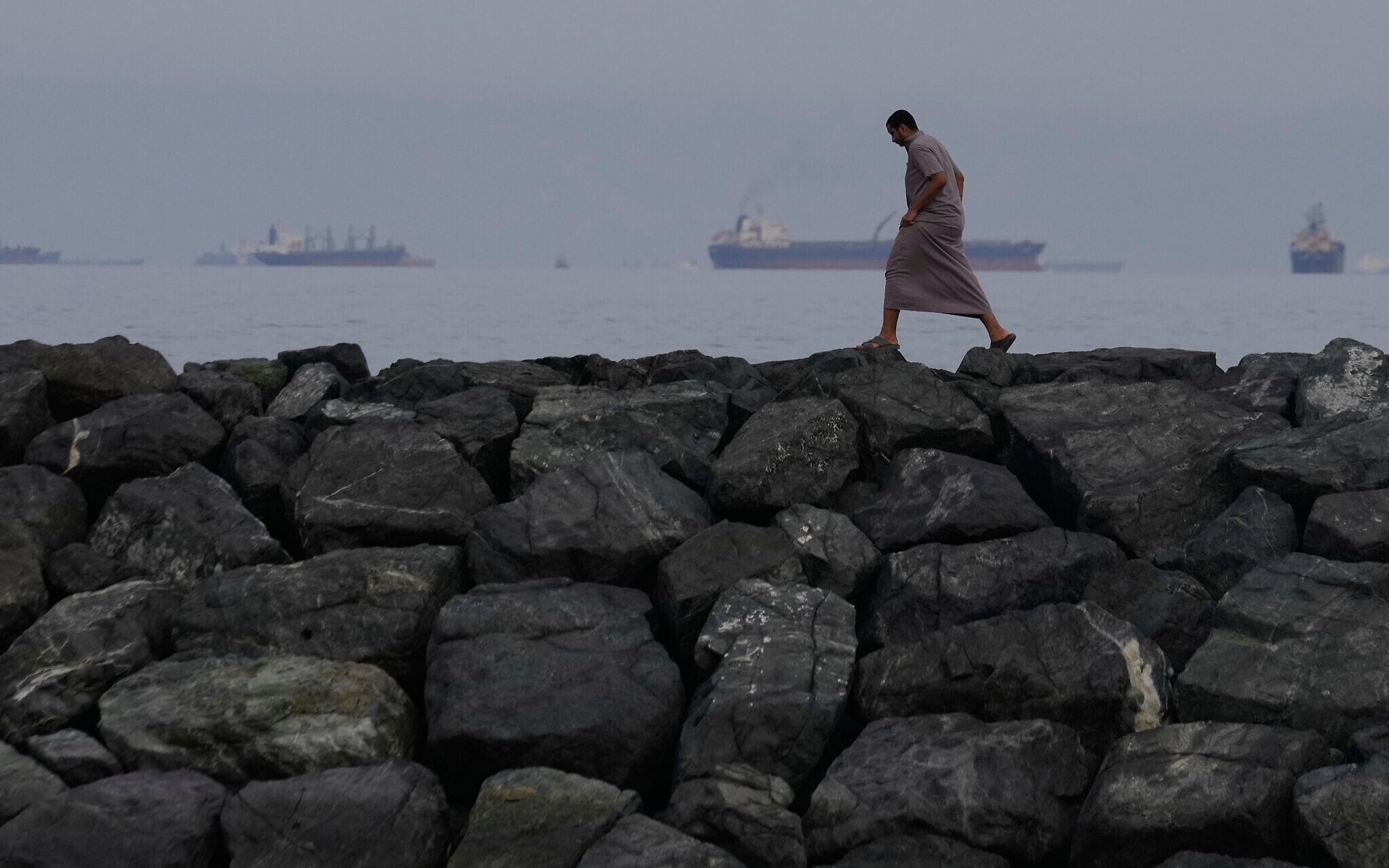
Iran’s attacks on shipping in the region, as well as reportedly demanding as much as $2 million for passage through the narrow mouth of the Persian Gulf, have created a stranglehold on the route through which 20 percent of the world’s oil supply moves.
It was unclear what the proposal would mean. Oman did not immediately acknowledge it.
The strait runs through Iranian and Omani territorial waters, but is considered an international waterway that should freely allow ships to pass.
“Naturally, when we face an act of aggression, navigation encounters serious problems, and this is the result of the aggressive act,” Gharibabadi said. “We are currently at war and cannot expect pre-war rules to govern wartime conditions.”









The Times of Israel Community.