

Israel says it won’t recognize Ugandan Jewish community — report
Interior Ministry rules man from Abayudaya cannot immigrate, rolling back recognition from Jewish Agency
 Add ToI as a Preferred Source on Google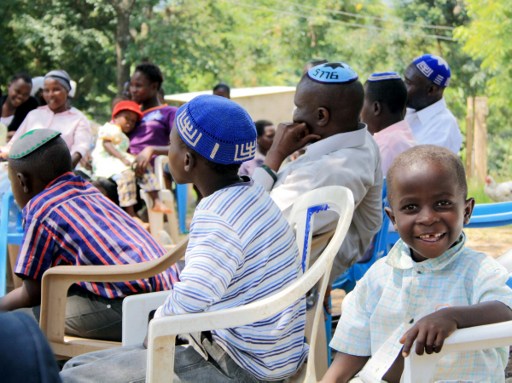
Israel has ruled that it will not recognize Uganda’s Jewish community, according to an newspaper report Thursday.
The Interior Ministry denied the request of a Ugandan Jew, Kibitz Yosef, to immigrate to Israel, Haaretz reported. The ministry said Yosef, who is staying at a kibbutz in southern Israel, had to leave the country by June 14, according to the report.
A representative told Haaretz that the decision represented Israel’s stance on the Ugandan Jewish community, not just the applicant in question. The ministry said Yosef could challenge its decision in the High Court of Justice.
The Uganda community, also called the Abayudaya, numbers approximately 2,000 and traces its roots to the early 20th century, when a former leader read the Bible and embraced Judaism. Most members were converted under the auspices of U.S. Conservative rabbis and thus are not recognized as Jewish by Israel’s mostly ultra-Orthodox Chief Rabbinate.

In 2016, the Jewish Agency for Israel recognized the community, seemingly opening a path for its members to immigrate to Israel. However, the Abuyudaya have struggled to obtain recognition to do so. In December, Israel denied a visa application by a member of the community to study at a yeshiva in Israel, leading to accusations of racism.
This week, the Chief Rabbinate published a list of draft criteria for religious courts in the Diaspora to have its conversions accepted in the Jewish state. If enacted, Jewish converts in America may face additional hurdles in being recognized as Jewish by the Chief Rabbinate, which controls Jewish marriage, divorce, conversion and burial in the Jewish state. However, it does not have authority over who can immigrate to the country.








The Times of Israel Community.