

Israeli researchers find humans and turtles, share key brain function going back 320 million years
Turtles are able to grasp that the same object seen from different angles is not a different object, an important trait for defense against land-based predators
 Add ToI as a Preferred Source on Google
Sue Surkes is The Times of Israel's environment reporter
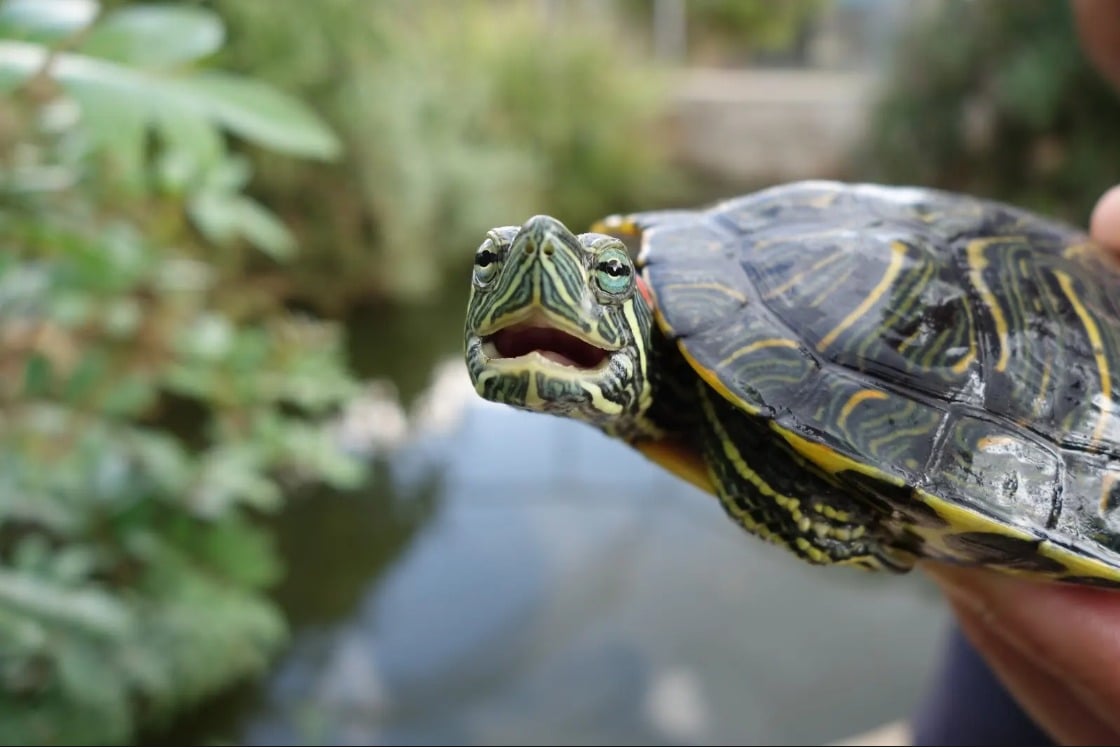
Israeli scientists have discovered, through research on living turtles, that the brain’s ability to distinguish between new objects and the same object seen from different angles likely evolved at least 320 million years ago, when mammals and reptiles split from a common ancestor, according to a recently published study.
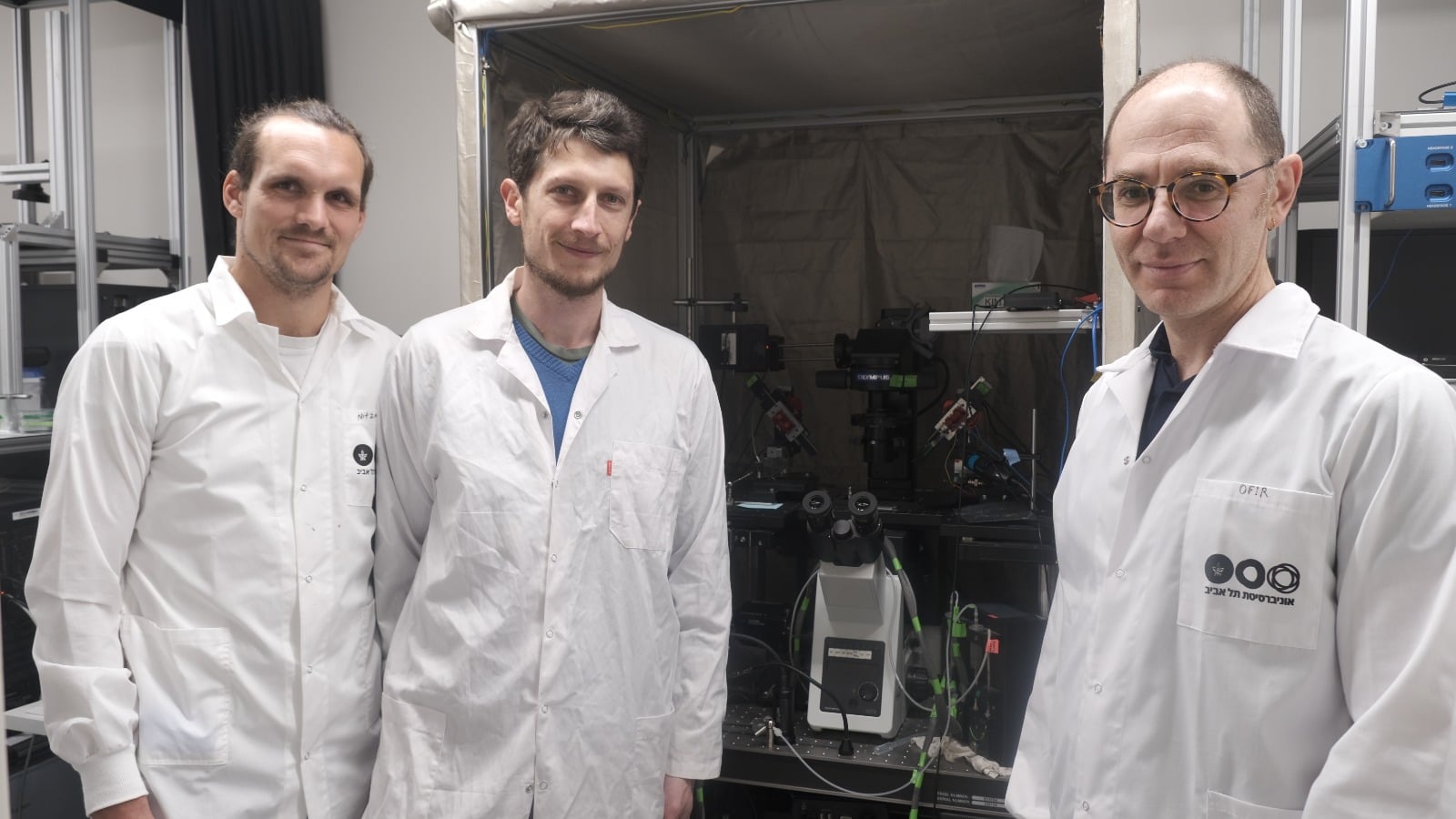
Tel Aviv University’s Milan Becker, Nimrod Leberstein, and Mark Shein-Idelson set out to probe the earliest function of the cerebral cortex, the part of the brain responsible for our high cognitive and information processing skills.
Shein-Idelson explained that the team chose sweet water turtles because they have pathways similar to those of mammals that connect the retina to the brain’s cortex, where complex visual data is analyzed.
Both classes of creatures evolved from a common ancestor that left the water and moved onto land. It is thought that this ancestor had a three-layered cerebral cortex (turtles still have three, while mammals now have a six-layered one) and visual abilities that far exceeded those of fish and other marine creatures, which can only see short distances.
By recording neural activity in the turtles and tracking their eye movement with specially developed cameras, the researchers, from the Department of Neurobiology, were able to examine how the turtle brain responded to repetitions of the same visual stimulus and the introduction of a new stimulus, as they moved their eyes, and the stimuli fell on different parts of the retina.
“Even if a turtle moves its head and an object looks different, its brain realizes that it’s the same thing it already saw, just from a different angle,” said Shein-Idelson.” Our findings suggest that one function of this ancestral cortex was to perform this computation. ”
“Imagine you’re an animal on land, looking around, and there’s a predator,” he said. “This predator falls on some part of the retina. You locate it in a particular direction. Now, you move your eye or your head, and the [image of the] predator falls on a different part of the retina. Is it the same predator? The retina changes with every shift of your gaze, but the objects in the world don’t necessarily. So the animal must integrate the object and the environment into a coherent understanding that is independent of eye movements. This is a major challenge when you are on land and rely on vision.”
The research team now intends to test whether the turtles can grasp that an object seen at varying distances (in different sizes) or different light conditions is still the same object.
Shein-Idelson began his post-doctoral studies with Gilles Laurent at the Max Planck Institute for Brain Research in Germany. Laurant is known for his research on reptilian brains. In 2018, he published work on anesthetized turtles.
The Tel Aviv University study was published in the journal Science Advances.










The Times of Israel Community.