

Knesset committee extends money laundering law to wildlife trafficking
Move allows authorities to follow money trail, track down criminals involved in what is regarded as fourth-largest category of illegal global trade
 Add ToI as a Preferred Source on Google
Sue Surkes is The Times of Israel's environment reporter
In a victory for wildlife conservation, the Knesset’s Law Committee approved a temporary order that recognizes trafficking in wildlife and protected flora as offenses under the Money Laundering Prohibition Law.
Monday’s order, already operational, will last for two years.
That will give time for the Wildlife Protection Law to be amended to define trafficking offenses under aggravated circumstances as criminal offenses punishable by a four years’ imprisonment. Upon completion of the amendment to the Wildlife Protection Law, which will require Knesset approval, the temporary order will become permanent.
The order allows enforcement authorities to go beyond the small cogs in the system and follow the money to track down the more important criminals involved in an industry often cited as the fourth-largest category of illegal global trade, after narcotics, counterfeiting, and human trafficking.
It will enable them to confiscate both the proceeds from crimes and the instruments used to commit them.
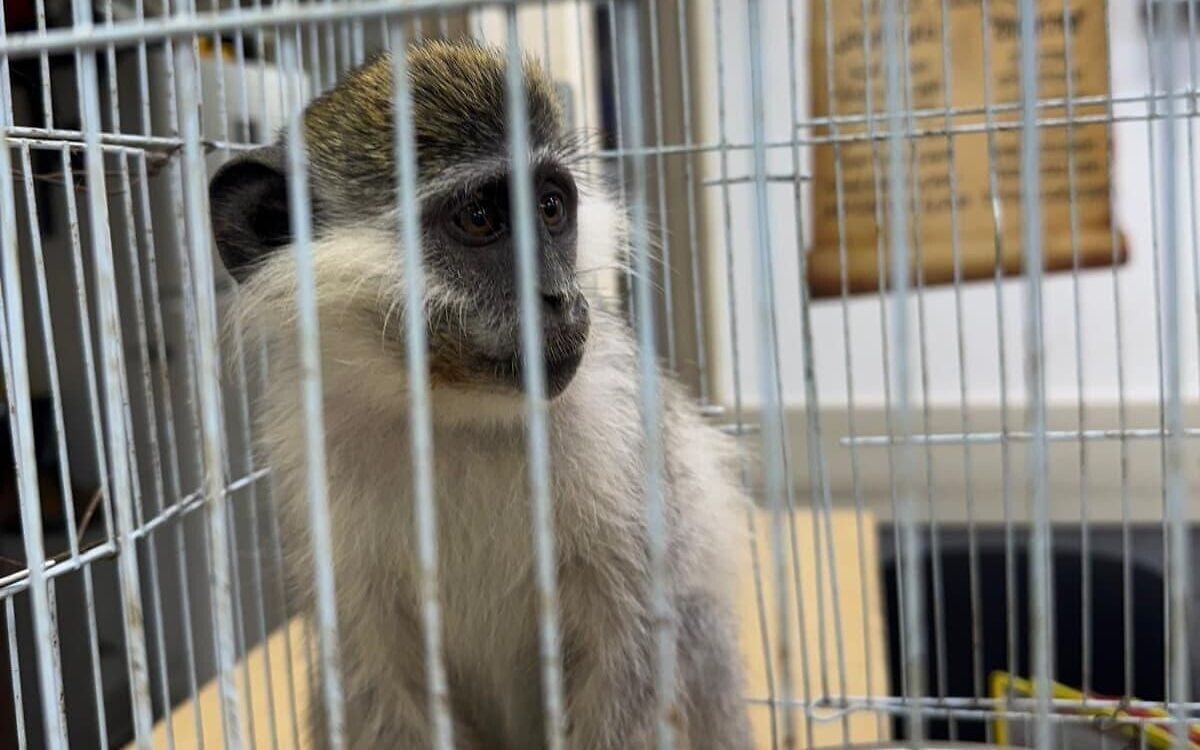
Among the animals trafficked into Israel and caught over the past three years were lion cubs and dozens of vervet, green, and guenon monkeys.
According to Channel 12, those animals were smuggled from Libya, transferred to drug traffickers in Egypt, driven by pickup truck to Sinai, and sent by drones over the border fence with Israel to a site near the Bedouin town of Bir Hadaj.
The monkeys were found chained, mainly in tiny cages. As police and wildlife inspectors became more aware of the smuggling, many of the animals were found tied up in open spaces while their keepers tried to avoid being caught red-handed.
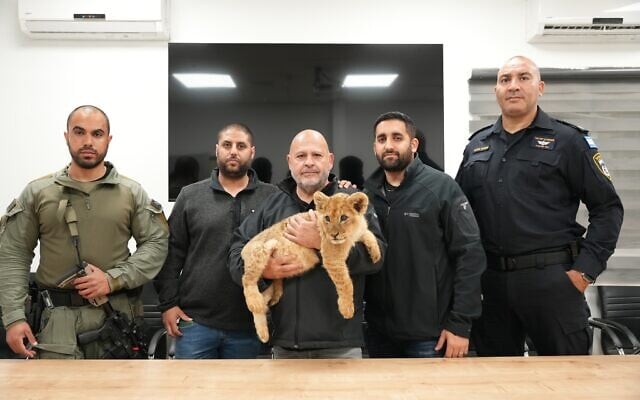
“Wildlife trafficking criminals do not operate in a vacuum. In many cases, this is a criminal economic activity connected to broader criminal networks,” the Nature Authority’s chief prosecutor Shai Peretz said.
“The decision to recognize wildlife trafficking offenses as predicate offenses under the Money Laundering Prohibition Law is an important conceptual change, no longer treating these offenses as environmental offenses alone, but as part of the overall fight against organized crime. From now on, it will also be possible to act against the money, property, and profits behind this crime.”
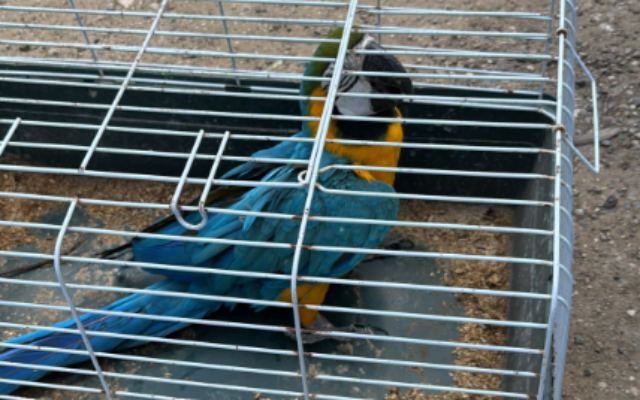
“Wildlife has become a status symbol, cubs are separated from the mothers at a very young age, the trade methods are super cruel, they smuggle birds in milk cartons, monkeys and lions are smuggled by drones that sometimes crash,” MK and animal rights campaigner Yasmin Fridman (Yesh Atid) said. “The animals arrive at homes, and people don’t understand what happens when they grow up and become dangerous. ”
She added, “Beyond animal cruelty, this will be a statement of morals and values.”
Tamar Fredman, director of the Israel Primate Sanctuary, which has taken in smuggled monkeys, said, “I meet the victims every day and see the suffering. The nature of the trade has changed from buying and selling to renting the ‘forbidden object’ for the purpose of videos.”








The Times of Israel Community.