

Liberman seen most able to deal with terror — poll
Survey finds 29% deem Yisrael Beytenu leader best-placed to tackle surge in violence, compared to 17% for Netanyahu
 Add ToI as a Preferred Source on Google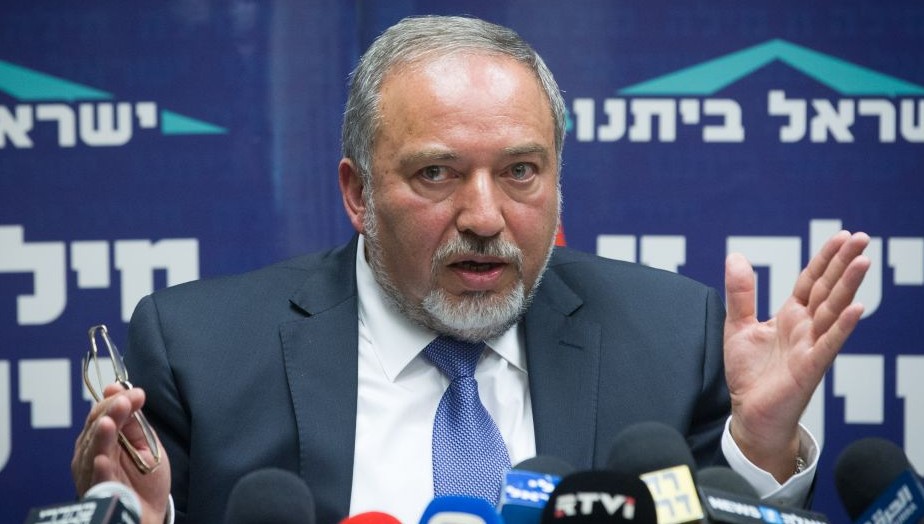
Hawkish former foreign minister Avigdor Liberman is regarded as the politician most able to tackle the ongoing violence wracking Israel and the Palestinian territories, according to a poll published by Channel 2.
A Midgam poll taken October 14-15 and published on October 23 asked 807 Israelis to choose which of six Israeli politicians they saw as most capable of addressing the current cycle of Palestinian terrorism. Yisrael Beytenu leader Liberman took 29 percent, while Prime Minister Benjamin Netanyahu, who stumped during the March 2015 election campaign on a security platform, earned a mere 17% of respondents’ votes.
Liberman’s Yisrael Beytenu party holds six seats in the 120-seat Knesset. The 2015 elections saw the party, which ran on a platform advocating the execution of convicted terrorists, split from its alliance with the Likud party. It dropped from 15 seats in the 2009 elections to 11 seats in the united list with Likud in 2013 to just six in 2015.
An identical poll conducted a week earlier gave Liberman 22% and Netanyahu 15%. Jewish Home party leader Naftali Bennett saw a drop from 17% in the first poll to just 11% in the poll published Saturday.
Opposition leader Isaac Herzog, head of the Zionist Union, and Yesh Atid party leader Yair Lapid, trailed the pack with five percent apiece in the new poll; Herzog and Lapid had scored 5% and 4% respectively in the previous survey. Former IDF chief of staff Gabi Ashkenazi, who has yet to join any political party but may soon throw his hat into the ring as a challenger against Herzog in the upcoming Labor Party primaries, took 10% in the first poll and nine percent in last week’s.
The latest poll had a margin of error of 3.4%.
Asked whether they were satisfied with Netanyahu’s response and management of the past month of terror attacks, just 25% of respondents in the newer poll voiced approval, compared to 71% disapproval. Three percent were uncertain or declined to answer. The survey marked a minor increase in approval compared to earlier in the month, which gave the prime minister just 23% approval, compared to 73% disapproval.






The Times of Israel Community.