

Likud court overturns Netanyahu bid to cancel party primary in case of war
Tribunal stresses importance of maintaining vote for election slate, says nixing it would be ‘wholesale violation of party constitution,’ will step in if emergency prevents ballot
 Add ToI as a Preferred Source on Google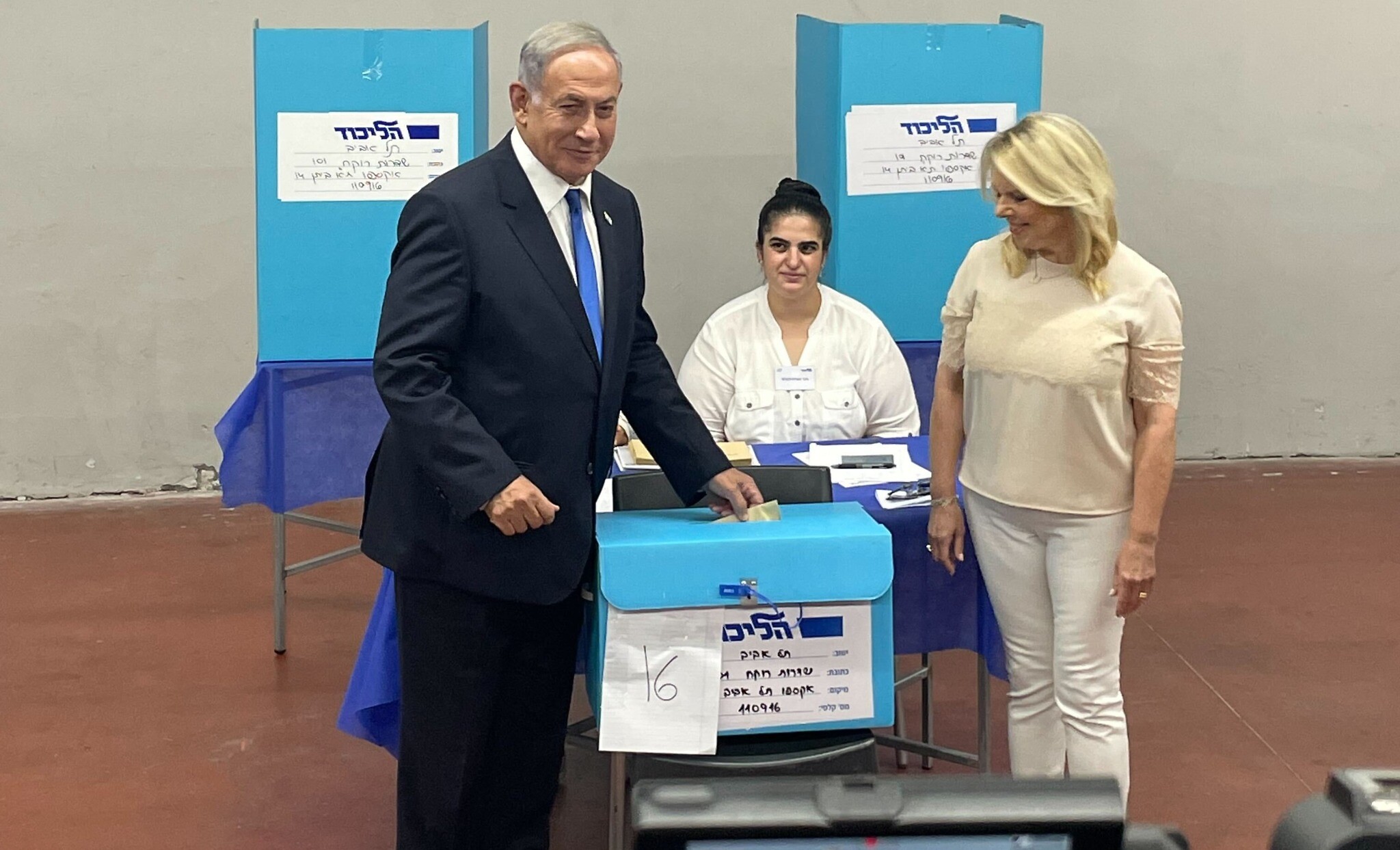
The ruling Likud Party’s internal court on Sunday overturned Prime Minister Benjamin Netanyahu’s bid to cancel the upcoming party primary if it cannot be held because of a possible “wartime situation” and to select its Knesset slate through an appointed committee controlled by the premier.
In its ruling, the court said there is “no room to open even the slightest door to canceling the primary,” which is currently set for August 17, arguing that Likud “is not a one-man party and will lose its character if it becomes one.”
Recent Hebrew media reports said that some Likud lawmakers were concerned that Netanyahu was seeking to avoid holding primaries in order to give him absolute control over the entire slate, a move that could see some backbenchers pushed so far down they would not realistically return to the Knesset after coming national elections.
Amid a tense and volatile standoff between the US and Iran that has seen near-nightly US attacks and Iranian counterattacks for the past two weeks, Israel, which was not involved in the fighting, has been anticipating that it too could be targeted by Iran, which has fired drones and missiles at US allies in the Middle East.
The judges ruled that if security conditions make it impossible to hold the vote as scheduled, the preferred solution is to postpone it or use electronic voting — though this is not currently permitted under the party’s constitution. Either, according to the decision, would be “a thousand times preferable, in our view, to a wholesale violation of the party constitution by not holding a vote at all.”
The court also noted that the party’s constitution already allows primaries to be postponed during an emergency, and said it will rule again should unforeseen circumstances arise.

The decision overturned a measure approved by the Likud Constitution Committee last week allowing Netanyahu to appoint a five-member committee of Likud mayors to determine the party’s Knesset slate if a wartime emergency prevented the primary from being held, effectively capitulating to the premier’s months-long push for unprecedented control over the party’s candidate list.
At the time, Netanyahu said that he supported holding a primary, but that “there is a possibility that we could find ourselves in an exceptional security situation” that would make campaigning and voting impossible.
The committee also agreed to Netanyahu’s demand to grant him eight reserved slots on the Knesset list, seven of them within the first 30 places, to install handpicked candidates.
Netanyahu had previously threatened to cancel the primary if his demand for more reserved seats was not met.
Likud uses a complex primary system to determine much, though not all, of its candidate list, and has long prided itself on its internal democratic processes. It is one of only a handful of Israeli parties that hold primaries to select both its leader and Knesset slate, alongside the left-wing The Democrats Party, which held internal elections earlier this month, the Arab-majority Hadash, which held a primary in May, and the Religious Zionism party, which was holding its primary on Sunday.
The premier’s push for reserved slots, which has long faced resistance from within the party, comes amid concerns that primaries could elevate candidates who are highly popular among the Likud base — including MK Tally Gotliv and ministers Shlomo Karhi and May Golan — but who internal party polling suggests are less appealing to moderate right-wing and swing voters whose support could prove decisive in the upcoming national election.

Currently the largest party in the Knesset, with 32 seats, Likud has generally been projected by polls in recent months to drop to around 22-23 seats, bringing it neck-and-neck with or only slightly overtaking the opposition’s Yashar Party led by Gadi Eisenkot, which has been steadily rising in the polls, and the Together slate of former prime ministers Naftali Bennett and Yair Lapid.
Israel’s general election is scheduled for October 27.







The Times of Israel Community.