

Likud, Yisrael Beytenu look to wrap coalition deal by afternoon
Liberman said to drop demands for ultra-Orthodox draft, civil marriage, scale back bid for death penalty, as sides seek to quickly seal agreement to expand coalition
 Add ToI as a Preferred Source on Google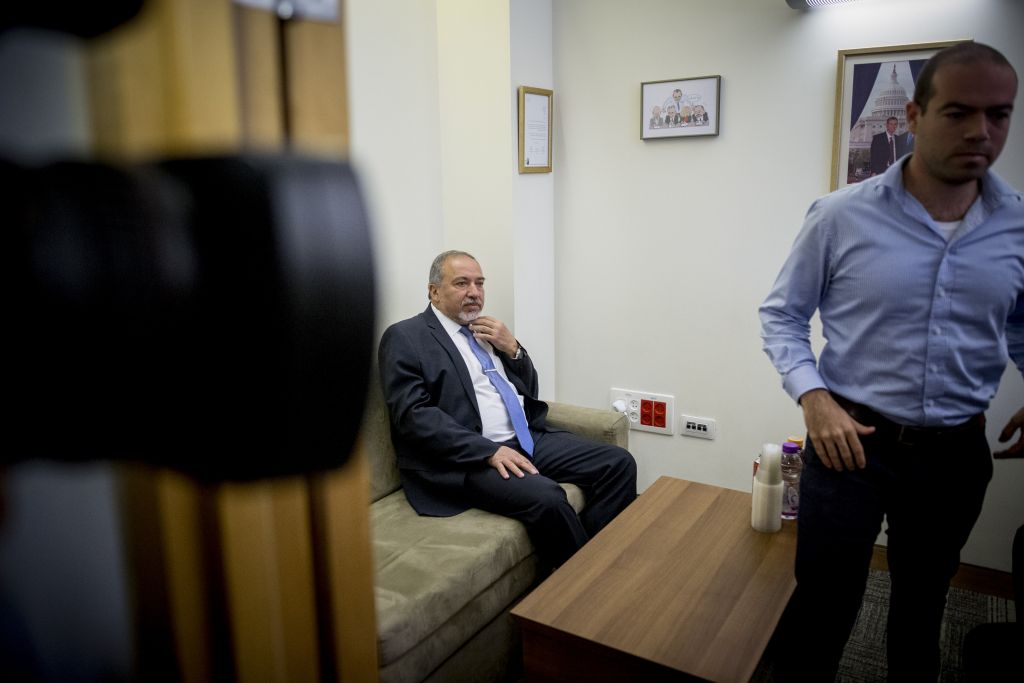
Coalition talks between the ruling Likud party and Yisrael Beytenu are slated to continue Sunday, with both parties saying they hope to seal a deal by the afternoon.
Prime Minister Benjamin Netanyahu is eager to formally bring the six-seat party into his coalition, growing it from the current 61 seats — the smallest majority possible in the 120-seat Knesset — to a more stable 67.
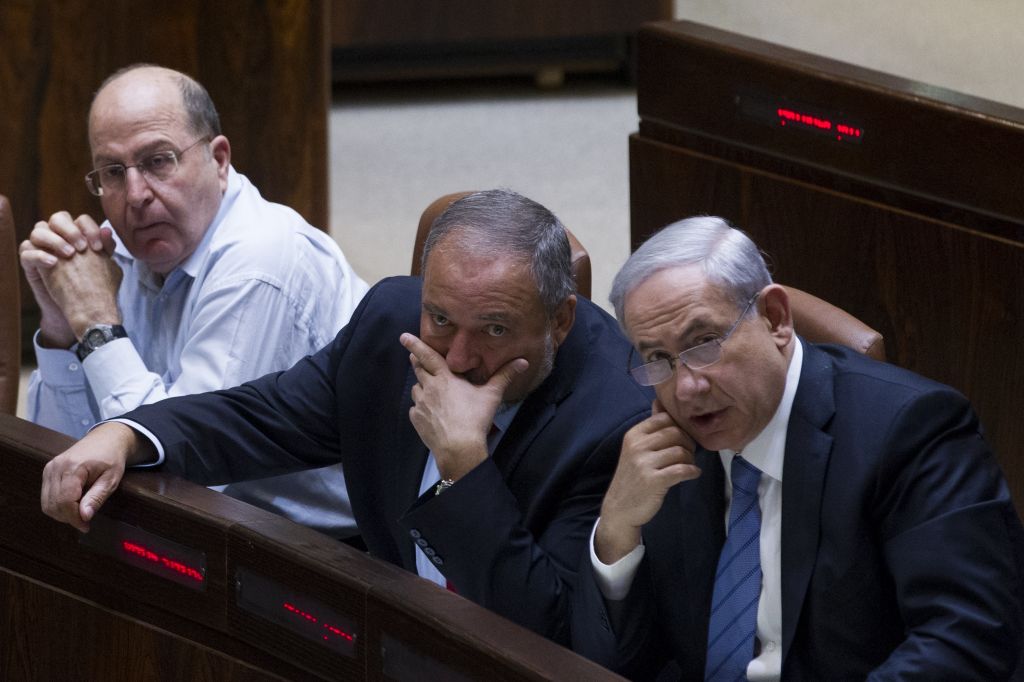
The effort by Netanyahu to expand his coalition has led to a dramatic break with one of his closest Likud allies, outgoing Defense Minister Moshe Ya’alon, after Netanyahu offered the defense post to Yisrael Beytenu chairman MK Avigdor Liberman.
Talks kicked off on Wednesday, and though unnamed officials indicated they would be wrapped up quickly, negotiations have reportedly gotten hung up on two issues, pensions for elderly former Soviet Union immigrants, and Liberman’s campaign promise to institute a death penalty for terrorists convicted of ideologically motivated murder.
Previous demands by Yisrael Beytenu, especially the expansion of mandatory civil or army service to the ultra-Orthodox community and the institution of civil marriage, were dropped before talks began, according to multiple sources.

The abruptness of Ya’alon’s departure is one reason both parties are eager to conclude the talks quickly.
Ya’alon resigned his position on Friday, citing his “lack of faith” in Netanyahu and warning of “dangerous elements” who have taken over the Likud party and the country.
Ya’alon formally submitted his resignation to the Knesset on Saturday night. It will go into effect 48 hours later, when the next-in-line on the Likud’s Knesset list, Temple Mount activist Yehudah Glick, is slated to be sworn in as a member of Knesset.
Ya’alon will attend a formal sendoff for him on Sunday at army headquarters in Tel Aviv’s Kirya compound, after which the defense minister’s post will be officially held by Netanyahu — who is also foreign minister, communications minister, regional cooperation minister and economy minister — until Liberman’s swearing-in.
The replacement of Liberman, a firebrand with little defense experience, for Ya’alon, a former IDF chief of staff, has raised anger and fears among many. On Saturday night, several hundred people gathered in Tel Aviv to rally against Liberman’s appointment and call for Netanyahu’s resignation.

Netanyahu fears that dragging out the talks could destabilize his own faction. Many senior Likud ministers believe an overly generous offer to Yisrael Beytenu will lead to new demands from Jewish Home, which holds eight seats as compared to Yisrael Beytenu’s 6 but has settled for less senior posts — education and justice.
If Jewish Home party leader Naftali Bennett decides to demand the vacant Foreign Ministry, the move would free up the education portfolio — the largest budget after defense — and likely set off a domino effect of demands by Likud leaders to move up the cabinet hierarchy.
In a bid to head off such a scenario, Netanyahu announced Friday he was retaining hold of the Foreign Ministry himself in the hopes that the center-left Zionist Union, spurned last week in favor of Yisrael Beytenu, would reconsider its opposition to joining the government.
Pensions and death penalties
On Friday, Liberman and Netanyahu met to discuss a proposal for new funds to help replace pensions lacking for immigrants from the former Soviet Union with income subsidies and other benefits.
Many of the immigrants arrived in Israel in their middle age, too old to save enough money for a livable pension but at the same time lacking pension rights in the countries they left.
The proposal has already seen months of preliminary staff work in the Absorption Ministry and is thought by insiders to be a key reason Liberman agreed to enter the government.
Finance Ministry figures cited by the Walla news site Saturday reveal that some 78,000 first-generation immigrants, most of them from former Soviet states, live on state-subsidized incomes. Many of these retirement-age Russian-speaking Israelis make up Liberman’s core voting base.
Liberman reportedly met with Finance Minister Moshe Kahlon shortly after the meeting with the prime minister on Friday.
Meanwhile, Liberman’s widely touted demand to institute a death penalty both in civilian and military courts for convicted terrorists has been scaled back dramatically, according to multiple reports.
The party’s current demand is a far more limited amendment to the regulations governing military courts that would allow panels of military judges to sentence a terrorist to death by majority vote. The current rules that require a unanimous decision.
The power to sentence terrorists to death has never been used by Israeli military courts, and the death sentence has never been sought by the military prosecution. It is not clear what practical effect the proposed change would have.








The Times of Israel Community.