Russian tactics could inspire Iran, China – study
Russia’s alleged tactics in the Ukraine conflict including covert military action and social media campaigns could inspire other nations such as China and Iran, a top defense think tank warns.
Most armies around the world are ill-prepared to tackle this new type of “hybrid warfare,” the International Institute for Strategic Studies (IISS) says in its annual Military Balance report.
It said NATO should act with “urgency” to develop responses to such threats, which had the potential to “rapidly destabilize” Western states.
The study says Moscow had waged “limited war for limited objectives” in Ukraine while maintaining a “deniability” which had confused the West’s response.
As the United States considers whether to supply arms to Ukraine, it also details how Kiev’s armed forces had been “hollowed out” by low investment and were largely reliant on Soviet-era equipment.
But the effect of such tactics could also spread beyond Ukraine, the report says.
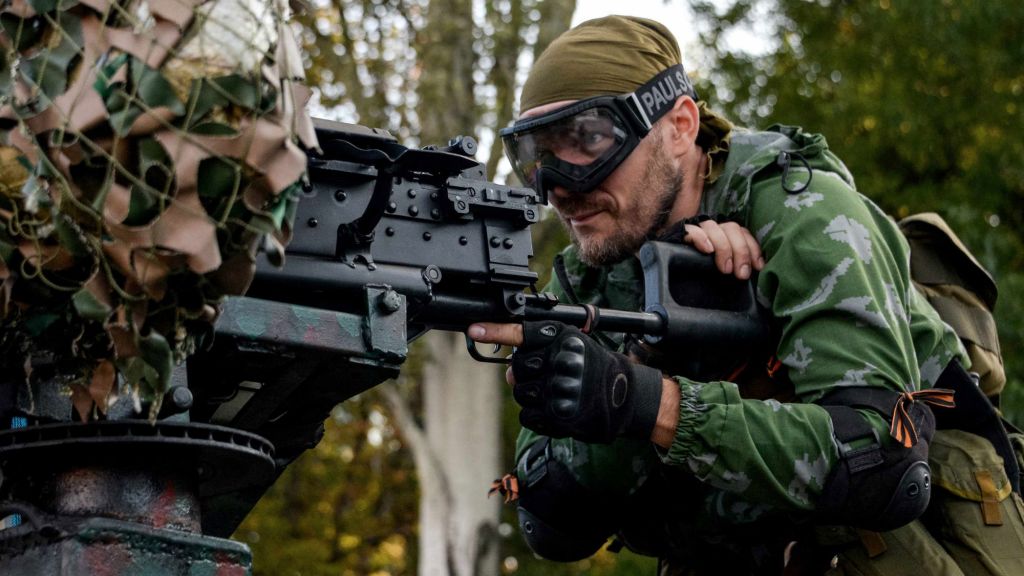
A Pro-Russian rebel prepares arms for the the assault on the positions of Ukrainian army in Donetsk airport, eastern Ukraine, Sunday, Aug. 31, 2014. (AP Photo/Mstislav Chernov)
“Policymakers may anticipate that some current or potential state or non-state adversaries, possibly including states such as China and Iran, will learn from Russia’s recent deployment of hybrid warfare,” it says.
Some of the media tactics employed by IS jihadists in Iraq and Syria, including using social media to recruit fighters, had “thematic similarities” with those used in Ukraine, the study says.
It warns that Western armies, many emerging from a 13-year war in Afghanistan and facing squeezed budgets, were still focused on fighting more conventional conflicts.
Given the threat, they should be looking at how to counter enemy propaganda as well as gathering intelligence and improving the readiness of military forces, the IISS says.
Another IISS fellow, Toby Dodge, predicts that fighting in Syria and Iraq would last for up to a decade.
“This conflict is going to run in Iraq and Syria over the next 5 to 10 years and I suspect then… the region then moves to contain it,” he told reporters.
— AFP


 Add ToI as a Preferred Source on Google