

 From
From New York Times walks back line that seemed to question if Israelis were victims on Oct. 7
 Add ToI as a Preferred Source on Google
Luke Tress is The Times of Israel's New York correspondent.
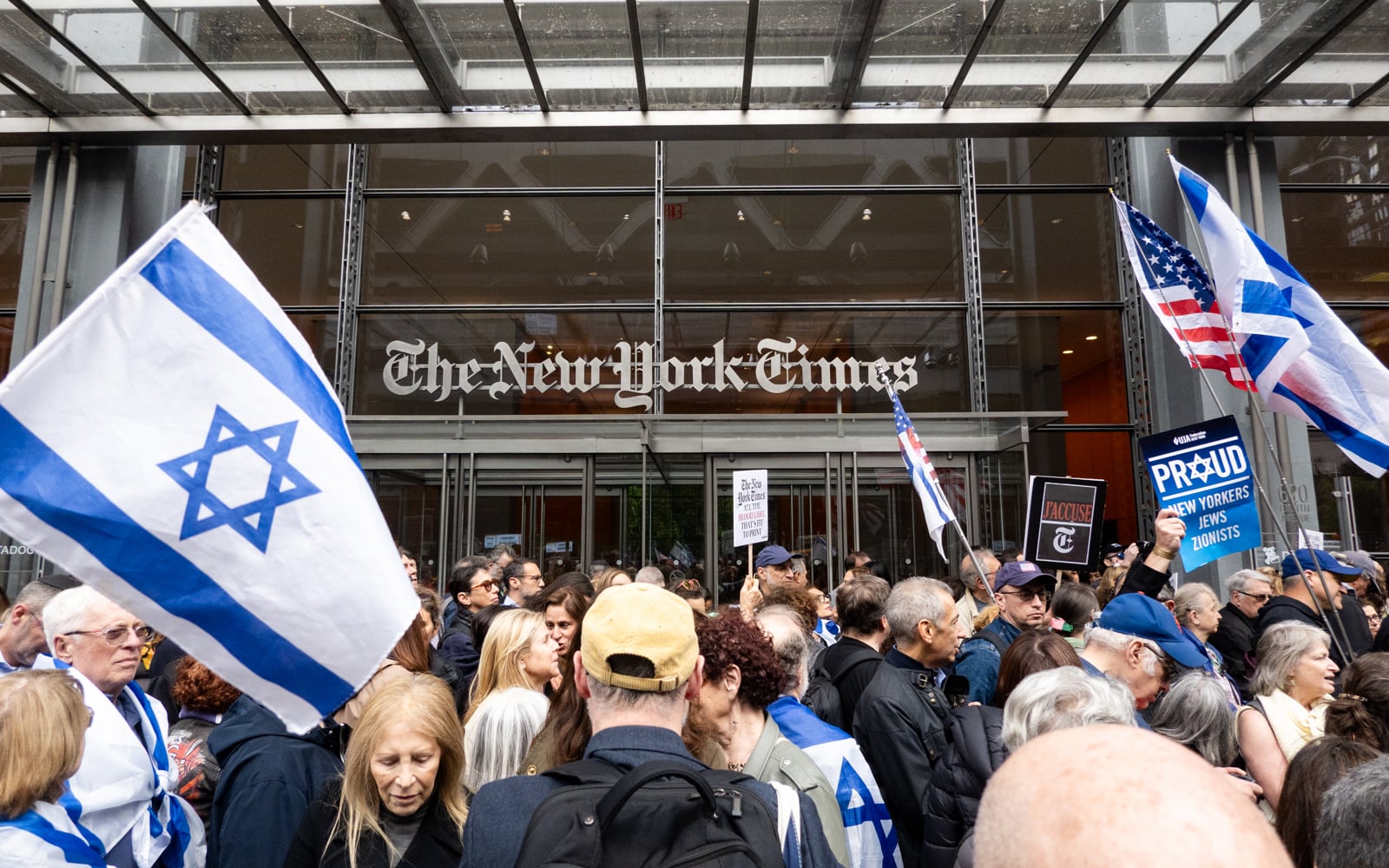
The New York Times walks back a line that had drawn criticism for appearing to question whether Israelis were victims of Hamas’s October 7, 2023, terrorist invasion.
In an article on the documentary film “NAZA” published Monday, the newspaper reported, “Israelis are deeply divided over how to apportion blame for the policy, military and intelligence failures that preceded the attack and the war.”
“But Israelis still largely view themselves as the victims of Oct. 7,” the report said.
The statement drew fire from critics, who said the line cast doubt on whether Israelis were victims of the attack.
“Implying Israelis falsely view themselves as victims while downplaying Oct. 7 ignores basic reality,” says CAMERA, a media watchdog group. “Intelligence failures don’t negate civilian suffering. True journalistic integrity requires context and facts, not narrative spin.”
The New York Times deletes the line from the article, citing an “editing error.”
“An earlier version of this article included a statement that was intended to convey Israelis’ perception of the government’s military response to the Oct. 7 terror attack in relation to the attacks, but inadvertently suggested that Israelis’ experience as terror victims was a matter of perception. It has been removed from the article,” The New York Times communications department says in a statement.
The statement marked the second time the newspaper addressed criticism of its Israel coverage this week.
On Monday, The New York Times suggested that a peer-reviewed data study that showed an imbalance in its Israel coverage was misleading.
The study, by Edieal Pinker of the Yale school of management, said that the newspaper downplayed Israeli losses incurred after the October 2023 Hamas invasion and minimized the role of Palestinian violence in perpetuating the conflict.
“The advocates behind multiple studies on media bias cherry-pick data that supports their beliefs while ignoring any evidence to the contrary,” The New York Times said in response. “We remain open to good-faith disagreement, but we will not let critics or advocacy campaigns move us away from independent reporting.”
The statement did not include any specific objections to the study, which was based on data analysis and published in the Studies in Conflict & Terrorism academic journal.








The Times of Israel Community.