

New film takes audiences for a ride on Jerusalem’s light rail
Filmmaker Amos Gitai creates a mosaic of the train’s diverse passengers, as a metaphor for the divided city
 Add ToI as a Preferred Source on Google
Jessica Steinberg, The Times of Israel's culture and lifestyles editor, covers the Sabra scene from south to north and back to the center
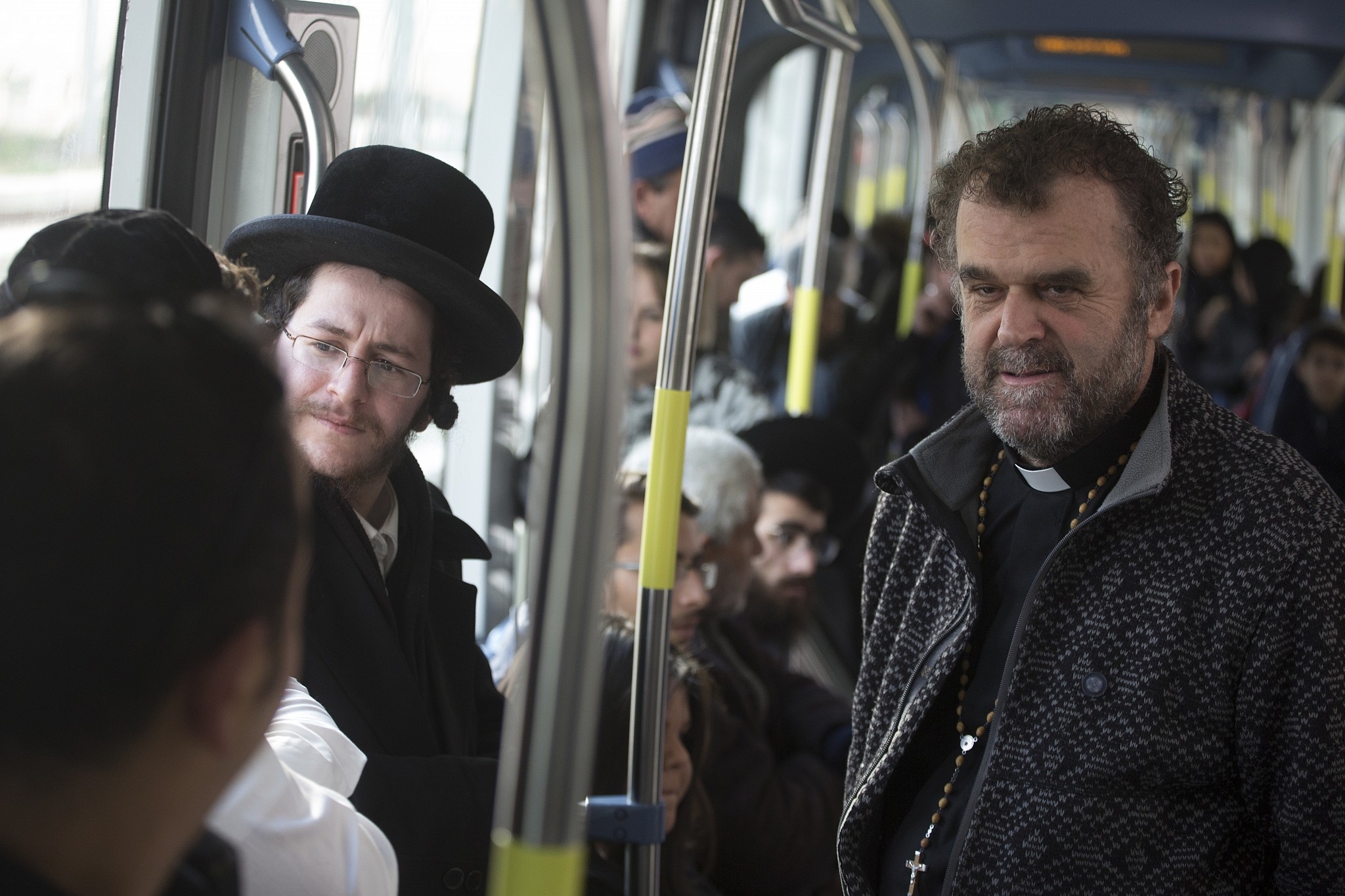
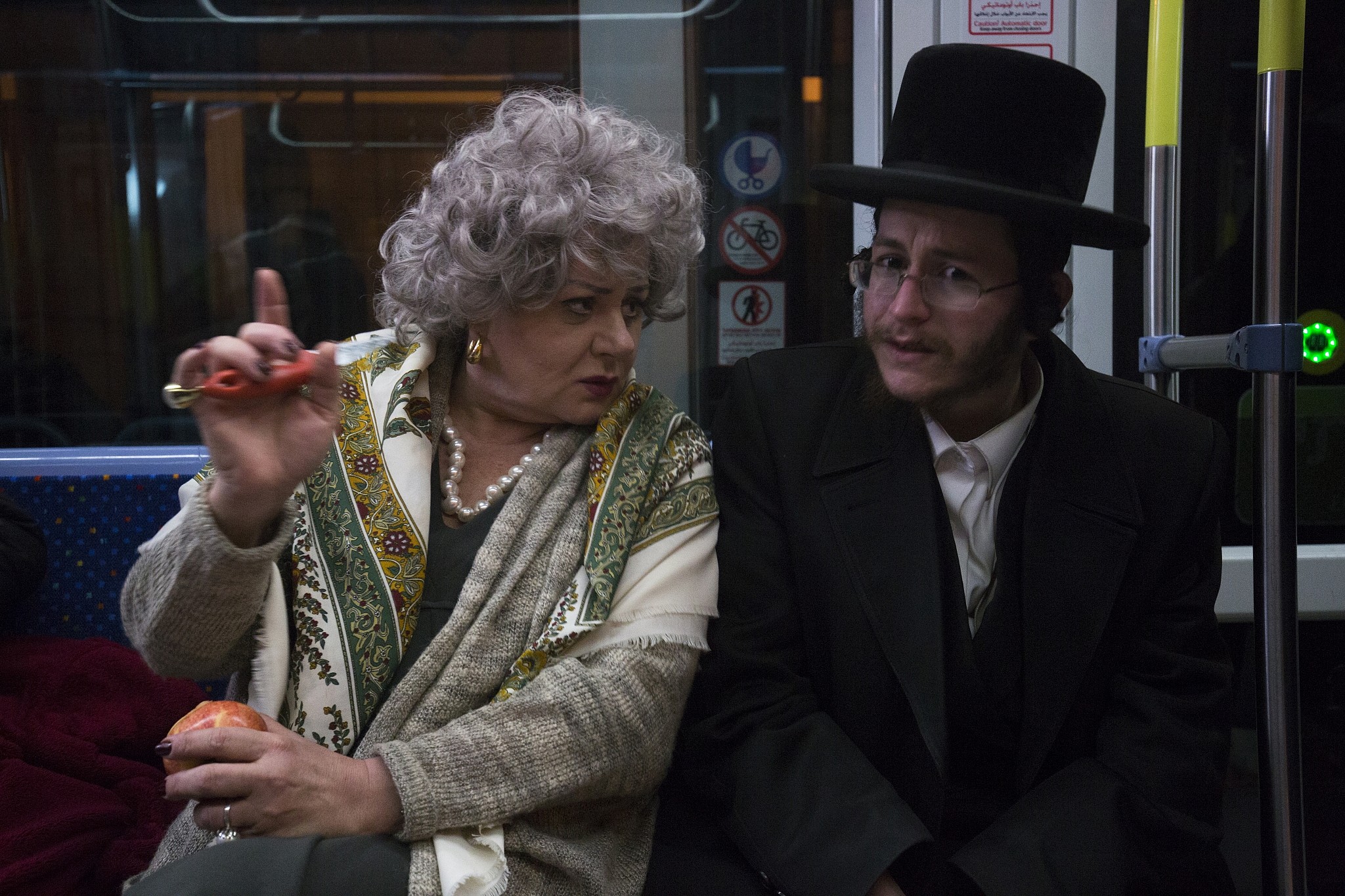
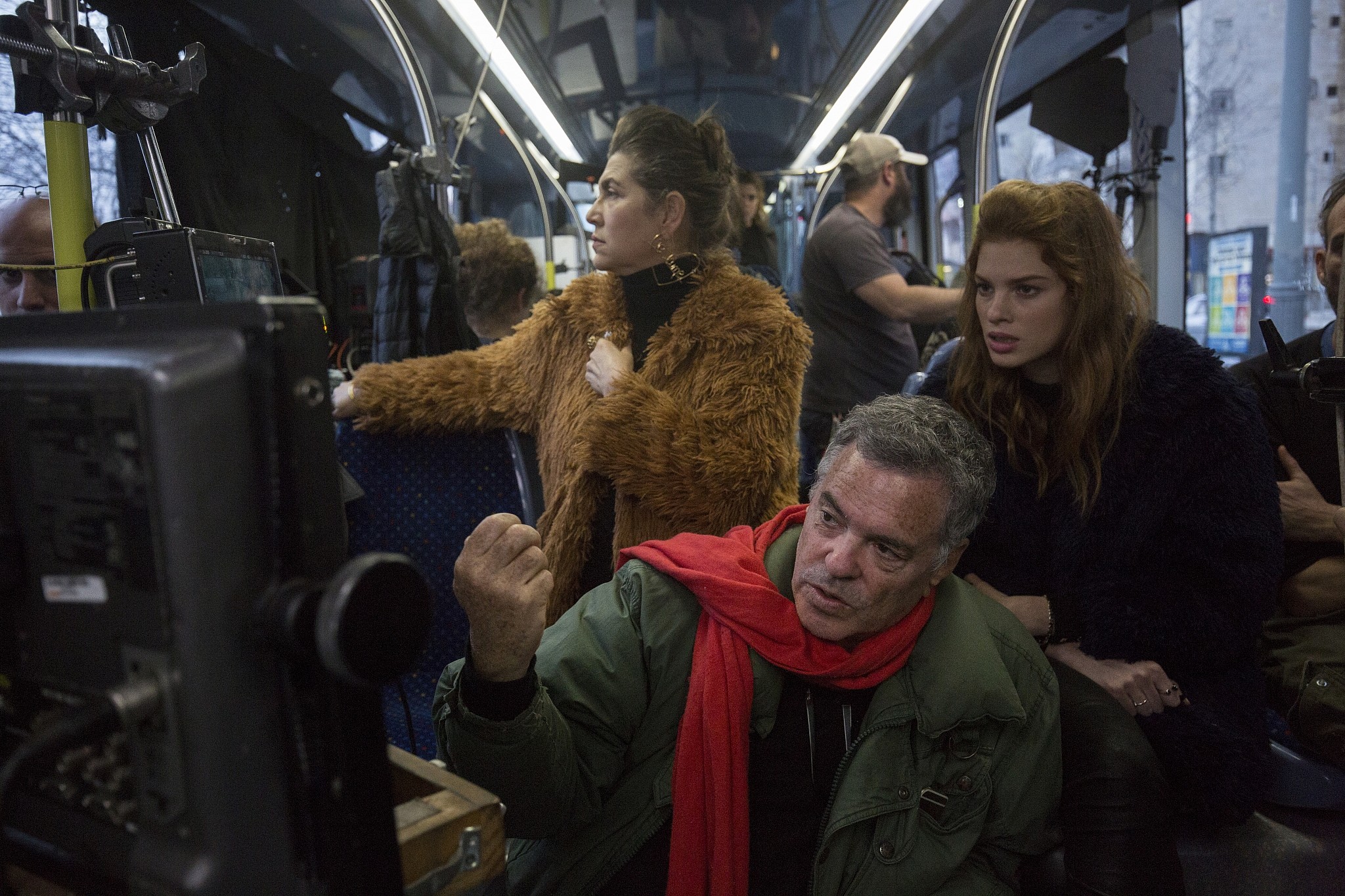
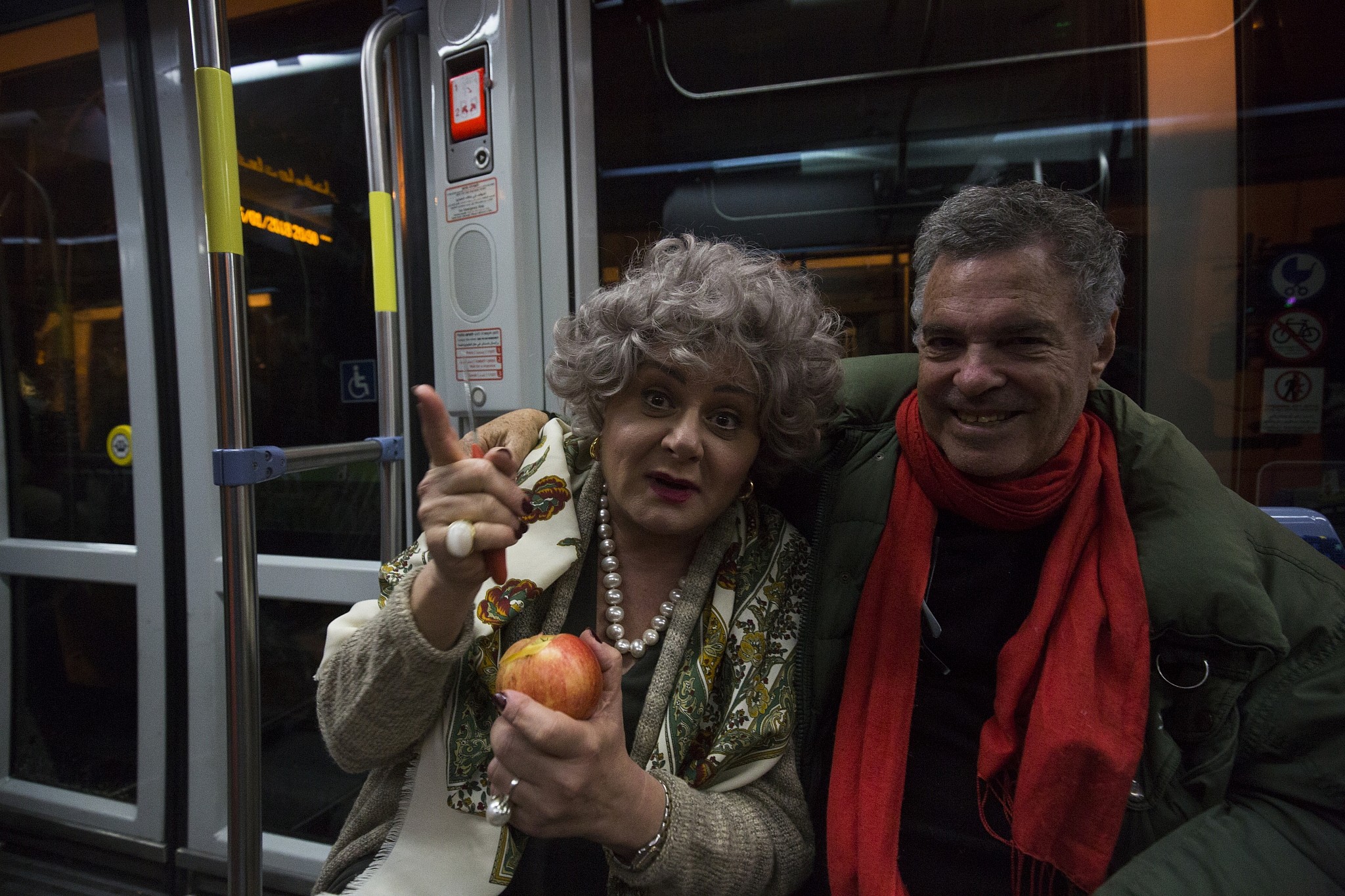
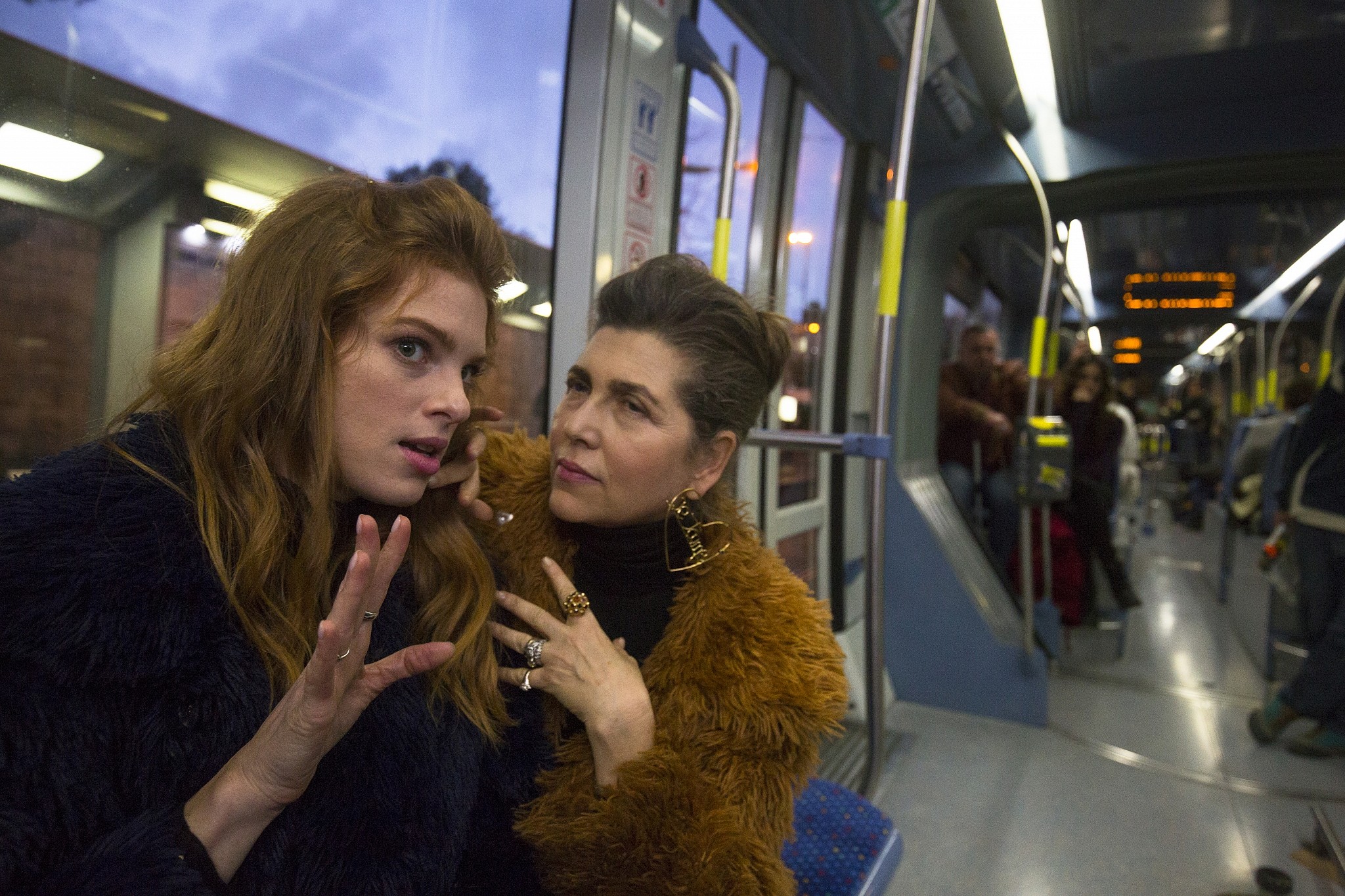
It’s been years since filmmaker Amos Gitai — that lover of trilogies and difficult films about his country’s geopolitical realities — made a film in Jerusalem, but he’s back.
This time it’s “Light Rail in Jerusalem,” a film about the mosaic of people riding Jerusalem’s light rail, the “whole mix,” said Gitai, of religious and secular, Palestinians and Israelis, making their way on the mode of transportation that did not even exist the last time Gitai shot a film in Jerusalem.
“I like metaphor,” said Gitai, sitting outside, at the main train depot in northern Jerusalem, on his last day of filming.
Much of the movie was filmed here, in this depot north of French Hill, where the trains are parked when they are not running.
“We had to do this pretty quickly,” said Gitai. “They were letting us use a train, after all.”
Gitai’s last film in the holy city was “News from Home/New from House” (2005), the third part of his trilogy about the German Colony home abandoned during the 1948 war by its Palestinian owner, and later lived in by Israeli Jews. The films were rejected and censored by Israeli television.
“‘House’ was the destruction of metaphor and the development of the Palestinian diaspora,” said Gitai.
With this latest film, Gitai wanted to see how the metaphor that is Jerusalem is changing.
He created a series of vignettes with “Light Rail,” calling it “a bit like ‘Shortcuts,'” the 1993 Robert Altman film that cut in and out of several storylines.
This film, however, mixes the many types of people who travel Jerusalem’s light rail, which currently runs from the north of the city to the center, transporting some 150,000 people each day, said Gitai.
“The interesting thing about Jerusalem is that, contrary to all politics, and especially this government, it is a divided city and has been a divided city for centuries, if not millennia,” said Gitai. “That is the beauty of it — it’s not one unified place. When you go to Mea Shearim and then to Jaffa Gate, it’s a different place. When you go to the Old City, you go from one quarter to another. It’s about the mosaic, not the unified.”
The large cast of actors includes Hana Laslo, Yuval Sherf, Keren Mor, Rotem Abuhav, Yael Abecassis, Liron Levo, Eran Sabag, Ahinoam Nini as herself, and others.





The Times of Israel Community.