

North American Federations confab to focus on Israel’s postwar rebuilding efforts
The first JFNA General Assembly after two years of conflict sees the umbrella group transition from emergency mode after it raised $3 billion in 2024, $1 billion more than in a typical year
 Add ToI as a Preferred Source on Google
Zev Stub is the Times of Israel's Diaspora Affairs correspondent.

After breaking its own records for fundraising last year, the Jewish Federations of North America will commence its General Assembly this week to plan for the Jewish future under the shadow of Israel’s ceasefire with Gaza, rising global antisemitism and political developments in the United States under President Donald Trump — including the recently ended longest government shutdown ever and another potential shutdown looming when the funding agreement expires at the end of January.
More than 2,000 Jewish communal leaders are expected to take part in the General Assembly between November 16 and 18 in Washington, DC, according to the event’s website. JFNA represents 141 Jewish federations in communities across North America.
The federations raised some $3 billion in 2024 — about $1 billion more than in a typical year, the organization said in a November 11 press release. That included $683 million in Israeli Emergency Campaign funds raised during the year, out of a total $908 million raised since the Hamas-led onslaught on Israel on October 7, 2023. It also raised $1.1 billion through its annual campaign, a 7.3% year-over-year increase, the JFNA said.
“In this unique moment in Jewish history, we have seen both an incredible surge within our community on ways to engage Jewishly, alongside an amazing desire to strengthen the community through giving,” said JFNA Chair Gary Torgow in the release.
The total number of donors grew by 80,000 to more than 364,000, JFNA said.
The confab comes a month after the US brokered a ceasefire between Israel and Hamas that saw the return of all of the surviving hostages and most of the remains of deceased hostages taken during the October 7 massacre. That allows Israel “to turn the page and [see] its needs transition from emergency to rebuilding,” JFNA president and CEO Eric Fingerhut said.
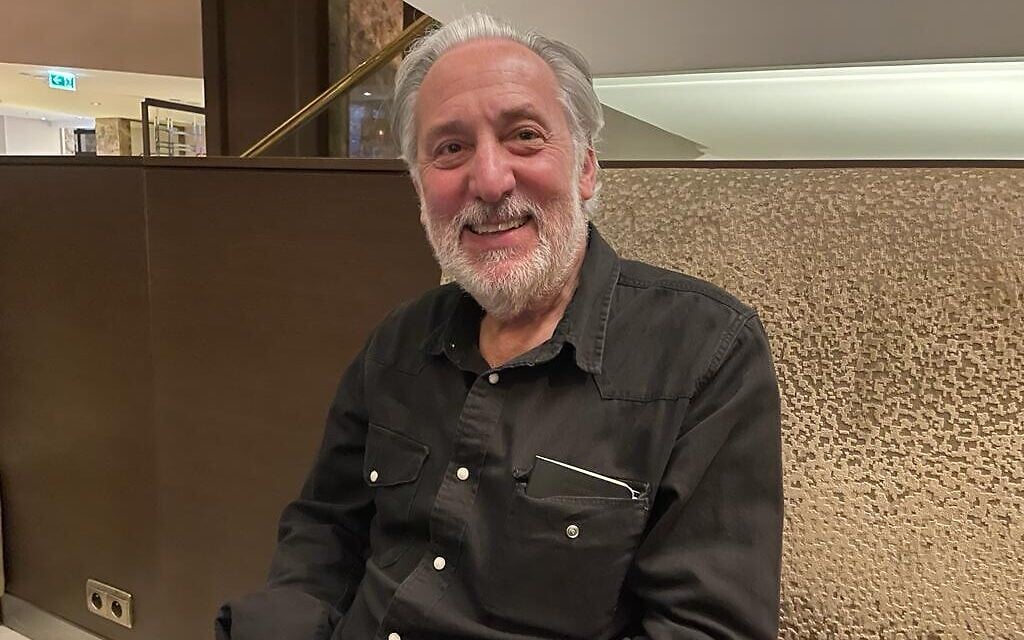
“During the General Assembly last year, Israel was still very much in the middle of the Gaza war and was fighting a ground campaign in Lebanon against Hezbollah. Though Trump had already been elected, the GA was also held under the Biden administration,” noted Judah Ari Gross, managing editor of eJewishPhilanthropy and former correspondent for The Times of Israel. “We’re in a very different place now.”
With the end of the war, JFNA’s emergency efforts have pivoted toward a new phase, entitled “Rebuild Israel,” focusing on the long-term rebuilding and recovery of Israeli society. Most of the $908 million raised has already been distributed through over 4,200 grants to 877 NGO partners, including 208 communities across Israel, the JFNA said in a previous press release.
In addition to rehabilitating Israeli communities and institutions, sessions over the three-day gathering will explore topics like increasing civic engagement, fighting antisemitism in schools, increasing security, supporting communities and building upon “the surge,” JFNA’s term for the sharp increase in Jewish identity and engagement observed in the aftermath of October 7.
Among marquee personalities slated to appear at the General Assembly is Rahm Emanuel, former US ambassador to Japan and mayor of Chicago. He’ll speak at the opening plenary with Jessica Tarlov, co-host of The Five on Fox News, and CNN pundit Scott Jennings, about how America’s Jewish community can navigate today’s political environment.
Authors Micah Goodman and Sarah Hurwitz are also scheduled to speak at Sunday’s opening event, followed by a musical performance by The Tamari Project, a musical initiative born in memory of Tamar Kedem Siman Tov and her family, murdered on October 7.
“There are a lot of plenaries and workshops planned, but the more significant parts of the gathering are the private conversations happening in lobbies and side rooms where business really gets done,” Gross noted. “That’s why so many Jewish organizations want to be here.”









The Times of Israel Community.