

Orthodox Christian pilgrims flock to Jerusalem for Holy Fire ceremony
Annual procession marked by heightened police presence, aggressive detention of several Palestinian Christians, and limited attendance amid fragile ceasefire with Iran
 Add ToI as a Preferred Source on Google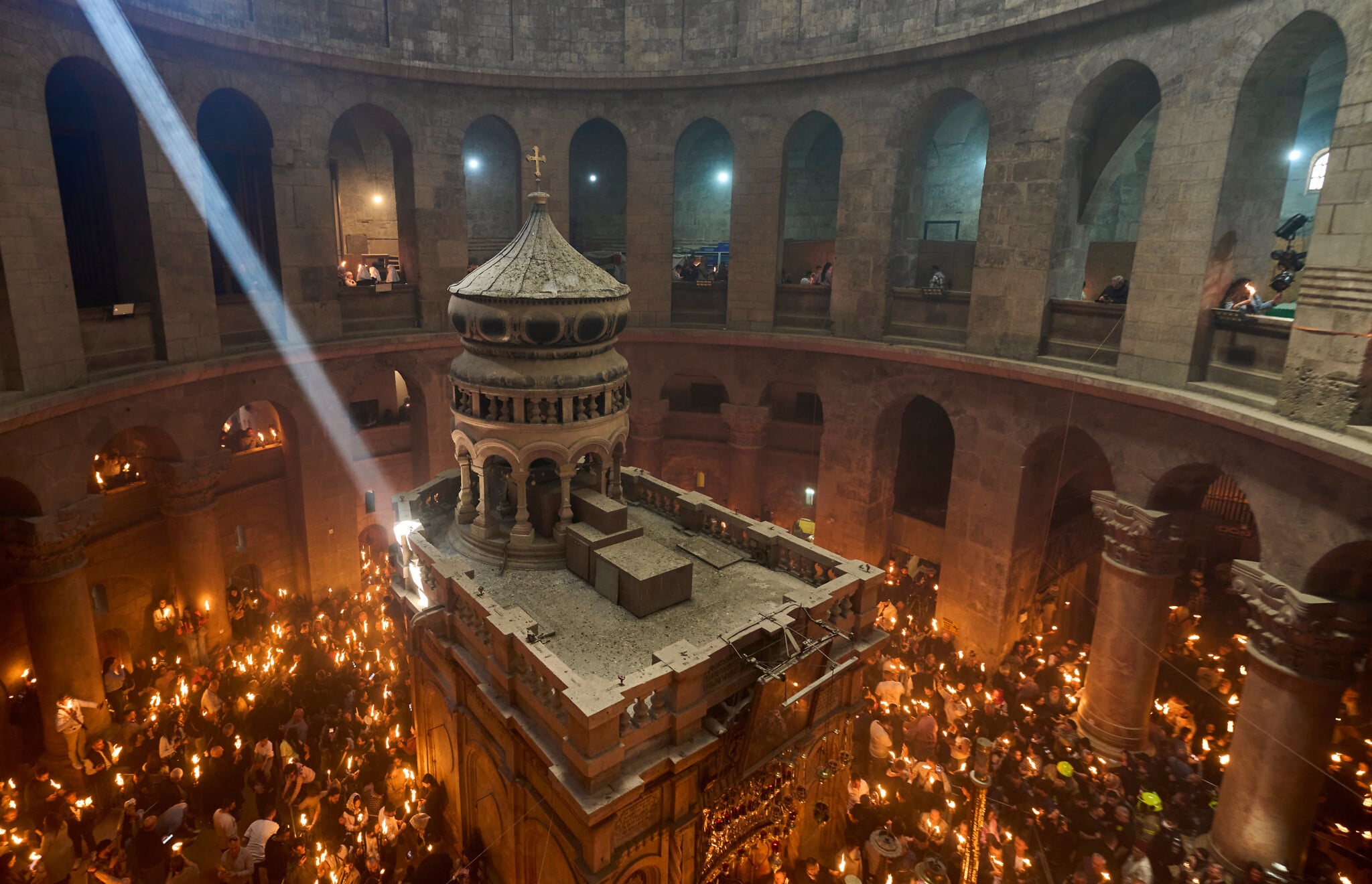
Thousands of worshipers took part in the annual Holy Fire ceremony on Saturday in Jerusalem’s Church of the Holy Sepulchre, an Orthodox Christian ritual that dates back more than 1,200 years.
The ceremony, held the day before Orthodox Easter, symbolizes the resurrection of Jesus. A flame, supposedly kindled in some miraculous way in the heart of Jesus’s tomb, is used to light the candles of fervent believers from Orthodox communities.
The Church of the Holy Sepulchre reopened just two days prior to the ceremony, having been closed to the public for 40 days under Israeli security restrictions during the war with Iran. But it opened its doors again on Thursday, along with the Old City of Jerusalem’s other holy sites, as the fragile two-week ceasefire between Iran, Israel and the US appeared to hold.
Still, Saturday’s proceedings drew a significantly smaller crowd than previous years, The Orthodox Times reported, although thousands still crowded into the church and on the surrounding streets to wait for the Patriarch of the Orthodox Church of Jerusalem, Theopilos III, to exit the Aedicule, believed in Christianity to be the burial place of Jesus, with the lit ceremonial torches.
“Just two days ago there was absolutely no one in the Old City, it felt like an orphaned town,” said Fr. Antonious Al-Orshalemy, who was taking part in the procession. “But now we see wedding-like celebrations on every level. Everyone is happy, and everyone is joyful.”
There was also a heavy police presence on the streets surrounding the ceremony, with the Haaretz news site alleging that the police were treating the annual Holy Fire procession as a security incident, rather than a religious celebration, putting up eight checkpoints from the Old City’s New Gate to the Church of the Holy Sepulchre and significantly limiting the movement of participants.
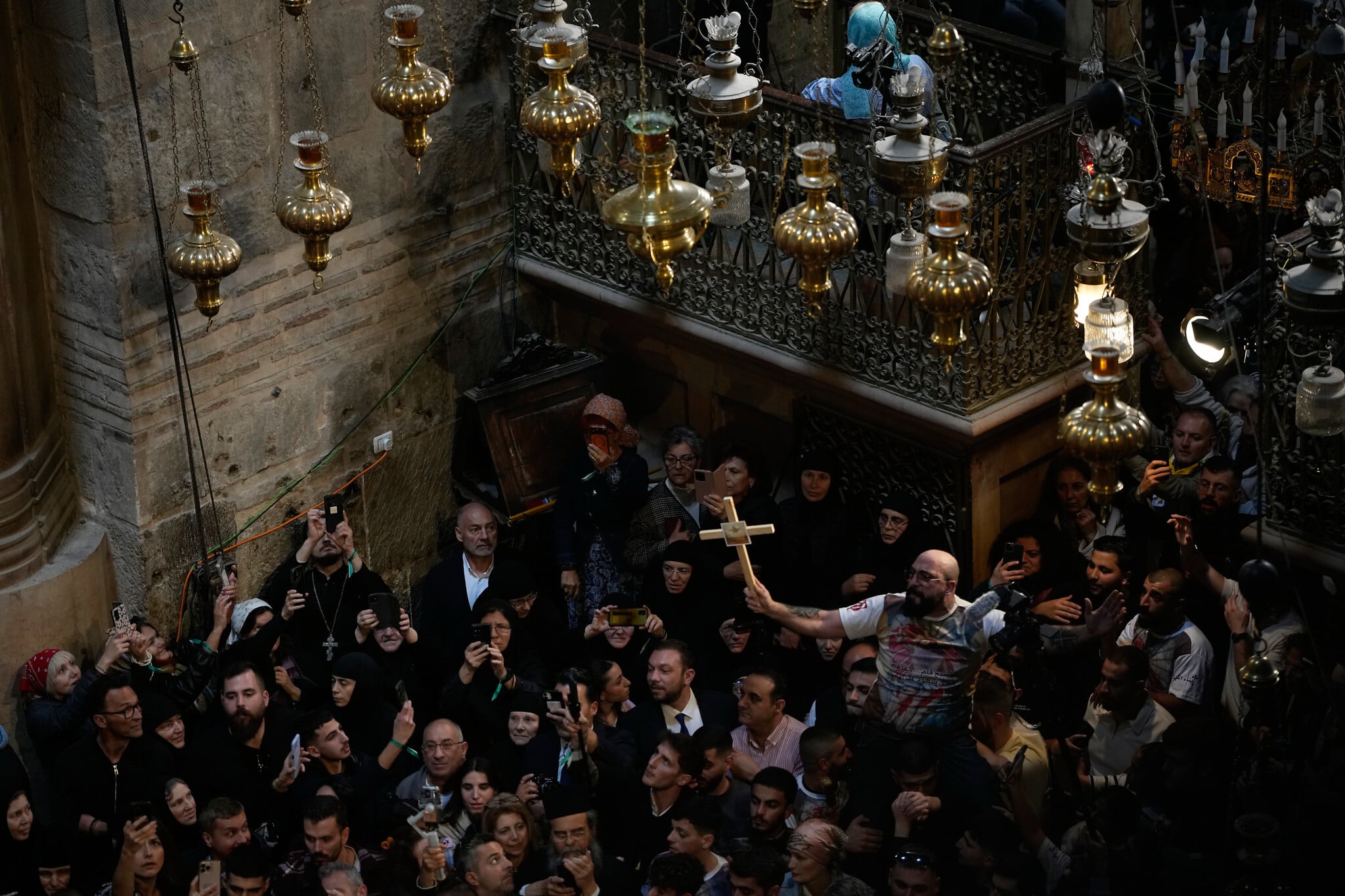
A police spokesperson said in advance of the event that precautions were taken to prevent overcrowding.
While the ceremony largely passed peacefully and without incident, Israel Police officers were filmed aggressively detaining several Palestinian Christians taking part in the Holy Fire procession.
HORRIFIC: Israeli police assault Christians and scout members celebrating Holy Saturday in the old city of Jerusalem. pic.twitter.com/1kUY7M0abu
— Ihab Hassan (@IhabHassane) April 11, 2026
The Palestinian Authority’s official Wafa news site said police forced members of the Palestinian scouts to remove the Palestinian flag from their uniforms.
Responding to allegations regarding the use of excessive force, police said in a statement that “the incident in question involved a small number of individuals, some of whom were under the influence of alcohol, who attempted to disrupt public order and the proper conduct of the Holy Fire ceremony by refusing to clear a designated route for a religious procession.
“Police officers acted to maintain order and ensure the safe continuation of the event. During the incident, one individual physically assaulted an officer and was subsequently arrested,” the statement added.
Following Saturday’s ceremony, the flame was received by Foreign Ministry representatives, who then handed it off to various diplomatic and church delegations, which, as every year, were in place to oversee its transportation back to their respective countries ahead of Orthodox Easter on Sunday.
The Foreign Ministry held a briefing on Thursday in preparation, after receiving confirmation that the ceasefire meant the ceremony could proceed as hoped.
Among the countries receiving a portion of the flame were Greece, Cyprus, Romania, and Russia.
Not all countries that traditionally send a delegation were participating this year, however. The Bulgarian Orthodox Church said on Thursday that it had decided against sending a delegation to Jerusalem due to a travel warning for the region. Instead, it said it would distribute the previous year’s flame, which it had kept burning.






The Times of Israel Community.