

Passover hotel programs see mass exodus as war disrupts holiday travel plans
Flight cancellations and security concerns make the journey in and out of Israel nonviable for tens of thousands, dealing a blow to the growing kosher for Passover hospitality industry
 Add ToI as a Preferred Source on Google
Zev Stub is the Times of Israel's Diaspora Affairs correspondent.

Before the war with Iran broke out more than four weeks ago, David was looking forward to bringing his extended family of 14 people from London to spend the Passover holiday in Israel.
When foreign air carriers stopped flying to Israel for security reasons, however, he had to cancel everything and look for other options.
“We were able to resolve payment with the first place, so we looked around and booked a Passover program at a hotel in Europe,” said David, who asked that his last name be withheld for his privacy. “But then that one got canceled as well, probably because the Israelis who were signed up couldn’t make it. Eventually, we signed up for a different program that is much more expensive.”
Rearranging his family vacation was a minor inconvenience compared to the suffering others face during this war, David acknowledged, but the saga had been fraught with stress and frustration.
“I can’t say I’m happy about this, but it’s been a difficult time for Jews everywhere,” he said. “I just hope it’s all worth it.”
This year, flight cancellations to and from Israel by El Al and other carriers have disrupted Passover plans for hundreds of thousands who were planning to travel for the holiday, one of Israel’s busiest travel seasons.

What was looking to be a banner year for the burgeoning luxury Passover program industry has been “tragic,” with numerous programs canceled and others scrambling to replace guests unable to attend, according to Raphi Bloom, head of the Totally Jewish Travel website.
Bloom, who co-founded the site in 1999, has watched the demand for hotel Pesach programs explode over the past several decades, from a niche market serving only the wealthiest Orthodox Jews to a global phenomenon catering to people across the Jewish spectrum. His site listed about 130 different programs around the world this year, about 10 percent of them in Israel.

“We watched how organizers navigated COVID, when the world shut down two weeks before Passover in 2020, and how the sector came back to life after the pandemic,” Bloom said. “The Gaza war that started after October 7, 2023, hurt Israeli programs for the last two years, but people were finally starting to come back this year. This war with Iran has snatched that all away.”
Programs in Israel that cater to foreign Jews and overseas programs that target Israelis have been the worst affected by the war’s uncertainty. That’s a fair chunk of the estimated 35,000 people who now attend Passover programs at hotels around the world, Bloom said.

As the appetite for Passover programs has grown, competition has become fierce. Price tags for these programs are hefty, ranging from $2,500 to more than $15,000 per person for the eight-day holiday, and organizers pull out all the stops to create to-die-for experiences.
Top programs now compete to offer the most attractive entertainment programs at the most exotic locations, from Panama and the Bahamas to France, Thailand, and increasingly, the United Arab Emirates, Bloom said. They promise luxury accommodations and non-stop gourmet food options to those prepared to pay for them — all at the strictest Passover kashrut requirements.
Canceling or modifying such productions at the last-minute — after food has been ordered and hotels have been paid — can easily bankrupt an organizer or set them back for years, industry insiders said.
Juggling bookings in Israel
In Israel, most of the Passover programs located in the north of the country, currently under fire from Hezbollah and Iran, have been canceled, according to Mark Feldman, CEO of Ziontours Jerusalem. However, elsewhere in the country, most of the programs that cater to Israelis are okay.

“The ones that are designed for Israelis, including English-speaking programs marketed at the local population, are going ahead,” Feldman said. “But the ones that rely heavily on overseas tourists have all canceled.”
Among popular English-speaking programs, AACI Travel programs in Jerusalem and Netanya and a Lenny Davidman program at the Dead Sea, are going forward as scheduled, with some adjustments made along the way. A program by industry leader Zvi Lapian at the Neve Ilan hotel outside Jerusalem is still on, while another he had scheduled in the Western Galilee has been scrapped, sources said.
Davidman, who relies heavily on foreign visitors, said his days have been chaotic since foreign carriers started scratching flights.
“I’m getting 50 to 100 calls a day, and I’ve got a week’s worth of emails and WhatsApps that I haven’t gotten to yet,” said Davidman, a retiree who has organized Jewish travel in Israel for more than 30 years. “People don’t know what’s going on, and some are making contingency plans.”
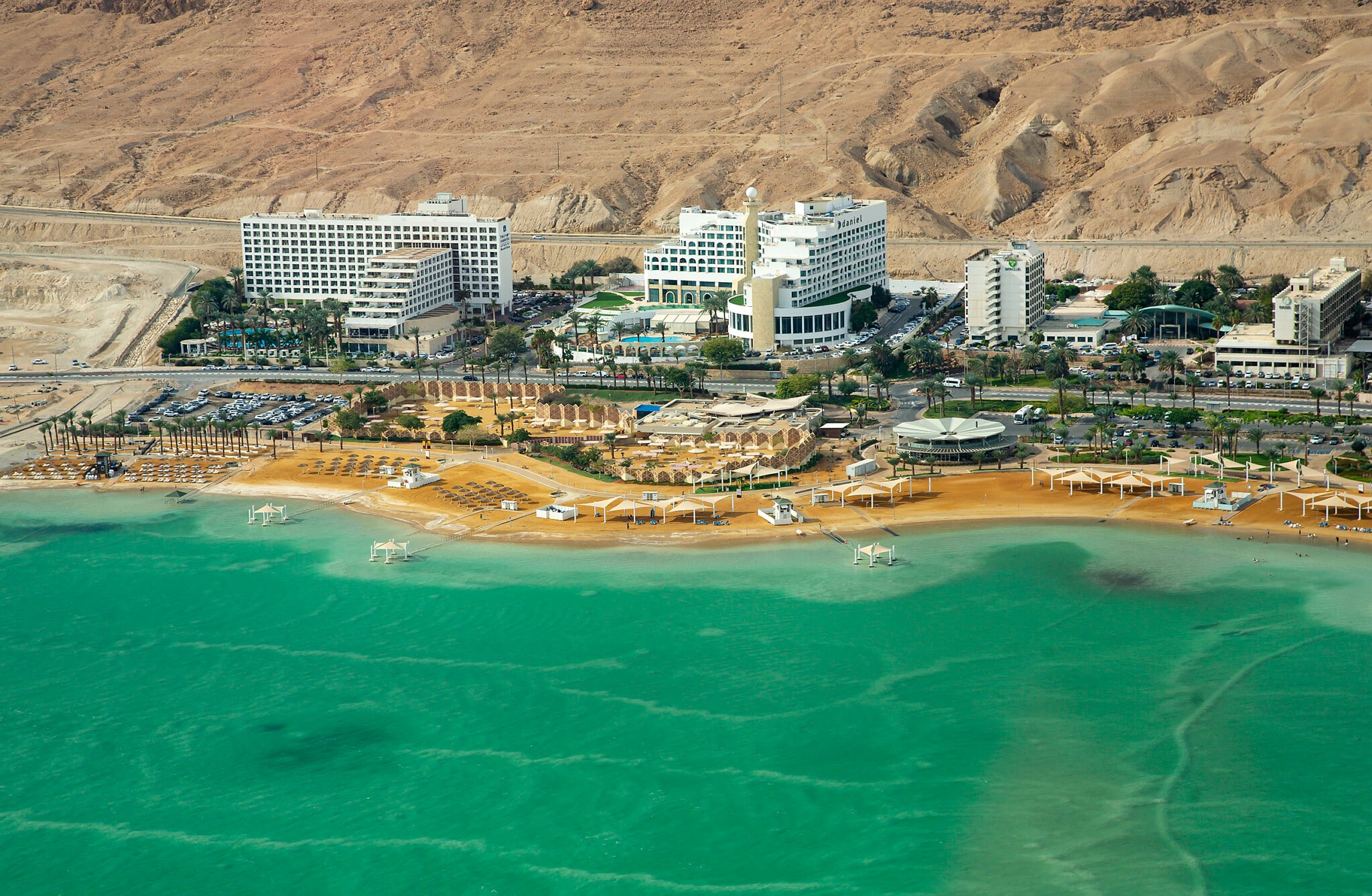
Davidman has booked 250 rooms at the Vert Hotel at the Dead Sea, and cancellations from overseas were just the beginning of his problems. Now, Israelis are also talking about abandoning their plans as fears and rumors spread.
“Some are saying that they are afraid to travel on the road to the Dead Sea, which doesn’t have many shelters from rockets,” he said. “Others are canceling because family members can’t get into the country. Now I’m juggling calls to fill the vacancies as they open up.”
Most cancellations are quickly filled with new customers, and the program is close to 90% occupancy, he noted.
AACI has also had success rebooking rooms after cancellations, said David London, the organization’s executive director. The nonprofit, founded in 1951 to help North American immigrants acclimate to Israeli society, has found success in recent years offering travel programs, whose profits help fund its community operations.
“Even with the cancellations, there is still more demand than supply,” London said. “We’re getting calls from people on other programs, and there are families coming even though their grandparents couldn’t come in from overseas.”
Hotel security is a huge concern for London ahead of the holiday, particularly in Netanya, where 600 guests are booked at the Vert Hotel. It is a city scarred from a 2002 suicide bombing at the Park Hotel during a Passover seder that saw 30 murdered and 140 injured.

“We’re bringing our staff in a day early to make sure we are prepared,” London said. “There are safe rooms on every floor, plus stairwells and shelters accessible from the dining rooms. With a large group like this, we can’t wait until the siren to start moving people, so we have to start going as soon as the early warning comes.”
The organization’s program in Jerusalem is smaller and was hit harder by the air closures, London noted.
“That one has more bookings from abroad,” he said. “Foreigners usually want to come and visit sites, while Israelis usually want to be by the sea.”
Meeting market needs abroad
Meanwhile, non-Israeli programs are generally continuing as planned, despite rising incidents of antisemitism around the world, Bloom said.
“We have not seen any hesitancy from customers around that,” Bloom said, noting that program operators have all increased security measures since the bloody October 7, 2023, Hamas onslaught. “Sadly, this is part of the times we live in.”
The programs that have taken hits are those that are marketed heavily to Israeli travelers. Off the top of his head, Bloom listed programs in Italy, Greece, Kenya and Azerbaijan among those forced to close.
“Those were mainly for Hebrew speakers,” Bloom said. “The ones that were marketed more to Europeans and Americans weren’t as affected.”
Other organizers have found ways to replace canceled Israeli bookings with new orders, Bloom said. At least one program in Croatia has found a creative way to stay afloat by chartering a flight from Taba for its Israeli guests, he noted.

Program organizers in Europe have less leeway than their Israeli counterparts to absorb losses, Bloom noted.
“In Israel, the government provides compensation for businesses who have lost money because of the war,” he said. “If you’re a European program, you don’t have that cushion, so the stakes are much higher.”
In recent years, Bloom noted, a number of lower-cost Passover programs have opened up around the world, offering family getaways at less luxurious hotels in locations such as Albania.
“Passover is a time for family, and this is a great way for multigenerational families to come together in one place that is comfortable for everyone, without the stresses of cleaning,” he said.

If there is a bright side to the lack of tourists in Israel this year, it’s that deals are available for those looking for a last-minute getaway to help mitigate the stresses of war.
Jerusalem resident Mimi Borowich Milstein said she was disappointed when she found out that her family in Florida would be unable to fly in. When her husband’s parents saw that they would be home alone with their child for the holiday, they stepped in and offered to register them for a program to cheer them up.
“I started making some calls, and all these places that were booked up a few months ago had plenty of availability and better prices,” she said. “It’s crazy how everything has changed so quickly.”









The Times of Israel Community.