

Placing blame elsewhere, Netanyahu shares his answers to state comptroller’s Oct. 7 probe
PM releases selective quotes portraying security chiefs and political rivals as opposed to toppling Hamas, though before 2023 attack he wrote that he opposed ‘conquering’ Gaza when Bennett pushed to do so in 2014
 Add ToI as a Preferred Source on Google
Lazar Berman is The Times of Israel's diplomatic reporter
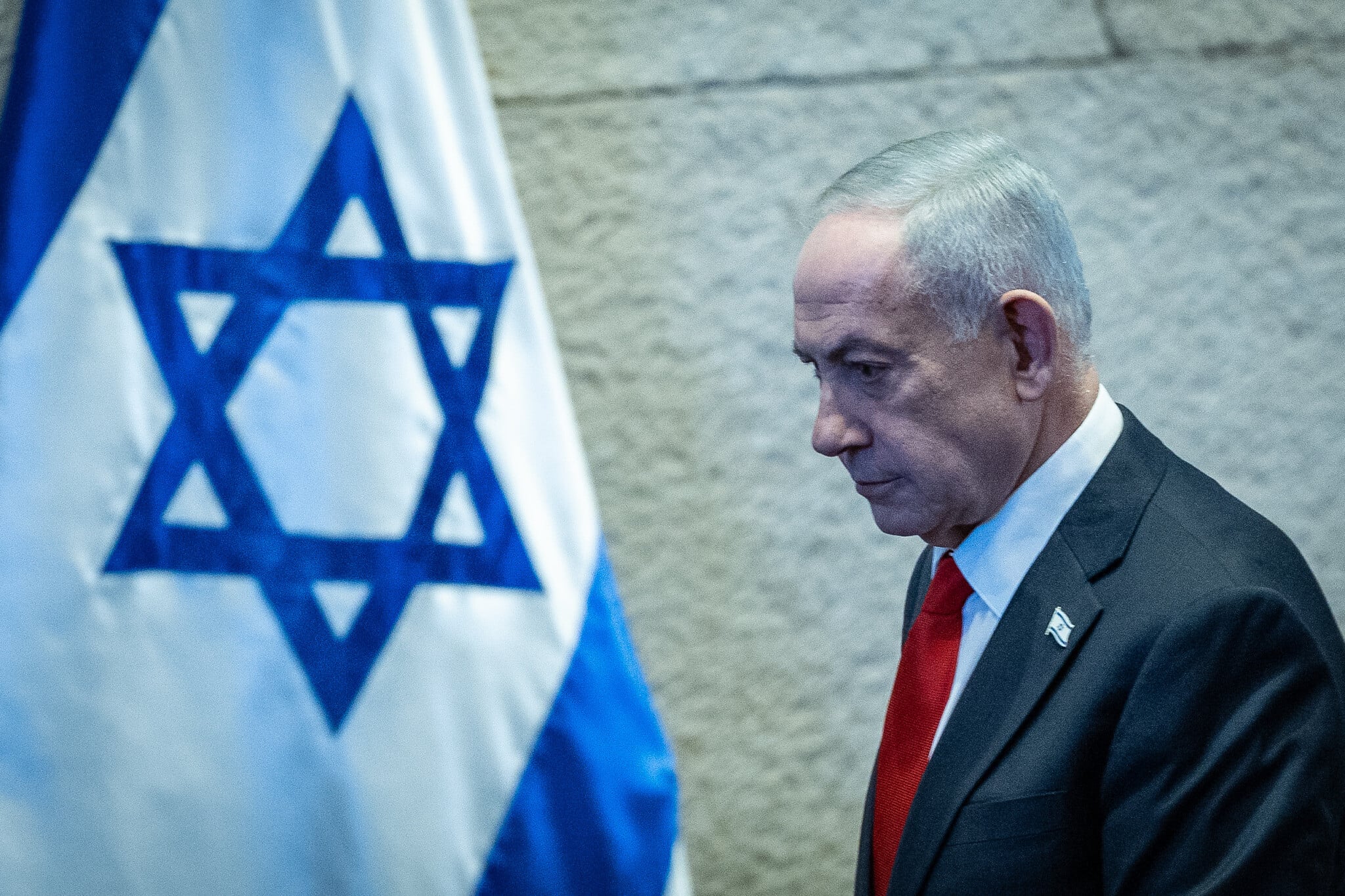
Prime Minister Benjamin Netanyahu late Thursday released the full 55-page document of his answers given to the state comptroller as part of the ombudsman’s investigation into the October 7, 2023, Hamas-led atrocities, pinning the failure to prevent the onslaught on political rivals and security chiefs while presenting himself in a positive light and deflecting his responsibility for the attack.
Netanyahu earlier in the day presented lawmakers on the Knesset Foreign Affairs and Defense Committee with materials he had previously submitted to the state comptroller from the years preceding the October 7 attack, the most devastating in Israel’s history and the deadliest day for Jews since the Holocaust.
The prime minister has the authority, subject to proper procedure and legal challenge, to release and redact such materials.
In his answers to State Comptroller Matanyahu Englman, Netanyahu sought to build the case, with partial, curated quotes from cabinet protocols, that he repeatedly pushed for assassinating Hamas leaders but security chiefs consistently argued against the idea.
His release of the documentation drew fierce denunciations from opposition figures, who said he was skewing the facts and who noted warnings they issued in the weeks leading up to October 7 of a potential multi-front conflict and that Hamas was not deterred.
One opposition member of the Knesset Foreign Affairs and Defense Committee demanded access to the unredacted versions of the protocols referred to by the premier. And Netanyahu’s own defense minister on October 7, Likud colleague Yoav Gallant, who had publicly warned in March 2023 that the national rift over the coalition’s planned judicial overhaul had come to pose a tangible threat to Israel’s security, flatly called the prime minister a liar.
Netanyahu has served as prime minister since 2009, with the exception of 18 months in 2021-2022. He presided over a policy of encouraging Qatar to send hundreds of millions of dollars into Hamas-run Gaza, which he publicly defended as essential to prevent a humanitarian catastrophe in the coastal enclave.
Englman has not released findings from his investigation, which the High Court of Justice ordered him to freeze in December. The comptroller’s probe was controversial from the get-go, facing claims that it is severely flawed, would taint evidence and the investigative process, and that only a state commission of inquiry could properly investigate the disaster.
In a video statement released in parallel to the document, Netanyahu repeated his claim that he believed it was suspicious that the court halted the comptroller’s investigation only six days after they met on December 25, 2025.
“For nearly two years, the comptroller worked with full freedom of action, without any interference whatsoever from the judicial system or from anyone else,” said Netanyahu.
“But only six days after I submitted this response, the Supreme Court decided to accept the attorney general’s request to immediately stop the comptroller’s work—work that was intended to uncover the truth,” he continued, demanding the court reverse its order and let Englman continue the investigation.
“Is this a coincidence? I say one simple thing — judge for yourselves.”
Netanyahu also repeated his call for a “democratic and balanced” commission of inquiry into October 7, with half its members chosen by the government and half by the opposition. Opinion polls have regularly shown a clear majority of Israelis support a state commission of inquiry, Israel’s highest investigative authority, which Netanyahu opposes because it is appointed by the judiciary, which he argues would be biased as his government is pushing to curb the courts’ powers.
The opposition has rejected Netanyahu’s bid to set up a political inquiry, but the coalition is aiming to move ahead with that process anyway.
Invading Gaza
In the answers released Thursday, Netanyahu told Englman that he examined the possibility of conquering the Gaza Strip many times in the years before the October 7 invasion of southern Israel, but claimed the security establishment repeatedly shot the idea down, arguing that it would take a long, costly war without domestic or international legitimacy, and that there was no governing alternative to Hamas ready.
Netanyahu, who has never acknowledged direct responsibility for the failures surrounding October 7 and relentlessly attempted to place the blame on others, stated that he repeatedly pushed for assassinating Hamas leaders, but security chiefs consistently argued against the idea.
Numerous reports and some top security officials themselves, however, have said publicly that Netanyahu and his government repeatedly rejected plans to kill senior Hamas leaders, while the military correspondent for Channel 13 news told an independent civilian commission of inquiry into the 2023 massacres that the prime minister “stated on multiple occasions before October 7 that “he did not believe in any way in the possibility of military action to overthrow the Hamas regime.”
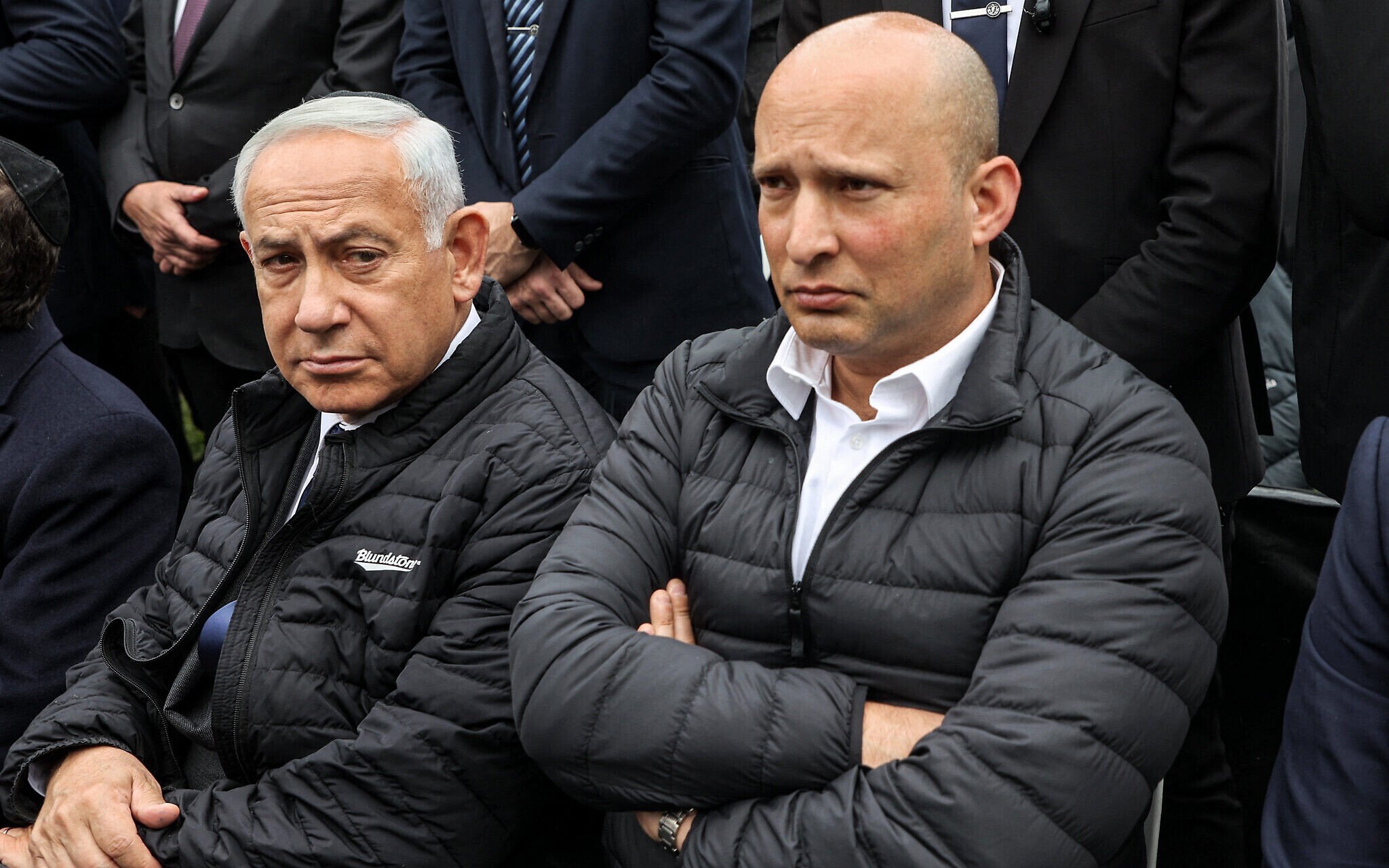
Netanyahu also included in his response to Englman a cabinet meeting from July 2014, during Operation Protective Edge in Gaza. He brought up conquering Gaza, and then-economy minister Naftali Bennett reportedly said, “I never talked about ‘conquering Gaza.’” According to the protocols, Netanyahu responded that the only way to demilitarize Gaza is to conquer it militarily.
Bennett is the leading challenger to Netanyahu in this year’s elections, and the prime minister has a clear political incentive to portray Bennett as someone who argued against taking out Hamas.

Netanyahu included quotes from the same discussion from other figures who are today highly critical of Netanyahu, including then-IDF deputy chief of staff Gadi Eisenkot, chief of staff Benny Gantz, and defense minister Moshe Ya’alon, all of whom, according to the materials Netanyahu selected, argued against taking the Gaza Strip.
Gantz, according to the records, called the idea “a strategic mistake,” while Eisenkot said it would be “a severe mistake.” Then-foreign minister Avigdor Liberman, who now leads an opposition party, said that “I am not recommending conquering or a ground invasion.”
However, the claim that Bennett and Liberman opposed conquering Gaza contradicts Netanyahu’s memoir released a year before the October 7 attack, in which he said they both wanted to topple Hamas, and stressed that Bennett in particular urged for “a full-scale ground invasion to ‘conquer Gaza.’”
“That could only be done with the wholesale destruction of Gaza, with tens of thousands of civilian deaths,” Netanyahu wrote in “Bibi: My Story.” “After destroying the Hamas regime, Israel would have to govern two million Gazans for an indefinite period. I had no intention of doing that, especially since I had my gaze fixed on Iran, a much greater threat.”
Along with the selective citations from the 2014 meetings, Netanyahu shared selected quotes from subsequent debates that show senior security officials, including the head of the Shin Bet, saying that Hamas’s only ability to surprise Israel is through cross-border tunnels.
He selected a 2016 discussion in which Shin Bet chief Nadav Argaman told Netanyahu that killing Hamas leaders Yahya Sinwar and Mohammed Deif would not cause Hamas to collapse, while the prime minister continued to argue for their assassination. In a 2024 interview, Argaman said that it was he who had pushed for years to take out the terror chiefs but was blocked by Netanyahu’s governments.
In the same 2016 debate, Eisenkot is quoted arguing against bringing down the Hamas government and brushing aside the idea that Israel’s intelligence wouldn’t pick up on a potential Hamas attack.
Netanyahu included quotes from a 2021 discussion after Operation Guardian of the Walls against Palestinian Islamic Jihad, in which he pushed again for assassinating Sinwar and Deif, while then-IDF chief of staff Aviv Kochavi firmly opposed such a policy. Netanyahu also shared a 2022 Shin Bet document that suggested easing economic pressure on Hamas instead of defeating the organization, as well as a series of meetings in 2023 in which he brought up killing Hamas leadership, but was opposed by the IDF and Shin Bet.
Reports this week said Netanyahu turned down 11 chances to kill Sinwar in the months before the terror group’s October 7, 2023, attack.
Focus on Gallant and Bar
Other partial quotes came from deliberations in the month before October 7, including a cabinet meeting on September 12, 2023, in which then-defense minister Gallant is cited as saying the security situation in Gaza is “stable,” and that Israel should “hold back its forces” against Hamas.
A summary that Netanyahu provided of a September 21, 2023 situational assessment headed by then-IDF chief Herzi Halevi said that “the chief of staff believes that it is possible to create a positive direction with Hamas” with economic incentives.
In a meeting with Netanyahu ten days before Hamas invaded, a representative from the IDF Military Intelligence Directorate said that Hamas “does want to reach an escalation,” while then-Shin Bet chief Ronen Bar said “they very much want to avoid a round of fighting.”
Gallant, subsequently fired by Netanyahu during the war, voiced a similar assessment about Hamas’s intentions, and pushed for a long-term arrangement with Hamas to ensure quiet.
Through the selected debates he released, Netanyahu looked to show that top ministers and security chiefs were consistently pushing for ways to buy extended quiet from Hamas, while the prime minister was arguing for preparations for assassinations of Hamas leaders.
He focused especially on Bar — whom he also sacked during the war — and released quotes from the day leading up to the invasion in which the Shin Bet commander said that quiet had been restored to the Gaza border, and a “deeper arrangement” with Hamas could be reached.

On the day of the Hamas-led invasion and massacre itself, Netanyahu presented a timeline of the events.
At 6:29 a.m., his military secretary Maj. Gen. Avi Gil informs him that an attack has begun.
At 6:44 a.m., Netanyahu asked if Israel can take out Hamas leaders, and whether the call-up of reserves is necessary.
He headed to the IDF Kirya headquarters in Tel Aviv at 8 a.m. During a 9:55 a.m. meeting, he ordered the Gaza border closed hermetically to stop continued incursions and hostages being taken into Gaza, according to Netanyahu’s curated answers to Englman. He also said he ordered a full call-up of reserves and to prepare for attacks from the north as well.
Netanyahu also stated that he ordered plans for a ground invasion of Gaza to be drawn up.
According to Netanyahu, in parallel Gil received a summary of the Shin Bet situational assessment that wrapped up at 5:15 a.m., shortly before the Hamas attack.
In the fragmented quotes shared by Netanyahu, the summary of the Shin Bet meeting said that the chances of a broad conflict with Hamas are low, and therefore Israeli actions should focus on stopping any attacks and not anything that could lead to a miscalculation and a war with Hamas.
Netanyahu pointed out that nowhere in the summary was there an instruction to update his military secretary, seeking to bolster his claim that key information was kept from him before the invasion.
TV reports this week said Shin Bet protocols contradict this claim and that elements of the timeline he presented as incorrecrt.
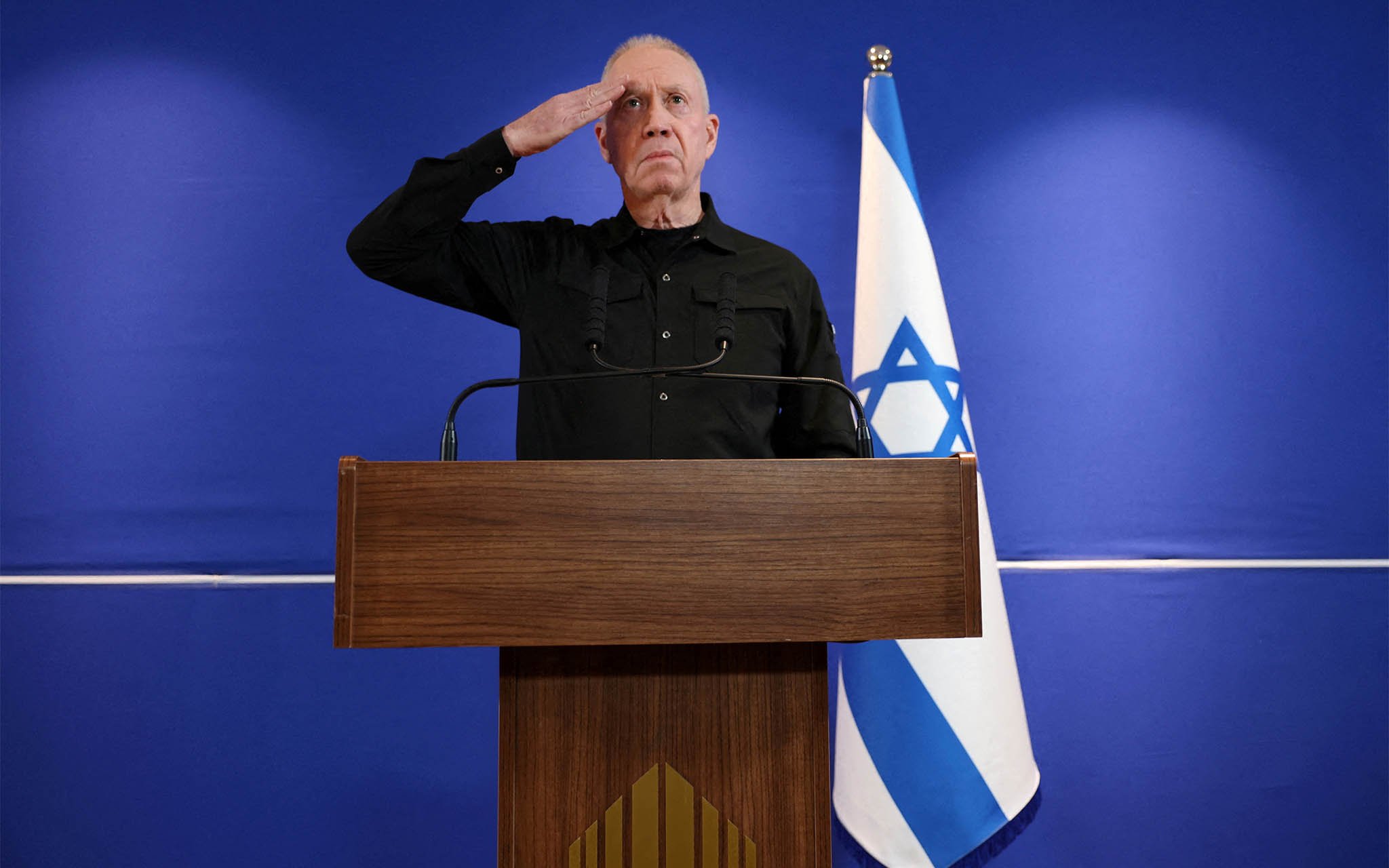
“Even today Netanyahu doesn’t miss a chance to lie and incite, as well as harm the IDF and Shin Bet,” Gallant said Thursday after the release of the document. “The decision to enlist the entire reservist system was made by me at 9 a.m. on October 7, and Netanyahu repeated my order later on.”
“It is no surprise that Netanyahu is opposed to a state commission of inquiry, which would surely expose his lies,” Gallant added.
Liberman responded to the document by reposting a video from September 28, 2023, of him touring the Gaza border area and slamming its response to recent violence along the frontier.
“The prime minister committed that no one will return to targeted assassinations,” Liberman charged in the video from the time. “This is what surrendering to terror looks like.”
Opposition Leader Yair Lapid said that “in contrast to his claims, Netanyahu was again and again warned before October 7, including by me, and ignored all the warnings.”
Lapid included a video of remarks he gave on September 20, 2023, warning Israelis “that we are coming dangerously close to a violent, multi-front conflict” and that “all the heads of the security services… are warning the government and the cabinet of a violent confrontation.”
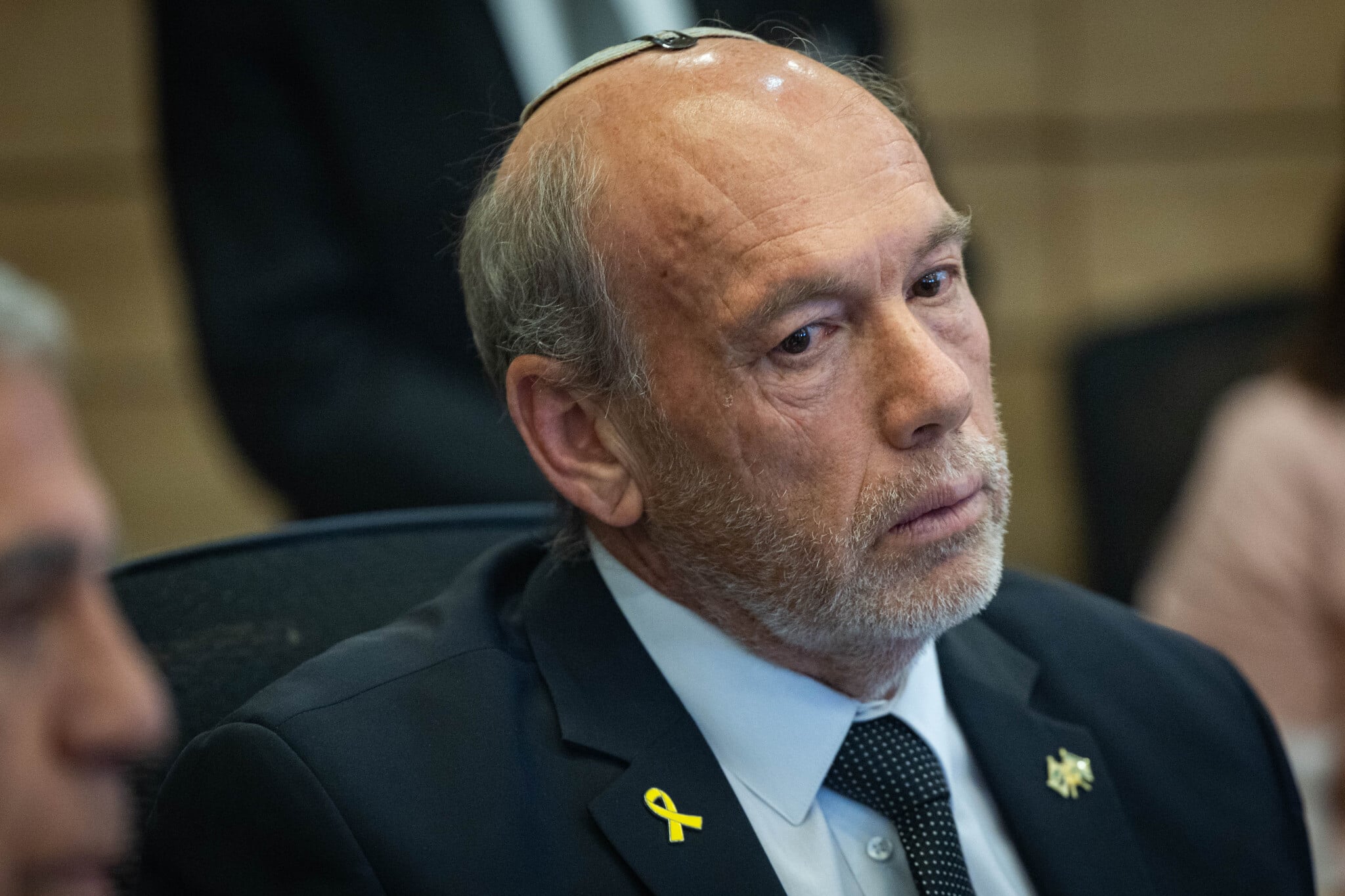
MK Elazar Stern, a lawmaker from Lapid’s Yesh Atid party who is a member of the Knesset Foreign Affairs and Defense Committee, said he wrote a letter to Likud MK Boaz Bismuth, the committee chair, demanding that committee members receive full access to the security cabinet protocols quoted by Netanyahu in the premier’s response to the state comptroller.
Presenting parts of the protocols at the committee on Thursday, Netanyahu “quoted only parts of sentences and parts of discussions that are comfortable for him,” said Stern in the letter, which he published on X.
Stern requested that Bismuth “demand a continuation of the discussion, and before it is held, distribute to members, in a closed forum, all the discussions from which the prime minister quoted.”
Failure to do so would constitute “serious, continued harm to the Knesset Foreign Affairs and Defense Committee’s ability to perform its role,” and would also cast Bismuth as the head of a “committee whose primary concern is narrow political calculations and not the security of the state of Israel,” said Stern in the letter.







The Times of Israel Community.