

Poll: 38% of British voters brand Jeremy Corbyn an anti-Semite
After a tumultuous summer of revelations, Britons appear unconvinced by the UK opposition leader’s rebuttal of allegations of anti-Semitism
 Add ToI as a Preferred Source on Google
Robert Philpot is a writer and journalist. He is the former editor of Progress magazine and the author of “Margaret Thatcher: The Honorary Jew.”
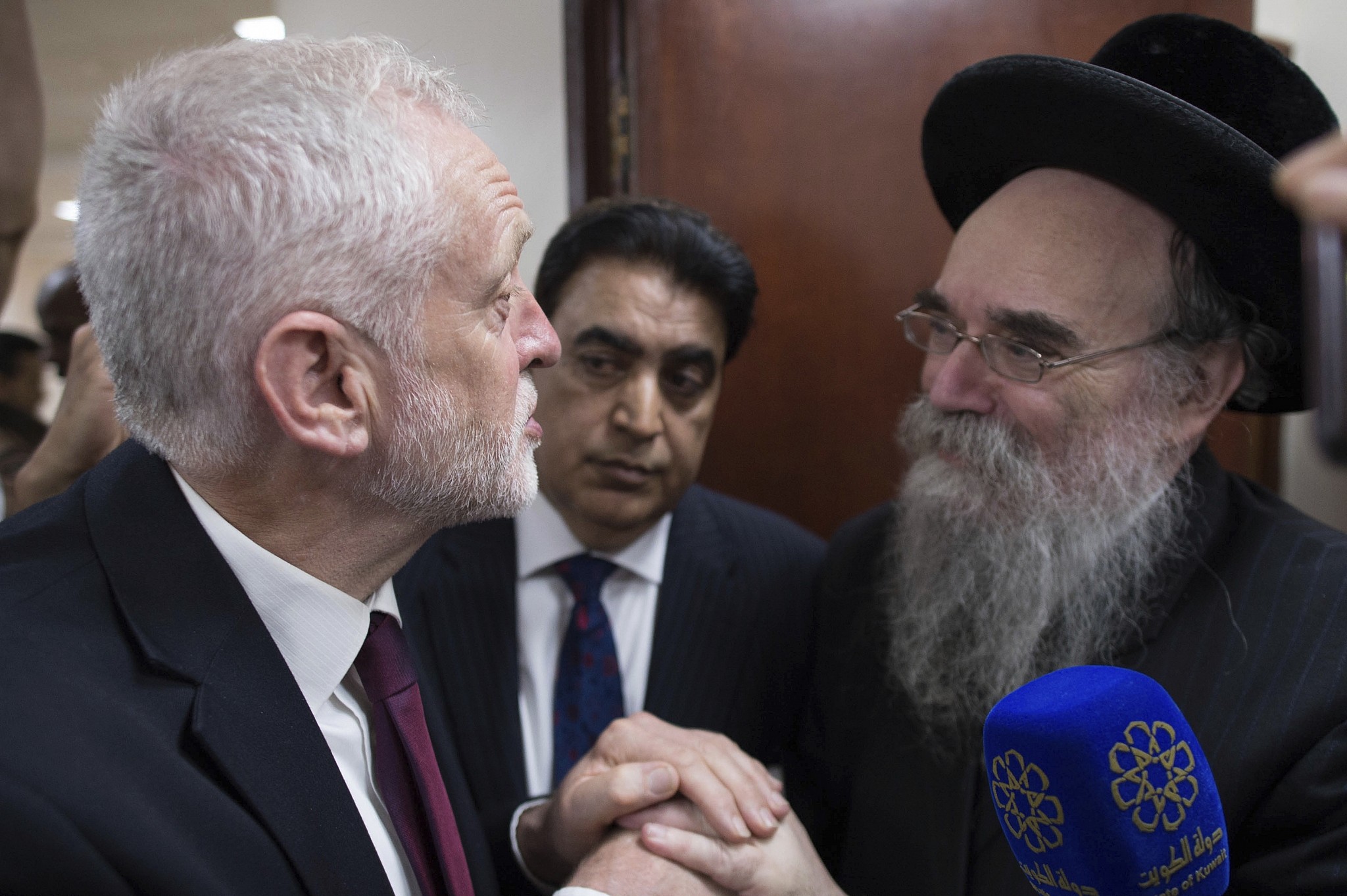
LONDON — Thirty-eight percent of Britons believe Jeremy Corbyn, the hard-left leader of the country’s main opposition party, is an anti-Semite, according to a new poll released Wednesday.
Only 25% of voters agreed that the Labour leader is a committed campaigner against racism of all kinds, including anti-Semitism.
The poll also shows deep public skepticism about Corbyn’s repeated insistence that his controversial contacts with terror groups such as Hamas and Hezbollah are designed to bring about an end to the conflict between Israel and the Palestinians.
The annual survey for the British Israel Communications and Research Center, an independent UK-based think tank, indicates that Corbyn’s tough anti-Israel stance is out of step with most voters. Support for the Jewish state in Britain is holding steady after reaching a seven-year high in polling conducted last October.
The research follows a particularly tumultuous six months for the Labour Party and its leader with a series of revelations about Corbyn’s alleged links to terrorists, anti-Semites and Holocaust deniers.
The news in March that Corbyn had previously defended an anti-Semitic mural, and the Jewish community’s “Enough is Enough” demonstration in Parliament Square in its wake, was swiftly followed by the row over the party’s refusal to adopt in full the International Holocaust Remembrance Alliance definition of anti-Semitism.
Over the summer, the Labour leader was hit by allegations that he attended a 2014 ceremony honoring the terrorists behind the 1972 Munich massacre and hosted a 2012 panel featuring a number of senior members of Hamas, as well as the disclosure of footage from 2013 in which he appeared to suggest that “Zionists” “don’t understand English irony” despite growing up in the country.
The BICOM survey, carried out at the beginning of October by the polling company Populus, tested the defenses deployed by Corbyn in the light of the accusations of anti-Semitism that have dogged his three-year leadership of the Labour Party.

It found that 38% of voters agreed with the statement “Whatever Jeremy Corbyn claims, his actions and past history point to him being anti-Semitic.”
By contrast, 25% of voters accepted the view that “Jeremy Corbyn is a committed campaigner against racism of all kinds, including anti-Semitism.” Thirty-seven percent of those questioned said they did not know.
Only 19% agreed that Corbyn had “worked hard to deliver peace between Israel and the Palestinians,” while 35% endorsed the statement that the Labour leader “only seems interested in talking to those organizations deemed to be terrorists by the British government, the EU and the US State Department.” Forty-six percent of those questioned did not know.
Responding to the results, James Sorene, the CEO of BICOM, said: “We were interested to measure support for Jeremy Corbyn’s own explanations for his conduct after accusations of anti-Semitism. The results are clear – 38% of people believe that Jeremy Corbyn is an anti-Semite.”
“It is also worth noting that the poll was carried out when this issue was no longer being reported in the news,” he said.
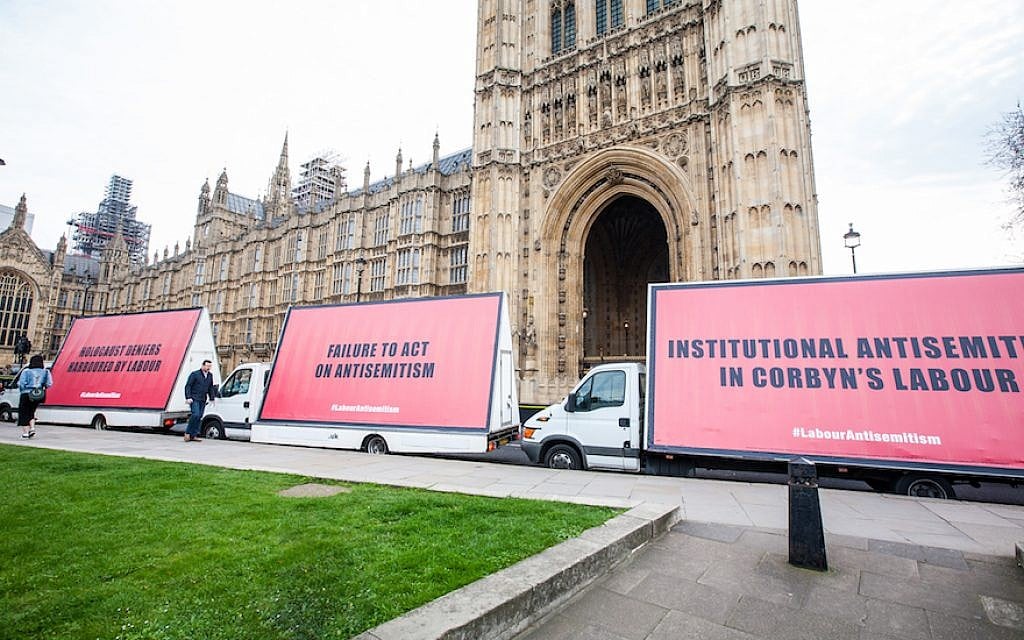
Like last year, nearly half of those surveyed — a representative sample of 2,035 voters — agreed that “hating Israel and questioning its right to exist” is anti-Semitic. Twenty percent of people disagreed with this statement.
Support for the BDS movement also remains limited to a small minority of voters. Forty-eight percent of respondents said they do not support boycotts of Israel and “find it difficult to understand how others do given everything else that is going on in the world.” Fourteen percent disagree with the statement.
Again, the survey finds that young people continue to oppose boycotts of Israel. Forty-five percent of those age 18-24 said they opposed singling out Israel for boycotts. In 2015, just 28% opposed a boycott of Israel. Sorene declared the result a “significant shift in opinion” over the past three years.
Britons also remain convinced that Israel is an important British ally in the fight against terrorism. Forty-nine percent agreed it was a key ally, more than any other Middle Eastern country in the survey.
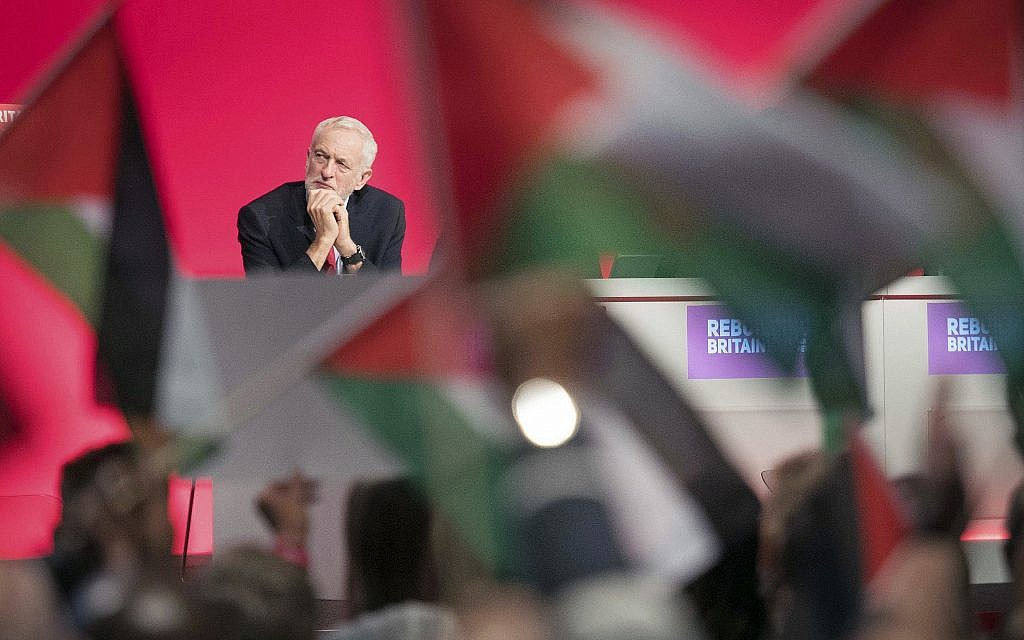
However, Britain’s close trading ties with Israel — earlier this year it was revealed that bilateral trade between the UK and the Jewish state had jumped by 25% between 2016-17 to £6.9 billion ($8.8 billion) — appears not to be fully appreciated.
As the country looks for new markets with its planned departure from the European Union next spring, Israel was rated to be only Britain’s third most important trading partner in the Middle East, behind Saudi Arabia and Qatar. Israel has slipped ahead of Turkey, which has dropped from third to fourth place this year. Egypt and Iran trail farther behind.
Overall, the poll suggests, Britons do not appear to take the side of either Israel or the Palestinians. Twenty percent of people said they felt warm toward Israel and 23% warm toward Israelis. Eleven percent felt warm toward the Palestinian Authority and 23% felt warm toward Palestinians. In each case, around 30% of people said they felt neutral or didn’t know and over 40% said cold. The chilliest reaction was reserved for the Palestinian Authority, which 51% of those surveyed said they felt cold toward.
Polling published last year by the London-based Institute for Jewish Policy Research showed that Israel’s ratings among Britons fall in between those of Germany and the US, on the one hand, and Russia, Syria and Iran, on the other.
“The poll results about Israel and the Palestinians are largely unchanged since last year,” said Sorene. “Israel and the Palestinians have similar levels of support, and opposition to boycotts of Israel remains high at 48%.”
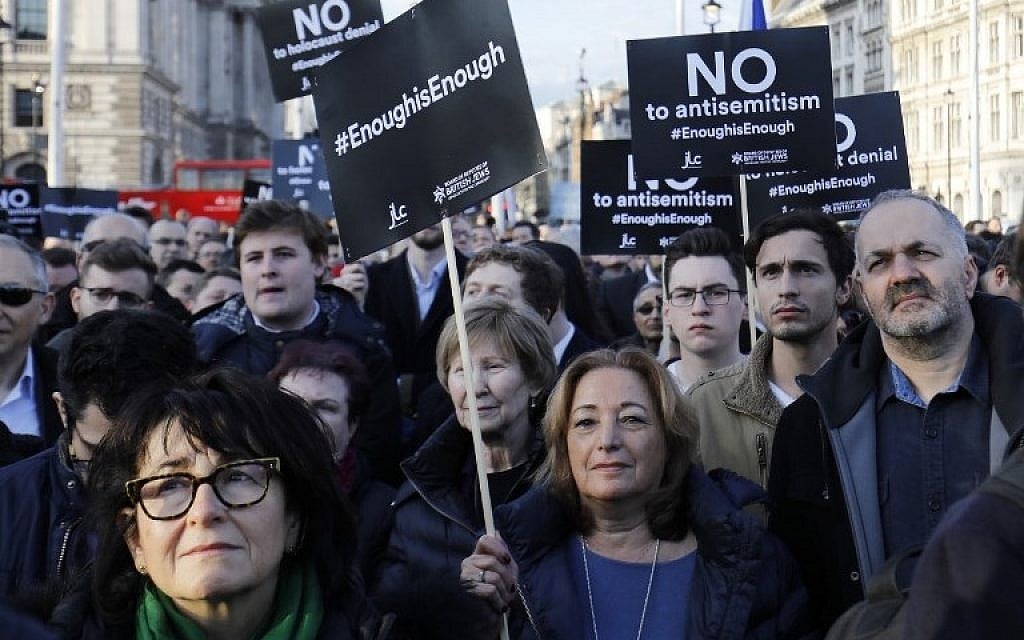
While the number of British voters regarding Corbyn as anti-Semitic are high, they remain far lower than the judgment cast upon the Labour leader by the country’s Jews.
A poll carried out for the Jewish Chronicle last month found that more than 85% of British Jews think Corbyn is anti-Semitic. Similar numbers believe that the Labour party itself suffers from significant levels of anti-Semitism at all levels. Only 1.7% of the country’s Jews believe Prime Minister Theresa May to be anti-Semitic.
Concern in the Jewish community about Corbyn becoming prime minister — current polling suggests May’s Conservative party has only a slight edge over Labour — remains high. A poll conducted in the summer showed that nearly 40% of British Jews would seriously consider emigrating if the Labour leader makes it to Downing Street.
Pollsters remain unsure about the impact allegations of anti-Semitism are having on Labour’s performance in the polls. There are indications, however, that Corbyn’s own ratings — which have been poor throughout his time as leader but surged during last year’s general election before slipping badly again during the course of this year – may have been taken a hit because of the string of anti-Semitism allegations he has faced.
Moreover, a recent survey by the pollster YouGov commissioned by the Labour Against Anti-Semitism campaign suggests the party’s association with Jew-hate may be a key factor in its seeming inability to capitalize on the government’s mishandling of Brexit and deep divisions over Europe within the Conservative party. It found that nearly one-third of Britons who say they’re not currently backing Labour but might potentially do so think the party has a problem with anti-Semitism. Of those, 39% say it would make them much less likely to vote Labour.










The Times of Israel Community.