

Polling stations close with slightly higher turnout, close races in major cities
Voting ends at 10 p.m. after violence and protests in Golan and voting halted in city of Arad; PM issues last-minute call to support Elkin in Jerusalem after reported trouble
 Add ToI as a Preferred Source on Google
Michael Bachner is a news editor at The Times of Israel
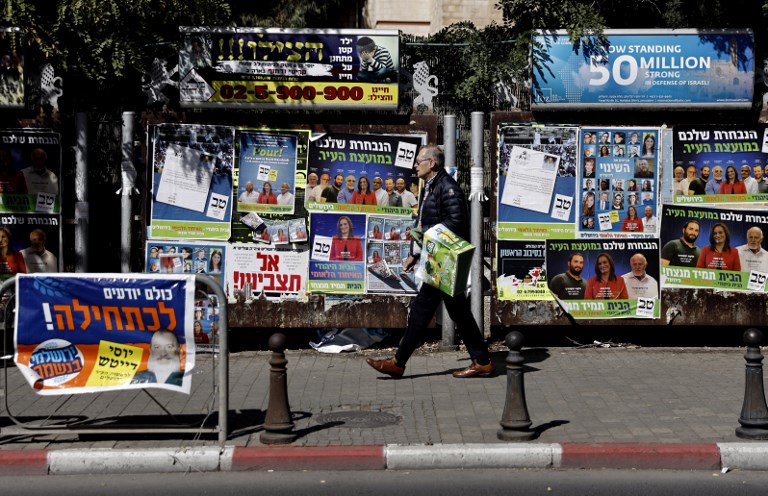
Municipal election polling stations throughout Israel closed at 10 p.m. on Tuesday after millions of Israelis voted during the day, with the country’s largest cities seeing hotly contested races bitterly fought until the last minute.
Local elections for mayors and councils in cities and regional councils took place for the first time since 2013.
According to the Interior Ministry, 3.6 million people voted out of 6.6 million eligible voters in 251 cities, towns, and local councils.
The figure was an increase of five percent over the rate when the last municipal elections were held five years ago.
Results are expected to trickle out through the night and into Wednesday.
Prospective mayors needed to score at least 40% of the vote in their local elections to win office; otherwise a run-off vote with the two top placed candidates will take place in two weeks.
The races in the big cities were close, with Haifa mayoral candidate Einat Kalisch-Rotem attempting to become the first female mayor of one of Israel’s three major cities at the expense of incumbent Yona Yahav, and Tel Aviv voters divided between Mayor Ron Huldai and his long-time deputy Asaf Zamir.
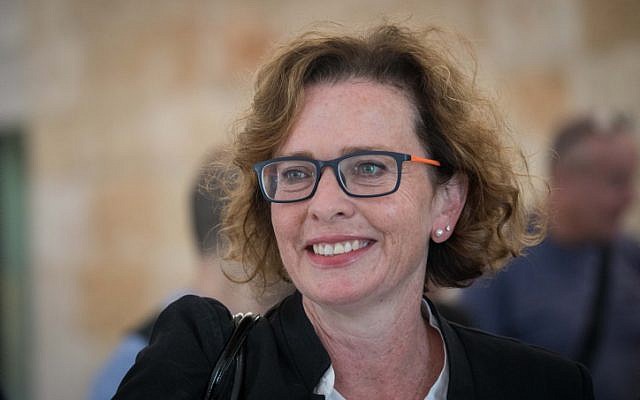
An exit poll showed Kalisch-Rotem handily beating Haifa’s Yona Yahav, becoming the first female to lead a major city in the country’s history.
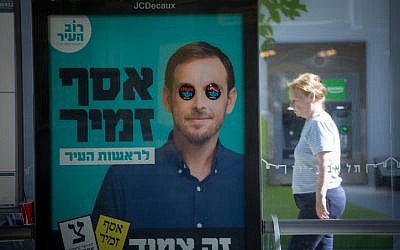
None of the battles were more hotly contested than the capital, with four contenders vying for the two top spots which will probably face each other in a second round.
An hour before stations closed, Hadashot TV reported high voter turnout in the secular and ultra-Orthodox neighborhoods of Jerusalem, signaling promising results for mayoral candidates Ofer Berkovitch and Moshe Lion, but low turnout in the national religious and traditionally-religious neighborhoods, spelling possible trouble for candidate Ze’ev Elkin.
That prompted Prime Minister Benjamin Netanyahu to issue a recorded statement calling on Jerusalemites who had not voted to support Elkin, a member of his Likud party and current minister of Jerusalem affairs.
“Go and vote. The battle is tight. I say this as a Jerusalemite. You need a person like Minister Ze’ev Elkin, a very talented man who has done a lot for Jerusalem and will do more.”

The voting proceeded without incident in most polling stations, but there were claims of fraud, cyber attacks, and irregularities, as well as violent confrontations and arrests in some locations.
Voting was briefly halted in the city of Arad in the southern Negev region, after fake ballots using non-standard fonts to spells the names of the incumbent mayor and his list were discovered at polling stations, the Yesh Atid party said.
Mayor Nissan Ben Hamo filed a complaint, prompting voting to stop until ballots in all stations were checked. Another station was found to contain the fake ballots, which would’ve been disqualified. Voting then continued in the city.
Justice Minister Ayelet Shaked apparently broke election laws when she posted to social media a video of herself inside a polling station in Tel Aviv, casting her vote and urging support for her Jewish Home party’s candidates.
Shaked admitted she inadvertently broke Israeli election laws by posting to her Twitter account the video of herself campaigning inside a polling station.
The video was later removed, and a statement from Shaked’s office said the minister did not realize she had broken the law at the time.
Activists from the Bnei Torah party in Jerusalem, affiliated with the extremist ultra-Orthodox Jerusalem Faction, claimed there was tampering in some of the capital’s neighborhoods. Party activists said they filed a complaint with police, arguing that at some locations there were attempts made to invalidate voting slips for the party, which has given its support to candidate Ze’ev Elkin as mayor — a break from the mainstream ultra-Orthodox parties who backed Moshe Lion.
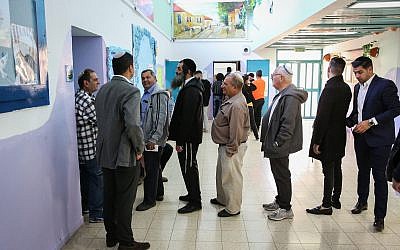
In Tel Aviv, the headquarters of Assaf Harel, a TV presenter hoping to become the next mayor in place of veteran Huldai, said it had received reports from locations around the city that the party’s voting slips were disappearing from booths.
“It seems there is someone who it is important to him to silence the alternative,” party said in a statement and that the matter had been reported to election officials.
In Haifa, Yahav filed a police complaint against rival Kalisch-Rotem accusing her of launching a spam attack against phones used by his party activists, preventing them from using the devices.
His rival Kalisch-Rotem’s headquarters hired a private investigator firm to ensure there was no fraud in the elections, claiming they had information that such attempts would be made, Ynet reported.
A fabricated “screen capture” shared on social media, which was made to look as though it had been snapped from the Ynet website, claimed that the mayor of Nazareth had been arrested for an illegal relationship and was being questioned by police. Ynet stressed that there was no such incident.
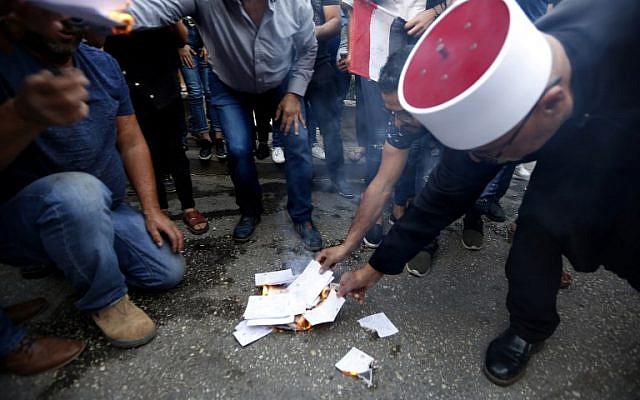
In the northern Druze city of Majdal Shams police officers broke up an anti-election violent protest that was blocking voters from a local polling station. No injuries were reported. Police said all polling stations in the city were opened.
תיעוד תחילת המהומה במג'דל שמס @rubih67 pic.twitter.com/F0xCkGzOCC
— כאן חדשות (@kann_news) October 30, 2018
A grenade was reportedly thrown toward a polling station in Yarka, injuring ten people.
Many in Druze communities in the Golan are boycotting the elections, saying they were loyal to Syria, not Israel. There have been reports that some voters who did show up were told by representative of religious authorities that they would be ostracized from their communities.
Hebrew-language media reported that the Interior Ministry announced that the national local elections supervisor had asked the Jerusalem election administration to look into an incident in the city in which a woman said she discovered someone had voted in her place.
This year was the first time Israelis were given the day off for local elections in an effort to boost turnout at municipal polls, with the Nature and Parks Authority reporting some 180,000 Israelis took advantage of the holiday to visit national parks across the country.



The Times of Israel Community.