

Prosecution presses Netanyahu over his interest in media coverage, Walla news site
Prosecutor focuses on PM’s concern with negative coverage of his wife when meeting with Hollywood mogul, Israel Hayom owners; premier again seeks to cut number of hearings per week
 Add ToI as a Preferred Source on Google
Michael Horovitz is a breaking news editor at The Times of Israel
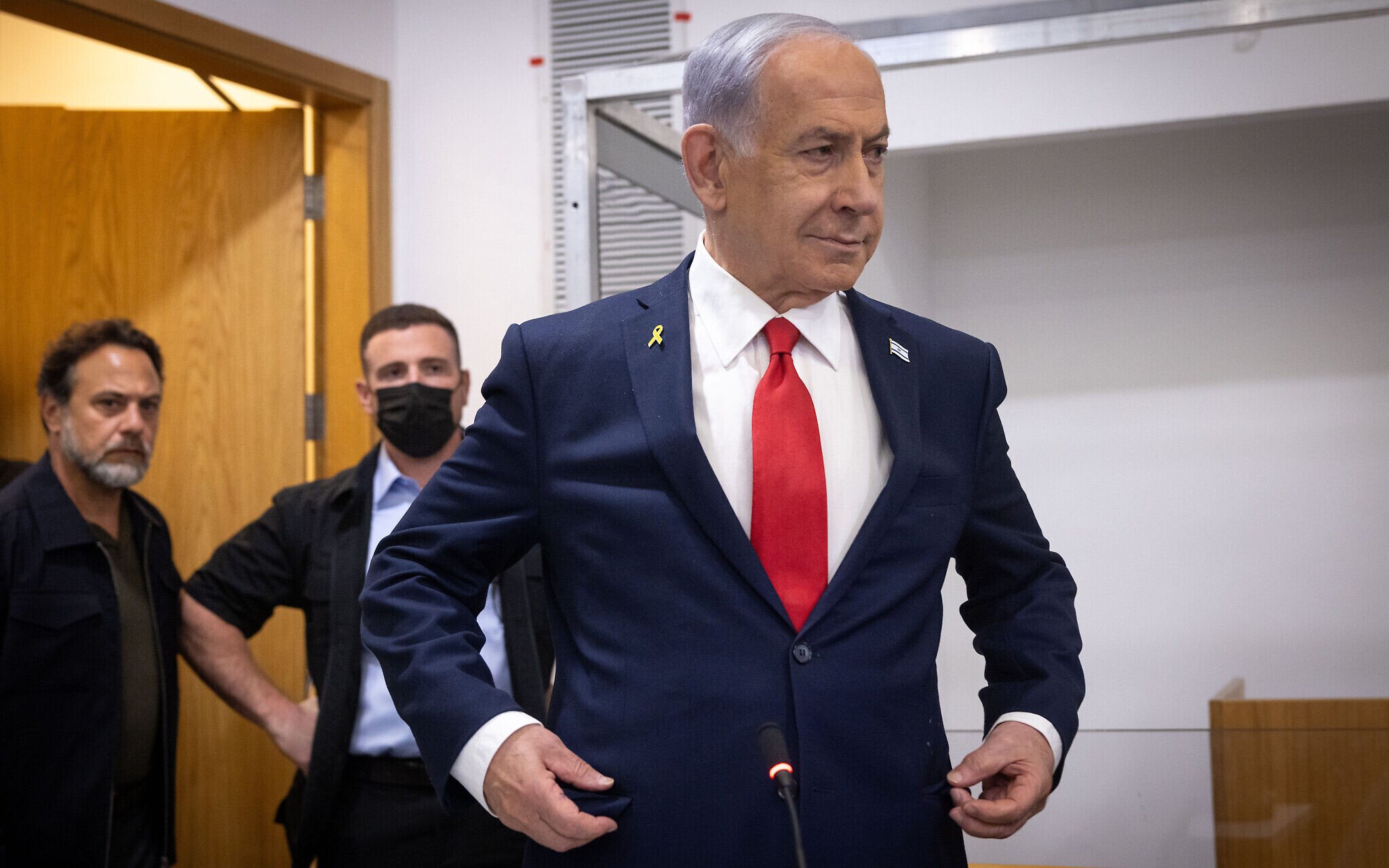
The prosecutor in Prime Minister Benjamin Netanyahu’s trial worked to prove the premier’s interest in media coverage of himself during the third and fourth days of his cross-examination in Case 4000, one of the three cases against him.
The premier is on trial for bribery, fraud, and breach of trust in Case 4000, also known as the Bezeq-Walla case, which focuses on allegations that Netanyahu authorized regulatory decisions that financially benefited Bezeq telecommunications giant shareholder Shaul Elovitch by hundreds of millions of shekels.
In return, Netanyahu allegedly received favorable media coverage from the Walla news site, also owned by Elovitch.
On Tuesday, prosecutor Yehudit Tirosh attempted to demonstrate Netanyahu’s deep interest in media coverage. She also claimed a link between Sara Netanyahu’s charge of unfair treatment by the media to the granting of an NIS 10,000 ($2,670) item of jewelry in 2016.
Referencing the testimony of Arnon Milchan, a witness in Case 1000, Tirosh said that Netanyahu called the Hollywood mogul and told him that his wife was being “slaughtered in the media,” which is why the prime minister asked for his help in getting the jewelry.
“The things that Mr. Milchan confirmed show that you are aware of the depth of her claims in this matter, and that this even motivates you to take action, to ask him for help in giving the jewelry,” Tirosh told Netanyahu, who denied the claim.
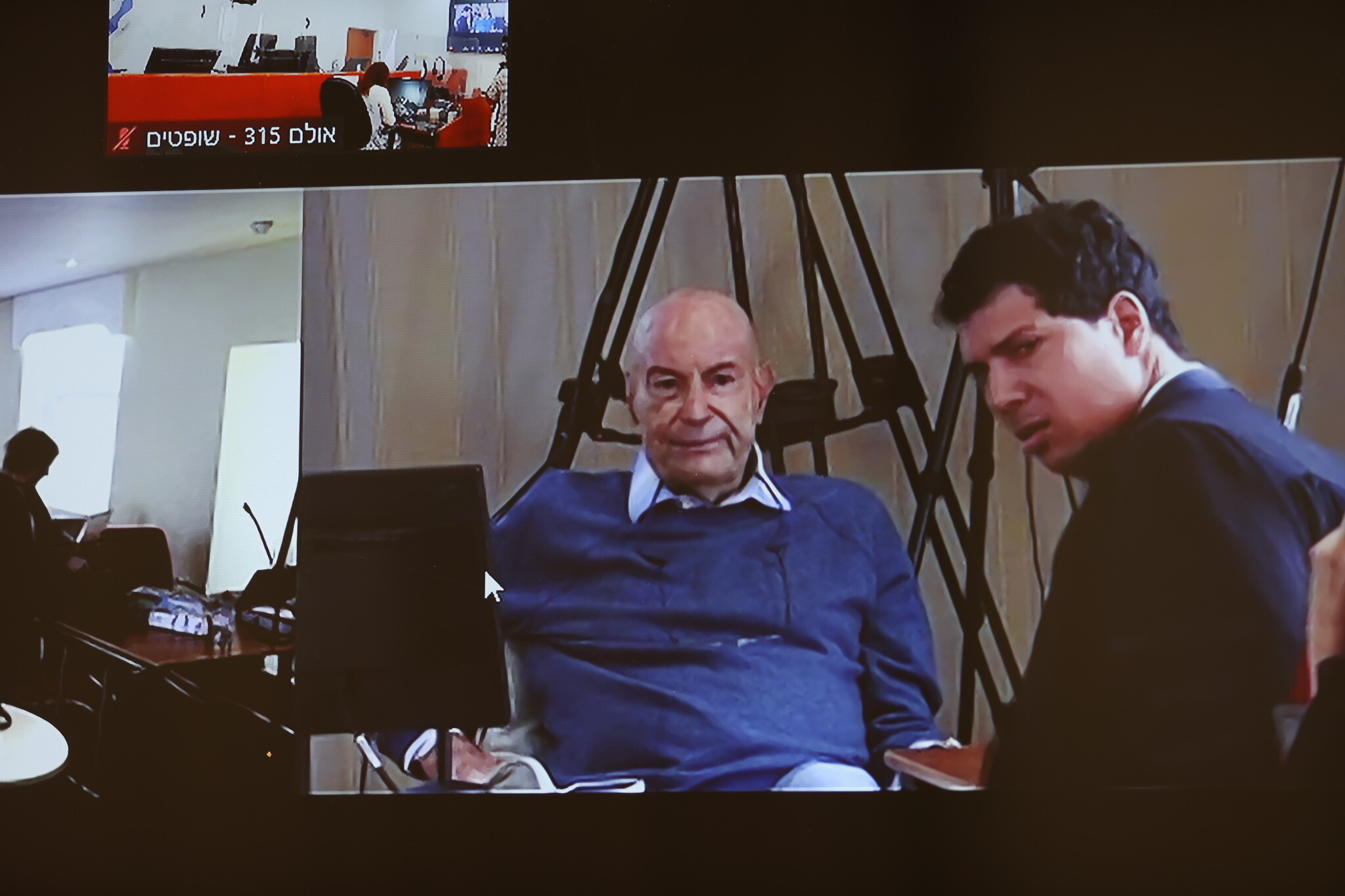
Tirosh also questioned Netanyahu over a 2013 meeting at the prime minister’s official residence on Balfour Street, which involved him and his wife, Sara, Sheldon and Miriam Adelson, and Milchan, who described the meeting in his testimony.
The prime minister claimed he didn’t recall the meeting in the way it was characterized by Milchan, who alleged the couple complained over coverage of them in the Adelson-owned Israel Hayom daily.
“There were complaints from Bibi and Sara, especially Sara, who is more emotional, that her blood is being spilled. She offered to replace the editor of Israel Hayom. It got to the point that Miri and Sheldon left,” Milchan recalled, who used Netanyahu’s nickname
“It was a matter-of-fact and friendly conversation,” Netanyahu told the court on Tuesday. “I remember there was a dinner. I would remember clearly if they stood and left.”
While Tirosh insisted that Sara Netanyahu complained about coverage of her multiple times and requested “flattering articles,” Netanyahu countered, asserting his concern was not about personal coverage of himself, “but the change in the newspaper’s bite and sharpness in the face of [the rest of the media’s] false claims about Iran, the Palestinian state, and populist economic arguments.”
“It was important that there was a daily lie against this brainwashing,” Netanyahu said.
On Wednesday, Tirosh attempted to prove the value Netanyahu saw in the Walla news site as an important media platform during the 2013 and 2015 elections, questioning him on his knowledge of the site’s traffic figures.
Netanyahu claimed that he did not care about the traffic figures of the website, and claimed that he viewed two of the interviews he conducted with Walla as “bad and hostile.”
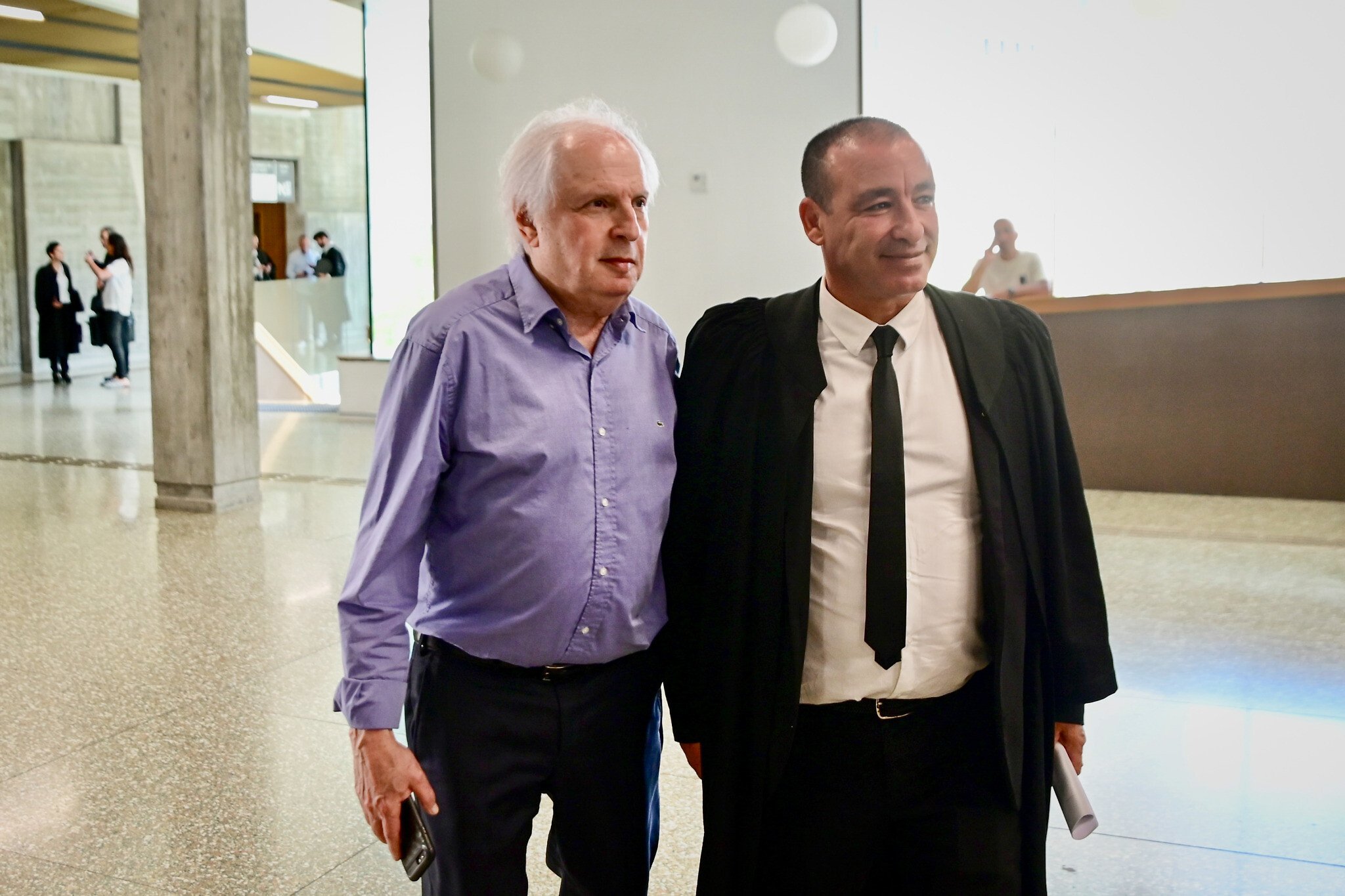
“I thought no good would come of [the interviews],” Netanyahu claimed, characterizing Walla as “North Korean in nature,” and said he nicknamed it “Walla Hamas.”
“To the best of your knowledge, did Walla have very high traffic during the relevant period?” Tirosh asked the prime minister.
“I don’t remember the traffic. I wasn’t interested in it,” Netanyahu claimed.
‘Almost impossible’ to testify three times a week
Netanyahu also told the judges at the start of Wednesday’s hearing that it is “almost impossible” for him to testify three times a week in his long-running corruption trial.
The premier told the judges that he has “made very great efforts to hold three hearings a week, efforts which required postponing critical discussions on issues that the public does not know about.”
“I am not exaggerating in the slightest — it is simply almost impossible,” he said.
Last month, the court said that Netanyahu would be required to testify three times a week, up from twice a week, in an effort to speed up the trial, which started in 2020 and is not expected to end before 2027.
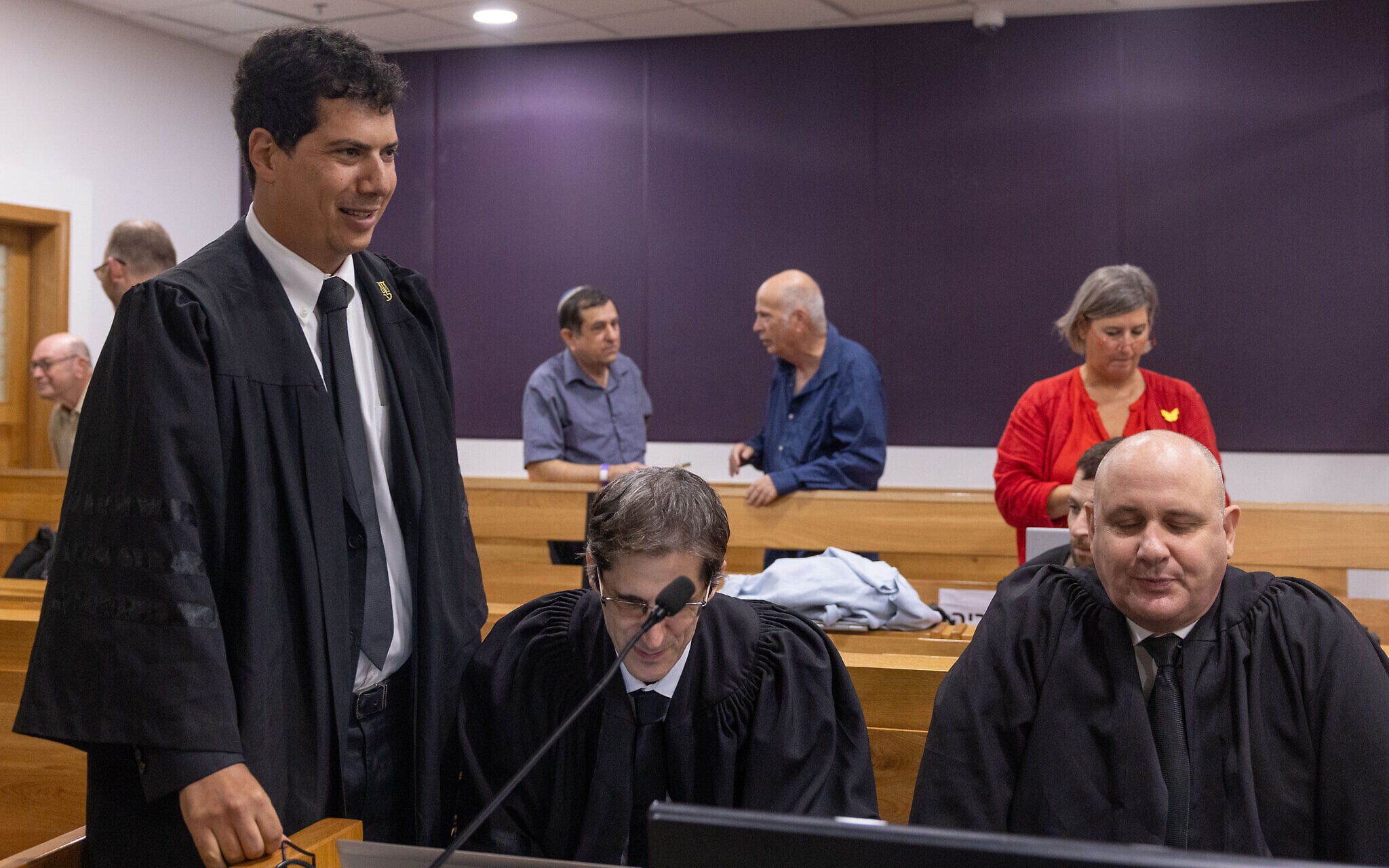
Since then, the premier’s defense team has submitted multiple requests for hearings to be shortened or canceled entirely, citing ill health, security meetings, or diplomatic visits.
Channel 12 news reported last week that there has not been a single week in which the premier has testified three times.
Along with Case 4000, Netanyahu is facing charges of fraud and breach of trust in Case 1000 and Case 2000. Prosecutors wrapped up their cross-examination of the prime minister in Case 1000 last week.
Case 1000 revolves around allegations that Netanyahu and his wife, Sara, received expensive gifts illicitly from Milchan worth some NIS 700,000, and that Netanyahu violated conflict of interest laws when he provided Milchan with assistance in renewing his long-term US residency visa and sought to help him with tax issues.
In Case 2000, the prime minister is accused of fraud and breach of trust over his alleged attempt to reach a quid pro quo agreement with the publisher of the Yedioth Ahronoth newspaper, Arnon (Noni) Mozes, whereby Yedioth would give the prime minister more positive media coverage in exchange for legislation weakening its key rival, the Israel Hayom free sheet.
The premier denies any wrongdoing and claims the charges were fabricated in an attempted political coup led by the police and state prosecution.






The Times of Israel Community.