

Provocative novel peeps into the profane world of a Haredi woman’s porn addiction
In her debut work set in New York, pseudonymous author Felicia Berliner tells the story of a young Hasidic woman sucked into an obsession with ‘Shmutz’
 Add ToI as a Preferred Source on Google
Amy Spiro is a reporter and writer with The Times of Israel
Raizl never imagined the ways in which owning a laptop would change her life.
The protagonist of the debut novel, “Shmutz,” by Felicia Berliner (a pen name), had never accessed the internet before she turned 18, when she gained the very reluctant consent of her strict Hasidic father to study accounting at a city college.
Suddenly and accidentally exposed to an entire world she never knew existed, Raizl becomes addicted to online pornography, spiraling into an obsession that controls her days and nights, and makes her fearful that she won’t be able follow her predetermined path of marriage and motherhood.
“My book is about the struggle of a young woman who has to choose between her sexual exploration and identity and her family and her community, which she loves,” Berliner told The Times of Israel in a recent phone interview. “I wrote this book as a protest against this requirement to choose and fit in.”
“Cosmopolitan” included the book on its list of summer 2022 beach reads, but it’s not exactly the light, fun reading such a designation often implies.
The book is notably graphic and oftentimes disturbing, with detailed depictions of Raizl’s online explorations into the darkest corners of the internet, as well as her own real-life uncomfortable and borderline abusive experiences.
The author said she very consciously chose to describe Raizl’s online discoveries in explicit detail in the book.
“I chose to write from the perspective of a young ultra-Orthodox woman who had really been sheltered from the internet,” said Berliner. “So that the full force and shock of online porn could be represented.”
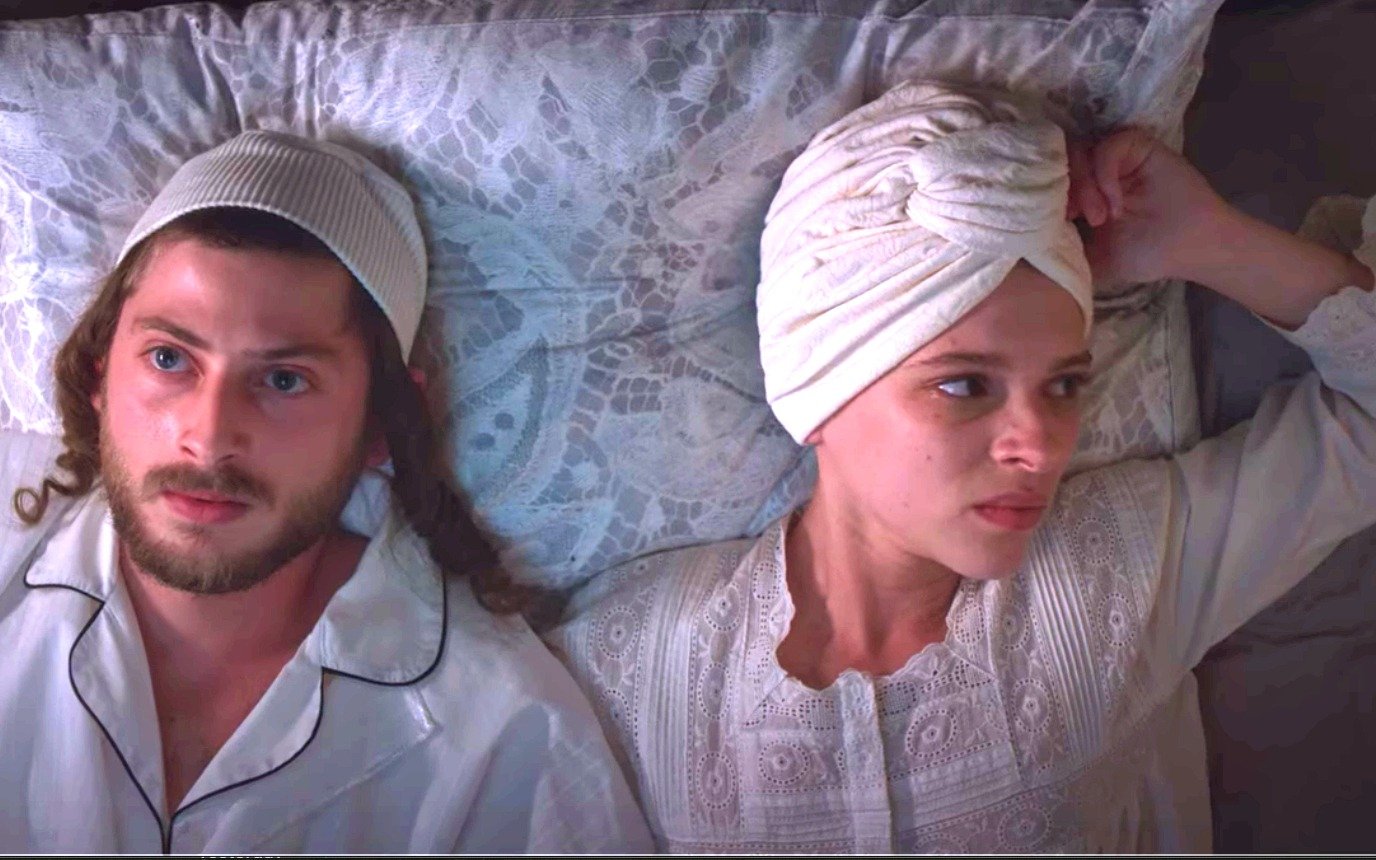
“Shmutz,” which hits shelves this week, comes amid a slew of recent mainstream cultural depictions of Hasidic life, such as TV series “Unorthodox” and “Shtisel” and memoirs “Becoming Eve” and “All Who Go Do Not Return.” Many of them, however, were the subject of considerable criticism by those in the Hasidic world unhappy with the portrayals.
“I’m so glad they’re out there. I’m so glad that there’s now so much more diversity of representation,” Berliner said, “that you can now look at TV, can read books – that all of that is out there is really fantastic.”
And when it comes to potential criticism or pushback to her book’s less-than-flattering depiction of Hasidic Judaism, Berliner is relatively unperturbed.
“There’s a lot of love for Hasidic family and ritual. Raizl loves her family and I think that comes through in the book,” the author said. “That doesn’t mean that all readers will approve.”
Between the covers
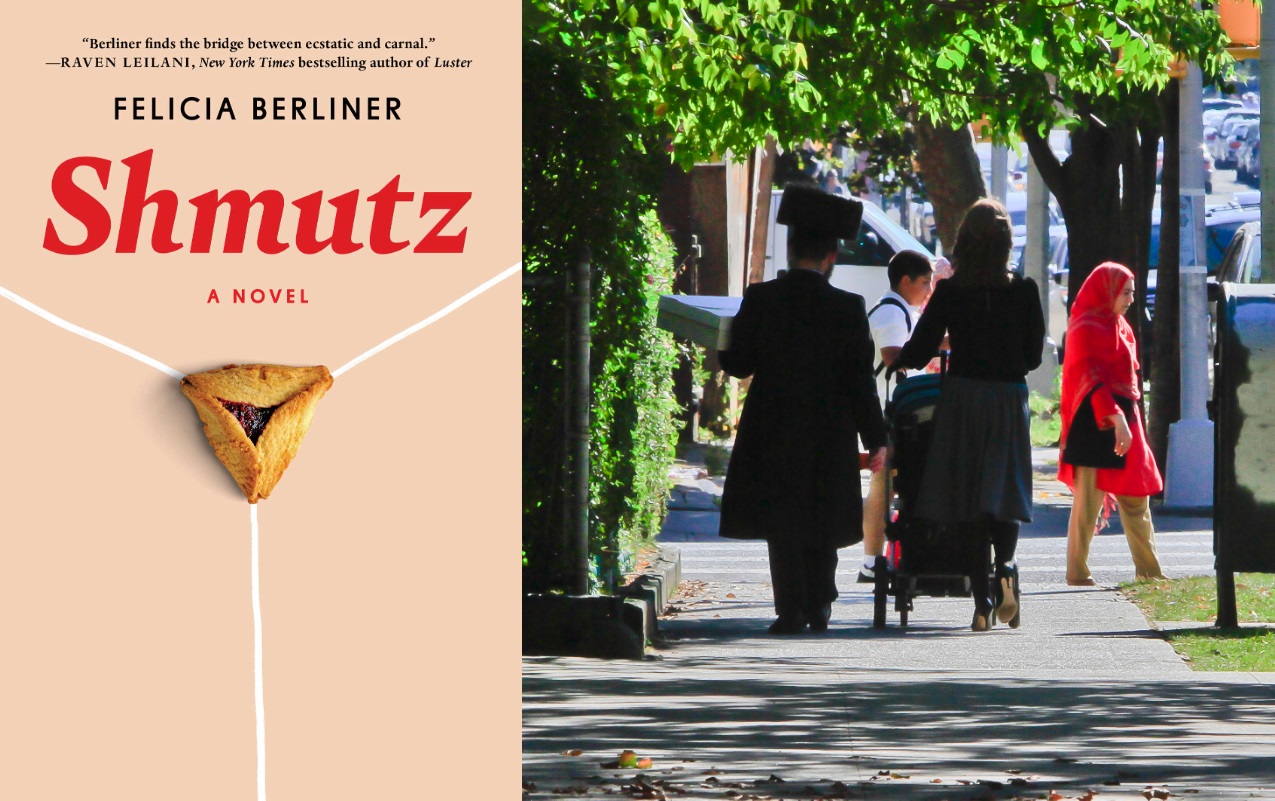
The cover – depicting one lone hamantasch, the triangular pastry consumed on Purim, in a simple yet suggestive manner – has already sparked chatter in certain corners of the internet.
“Many people are saying it’s very Jewish and provocative – that’s actually a great way to describe the novel too,” said Berliner. “The cover signals the way that Raizl’s sexuality is completely intertwined with her Jewish identity.”
Berliner said she is “excited that the cover has gotten such a fantastic response from early readers. People want to see what’s between the covers, which makes it the perfect design.”
Beyond just the title, Yiddish plays a very prominent role in “Shmutz,” as Raizl utilizes the language to navigate the new unfamiliar world, learning new words in her mother tongue for “the shmutzige shtupping words” — sexual terms — as well as inventing some of her own.
“I love Yiddish… Yiddish was the secret language that my grandmother and father would speak when they didn’t want me to understand,” Berliner said. “I definitely grew up hearing Yiddish, but it also had a certain mystery.”
Raizl’s journey, the author says, “is partly a journey in language… Yiddish has so many juicy words for sex, but Raizl did not know any of those.”
Grappling with identity
Berliner, who is writing under a pseudonym, is intentionally vague about her own connections to the ultra-Orthodox world and her familiarity with the community. She says she grew up in Los Angeles, attended yeshiva schooling through high school and “was very close to my Orthodox grandparents growing up.”
Berliner declined to say if had she conducted any outside research before writing the book, saying simply that some early readers of “Shmutz” were themselves ultra-Orthodox. “The goal here isn’t really ethnography. This is one fictional young woman’s story.”
The author takes great care to keep her identity under wraps, appearing at a book event in New York last month wearing a baseball hat and a black face mask. While publishing under a pseudonym is a practice as old as the written word, of late there is talk in the publishing world of “own voices,” a push for books about characters with underrepresented identities to be written by authors from the same background.
Her debut novel, Berliner said, grew out of “my lifetime of relationships with Orthodox family and friends and my own yeshiva education… I’m blessed to have a deep connection with Orthodox thought and culture and rituals.”
While many recent popular depictions of Hasidic life tell a journey of leaving the community behind, Berliner found it important to explore what it means to grapple with many potentially conflicting facets of identity.
“The message here is really about being whole, being all the parts of yourself,” she said. “Raizl is devout, deeply connected to der bashefer [the Creator], her God, her sense that God is all knowing, all powerful. And she’s also a sexual human being.”
“And this book is about her struggle, and her discovery that she can’t be just one thing, and that she can’t live her life, really, according to any one set of expectations.”
And while the story is told from within the confines of a very narrow world, Berliner believes that it is ultimately a universal story – one of “wrestling with identity” and refusing to choose just one aspect and facet of an identity.
It’s about “people feeling caught between that love of their families and where they grew up, and wanting that sense of acceptance and belonging, versus wanting the ability to explore and really see who they are.”
This article contains affiliate links. If you use these links to buy something, The Times of Israel may earn a commission at no additional cost to you.










The Times of Israel Community.