

Rabin bodyguard: ‘If only I’d looked left 2 or 3 seconds sooner…’
‘I feared I’d be blamed for the murder,’ says A.H. in first ever interview, still emotional 20 years after that terrible night
 Add ToI as a Preferred Source on Google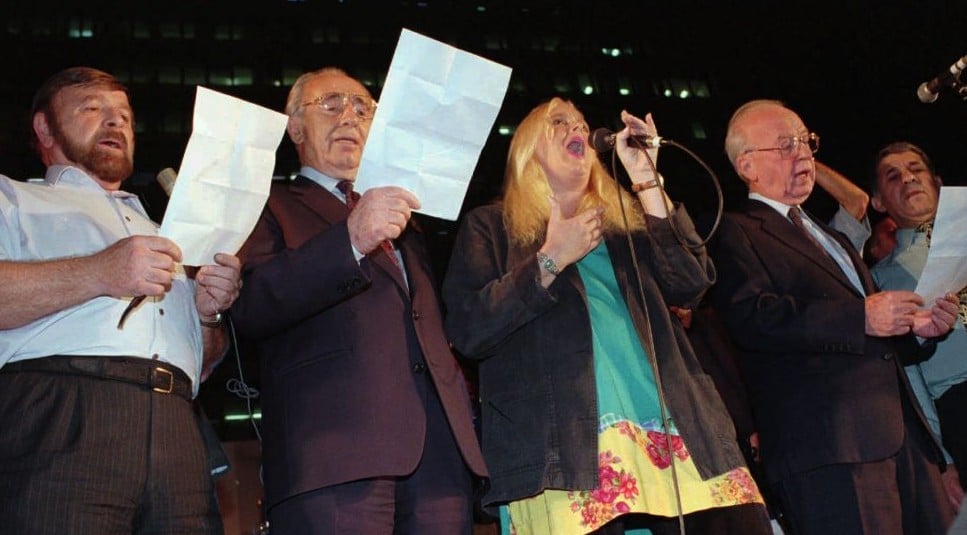
One of the four bodyguards assigned to Yitzhak Rabin on the night the prime minister was assassinated 20 years ago said that if he’d only looked to his left “two or three seconds earlier,” he might have been able to prevent the killing. Instead, he acknowledged in the first interview he has ever given, he and the three other bodyguards failed that night — and “that’s an understatement.”
The bodyguard, interviewed in a darkened room by Israel’s Channel 2 and identified only by the initials A.H., said that when amateur video footage of the November 4, 1995 assassination was subsequently broadcast on television, he feared “there’d be a red circle around my head. And they’d say, ‘it’s because of him.'” In fact, A.H.’s conduct on the night was deemed by the Shamgar Commission that investigated the murder to have been without flaw, the TV report said, in contrast to that of certain others who were on duty.
While some outside the service have carped that he should have drawn his gun and fired at Yigal Amir after the first shot rang out, his decision to jump on the assassin and wrestle him to the floor was “exactly what we are trained to do in an incident at that range. It was the correct action. If I had pulled out my gun and fired, it would have been slower.”
By the time A.H. had knocked the gun out of Amir’s right-hand and wrestled him to the floor, however, the killer had fired two more bullets. Of the three shots Amir fired in total, the first and third hit Rabin in the back, fatally. The second injured another bodyguard, Yoram Rubin.
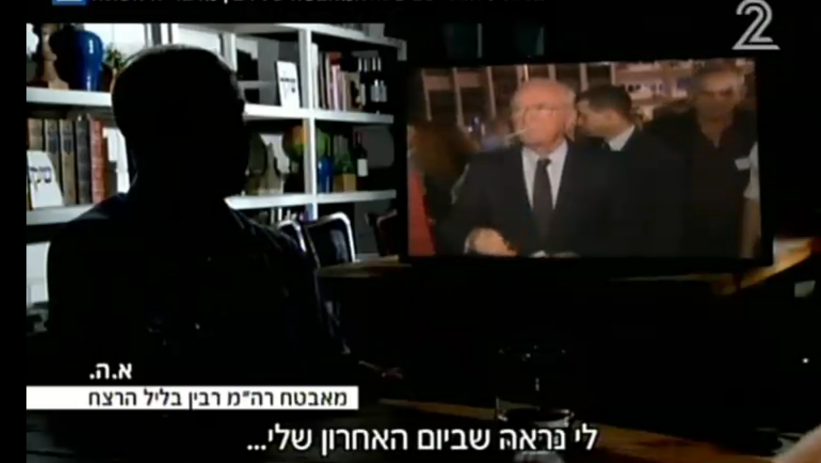
A.H. said that he did have his gun to Amir’s head as they lay on the ground, and had to decide whether to fire. “I thought about it; an assassin who had fired at the prime minister. But in that moment, I decided not to shoot. He was neutralized. He had no gun in his hand.”
A snippet of the interview with A.H. was broadcast on Wednesday, and the full conversation was screened on Friday night.
A former officer from an army combat unit who had joined the Shin Bet’s VIP protection unit six months earlier, A.H. said he had been tasked to protect Rabin at the fateful peace rally in Tel Aviv only after asking for the role, having been initially assigned elsewhere that night.
As Rabin left the rally, he remembered asking himself, “What if someone in the crowd pulls out a gun? What will I do?”
Standing just behind Rabin and looking to his right, he heard the first shot fired by Amir.
“I looked to my left and I saw a man who I later identified as Yigal Amir standing with his right hand out, and then there was another shot. I saw the flash. I jumped on him.”
“With hindsight, there was a third shot,” he said.
A.H. said he hit Amir on the hand that was holding the gun, and then they wrestled to the ground. “He was almost lying on me. I said to myself, ‘We have failed…”
“With my left hand I grabbed him. I wrapped my arm around his neck. I aimed punches at his face…” It was then that A.H. pulled out his gun, put it to Amir’s head, and decided not to shoot.
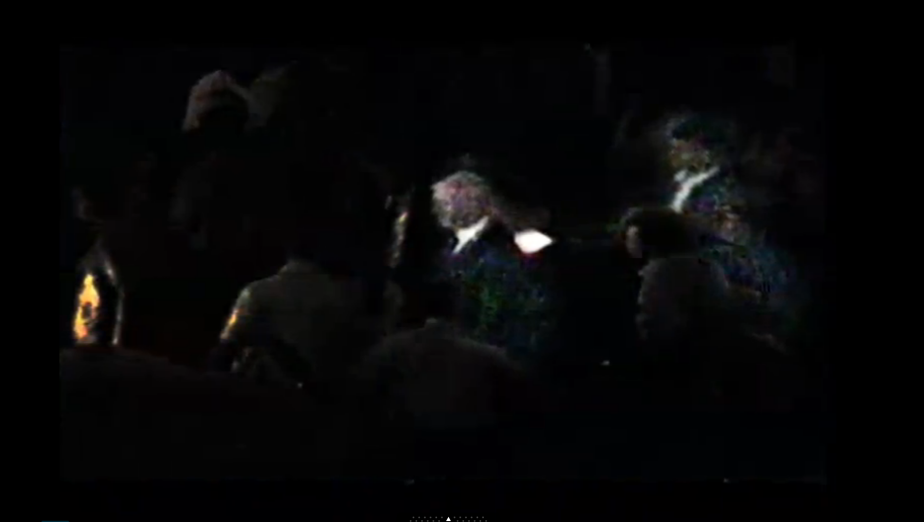
After Amir had been taken away, A.H. said the sense of failure was overwhelming. “After something like that, it’s hours of self-flagellation. Hours of, ‘If only I’d looked to the left two or three seconds earlier.'”
A.H. addressed claims that someone had shouted “Blanks, blanks” amid the gunfire, and said he didn’t hear that cry. “I heard, ‘It’s not real, it’s not real,'” he said. He added that he “recognized the voice. I think I know who it was,” but did not disclose the speaker’s identity.
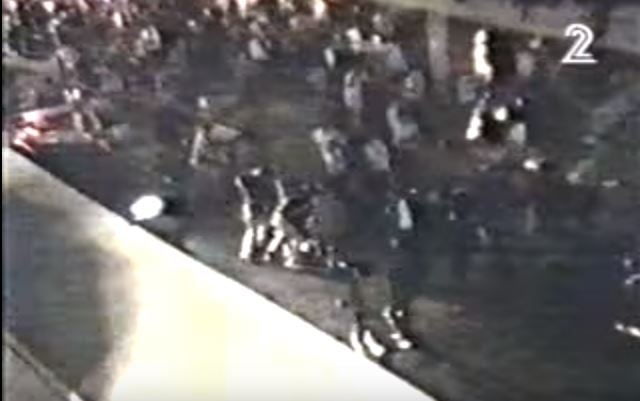
A.H. saw Amir again, in court, and found it hard to look at the assassin, who was smiling. It was as though Amir was saying, “‘I’m on top of the world… It’s good for me,'” the bodyguard said.
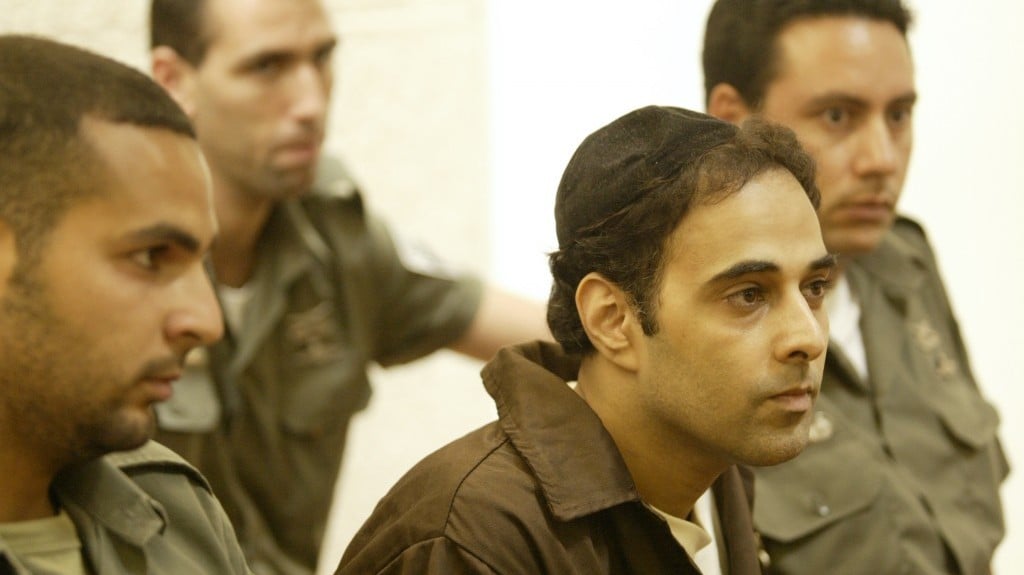
The events of that night have never left him, and have deeply colored his life, he said. He recalled having to speak to his seven-year-old son, who came home from school one day having been told “that the bodyguards failed and that’s why (Rabin) was murdered. Not because an assassin came. You have to explain to your son of seven that the bodyguards indeed failed, but it was someone else who murdered him.” A.H. said he still clearly remembers that conversation, and his son is now 15.
Channel 2 said A.H. was highly emotional during the interview, the first he has given about the events that night. He felt able to speak, he said, because after 20 years, “it’s closing a circle for me. I feel that I can tell the story.”
A.H. said the assassination is in his thoughts continually. “It will follow me to the end of my life… I believe that on my last day, that’s what I’ll be thinking about.”
A.H. is no longer in the Shin Bet security service. He works in Tel Aviv, and passes near to the square where Rabin was killed almost every day, the report said.
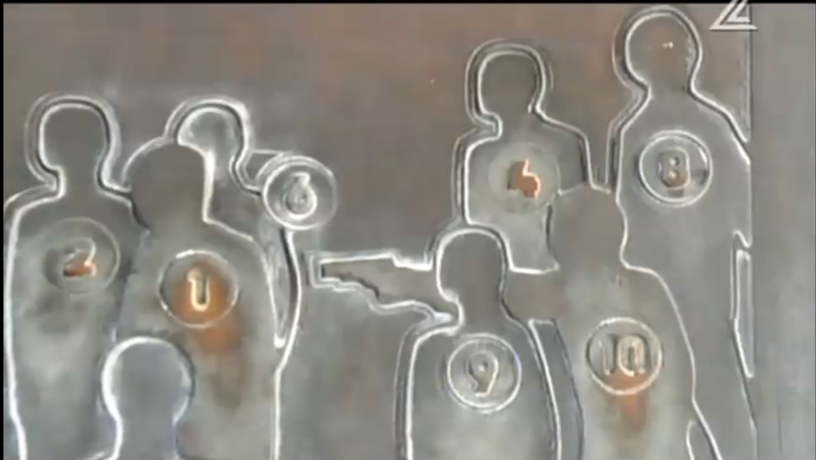
At the site of the murder, the moment of the assassination is frozen with white outlines of the figures who were there. “Number 1 is Yitzhak Rabin,” A.H. said. “Number 10 is Yigal Amir. I’m number 4.”



The Times of Israel Community.