

Rare mystical prayer book unveiled at ANU museum in Tel Aviv
16th century siddur, handwritten and based on Rabbi Isaac Luria’s kabbalistic teachings, to be exhibited starting on Lag B’Omer
 Add ToI as a Preferred Source on Google
Jessica Steinberg, The Times of Israel's culture and lifestyles editor, covers the Sabra scene from south to north and back to the center
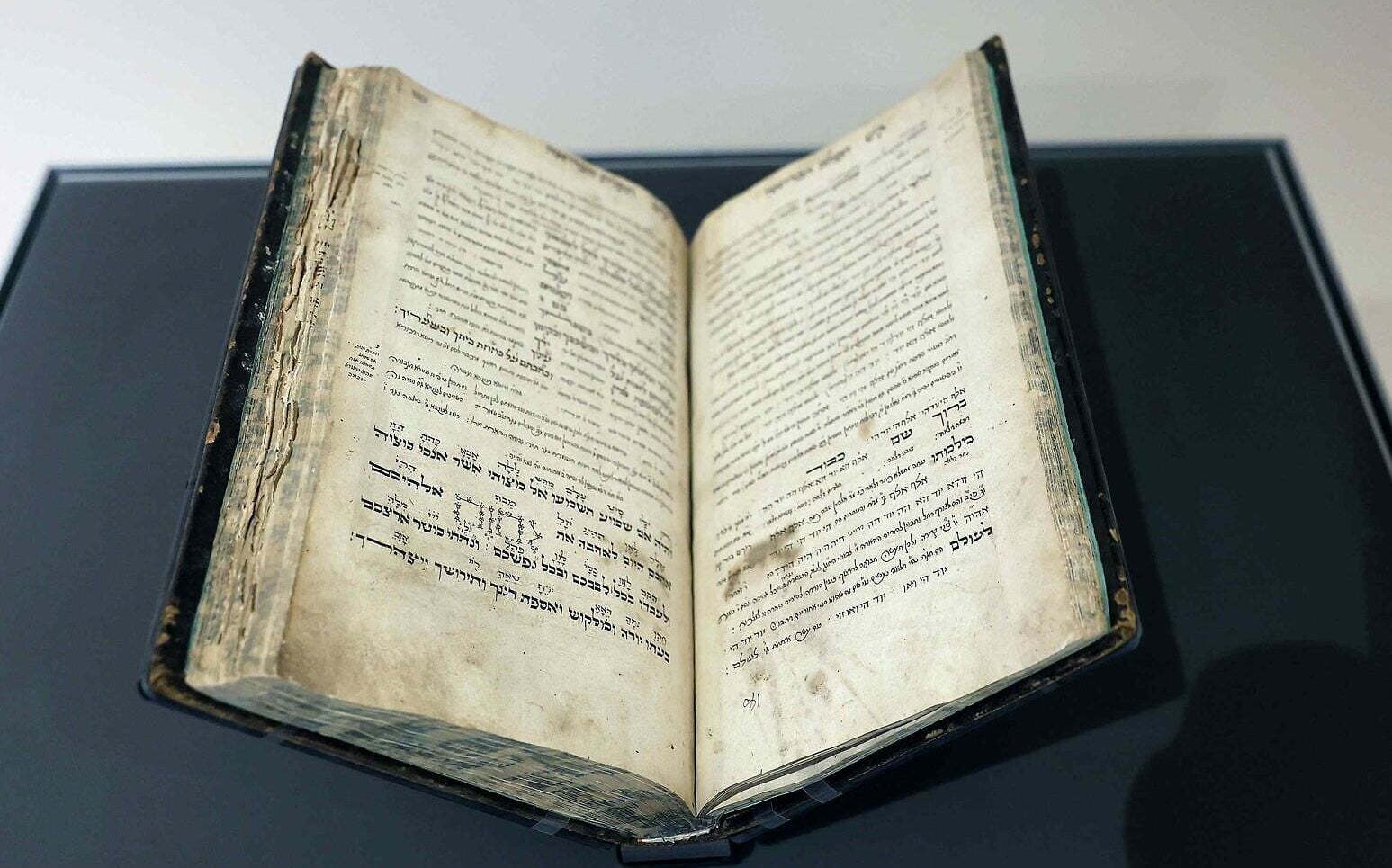
In honor of the Lag B’Omer holiday beginning Monday night, the ANU Museum of the Jewish People is unveiling a 16th-century prayer book based on the teachings of Rabbi Isaac Luria, known as Ha’ari, a leading 16th-century mystic from Safed.
It was Luria who turned Lag B’Omer, initially considered a technical break in the counting of the Omer period, into a major kabbalistic holiday.
The rare prayer book contains his mystical intentions.
Written in ink on paper and bound in an ornate leather cover decorated with leather panels and gold leaf, the prayer book reflects Luria’s spiritual tradition, in which prayer is seen as a means of repairing the world and accessing the higher spiritual realms.
He composed the kavanot, meditative intentions designed to guide one’s thoughts during prayer, based on the belief that these intentions could affect the divine and the cosmos.
The prayer book includes detailed instructions for the meditative intentions, with visual elements such as emphases, diagrams, and tables.
The manuscript was copied by hand in 1749 in the town of Stanov (then part of Poland, now considered part of Ukraine) by the scribe Israel ben Raphael Segal.
At the time, the printing press had already been invented, but there was a prohibition against printing Luria’s teachings, limiting the dissemination of his writings.
Texts with controversial content were reproduced by hand within mystical circles.
“This prayer book embodies the tension between the hidden and the revealed,” said Orit Shaham Gover, chief curator at ANU. “Visitors are invited into a world where prayer is not merely text, but a profound and intentional spiritual experience, seeking to connect humanity, faith, tradition, and the world of Kabbalah.”
ANU is located on the campus of Tel Aviv University.










The Times of Israel Community.